
Don Winslow (1) (1953–)
Author of The Power of the Dog
For other authors named Don Winslow, see the disambiguation page.
About the Author
Don Winslow was born in New York City on October 31, 1953. He received a degree in African history from the University of Nebraska. Before becoming a full-time writer, he worked as a movie theater manager, private investigator, safari guide, actor, theater director and consultant. His works include show more A Cool Breeze on the Underground, The Death and Life of Bobby Z, The Winter of Frankie Machine, Savages, The Kings of Cool, The Cartel, and the Neal Carey Mysteries series. His novel California Fire and Life won the Shamus Award. In 2016, he won the Ian Fleming Steel Dagger for best crime thriller of the year for The Cartel. He has also written for film and television. (Bowker Author Biography) show less
Image credit: Mark Coggins
Series
Works by Don Winslow
The Final Score: The King of Crime Thrillers Is Back―Revealing the True Price of Power, Betrayal, and Survival (2025) 106 copies, 8 reviews
Don Winslow Power of the Dog Series Collection 3 Books Set (The Power of the Dog, The Cartel, The Border) (2020) 1 copy
Associated Works
Tagged
Common Knowledge
- Canonical name
- Winslow, Don
- Legal name
- Winslow, Don
- Other names
- Уинслоу, Дон
- Birthdate
- 1953-10-31
- Gender
- male
- Education
- University of Nebraska (African History)
University of Nebraska-Lincoln (M.A.) (Military History) - Occupations
- theatre manager
private investigator
safari guide
writer
screenwriter - Nationality
- USA
- Birthplace
- New York, New York, USA
- Places of residence
- Perryville, Rhode Island, USA
New York, New York, USA
Julian, California, USA - Map Location
- USA
Members
Reviews
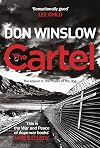
Brutal, searing, epic sequel to The Power Of The Dog - though reading the latter isn't essential, as the various low points of the Keller/Barrera hategrudge are succinctly presented, and then the book gets on with the business of fictionalising the horrors of the last decade or so of the drug war. Adan Barrera swans out of prison and goes to work re-establishing his power. Art Keller is, reluctantly, sent south of the US/Mexico border to track him down. But there are more players involved in show more the rising cartels than just Barrera, and they are embarking on a war of their own of unprecedented savagery, infecting every level of Mexican society with fear and corruption and bloodshed.
In terms of crime fiction as social document, this is the literary successor to The Wire. Winslow's been impressing with his distinctive prose style and the effortless cool of hos characters and his plots, but this surpasses Ellroy in its portrayal of a society brutalised by crime. Even the ugly moral choices made by Keller as he battles his way closer to Barrera are dwarfed by the sheer scale of the evil. A dark, passionate, angry, unflinching novel, and though it leaves the reader dazed and sobered and weary, it also exhilarates as a major piece of crime literature. show less
In terms of crime fiction as social document, this is the literary successor to The Wire. Winslow's been impressing with his distinctive prose style and the effortless cool of hos characters and his plots, but this surpasses Ellroy in its portrayal of a society brutalised by crime. Even the ugly moral choices made by Keller as he battles his way closer to Barrera are dwarfed by the sheer scale of the evil. A dark, passionate, angry, unflinching novel, and though it leaves the reader dazed and sobered and weary, it also exhilarates as a major piece of crime literature. show less
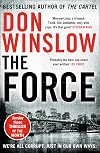
The Force is as meticulously researched as The Power of the Dog. Winslow had conversations with cops and their families for years, and his working knowledge as a PI and a trial consultant also helped to infuse this book with a reality that remains hidden for most.
It’s less sprawling than The Power of the Dog however, and less violent too. While the canvas might be smaller, it packs an punch that’s as affective. It also allows for a more focused examination of its subject matter: at the show more heart of this novel are nuanced questions about utilitarian ethics and justice. Winslow shows how corruption slowly establishes itself, against a backdrop of imperfect systems and systemic racism.
The Force was published in 2017, five years after the death of Trevor Martin, and three years before the death of George Floyd, and contemporary racial relations in the USA is the secondary theme running through its pages – illustrating the biological reality of in- and out-group dynamics that hinder the realization of utopian ideals.
Let’s try to unpack the moral subtext Winslow provides in the remainder of this review.
(...)
Full review on Weighing A Pig Doesn't Fatten It show less
It’s less sprawling than The Power of the Dog however, and less violent too. While the canvas might be smaller, it packs an punch that’s as affective. It also allows for a more focused examination of its subject matter: at the show more heart of this novel are nuanced questions about utilitarian ethics and justice. Winslow shows how corruption slowly establishes itself, against a backdrop of imperfect systems and systemic racism.
The Force was published in 2017, five years after the death of Trevor Martin, and three years before the death of George Floyd, and contemporary racial relations in the USA is the secondary theme running through its pages – illustrating the biological reality of in- and out-group dynamics that hinder the realization of utopian ideals.
Let’s try to unpack the moral subtext Winslow provides in the remainder of this review.
(...)
Full review on Weighing A Pig Doesn't Fatten It show less
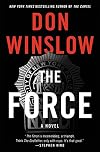
This book kept me up at night, reading it, feeling Malone's frustration with the cards he is dealt and the problems he makes for himself. And there are many problems he makes for himself. This is a very honest look at the situation of the police and their relationship to the minorities they serve. Both sides are represented, but the police are more represented.
Denny Malone, the King of Manhattan North. What kind of guy is he? Denny Malone happens upon a young black boy in a tenement hallway show more in his precinct. He talks to the kid a little bit and happens to notice that the kid has welts and belt-marks on his back. After some prompting the boy tells him it was his mother's boyfriend. Malone asks the kid where he lives and takes him home where the boy's mother and her boyfriend are sitting at the table, eating. Malone proceeds to beat the boyfriend, break his wrist and tell him that if he is ever seen in Manhattan North again, he will face Malone. He throws out the boyfriend. The mother, who has been quiet throughout the ordeal, says, "Don't I deserve love, too?" Malone says, "Love your kid..."
And he's also the kind of guy who will execute a drug dealer and then take his drugs and money and split it between him and his partner and close friends. The drug dealer had ordered the execution of a family (including two kids) because the dad was a dealer who did something to anger his employer.
In Manhattan North the cops work with the mob, the Latino gangs and the black gangs to control them and make a buck or two within strict codes. Malone and Da Force (hated "Da" in that-too cutesy) will be the go-betweens when one gang wants to sell to another gang but hates them because of their color. That way everyone makes money.
Winslow expertly navigates a very fine line between realism and racism. Example-there is a black gang called the Spades and it's capitalized every time so it took me a minute to realize that Malone wasn't just calling African-Americans "spades", but referring to gang-members who belong to a gang that call themselves the Spades. These cops tease each other about their various ethnicities and no one gets angry, which I found authentic. Malone doesn't care what color anyone is, even though the racial epithets run rampant in this tour de force.These are the blue-collar guys I've known all my life. Except that they have power. Malone isn't more complicated than the average guy, but as a cop he has a lot more power over a lot more people. Malone has the intelligence and the ability to strategize, but he is still surprised when everything goes south and all his men are in jeopardy.
Writer nerd mechanics: This is told from Malone's point of view in a very readable, very authentic 3rd person voice. Winslow pulls off the present tense admirably. There are info-dumps, where it seems that the author dumped in paragraphs of quotes from cops in real life. It's obvious that Winslow did his research on this. show less
Denny Malone, the King of Manhattan North. What kind of guy is he? Denny Malone happens upon a young black boy in a tenement hallway show more in his precinct. He talks to the kid a little bit and happens to notice that the kid has welts and belt-marks on his back. After some prompting the boy tells him it was his mother's boyfriend. Malone asks the kid where he lives and takes him home where the boy's mother and her boyfriend are sitting at the table, eating. Malone proceeds to beat the boyfriend, break his wrist and tell him that if he is ever seen in Manhattan North again, he will face Malone. He throws out the boyfriend. The mother, who has been quiet throughout the ordeal, says, "Don't I deserve love, too?" Malone says, "Love your kid..."
And he's also the kind of guy who will execute a drug dealer and then take his drugs and money and split it between him and his partner and close friends. The drug dealer had ordered the execution of a family (including two kids) because the dad was a dealer who did something to anger his employer.
In Manhattan North the cops work with the mob, the Latino gangs and the black gangs to control them and make a buck or two within strict codes. Malone and Da Force (hated "Da" in that-too cutesy) will be the go-betweens when one gang wants to sell to another gang but hates them because of their color. That way everyone makes money.
Winslow expertly navigates a very fine line between realism and racism. Example-there is a black gang called the Spades and it's capitalized every time so it took me a minute to realize that Malone wasn't just calling African-Americans "spades", but referring to gang-members who belong to a gang that call themselves the Spades. These cops tease each other about their various ethnicities and no one gets angry, which I found authentic. Malone doesn't care what color anyone is, even though the racial epithets run rampant in this tour de force.These are the blue-collar guys I've known all my life. Except that they have power. Malone isn't more complicated than the average guy, but as a cop he has a lot more power over a lot more people. Malone has the intelligence and the ability to strategize, but he is still surprised when everything goes south and all his men are in jeopardy.
Writer nerd mechanics: This is told from Malone's point of view in a very readable, very authentic 3rd person voice. Winslow pulls off the present tense admirably. There are info-dumps, where it seems that the author dumped in paragraphs of quotes from cops in real life. It's obvious that Winslow did his research on this. show less
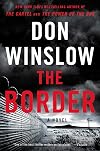
Exciting, sometimes gruesome exploration of the war on drugs and how it has evolved under a thinly-disguised Trump administration. This book takes us into stories of the cartels, but also puts us in touch with the smaller players involved who struggle to survive on the garbage heaps of a society that preys on anyone of a lower status. The longest war, the war on drugs, is the main target here. When all is said and done the main character breaks the rules to try to break though this senseless show more battle against corruption and a struggle to line pockets. "We can say that the roots of the heroin epidemic are in Mexican soil, but opiates are always a response to pain. What is the pain in the heart of American society that sends us searching for a drug to lessen t, to dampen it." show less
Lists
READ in 2024 (1)
READ 2025 (1)
Awards


You May Also Like


Associated Authors
Statistics
- Works
- 48
- Also by
- 6
- Members
- 13,228
- Popularity
- #1,765
- Rating
- 3.9
- Reviews
- 637
- ISBNs
- 859
- Languages
- 20
- Favorited
- 30

