
Charlie Huston
Author of Already Dead
About the Author
Image credit: Flickr user pinguino
Series
Works by Charlie Huston
Moon Knight (2006) #1 4 copies
Legion of Monsters: Man-Thing #1 2 copies
Increvable 1 copy
Promises in Death 1 copy
Moon Knight (2006) #12 1 copy
Bullseye: Perfect Game 1 copy
The Ultimates Annual #2 1 copy
UIDS 101 1 copy
Moon Knight (2006) #2 1 copy
The Stairs I Fell On 1 copy
Human Messes 1 copy
Pizza Sauce 1 copy
Moon Knight (2006) #6 1 copy
Moon Knight (2006) #5 1 copy
Moon Knight (2006) #3 1 copy
Moon Knight (2006) #4 1 copy
Revolutionary Road 1 copy
Associated Works
Tagged
Common Knowledge
- Birthdate
- 20th Century
- Gender
- male
- Nationality
- USA
- Birthplace
- Oakland, California, USA
- Places of residence
- Livermore, California, USA
New York, New York, USA - Associated Place (for map)
- California, USA
Members
Reviews
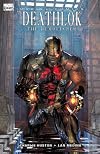
The art was stunning. Let's start with that. Incredibly well done, and Medina brought something new to the table with Deathlok.
Now, I remember picking up that first Astonishing Tales issue with Deathlok by Moench and Buckler, and completely falling in love with the character, despite the often thin storyline. I always wished—and I still do—that someone would come along that really gets Deathlok and could finally write him the way he's always deserved.
While this collection approaches show more that, there's still too many issues for me to be happy with this incarnation.
I know Huston was completely going for over the top with the play-by-play commentary, and the entire war-as-a-spectator-sport thing, but it got old fairly quickly. As did the deleted cussing. If you're going to have the characters swear, then let them fucking swear, not ####### swear. It's irritating as hell to read.
But how about Deathlok? While it was an interesting take, it was still the same old story. Deathlok is created, then he remembers his wife and kid, and his new mission parameter is to get home. It's shown up in every damn incarnation of the character I've read from the Astonishing Tales debut to the horrible version in Marvel's Agents of S.H.I.E.L.D..
Can't we get past that and give poor Luther Manning something else to fight for?
So, while I applaud Huston for building an entirely new world around Deathlok, in the end, it's still the same old same old.
There's some good elements in there, but not enough. This is still not the version of Deathlok I'm looking for. show less
Now, I remember picking up that first Astonishing Tales issue with Deathlok by Moench and Buckler, and completely falling in love with the character, despite the often thin storyline. I always wished—and I still do—that someone would come along that really gets Deathlok and could finally write him the way he's always deserved.
While this collection approaches show more that, there's still too many issues for me to be happy with this incarnation.
I know Huston was completely going for over the top with the play-by-play commentary, and the entire war-as-a-spectator-sport thing, but it got old fairly quickly. As did the deleted cussing. If you're going to have the characters swear, then let them fucking swear, not ####### swear. It's irritating as hell to read.
But how about Deathlok? While it was an interesting take, it was still the same old story. Deathlok is created, then he remembers his wife and kid, and his new mission parameter is to get home. It's shown up in every damn incarnation of the character I've read from the Astonishing Tales debut to the horrible version in Marvel's Agents of S.H.I.E.L.D..
Can't we get past that and give poor Luther Manning something else to fight for?
So, while I applaud Huston for building an entirely new world around Deathlok, in the end, it's still the same old same old.
There's some good elements in there, but not enough. This is still not the version of Deathlok I'm looking for. show less
Charlie Huston is one of my (many) favorite authors. He has a lean mean writing style that mostly gets out of the way of the story he wants to tell. His stories do a great job of twining several layers of plot in ways that are entertaining.
I'd say he hit the mark again here. I really enjoyed his primary idea, about how Skinner was raised and the extraordinary nuance Huston puts into so few flashback-y words. "Skinner's Maxim" is pure gold. The master coordinator and talent scout, Terrence, show more plays such a huge role for a character that gets so little screen time. And Jae was another fully fleshed out bizarre-talent person. Wonderful!
And then he weaves in a secondary plot, really more a theme, about "contraction" (not really a spoiler without any context). The secondary plot was more about military contractors.
Huston has a masterful touch with his minor supporting characters. Maker Smith, for example. I so appreciate how smoothly Huston sketches these sort of oddballs, using relatively few words.
I started to enjoy Skinner's foil, Haven, but I felt the plot was robbed. There had to be more scenes between those two. Perhaps they fell to the editing knife (X-Acto #28, lol)? And the final resolution between them, without spoiling it, was a lame joke compared to what I anticipated. It was fully intentional and I suspect it was Huston 'taking the piss' on us. Doesn't matter much as it was only a blemish on a solid 4-star canvas.
I've got one harsh complaint and that is the dialog. Huston's style is naturally sparse but too many characters' speech patterns were telegraphic. I can show what I mean by the following exchange between two characters (not an actual quote but darn close in some places) --
"Hello."
"Did you?"
"You know."
"Of course."
"So there we are."
It makes perfect sense for some characters, like Jae and Skinner, but it got annoying when it is everyone. It is too skeletal, too much of an affectation. This felt like some laziness on Huston's part, or where his ego and track record beat down some editor's suggestions.
I imagine Huston editing his dialog and trying to drop out as many words as he can without losing us entirely. There were times it felt like that.
There were places where the pacing was off. Very unusual for Huston. And it took some extra effort to get into the story, introducing the characters and how they relate to each other.
One last pet peeve. And I think Huston knows better than this one also. He interchangeably uses the words "magazine" and "clip" for the magazine of a pistol or rifle. Magazine is the one and only correct term. "Clip" belongs to the holding-a-gun-sideways and watching too many action movies aesthetic. I got the feeling Charlie made an intentional dig at pedantics like me because he uses "magazine" once or twice and then it goes all clippy.
This story is also dated strongly by some of the pop culture and world event references. It plays very well today but it might weaken this book for readers twenty years from now. Very minor nitpick.
I think if Huston repaired the dialog, didn't screw us with Haven's end, and fixed some pacing issues I might rate this as five stars. It is very good, to me, and if you like Huston's other works you'll probably like this one as well. But it doesn't have the "small" feel of his usual noir. This one rambles around the world. Maybe I also like his rants. show less
I'd say he hit the mark again here. I really enjoyed his primary idea, about how Skinner was raised and the extraordinary nuance Huston puts into so few flashback-y words. "Skinner's Maxim" is pure gold. The master coordinator and talent scout, Terrence, show more plays such a huge role for a character that gets so little screen time. And Jae was another fully fleshed out bizarre-talent person. Wonderful!
And then he weaves in a secondary plot, really more a theme, about "contraction" (not really a spoiler without any context). The secondary plot was more about military contractors.
Huston has a masterful touch with his minor supporting characters. Maker Smith, for example. I so appreciate how smoothly Huston sketches these sort of oddballs, using relatively few words.
I started to enjoy Skinner's foil, Haven, but I felt the plot was robbed. There had to be more scenes between those two. Perhaps they fell to the editing knife (X-Acto #28, lol)? And the final resolution between them, without spoiling it, was a lame joke compared to what I anticipated. It was fully intentional and I suspect it was Huston 'taking the piss' on us. Doesn't matter much as it was only a blemish on a solid 4-star canvas.
I've got one harsh complaint and that is the dialog. Huston's style is naturally sparse but too many characters' speech patterns were telegraphic. I can show what I mean by the following exchange between two characters (not an actual quote but darn close in some places) --
"Hello."
"Did you?"
"You know."
"Of course."
"So there we are."
It makes perfect sense for some characters, like Jae and Skinner, but it got annoying when it is everyone. It is too skeletal, too much of an affectation. This felt like some laziness on Huston's part, or where his ego and track record beat down some editor's suggestions.
I imagine Huston editing his dialog and trying to drop out as many words as he can without losing us entirely. There were times it felt like that.
There were places where the pacing was off. Very unusual for Huston. And it took some extra effort to get into the story, introducing the characters and how they relate to each other.
One last pet peeve. And I think Huston knows better than this one also. He interchangeably uses the words "magazine" and "clip" for the magazine of a pistol or rifle. Magazine is the one and only correct term. "Clip" belongs to the holding-a-gun-sideways and watching too many action movies aesthetic. I got the feeling Charlie made an intentional dig at pedantics like me because he uses "magazine" once or twice and then it goes all clippy.
This story is also dated strongly by some of the pop culture and world event references. It plays very well today but it might weaken this book for readers twenty years from now. Very minor nitpick.
I think if Huston repaired the dialog, didn't screw us with Haven's end, and fixed some pacing issues I might rate this as five stars. It is very good, to me, and if you like Huston's other works you'll probably like this one as well. But it doesn't have the "small" feel of his usual noir. This one rambles around the world. Maybe I also like his rants. show less
LA is under martial law. There is fuel and food shortages, rioting, suicide bombings and worst of all, a pandemic has a grip on the world, affecting about ten per cent of the population. This disorder is called SLP and it causes severe sleep deprivation and eventual death. Parker Haas is a detective in the LAPD, working undercover. He is happily married with a new baby on board. His wife has SLP. His job, is to immerse himself in the booming illegal drug trade and find a link to the black show more marketing of “Dreamer”, which is the only government-sanctioned drug that temporarily helps the afflicted sleep. It is a hot commodity but strictly controlled and very expensive. Park is a good honest cop and his investigation leads him into some very dangerous water and he is soon being pursued by an aging but ruthlessly determined mercenary. This is a fresh, tautly written story, that contains action, memorable characters, sizzling dialogue and a surprisingly effective love story. Huston is one of my favorite crime writers and this is his most mature, ambitious book to date. show less
First there was 'chick-lit.' Then there was 'hick-lit.' I hereby dub a new sub-genre: dick-lit. No, it's not about sex, porny-readers. I'm thinking of such books as The Goldfinch, Less Than Zero, Catcher In the Rye, and others whose titles escape me because it isn't a genre I read and enjoy. Usually.
In the way that chick-lit is about women in their twenties finding their way, finding a job and finding a man (not necessarily in that order), dick-lit is about men in their twenties working out show more their lives, finding a job and finding a woman (usually in that order). In this particular sub-genre, they also tend to be unlikable during the process. Webster, the protagonist, has good reason to be unlikable. As the story comes together, the reader starts to understand, if not necessarily applaud, Web's behavior and his travels on a sort of redemption arc. Of course, this is not the silly-girly redemption arc in chick-lit where she becomes An Entirely Different Awesome Person Embracing Change, but more like a 2.0 person, still with their dysfunctional history, still a fuck-up--just not as much of one.
"I closed my eyes for a moment, when I opened them it was gone. I looked down the street, knowing it must have just turned the corner, but unable to keep myself from thinking other thoughts. Thinking about the Flying Dutchman. Ghost ships. Haunted freighters, lost souls that manifest and dissolve, unbidden. Just the usual."
Don't read the blurb. It's a disaster of a description that gives a lot of the development away, and gets details wrong to boot. The story is set around Webster, an adult who has been freeloading on his best and life-long friend, Chev. Narrative is from Web's point of view, but because Web is focused on the here and now, explanations and mental digressions are in short supply. The reader is essentially dropped in on a teaser scene in a motel, and then returns to where the story begins with Web and Chet are squabbling like an old married couple. It becomes clear that Web is in immediate need of employment, so he takes a day-job cleaning up after messy deaths with their friend, Po Sin.
In some ways it reads like a script, dialogue-heavy with little visual background. The one thing about Huston's writing is that he is violently allergic to quotation marks (at least, I presume that's the reason), so the structure may make or break your enjoyment of the book:
I looked at the number.
--Caller unknown. Probably a customer. Let me get this for you.
--Do not pick that up.
I flipped the phone open.
--White Lightning Tattoo.
Chev jammed a hand in his pocket, going for his keys.
--Asshole!
I nodded my head, phone at my ear, backing from the door.
--A string of barbed wire? Around your biceps? Yea, sure, we can do that.
Chev turned the key.
--Do not say another word.
I covered the mouthpiece with my hand.
--No, it's cool, I can handle this.
He pushed the door open.
--Give me the phone.
I took my hand from the mouthpiece.
--Sure, sure we can do that wire around your arm. We can also tattoo lameass poser wannabe on your forehead.
Chev came at me, grabbing for the phone.
I held it over my head, screaming.
--Or how about you just get a unicorn on your hip so people will know what a real man you are!
What can I say? I liked it. I liked the feel of realness in the relationship between best friends, and in the dialogue between them. I like how the male friendship was portrayed with Chet as wells as with Po. I especially liked it when Web's friends continued to hold him accountable. I liked gradually finding out about Web through his interactions, rather than being told. The work was kind of fascinating, giving a voyeuristic insight into messy deaths, and I really wouldn't have minded more detail there. The humor was a little adolescent at time, punching and shoving and generally being sarcastic assholes. When Web encountered someone even more dickish than himself, I admit I laughed out loud a few times at the way Web talked to him.
There's also a complicated crime-situation thing going on where Web unsurprisingly plays the clueless hero. Since the book was a nominee for both an Edgar and Anthony Award, I'll assume it qualifies as a mystery, although there's really a certain sort of screwball dark comedy to it.
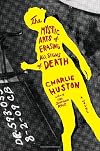
By the way, thought the cover looks like a dead woman, I'm almost certain everyone who died in the book was male. Just sayin', publishers.
Dicks. show less
In the way that chick-lit is about women in their twenties finding their way, finding a job and finding a man (not necessarily in that order), dick-lit is about men in their twenties working out show more their lives, finding a job and finding a woman (usually in that order). In this particular sub-genre, they also tend to be unlikable during the process. Webster, the protagonist, has good reason to be unlikable. As the story comes together, the reader starts to understand, if not necessarily applaud, Web's behavior and his travels on a sort of redemption arc. Of course, this is not the silly-girly redemption arc in chick-lit where she becomes An Entirely Different Awesome Person Embracing Change, but more like a 2.0 person, still with their dysfunctional history, still a fuck-up--just not as much of one.
"I closed my eyes for a moment, when I opened them it was gone. I looked down the street, knowing it must have just turned the corner, but unable to keep myself from thinking other thoughts. Thinking about the Flying Dutchman. Ghost ships. Haunted freighters, lost souls that manifest and dissolve, unbidden. Just the usual."
Don't read the blurb. It's a disaster of a description that gives a lot of the development away, and gets details wrong to boot. The story is set around Webster, an adult who has been freeloading on his best and life-long friend, Chev. Narrative is from Web's point of view, but because Web is focused on the here and now, explanations and mental digressions are in short supply. The reader is essentially dropped in on a teaser scene in a motel, and then returns to where the story begins with Web and Chet are squabbling like an old married couple. It becomes clear that Web is in immediate need of employment, so he takes a day-job cleaning up after messy deaths with their friend, Po Sin.
In some ways it reads like a script, dialogue-heavy with little visual background. The one thing about Huston's writing is that he is violently allergic to quotation marks (at least, I presume that's the reason), so the structure may make or break your enjoyment of the book:
I looked at the number.
--Caller unknown. Probably a customer. Let me get this for you.
--Do not pick that up.
I flipped the phone open.
--White Lightning Tattoo.
Chev jammed a hand in his pocket, going for his keys.
--Asshole!
I nodded my head, phone at my ear, backing from the door.
--A string of barbed wire? Around your biceps? Yea, sure, we can do that.
Chev turned the key.
--Do not say another word.
I covered the mouthpiece with my hand.
--No, it's cool, I can handle this.
He pushed the door open.
--Give me the phone.
I took my hand from the mouthpiece.
--Sure, sure we can do that wire around your arm. We can also tattoo lameass poser wannabe on your forehead.
Chev came at me, grabbing for the phone.
I held it over my head, screaming.
--Or how about you just get a unicorn on your hip so people will know what a real man you are!
What can I say? I liked it. I liked the feel of realness in the relationship between best friends, and in the dialogue between them. I like how the male friendship was portrayed with Chet as wells as with Po. I especially liked it when Web's friends continued to hold him accountable. I liked gradually finding out about Web through his interactions, rather than being told. The work was kind of fascinating, giving a voyeuristic insight into messy deaths, and I really wouldn't have minded more detail there. The humor was a little adolescent at time, punching and shoving and generally being sarcastic assholes. When Web encountered someone even more dickish than himself, I admit I laughed out loud a few times at the way Web talked to him.
There's also a complicated crime-situation thing going on where Web unsurprisingly plays the clueless hero. Since the book was a nominee for both an Edgar and Anthony Award, I'll assume it qualifies as a mystery, although there's really a certain sort of screwball dark comedy to it.
By the way, thought the cover looks like a dead woman, I'm almost certain everyone who died in the book was male. Just sayin', publishers.
Dicks. show less
Lists
to get (2)
crime / thriller (1)
Awards


You May Also Like


Associated Authors
Statistics
- Works
- 52
- Also by
- 3
- Members
- 8,418
- Popularity
- #2,861
- Rating
- 3.8
- Reviews
- 313
- ISBNs
- 201
- Languages
- 11
- Favorited
- 45


