
Walter Rhein
Author of Reckless Traveler
Works by Walter Rhein
Tagged
Common Knowledge
There is no Common Knowledge data for this author yet. You can help.
Members
Reviews
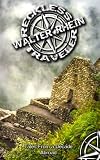
Travel helps separate what is real from what is not. Travel is education without agenda, and the person who completes a journey can depend on being improved over the one who set out. Welcome to Walter Rhein, the Reckless Traveler, an American who traveled to Lima, Peru as a tourist, and ended up living there for another decade. The book's a collection of travelogue and memoir, short stories about his adventures abroad. From teaching English in local Puruvian schools, learning Spanish and show more making all kinds of mistakes while practicing. Walter wrestled with kidney stones, met several medicine men and women, and learned to know a beautiful woman by pretending not to understand her compliments and desires spoken in Spanish. Discover the pleasure of being robbed, visit Machu Picchu to list a few, or feel the blisters popping up in a multi day hike on ancient Inca paths through the mountains. Rhein takes you to Chile and Venezuela, bus trips, bureaucrats, parties and local population. Reckless Traveler is fast-paced, well-written, a pleasure to read. show less
A South American - Magical Mystery Tour
"Travel helps separate what is real from what is not. Travel is education without agenda." - Walter Rhein
Walter Rhein’s introductory chapter to Reckless Traveler, available online and in the eBook preview, trapped me as quick as I glanced at it. I did not set out to read a travel biography, but a chance crossing of a Facebook post had me ensnared. Equally concerned for Walter’s health and excited about what he experienced, I had no choice but to show more neglect my to-read pile dominated by dark fantasy. My reading mirrored that of the author’s experience. Spending a decade in Peru, initially as short-time tourist one who did not speak the local language, Walter recaps his own entrapment: his muse anchored him in a foreign land.
The author’s style is welcoming; the story is adventurous and peppered with philosophical depth. He accurately portrays the consequences of traveling without a plan, which is fraught with fun and danger. Visa issues and adventure take him to Venezuela and Chile—so he was not bound to Peru. Read this and you encounter: giant cockroaches, being robbed, Machu Picchu, AK47’s, Chilean jails, medical crises, peanut butter, transient friendships, bribery, murder, a race through the mountains, being robbed again…He does not advocate that everyone should actually travel recklessly; the best alternative is to let Walter do the walking and talking…and just follow him via the comfort of this book.
Recommend for all readers. The best way I can communicate Walter’s voice and the scope of the book is to offer a random array of quotes:
Random Adventurous Snippet (curious-reader traps):
My dreamy recollections came to an abrupt halt when once again I found myself in Ecuador, regarding the ominous line of stern-faced mercenaries with AK-47s.
A kiss is a nice greeting. Getting through the day becomes much easier when dotted with kisses from women you meet.
I woke to find myself staring into the eyes of the world’s largest cockroach.
I rounded the corner and came upon the carnage. The taxi sat by the side of the road, its windshield spattered with orange-red droplets. I looked at the droplets for some time before I realized they were blood.
After thirty seconds, I threw up the tea. “Can we please go to the hospital now?”
My left wrist was scratched. In the place where my watch normally rested was now only a patch of untanned white skin. The guy had stolen my Timex Ironman!
“His name is Ivan. He’s the son of the Yugoslavian ambassador to Perú, and he doesn’t like Americans.”
Its trunk light came on to reveal a crumpled sheet of thick plastic. The driver pushed this aside, to expose, much to my surprise, piles and piles of money.
I paged through my passport and found an entry stamp to Chile. I shook my head. There was something slightly creepy about entering a foreign country without even talking to a border official, but I shrugged it off.
Last to emerge was Alan Garcia, the President of Perú himself.
I received a call from Roberto Carcelen. Roberto is a cross-country skier who became Perú’s first winter Olympian after representing the country at Vancouver and then again at Sochi.
The trick to crossing an Indiana Jones-style suspension bridge is to never look down. Of course, this is impossible, because you must ensure that your feet connect with planks not rotten to the core.
Philosophical Excerpts :
I was suddenly glad for the increased ability to dampen out sensory intrusions. You don’t read words you can’t understand, or eavesdrop on conversations you can’t comprehend.
Therein lay the rub. “They hate it,” I said. “Everybody hates it. When I meet American tourists on the street here, taking ‘appropriate’ two-week vacations, they flash me disapproving stares as they pass by… “Maybe their scorn is only in my imagination,” I admitted. “But in the US these days, or at least where I lived, there are those who will label you as ‘unpatriotic’ for even aspiring to learn a foreign language.”
Living in Perú took the pressure off me financially, and created the freedom to think about things other than how I was going to cover monthly expenses. I felt I had stumbled into a closeout sale on time, and I wanted to purchase as much as I could. But Perú had a dark side too: it was important to keep on your toes.
The funny thing about learning foreign languages is that whenever you make an error in word choice or pronunciation you invariably say something totally inappropriate and probably sexual in nature.
The fact is, altitude can really mess with you, and you must consciously remember not to overexert yourself. Even a slow walking pace is enough to jack your heart rate up to near its maximum capacity. However, you don’t feel as if you are going too hard, which is why you can get yourself into trouble.
The only way to get a true experience is to be your own guide.
It’s liberating to come home and know there won’t be a stack of bills waiting for you. This freedom came with certain inconveniences, but overall the trade worked for me. I liked that I needed to go for a twenty minute walk if I wanted to use the internet; it meant I wouldn’t go online unless I had a true task pending that needed to be taken care of.
I could see how a bilingual readership would make it more challenging for any single entity to control a narrative.
Personally, I’d rather strive for error-riddled greatness than be limited to perfect mediocrity.”
On that pinnacle, I realized that, when discussing decision-making, people tend to leave out significant points, the most important being this: Every choice has a consequence; some are good; some are bad; some are positive, but yet represent missed opportunities. show less
"Travel helps separate what is real from what is not. Travel is education without agenda." - Walter Rhein
Walter Rhein’s introductory chapter to Reckless Traveler, available online and in the eBook preview, trapped me as quick as I glanced at it. I did not set out to read a travel biography, but a chance crossing of a Facebook post had me ensnared. Equally concerned for Walter’s health and excited about what he experienced, I had no choice but to show more neglect my to-read pile dominated by dark fantasy. My reading mirrored that of the author’s experience. Spending a decade in Peru, initially as short-time tourist one who did not speak the local language, Walter recaps his own entrapment: his muse anchored him in a foreign land.
The author’s style is welcoming; the story is adventurous and peppered with philosophical depth. He accurately portrays the consequences of traveling without a plan, which is fraught with fun and danger. Visa issues and adventure take him to Venezuela and Chile—so he was not bound to Peru. Read this and you encounter: giant cockroaches, being robbed, Machu Picchu, AK47’s, Chilean jails, medical crises, peanut butter, transient friendships, bribery, murder, a race through the mountains, being robbed again…He does not advocate that everyone should actually travel recklessly; the best alternative is to let Walter do the walking and talking…and just follow him via the comfort of this book.
Recommend for all readers. The best way I can communicate Walter’s voice and the scope of the book is to offer a random array of quotes:
Random Adventurous Snippet (curious-reader traps):
My dreamy recollections came to an abrupt halt when once again I found myself in Ecuador, regarding the ominous line of stern-faced mercenaries with AK-47s.
A kiss is a nice greeting. Getting through the day becomes much easier when dotted with kisses from women you meet.
I woke to find myself staring into the eyes of the world’s largest cockroach.
I rounded the corner and came upon the carnage. The taxi sat by the side of the road, its windshield spattered with orange-red droplets. I looked at the droplets for some time before I realized they were blood.
After thirty seconds, I threw up the tea. “Can we please go to the hospital now?”
My left wrist was scratched. In the place where my watch normally rested was now only a patch of untanned white skin. The guy had stolen my Timex Ironman!
“His name is Ivan. He’s the son of the Yugoslavian ambassador to Perú, and he doesn’t like Americans.”
Its trunk light came on to reveal a crumpled sheet of thick plastic. The driver pushed this aside, to expose, much to my surprise, piles and piles of money.
I paged through my passport and found an entry stamp to Chile. I shook my head. There was something slightly creepy about entering a foreign country without even talking to a border official, but I shrugged it off.
Last to emerge was Alan Garcia, the President of Perú himself.
I received a call from Roberto Carcelen. Roberto is a cross-country skier who became Perú’s first winter Olympian after representing the country at Vancouver and then again at Sochi.
The trick to crossing an Indiana Jones-style suspension bridge is to never look down. Of course, this is impossible, because you must ensure that your feet connect with planks not rotten to the core.
Philosophical Excerpts :
I was suddenly glad for the increased ability to dampen out sensory intrusions. You don’t read words you can’t understand, or eavesdrop on conversations you can’t comprehend.
Therein lay the rub. “They hate it,” I said. “Everybody hates it. When I meet American tourists on the street here, taking ‘appropriate’ two-week vacations, they flash me disapproving stares as they pass by… “Maybe their scorn is only in my imagination,” I admitted. “But in the US these days, or at least where I lived, there are those who will label you as ‘unpatriotic’ for even aspiring to learn a foreign language.”
Living in Perú took the pressure off me financially, and created the freedom to think about things other than how I was going to cover monthly expenses. I felt I had stumbled into a closeout sale on time, and I wanted to purchase as much as I could. But Perú had a dark side too: it was important to keep on your toes.
The funny thing about learning foreign languages is that whenever you make an error in word choice or pronunciation you invariably say something totally inappropriate and probably sexual in nature.
The fact is, altitude can really mess with you, and you must consciously remember not to overexert yourself. Even a slow walking pace is enough to jack your heart rate up to near its maximum capacity. However, you don’t feel as if you are going too hard, which is why you can get yourself into trouble.
The only way to get a true experience is to be your own guide.
It’s liberating to come home and know there won’t be a stack of bills waiting for you. This freedom came with certain inconveniences, but overall the trade worked for me. I liked that I needed to go for a twenty minute walk if I wanted to use the internet; it meant I wouldn’t go online unless I had a true task pending that needed to be taken care of.
I could see how a bilingual readership would make it more challenging for any single entity to control a narrative.
Personally, I’d rather strive for error-riddled greatness than be limited to perfect mediocrity.”
On that pinnacle, I realized that, when discussing decision-making, people tend to leave out significant points, the most important being this: Every choice has a consequence; some are good; some are bad; some are positive, but yet represent missed opportunities. show less
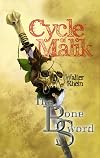
I'm a big Walter Rhein fan, having read and reviewed his autobiographical Reckless Traveler (highly recommended story of his South American travels), and his fiction Reader of Acheron (also highly recommended, this one being more of dystopian, urban fantasy focused on a culture in which reading is prohibited). Actually, the sequel to The Reader of Acheron is slated for a 2018 release and I was anxious to read more Rhein. So, I grabbed The Bone Sword to tie me over.
The Bone Sword is classic show more fantasy with a coming of age story of a brother and sister (Noah and Jasmine). Their savior is the outcast warrior: Malik. This tale is simpler with less philosophical undertones than the Reader or Reckless Traveler. The "bad guys" are undeniably evil (Father Ivory in particular, though one may argue he was 50%crazy). The "good guys" are the young children with brewing, magical potential, and their fellow oppressed villagers. The only "gray" character is Malik, but despite his ability to murder and fight, he is closely aligned with the good guys and brings hope to the battle of Miscony.
The first chapter I feared was going to be cliche or overly simplistic, but Rhein quickly introduced meaningful backstory and context. A few chapters in, and I became genuinely attached to the main party. Rhein sprinkles in several very memorable scenes to ramp up the drama. A slight over reliance on rapid healing dampens several stunning sequences that had taken my breath away.
The Bone Sword is a step above a lot of fantasy. It is only #1 of a promised cycle, which is great news. For now, I eagerly await "Acheron #2/The Slaves of Erafor #2" which should emerged soon. show less
The Bone Sword is classic show more fantasy with a coming of age story of a brother and sister (Noah and Jasmine). Their savior is the outcast warrior: Malik. This tale is simpler with less philosophical undertones than the Reader or Reckless Traveler. The "bad guys" are undeniably evil (Father Ivory in particular, though one may argue he was 50%crazy). The "good guys" are the young children with brewing, magical potential, and their fellow oppressed villagers. The only "gray" character is Malik, but despite his ability to murder and fight, he is closely aligned with the good guys and brings hope to the battle of Miscony.
The first chapter I feared was going to be cliche or overly simplistic, but Rhein quickly introduced meaningful backstory and context. A few chapters in, and I became genuinely attached to the main party. Rhein sprinkles in several very memorable scenes to ramp up the drama. A slight over reliance on rapid healing dampens several stunning sequences that had taken my breath away.
The Bone Sword is a step above a lot of fantasy. It is only #1 of a promised cycle, which is great news. For now, I eagerly await "Acheron #2/The Slaves of Erafor #2" which should emerged soon. show less
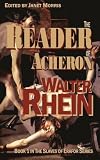
Walter Rhein’s The Reader of Acheron is 'A Reader-Haunted World'(yes, that is a call-out to Carl Sagan's The Demon-Haunted World: Science as a Candle in the Dark.)
Rhein begins with a bunch of characters struggling to survive in a futuristic earth in which reading is prohibited. Three key individuals emerge as tour guides. Two are the sword-swinging duo of Quillion and Cole who are reminiscent of Fritz Leiber’s Fafhrd and the Gray Mouser (famous Sword and Sorcery adventurers which share show more brawn and some intellect). The third is Kikkan, a slave who is rather like Marvel’s Hulk.
This is a fast reading narrative, with well-placed doses of humor, horror, and brutal fighting. The pacing is spot on. The conflict is ever present and breathtaking; the plight of Kikkan the slave is most compelling. To avoid spoilers but still highlight Kikkan’s drama, the below excerpt is taken from Kikkan’s first appearance; here his owner was encouraged to demonstrate his power over his property:
"He dropped his head to Duncan’s boot. The road smell was upon it. The dirt and the filth of miles of walking. The sweat of man and animal imbibed the leather. The scent of urine and fecal matter, all the trappings of a farm. Kikkan’s command was to clean the boot. But it was not enough to clean it. It had to be cleaned absolutely. Kikkan extended his tongue. The work began."
You’ll be rooting for Kikkan to overcome his oppression, but beware; Rhein rapidly takes Kikkan into even more emotive scenes that will leave you breathless. Like most dystopic fantasy (from Planet of The Apes, The Hunger Games, and Fahrenheit 451), the author invites readers to consider humanity’s societal flaws. And it is not just the possible re-emergence of slavery that is posited; many other group behaviors are on display here, the most obvious being state-based censorship (book burning), but also drug-use and blind-obedience to institutions (religious and political). Actually, the author’s voice occasionally sneaks through too strongly via Kikkan (whose articulate dialogue is a bit too refined given his life).
In summary, The Reader of Acheron is entertaining dystopia with intellectual depth. This establishes (a) an interesting dystopia and (b) a group of interesting characters to explore it. With such a solid foundation in place, this screams for a sequel. Indeed some places refer to this as "The Slaves of Erafor- Volume 1", so expect more! show less
Rhein begins with a bunch of characters struggling to survive in a futuristic earth in which reading is prohibited. Three key individuals emerge as tour guides. Two are the sword-swinging duo of Quillion and Cole who are reminiscent of Fritz Leiber’s Fafhrd and the Gray Mouser (famous Sword and Sorcery adventurers which share show more brawn and some intellect). The third is Kikkan, a slave who is rather like Marvel’s Hulk.
This is a fast reading narrative, with well-placed doses of humor, horror, and brutal fighting. The pacing is spot on. The conflict is ever present and breathtaking; the plight of Kikkan the slave is most compelling. To avoid spoilers but still highlight Kikkan’s drama, the below excerpt is taken from Kikkan’s first appearance; here his owner was encouraged to demonstrate his power over his property:
"He dropped his head to Duncan’s boot. The road smell was upon it. The dirt and the filth of miles of walking. The sweat of man and animal imbibed the leather. The scent of urine and fecal matter, all the trappings of a farm. Kikkan’s command was to clean the boot. But it was not enough to clean it. It had to be cleaned absolutely. Kikkan extended his tongue. The work began."
You’ll be rooting for Kikkan to overcome his oppression, but beware; Rhein rapidly takes Kikkan into even more emotive scenes that will leave you breathless. Like most dystopic fantasy (from Planet of The Apes, The Hunger Games, and Fahrenheit 451), the author invites readers to consider humanity’s societal flaws. And it is not just the possible re-emergence of slavery that is posited; many other group behaviors are on display here, the most obvious being state-based censorship (book burning), but also drug-use and blind-obedience to institutions (religious and political). Actually, the author’s voice occasionally sneaks through too strongly via Kikkan (whose articulate dialogue is a bit too refined given his life).
In summary, The Reader of Acheron is entertaining dystopia with intellectual depth. This establishes (a) an interesting dystopia and (b) a group of interesting characters to explore it. With such a solid foundation in place, this screams for a sequel. Indeed some places refer to this as "The Slaves of Erafor- Volume 1", so expect more! show less
Awards

Statistics
- Works
- 7
- Members
- 37
- Popularity
- #390,571
- Rating
- 4.0
- Reviews
- 13
- ISBNs
- 9