
Liz Greene
Author of The Mythic Tarot: A New Approach to the Tarot Cards
About the Author
Liz Greene is the cofounder of the Centre for Psychological Astrology in London and a contributor to the most respected astrology site on the web, www.astro.com. She holds a doctorate in psychology and is a qualified Jungian analyst.
Series
Works by Liz Greene
Barriers and Boundaries: The Horoscope and the Defences of the Personality (1996) 25 copies, 1 review
The Astrological World of Jung’s 'Liber Novus': Daimons, Gods, and the Planetary Journey (2018) 22 copies
'Jung's Studies in Astrology' and 'The Astrological World of Jung's 'Liber Novus'' (2 Volume Set) (2018) 4 copies
The Palgrave handbook of sound design and music in screen media : integrated soundtracks (2016) 3 copies
Die Botschaft des göttlichen Feuers: Die Sonne im Horoskop und der kreative Weg zu Individualität und Berufung (Standardwerke der Astrologie) (2004) 2 copies
The Art of Stealing Fire 2 copies
Saturno Astrologia psicologica como caminho de autoconhecimento e desenvolvimento do self (Em Portugues do Brasil) (2019) 1 copy, 1 review
Os astros e o amor - Um guia astrologico completo sobre relacionamentos (Em Portugues do Brasil) (2021) 1 copy, 1 review
A astrologia do destino. A busca pelo simbolismo astrologico e psicologico (Em Portugues do Brasil) (2019) 1 copy, 1 review
Saturno o senhor do karma 1 copy
Saturno - O Senhor do Carma 1 copy
Neptun. Die Sehnsucht nach Erlösung. Der Planet der Gegensätze und seine astrologische Deutung. 1 copy
Sag mir dein Sternzeichen, und ich sge dir, wie du liebst - Eine astrologische Charakterkunde (1992) 1 copy
Jung. o astrologo. Um estudo historico sobre os escritos de astrologia na obra de Carl G. Jung (Em Portugues do Brasil) (2019) 1 copy
Barreras y limites/ Barriers and Limits: Sistema de defensa de la personalidad (Spanish Edition) (2008) 1 copy
Relacionamentos 1 copy
Associated Works
Tagged
Common Knowledge
- Birthdate
- 1946-09-04
- Gender
- female
- Education
- University of Bristol (PhD) 2010
- Occupations
- psychologist
Jungian analyst
astrologer
author - Organizations
- Centre for Psychological Astrology
- Relationships
- Leigh, Richard (brother)
- Short biography
- Liz Greene is the co-founder of the Centre for Psychological Astrology in London and a contributor to the most respected astrology site on the web: www.astro.com, as well as a regular contributor to Astrodientst.com. She is the author of Astrology for Lovers and Relating: An Astrological Guide to Living with Others on a Small Planet. Greene currently resides in Zurich, Switzerland. Visit her at www.astrology.co.uk/LizG.htm
- Nationality
- USA
- Birthplace
- Englewood, New Jersey, USA
- Places of residence
- Zurich, Switzerland
- Associated Place (for map)
- USA
Members
Reviews

This is a collection of three transcribed seminars on the theme of mental illness and astrology: "The Psychopath" (2001), "Sanity and Madness" (2000), and "The Scapegoat" (1999). Greene doesn't go into actual psychology all that much in any of these seminars, so even though they're about fifteen years old at this point and the psychological understanding of these conditions has changed, the astrology is still usable. I found all three seminars to be easy to understand without having studied show more psychology. As with other lectures in the CPA Seminar Series, a basic understanding of astrology is assumed; astrological beginners may find a lot of this going over their heads.
I found "The Psychopath" the most interesting to read, although I hope it's the one with the least potential use in my life. Greene looks at the charts of several killers, looking for commonalities in their charts, as well as answers as to why some people are psychopaths and others, with similar charts, are not. "Sanity and Madness" is more practically useful for ideas about how to look at someone's chart. Greene covers a number of explanations for mental illness. I found her point that our mental illnesses fit our charts fascinating. She's not saying that anyone is fated to go mad, but that if they do have a mental illness, it's likely to fit their chart. I didn't find "The Scapegoat" as gripping as the other two seminars, and it didn't take me long to grow bored with the discussion of the scapegoat archetype. Once past that, though, it got more interesting. Greene shows how many people fall into victim or persecutor roles, both as individuals and at the community or national levels.
I had a few problems with the book. Being a set of transcripts, even edited, the organization of the information is looser than in regular textbooks. It's a lot more readable than a standard textbook, but harder to look things up in afterwards. Although I'm not a professional astrologer myself, I would have liked to have seen more discussion on how to work with mentally ill clients, even if that discussion was basically Point them towards mental health professionals and then step away. Also, I got irritated with Greene's disparaging comments on political correctness, even when she gave examples that I agreed with. But even allowing for the possibly outdated psychology, this is an excellent look at the astrology of an uncomfortable subject, and I recommend it. show less
I found "The Psychopath" the most interesting to read, although I hope it's the one with the least potential use in my life. Greene looks at the charts of several killers, looking for commonalities in their charts, as well as answers as to why some people are psychopaths and others, with similar charts, are not. "Sanity and Madness" is more practically useful for ideas about how to look at someone's chart. Greene covers a number of explanations for mental illness. I found her point that our mental illnesses fit our charts fascinating. She's not saying that anyone is fated to go mad, but that if they do have a mental illness, it's likely to fit their chart. I didn't find "The Scapegoat" as gripping as the other two seminars, and it didn't take me long to grow bored with the discussion of the scapegoat archetype. Once past that, though, it got more interesting. Greene shows how many people fall into victim or persecutor roles, both as individuals and at the community or national levels.
I had a few problems with the book. Being a set of transcripts, even edited, the organization of the information is looser than in regular textbooks. It's a lot more readable than a standard textbook, but harder to look things up in afterwards. Although I'm not a professional astrologer myself, I would have liked to have seen more discussion on how to work with mentally ill clients, even if that discussion was basically Point them towards mental health professionals and then step away. Also, I got irritated with Greene's disparaging comments on political correctness, even when she gave examples that I agreed with. But even allowing for the possibly outdated psychology, this is an excellent look at the astrology of an uncomfortable subject, and I recommend it. show less
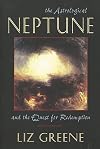
Liz Greene has an admirable knack for sewing everything together (mythology, psychology and factual information) into a beautifully coherent tapestry for hapless Neptunians like me. It delves into several mythologies that help the reader to gain a helpful ancient cultural context AND links this to our current cultural Neptunian tendencies (our obsession with movie stars and musicians, who in turn also get themselves into tragic situations or drugs)
It's one of the few astrology books that show more handles a planetary archetype very well, because it actually defines what Neptune "feels" like to the reader, instead of pelting the poor reader with vague descriptions of suffering, incarceration, addiction and insanity that incites this equally vague anxiety for the heavily Neptunian (read: highly sympathetic but also very emotional door mat). Though I did see "self-immolation" bandied about more than a few times.
Screw it. Everyone should read this book - not just for those into astrology. Maybe read an astrology intro first, then dive into this. It's for anyone who wants to understand why these seemingly helpless people behave as they do. Sure, we Neptunians can't help ourselves, but we can do some hella magic with smoke and mirrors... show less
It's one of the few astrology books that show more handles a planetary archetype very well, because it actually defines what Neptune "feels" like to the reader, instead of pelting the poor reader with vague descriptions of suffering, incarceration, addiction and insanity that incites this equally vague anxiety for the heavily Neptunian (read: highly sympathetic but also very emotional door mat). Though I did see "self-immolation" bandied about more than a few times.
Screw it. Everyone should read this book - not just for those into astrology. Maybe read an astrology intro first, then dive into this. It's for anyone who wants to understand why these seemingly helpless people behave as they do. Sure, we Neptunians can't help ourselves, but we can do some hella magic with smoke and mirrors... show less

This book contains the transcripts of two seminars on psychological defenses as seen in the natal chart. The first seminar, "The Psychology of Defences and Their Astrological Significators," starts with an introduction to Freud's oral, anal, and Oedipal defenses, as well as disassociation. Greene correlates these defenses to the four elements and looks at how each sign has its own approach to "its" defense. In the second seminar, "Saturn and Chiron as Defence Mechanisms," Greene looks at the show more similarities and differences in how these two planets show deprivation and wounding in our lives, and how we use them to try to protect ourselves from further pain.
Generally I enjoy reading Greene's seminar transcripts and this was another fascinating read for me. It was a change of pace to see astrology through a Freudian lens rather than a Jungian one (Greene acknowledges that most psychological astrologers take a Jungian approach, but says that Freud did more work with defense mechanisms.) I had put off reading this book for a while because I thought the topic might be a bit heavy—"How to see how defensive and neurotic you are through your natal chart!"—but Greene states early on that defenses are a healthy part of the psyche and can stimulate creative responses to the challenges we face. Only when a defense mechanism becomes destructive may it need to be worked with. While I learned a lot from both seminars, I thought the material on Chiron was especially useful; Greene explained Chiron's function in a way that finally makes sense to me. Although I agree with her that many people will be uncomfortable that Chiron's myth isn't pretty, the wound isn't justly received, and—possibly hardest of all to accept—it cannot be healed.
A fine book and worth the read if you can find a copy. It's out of print in paper and at this writing, the used book prices are astronomical, but it's also available as an e-book. show less
Generally I enjoy reading Greene's seminar transcripts and this was another fascinating read for me. It was a change of pace to see astrology through a Freudian lens rather than a Jungian one (Greene acknowledges that most psychological astrologers take a Jungian approach, but says that Freud did more work with defense mechanisms.) I had put off reading this book for a while because I thought the topic might be a bit heavy—"How to see how defensive and neurotic you are through your natal chart!"—but Greene states early on that defenses are a healthy part of the psyche and can stimulate creative responses to the challenges we face. Only when a defense mechanism becomes destructive may it need to be worked with. While I learned a lot from both seminars, I thought the material on Chiron was especially useful; Greene explained Chiron's function in a way that finally makes sense to me. Although I agree with her that many people will be uncomfortable that Chiron's myth isn't pretty, the wound isn't justly received, and—possibly hardest of all to accept—it cannot be healed.
A fine book and worth the read if you can find a copy. It's out of print in paper and at this writing, the used book prices are astronomical, but it's also available as an e-book. show less
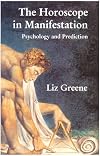
This book contains the transcripts of two related lectures given by Liz Greene in 1996. In the first lecture, "Complexes and Projection," Greene first introduces readers to the concept of psychological complexes and then explores how to see them in the birth chart. In the second lecture, "A Psychological Approach to Transits and Progressions," she focuses on predictive astrology, looking at how planetary movements show which complexes in a person's chart are likely to be the most active at show more any given time. I think whether or not you like this book will have a lot to do with whether you favor a psychological or traditional approach to astrology. The book description suggests that it offers a way to reconcile these two schools of thought. It does, but Greene is a psychological astrologer and her explanations will probably go over best with astrologers who are open to that approach. Simplifying greatly, she sees complexes as having so much energy that they can manifest in real-world ways (illnesses, conflicts with other people, etc.), an explanation that traditional astrologers may find insufficient.
I both enjoyed reading this book and found it helpful on a practical level. The material in the first lecture about complexes was interesting enough, but I really appreciated Greene's thoughts on predictive astrology. I thought her discussion of how transits and progressions can be interpreted in three ways—teleological, emotional, and material—was useful, especially when she advises readers not to ignore the feelings of their clients who are suffering, miserable, and not ready to hear What A Wonderful Learning Experience this horrible time in their lives is supposed to be. I was also intrigued by how she sees transits, secondary progressions, and solar arc directions as all being valid, but operating at different levels. I'd recommend this book to any astrologer interested in both the psychological and event-oriented ways of seeing predictive astrology, except that at the time of this writing, it's quite the challenge to find this book (published in the UK) in the United States at a reasonable price. show less
I both enjoyed reading this book and found it helpful on a practical level. The material in the first lecture about complexes was interesting enough, but I really appreciated Greene's thoughts on predictive astrology. I thought her discussion of how transits and progressions can be interpreted in three ways—teleological, emotional, and material—was useful, especially when she advises readers not to ignore the feelings of their clients who are suffering, miserable, and not ready to hear What A Wonderful Learning Experience this horrible time in their lives is supposed to be. I was also intrigued by how she sees transits, secondary progressions, and solar arc directions as all being valid, but operating at different levels. I'd recommend this book to any astrologer interested in both the psychological and event-oriented ways of seeing predictive astrology, except that at the time of this writing, it's quite the challenge to find this book (published in the UK) in the United States at a reasonable price. show less
You May Also Like


Associated Authors
Statistics
- Works
- 69
- Also by
- 3
- Members
- 2,817
- Popularity
- #9,108
- Rating
- 3.7
- Reviews
- 25
- ISBNs
- 224
- Languages
- 14
- Favorited
- 5
