
Philip Temple
Author of Beak of the Moon
About the Author
Image credit: Photo by Craig Baxter
Series
Works by Philip Temple
The world at their feet; the story of New Zealand mountaineers in the great ranges of the world (1969) 19 copies
Associated Works
From a room of their own: A celebration of the Katherine Mansfield Fellowship (1993) — Contributor — 5 copies
Tagged
Common Knowledge
- Birthdate
- 1939
- Gender
- male
- Occupations
- novelist
children's book author
mountaineer
explorer
biographer - Awards and honors
- Robert Burns Fellowship (1980)
Prime Minister's Award for Literary Achievement ( [2005])
Katherine Mansfield Memorial Fellowship (1979)
Creative New Zealand Berlin Writer's Residency (2003)
National Library Research Fellowship (1986) - Relationships
- Brown, Diane (wife)
- Nationality
- UK (birth)
New Zealand (residence) - Birthplace
- Yorkshire, England, UK
- Places of residence
- Dunedin, New Zealand
- Associated Place (for map)
- Yorkshire, England, UK
Members
Reviews
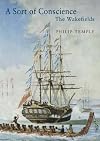
The neglect of New Zealand history is a sad thing. With this work by Philip Temple, the Wakefield family, that every school child heard about, but never grasped the importance of, is revealed free of the myths that have carelessly been created about it. Needless to say, it's taken 150 years to produce a history/biography that is adequate in its treatment, not only of Edward Gibbon Wakefield, but the unfortunate siblings too.
The research is great, relying much on letters and documents. The show more writing is up with best in modern historical biography, engaging and not laboured.
It's valuable to read about the foundations of the city one lives in and where this high risk, high energy, organizer and promoter of colonial settlement theory is buried. show less
The research is great, relying much on letters and documents. The show more writing is up with best in modern historical biography, engaging and not laboured.
It's valuable to read about the foundations of the city one lives in and where this high risk, high energy, organizer and promoter of colonial settlement theory is buried. show less

What more suitable place to read this novel than while on holiday in Fiordland? Whilst reclining in the beanbags in Milford Lodge, watching the rain stream down outside - the dark shapes of the beech trees rising in a perfectly penetrable wall, and above them sheer and rocky cliffs, streaming with waterfalls. This was my world as I read this, and this also is the kea's world.
For those not informed on New Zealand wildlife, the kea is the only alpine parrot in the world, and one of the most show more intelligent non-primate species that there is. This novel is rather like the Watership Down of my country (except not quite as famous). My copy originates from its first publication - in 1982, but Temple has since re-released it with a few of the facts updated as people learn more about the behaviour of these extraordinary birds. Although no dates are given, I believe this story is set in the 1870-80s or so, when farmers started colonising the valleys around Milford, burning the native tussock and replacing it with their more sheep-edible grasses. It includes the keas first experiences with human-kind, and also includes numerous extinct birds - and no mammals.
Like most realistic animal-protagonist books it is exceedingly sexist. All the main characters are male, and the role of the females seem to be to coo and beg at the more dominant males. This is excuseable - it is true kea behaviour, after all. It follows similar structures to most realistic animal books - the main character is exiled for getting a little too bolshy and trying to take on the dominant cock, with his friends he travels across the mountains to find a new home for himself, but alas, the new home has no kea and they're all males, therefore no matter how suitable (kea-kind) it is, they cannot remain there. They search, in vain, having amusing encounters with kakapo (which were plentiful at the time) and kaka. It is not a new storyline at all, but the richness of the writing, the personality of the characters, the complexity of their world all weaves together to create a captivating and spell-binding story. Added in, of course, is the fact that they are birds and the whole flying adds a new dimension (literally) to the plot. I am working on my own, rather more contemporary, kea novel and this has been something of an inspiration. My female character is going to much stronger, however! show less
For those not informed on New Zealand wildlife, the kea is the only alpine parrot in the world, and one of the most show more intelligent non-primate species that there is. This novel is rather like the Watership Down of my country (except not quite as famous). My copy originates from its first publication - in 1982, but Temple has since re-released it with a few of the facts updated as people learn more about the behaviour of these extraordinary birds. Although no dates are given, I believe this story is set in the 1870-80s or so, when farmers started colonising the valleys around Milford, burning the native tussock and replacing it with their more sheep-edible grasses. It includes the keas first experiences with human-kind, and also includes numerous extinct birds - and no mammals.
Like most realistic animal-protagonist books it is exceedingly sexist. All the main characters are male, and the role of the females seem to be to coo and beg at the more dominant males. This is excuseable - it is true kea behaviour, after all. It follows similar structures to most realistic animal books - the main character is exiled for getting a little too bolshy and trying to take on the dominant cock, with his friends he travels across the mountains to find a new home for himself, but alas, the new home has no kea and they're all males, therefore no matter how suitable (kea-kind) it is, they cannot remain there. They search, in vain, having amusing encounters with kakapo (which were plentiful at the time) and kaka. It is not a new storyline at all, but the richness of the writing, the personality of the characters, the complexity of their world all weaves together to create a captivating and spell-binding story. Added in, of course, is the fact that they are birds and the whole flying adds a new dimension (literally) to the plot. I am working on my own, rather more contemporary, kea novel and this has been something of an inspiration. My female character is going to much stronger, however! show less
An absolutely wonderful and unique Watership Dawn style book for New Zealand. Keas are New Zealand's alpine parrots, intensely curious social trouble makers. They are one of the world's most intelligent parrots (though they can't mimic human speech), the only parrot living where it snows and they will eat meat when available (including killing sheep). Beak of the Moon has a similar plot to Watership Down, several young males are forced out of an authoritarian group and undertaken a dangerous show more journey looking for a new place to live, and has a similar mythic quality, while being solidly grounded in real kea behaviour. show less
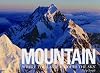
The most striking thing about his book is the wonderful photographs of gorgeous mountains, primarily provided by hedgehoghouse.com, a New Zealand stock photography agency. Author PhilipTemple, a long-time mountain climber and historian, gives a brief background of the mountains of New Zealand, using both the native histories and the New World histories of how the mountains were discovered and named. There is interesting text about the spiritual meaning of the mountains and volcanoes to show more native New Zealanders, as well as the lack of respect New Worlders had regarding warnings about climbing the mountains in the 19th and 20th centuries. Each mountain gets similar coverage, including histories of the first climbers to ascend the summits using different routes. The title and cover give no indication that the book is exclusive in its coverage to New Zealand, and flipping through the pictures on first glance I thought it was perhaps about a mountain range in Alaska with which I was unfamiliar. Instead, it is about a number of breathtaking mountain ranges on the two islands of New Zealand. This is a wonderful book for both the background of the region and a visual feast for the eyes. It's also a wonderful resource for NZ tourism-- I certainly want to go there now! show less
Lists
Awards


You May Also Like


Associated Authors
Statistics
- Works
- 64
- Also by
- 1
- Members
- 392
- Popularity
- #61,821
- Rating
- 3.9
- Reviews
- 7
- ISBNs
- 96
- Languages
- 2
- Favorited
- 1