
Graham Simons
Author of Mosquito: The Original Multi-Role Combat Aircraft
About the Author
Graham M. Simons is a highly respected aviation historian and author. He has penned a host of Pen and Sword titles focussing on aviation themes, including; Mosquito: The Original Multi-Rote Combat Aircraft (2011); B-29: Superfortress: Giant Bomber of World War 2 and Korea (2012), Narthrop Flying show more Wings (2013) and Valkyrie: The North American XB-70 (2014). He lives near Peterborough. show less
Works by Graham Simons
Valkyrie: The North American XB-70: The USA’s Ill-fated Supersonic Heavy Bomber (2011) 32 copies, 1 review
Tagged
Common Knowledge
There is no Common Knowledge data for this author yet. You can help.
Members
Reviews

The flavor of this book is like an extended article from the days of the magazine "Air International," and I say that as a compliment. On the other hand, while the author defends this aircraft as being more viable than it might have seemed, including the obligatory jab at Duncan Sandys (the politician British aviation enthusiasts love to hate), even Simons has to admit that this was not the machine that the British aviation industry needed to be building, when it was in their power to show more develop a competitor to the Lockheed Constellation and the Douglas DC-6. Prestige will only take you so far. show less
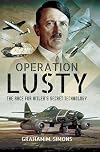
The subtitle of the book, "The Race for Hitler's Secret Technology", isn't quite accurate. The book, which feels rather long, covers the efforts of the US, French and British to recover German aircraft and rocket technology during and at the end of WW2. There were some aspects of a race, but mostly it was a matter of exploring German airfields and factories to find whole items and parts of aircraft and rockets. Also most of the book isn't about secret technology, indeed the first part of the show more book discusses the efforts of the British and American forces in Britain to recover downed aircraft and put them back in flyable condition to use as testing aircraft and also for propaganda displays. So examples of many of the aircraft found on German soil after the war had already been examined in Britain. The book isn't bad, but it isn't really something you'd read for pleasure, unless you're me! show less
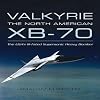
Since the fall of the Soviet Union, cost efficiency has returned to center-stage in American military procurement. Huge aircraft projects, strongly backed by their respective services, have either been cancelled-the A-12-or significantly curtailed-the B-2, F-22 and F-35. This drive for cost efficiency’s most prominent early proponent was Robert McNamara and the so-called “Whiz Kids” of the Kennedy-Johnson administrations. Bringing with them the new techniques of operations management show more developed in the Second World War and the post-war American industrial boom, these men attempted to rein in what they saw as the unnecessary duplication of functions by costly white elephants. Graham Simons’, Valkyrie, the North American XB-70, tells the story of their most famous target.
The XB-70 was the ultimate development of post-war American bomber strategy, with planes flying ever farther, ever higher, ever faster: see the B-29 to the B-36 to the B-47 to the B-52 to the B-58. That such a ground breaking aircraft went from the drafting board to Mach 3 flight in only seven years is a testament to the age that was perhaps the peak of American technological prowess Ironically, the Valkyrie was the first of the planned replacements for the B-52, which is still in service and is scheduled to serve into the 2040s, by which time the youngest engineer that worked on the XB-70 will be a centenarian.
Simons gives a broad overview of SAC’s doctrine in the 1950s and the quest for faster, higher flight. The ultimate goal was something that took the concept behind the Mach 2.1 B-58 and pushed it to the limit of what was considered possible. This resulted in the XB-70, a bomber that had intercontinental range flying at the edge of the stratosphere at Mach 3+. Whole new technologies were pioneered, like the use of titanium and laminated honeycomb structures for the fuselage. I was surprised to read of the cooperation between North American and Lockheed engineers in this. Lockheed’s Blackbird was a closely guarded secret, while the XB-70 was a very public project. While both companies were “on the same side” technical cooperation on aircraft that had something of an overlapping mission by rival firms seems unusual. One can imagine the machinations that must normally go on in this cutthroat world-as with the YB-36/YB-49 selection process a decade before the XB-70 was rolled out. Despite this cooperation, the amount of innovation required meant a lot of difficulties-expensive ones-even by the standards of SAC in the Cold War. This was a problem.
With the shoot down of Francis Gary Powers’ U-2 and the rapid improvement in ICBM performance, McNamara and President Kennedy deemed the project “unnecessary and economically unjustifiable” too much for the Air Force to afford. A fight in the press occurred between General Curtis LeMay and McNamara, which ended with McNamara winning. Attempts by the Air Force to re-brand and re-mission the XB-70 (a tactic later successful with the B-1) failed as the proposed XRB-70 reconnaissance bomber mission duplicated that of the new SR-71 Blackbird. Even more exotic proposals for the use of the Valkyrie, such as a test bed for nuclear engines, a launcher for the X-20 Dyna-soar space plane or as an airborne observatory were shelved.
The final missions for the two XB-70s built were as test platforms for a proposed American commercial SST-another project abandoned in the stagflation of the 1970s. North American pushed hard for its’ design proposal, a scaled up version of the XB-70, and with working platforms on a scale close to that of an actual commercial airliner, the United States would have seemed to have the lead in the design of a working SST. However, environmental concerns (stemming from tests conducted by the XB-70) and problems associated with rising fuel costs lead to the cancellation of both the North American and Boeing projects, leaving the field to the Anglo-French Concord and leaving the XB-70 without a role, and thus, to its retirement.
The XB-70’s operational career is fully covered by Simons, including a chapter on the tragic crash of one of the bombers after a mid-air collision involving an F-104 piloted by NASA’s chief test pilot during an ill-conceived photo-shoot. All the technical information an aviation buff could want is here-flight characteristics, performance etc. The book closes with the interesting post-flight life of the sole surviving craft, “Cecil the Sea-Sick Sea Serpent”, and the various restoration efforts it has undergone at the National Museum of the U.S. Air Force in Dayton, where it now resides. There are illustrations on almost every page which help a reader get acquainted with this exceptional aircraft. Valkyrie capably records a fascinating chapter in American aviation history and a path sadly not followed. show less
The XB-70 was the ultimate development of post-war American bomber strategy, with planes flying ever farther, ever higher, ever faster: see the B-29 to the B-36 to the B-47 to the B-52 to the B-58. That such a ground breaking aircraft went from the drafting board to Mach 3 flight in only seven years is a testament to the age that was perhaps the peak of American technological prowess Ironically, the Valkyrie was the first of the planned replacements for the B-52, which is still in service and is scheduled to serve into the 2040s, by which time the youngest engineer that worked on the XB-70 will be a centenarian.
Simons gives a broad overview of SAC’s doctrine in the 1950s and the quest for faster, higher flight. The ultimate goal was something that took the concept behind the Mach 2.1 B-58 and pushed it to the limit of what was considered possible. This resulted in the XB-70, a bomber that had intercontinental range flying at the edge of the stratosphere at Mach 3+. Whole new technologies were pioneered, like the use of titanium and laminated honeycomb structures for the fuselage. I was surprised to read of the cooperation between North American and Lockheed engineers in this. Lockheed’s Blackbird was a closely guarded secret, while the XB-70 was a very public project. While both companies were “on the same side” technical cooperation on aircraft that had something of an overlapping mission by rival firms seems unusual. One can imagine the machinations that must normally go on in this cutthroat world-as with the YB-36/YB-49 selection process a decade before the XB-70 was rolled out. Despite this cooperation, the amount of innovation required meant a lot of difficulties-expensive ones-even by the standards of SAC in the Cold War. This was a problem.
With the shoot down of Francis Gary Powers’ U-2 and the rapid improvement in ICBM performance, McNamara and President Kennedy deemed the project “unnecessary and economically unjustifiable” too much for the Air Force to afford. A fight in the press occurred between General Curtis LeMay and McNamara, which ended with McNamara winning. Attempts by the Air Force to re-brand and re-mission the XB-70 (a tactic later successful with the B-1) failed as the proposed XRB-70 reconnaissance bomber mission duplicated that of the new SR-71 Blackbird. Even more exotic proposals for the use of the Valkyrie, such as a test bed for nuclear engines, a launcher for the X-20 Dyna-soar space plane or as an airborne observatory were shelved.
The final missions for the two XB-70s built were as test platforms for a proposed American commercial SST-another project abandoned in the stagflation of the 1970s. North American pushed hard for its’ design proposal, a scaled up version of the XB-70, and with working platforms on a scale close to that of an actual commercial airliner, the United States would have seemed to have the lead in the design of a working SST. However, environmental concerns (stemming from tests conducted by the XB-70) and problems associated with rising fuel costs lead to the cancellation of both the North American and Boeing projects, leaving the field to the Anglo-French Concord and leaving the XB-70 without a role, and thus, to its retirement.
The XB-70’s operational career is fully covered by Simons, including a chapter on the tragic crash of one of the bombers after a mid-air collision involving an F-104 piloted by NASA’s chief test pilot during an ill-conceived photo-shoot. All the technical information an aviation buff could want is here-flight characteristics, performance etc. The book closes with the interesting post-flight life of the sole surviving craft, “Cecil the Sea-Sick Sea Serpent”, and the various restoration efforts it has undergone at the National Museum of the U.S. Air Force in Dayton, where it now resides. There are illustrations on almost every page which help a reader get acquainted with this exceptional aircraft. Valkyrie capably records a fascinating chapter in American aviation history and a path sadly not followed. show less
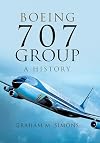
This is a very comprehensive, perhaps too comprehensive for many readers, look at the entire Boeing 707 and KC-135 family, including the many models and derivatives. Starting with early concepts, it delves deeply into the design and development of the aircraft, including the many conflicting requirements levied by the government and the airlines. There is a quite a lot of narrative concerning the military use and the various derivatives, as well as a detailed look at the civilian models and show more their history with the airlines. Aviation buffs will enjoy the many photographs as well. show less
You May Also Like


Associated Authors
Statistics
- Works
- 39
- Members
- 322
- Popularity
- #73,504
- Rating
- 3.7
- Reviews
- 12
- ISBNs
- 96