
Yudhijit Bhattacharjee
Author of The Spy Who Couldn't Spell: A Dyslexic Traitor, an Unbreakable Code, and the FBI's Hunt for America's Stolen Secrets
Works by Yudhijit Bhattacharjee
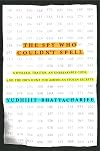
The Spy Who Couldn't Spell: A Dyslexic Traitor, an Unbreakable Code, and the FBI's Hunt for America's Stolen Secrets (2016) 147 copies, 7 reviews
Associated Works
Tagged
Common Knowledge
- Birthdate
- 1973
- Gender
- male
- Education
- Ohio State University (MA ∙ Journalism)
- Nationality
- India
USA - Places of residence
- Washington, D.C., USA
- Associated Place (for map)
- D.C., USA
Members
Reviews
The Spy Who Couldn't Spell: A Dyslexic Traitor, an Unbreakable Code, and the FBI's Hunt for America's Stolen Secrets by Yudhijit Bhattacharjee
In the late 90s, a disgruntled U.S. intelligence analyst named Brian Regan decided to solve his financial problems by stealing reams of top secret information and selling it to Libya for millions. He was caught before any information could fall into non-American hands, and sentenced to life in prison. Regan's story has long been a footnote in stories about his more effective successors, Snowden and Manning, simply by virtue of the far larger quantity of materials that he stole. Yudhijit show more Bhattacharjee thought him worthy of a story in his own right, and Regan's life and choices do have the makings of a good yarn.
The son of a large, poor Irish immigrant family, Regan was mocked as a kid for his social awkwardness and his dyslexia, and physically abused by an alcoholic father. The army was Regan's way out of the working-class Long Island neighbourhood where he grew. He enlisted, found that his dyslexia gave him an advantage in pattern recognition work, and met and married a woman whom he met while stationed in Europe. Yet true success and promotion eluded him. His colleagues didn't respect him; he was a binge drinker and serial adulterer; he racked up tens of thousands of dollars in credit card debt but refused to stop spending. And so he began to download information from the intranet of America's intelligence agencies, and came up with an incredibly complex cipher in which to encode information that he offered up first to Gadaffi's regime.
It's jaw-dropping how much information such a bumbler was able to make off with, and how close he came to success. It's also jaw-dropping to see just how poor the security is at the various U.S. national intelligence agencies, and the mistakes that they committed over and over again. Bhattacharjee tells his tale at a brisk pace with an eye for good detail, and The Spy Who Couldn't Spell is the kind of book you can easily down while travelling. Yet it could have been a better book if you didn't get the sense that Bhattacharjee felt he had to pull his punches when it came to criticising the FBI, whether because he didn't want to lose access to sources or out of political convictions. I couldn't quite work out if this passage, when the agents were trying to guess Regan's banking pass code:
was testimony to poor and reductive phrasing on Bhattacharjee's part, or if it was actually representative of the kind of "logic" regularly employed on such investigations. If the latter, then let me say wow, and also, as an Irishwoman, the fuck? Regan was born in Queens. This stuff isn't genetic.
Bhattacharjee also spends a lot of time on how Regan's admittedly awful upbringing primed him to commit this kind of act, but completely ignores any of the roles which gender expectations had to play—and if ever a man could be discussed under the rubric of "toxic masculinity", it's Brian Regan. show less
The son of a large, poor Irish immigrant family, Regan was mocked as a kid for his social awkwardness and his dyslexia, and physically abused by an alcoholic father. The army was Regan's way out of the working-class Long Island neighbourhood where he grew. He enlisted, found that his dyslexia gave him an advantage in pattern recognition work, and met and married a woman whom he met while stationed in Europe. Yet true success and promotion eluded him. His colleagues didn't respect him; he was a binge drinker and serial adulterer; he racked up tens of thousands of dollars in credit card debt but refused to stop spending. And so he began to download information from the intranet of America's intelligence agencies, and came up with an incredibly complex cipher in which to encode information that he offered up first to Gadaffi's regime.
It's jaw-dropping how much information such a bumbler was able to make off with, and how close he came to success. It's also jaw-dropping to see just how poor the security is at the various U.S. national intelligence agencies, and the mistakes that they committed over and over again. Bhattacharjee tells his tale at a brisk pace with an eye for good detail, and The Spy Who Couldn't Spell is the kind of book you can easily down while travelling. Yet it could have been a better book if you didn't get the sense that Bhattacharjee felt he had to pull his punches when it came to criticising the FBI, whether because he didn't want to lose access to sources or out of political convictions. I couldn't quite work out if this passage, when the agents were trying to guess Regan's banking pass code:
Given Regan's Irish background, Carr thought 3 was more likely [to be the numerical significance of the word 'stool']. The classic Irish milking stool—used for sitting down by a cow's udder to milk it—has three legs, not four.
was testimony to poor and reductive phrasing on Bhattacharjee's part, or if it was actually representative of the kind of "logic" regularly employed on such investigations. If the latter, then let me say wow, and also, as an Irishwoman, the fuck? Regan was born in Queens. This stuff isn't genetic.
Bhattacharjee also spends a lot of time on how Regan's admittedly awful upbringing primed him to commit this kind of act, but completely ignores any of the roles which gender expectations had to play—and if ever a man could be discussed under the rubric of "toxic masculinity", it's Brian Regan. show less
The Spy Who Couldn't Spell: A Dyslexic Traitor, an Unbreakable Code, and the FBI's Hunt for America's Stolen Secrets by Yudhijit Bhattacharjee
Most people probably remember the capture and revelations surrounding Robert Hanssen, a CIA officer who sold sensitive information to Russia. I had never heard, however, of Brian Regan, also an intelligence insider who tried to do something similar. Regan tried to offer a variety of sensitive documents to a number of enemy governments. He managed to steal the documents with disturbing ease. He didn't manage to sell them on, but it wasn't for want of trying. Regan's downfall came, in part, show more through dyslexia. His pattern of misspellings provided important clues to investigators. When Regan's messages were intercepted, CIA counter-intelligence agents had to figure out who the traitor was. Much of the book discusses the process of breaking the code and trapping the spy. In general it reads quickly and with excitement, as one might expect of an inside spy chase. There are fascinating bits of information- like polaroid photos taken by the CIA teams that break in and sweep offices and other locations. Anything moved is put exactly back in place, to the millimeter. It was amazing to me how cocky Regan became during his espionage. He really seemed to think he was above catching. According to Bhattacharjee's analysis, this cockiness, combined with a constant anger from having been belittled because of his learning disability, is what led Regan to his acts. This is a book well-worth reading for the interest and page-turning factor. show less
The Spy Who Couldn't Spell: A Dyslexic Traitor, an Unbreakable Code, and the FBI's Hunt for America's Stolen Secrets by Yudhijit Bhattacharjee
This book could be subtitled, "The Spy Who Couldn't Read Straight." A government employee concocts a scheme to sell top secret data to governments who are enemies of the United States. Due to his dyslexia, the Feds have a difficult time untangling the codes and ciphers used to hide the stolen documents,and media. The story is told in a blow by blow recitation of each maneuver of Mr. Regan. The description of the breaking of his codes is very detailed as is the recounting of the his trial. show more The author has performed exhaustive research to chronicle this historical event. My thanks to him and the Penguin First to Read program for a complimentary copy. show less
The Spy Who Couldn't Spell: A Dyslexic Traitor, an Unbreakable Code, and the FBI's Hunt for America's Stolen Secrets by Yudhijit Bhattacharjee
audiobook that tells the story of a disgruntled U.S. Air Force intelligence analyst who used his cipher skills to almost pull off an incredible intelligence theft and attempted sale of classified documents. The author discusses the spy’s background and details the tedious work of the FBI in tracking him down. It was an intelligence agency’s nightmare: having a mole in your own agency.
The FBI received a package containing several letters in a sophisticated cipher but when deciphered were show more marked by numerous misspellings. Those errors proved to be Brian Regan’s undoing. The FBI agent who doggedly pursued him was Steven Carr, and the methods used to track him are straight out of the best espionage/police procedural novels. Regan was a retired Air Force Master Sergeant whose dyslexia and ineptitude with social skills made him an almost perfect spy and he was viewed as the least likely person to be involved in such a scheme. One of eight children, he had been bullied and mistreated most of his childhood, considered stupid by most of his teachers because of his dyslexia. Steven Carr, his FBI antagonist, was a devout Catholic who considered his mission to track down Regan as a spiritual assignment.
Once they had identified their suspect, the FBI had to build a case, and here another of the ironies appeared. The agent who broke Regan’s ciphers had a disability himself, one that prevented him from doing arithmetic functions and math, a form of dyscalculia. He was really good at word problems but doing straight arithmetic and polynomial functions was very difficult. He was superb, however at pattern recognition and was discovered while taking a class from a postal inspector who told the clasExcellents to ignore some codes because they are insoluble. He took it as a challenge and deciphered the codes during class. First, though, to get into the FBI he had to get a college degree and it was only with the help of a very understanding math instructor (probably at a community college) that he managed to pass the math requirement.
Something I have emphasized over and over to my friends is to never, ever, ever, put anything into a digital document or email you don’t want the world to see. In spite of Regan’s having formatted his HD and deleted documents, they were, of course, all recoverable, including multiple versions of letters he had written. (The only way to truly protect yourself -- short of using a hammer to smash and fire to melt -- is to use a program that writes over your HD with multiple passes using gibberish.)
I love books about codes and ciphers so I liked the sections where Bhattacharjee discusses Regan’s system in some detail. Others may prefer the human aspects of the characters. For me it was a perfect mix and a very enjoyable book, difficult to put down. What was astonishing was how easy it was for Regan to steal highly classified material. Then again government has a tendency to over-classify material which perhaps leads people to be careless with the stuff. That he was discovered at all was a fluke, and the letters deciphered only because the letters happened to be delivered at the same time.
Riveting. show less
The FBI received a package containing several letters in a sophisticated cipher but when deciphered were show more marked by numerous misspellings. Those errors proved to be Brian Regan’s undoing. The FBI agent who doggedly pursued him was Steven Carr, and the methods used to track him are straight out of the best espionage/police procedural novels. Regan was a retired Air Force Master Sergeant whose dyslexia and ineptitude with social skills made him an almost perfect spy and he was viewed as the least likely person to be involved in such a scheme. One of eight children, he had been bullied and mistreated most of his childhood, considered stupid by most of his teachers because of his dyslexia. Steven Carr, his FBI antagonist, was a devout Catholic who considered his mission to track down Regan as a spiritual assignment.
Once they had identified their suspect, the FBI had to build a case, and here another of the ironies appeared. The agent who broke Regan’s ciphers had a disability himself, one that prevented him from doing arithmetic functions and math, a form of dyscalculia. He was really good at word problems but doing straight arithmetic and polynomial functions was very difficult. He was superb, however at pattern recognition and was discovered while taking a class from a postal inspector who told the clasExcellents to ignore some codes because they are insoluble. He took it as a challenge and deciphered the codes during class. First, though, to get into the FBI he had to get a college degree and it was only with the help of a very understanding math instructor (probably at a community college) that he managed to pass the math requirement.
Something I have emphasized over and over to my friends is to never, ever, ever, put anything into a digital document or email you don’t want the world to see. In spite of Regan’s having formatted his HD and deleted documents, they were, of course, all recoverable, including multiple versions of letters he had written. (The only way to truly protect yourself -- short of using a hammer to smash and fire to melt -- is to use a program that writes over your HD with multiple passes using gibberish.)
I love books about codes and ciphers so I liked the sections where Bhattacharjee discusses Regan’s system in some detail. Others may prefer the human aspects of the characters. For me it was a perfect mix and a very enjoyable book, difficult to put down. What was astonishing was how easy it was for Regan to steal highly classified material. Then again government has a tendency to over-classify material which perhaps leads people to be careless with the stuff. That he was discovered at all was a fluke, and the letters deciphered only because the letters happened to be delivered at the same time.
Riveting. show less
Lists
You May Also Like
Associated Authors
Statistics
- Works
- 3
- Also by
- 1
- Members
- 149
- Popularity
- #139,412
- Rating
- 4.0
- Reviews
- 7
- ISBNs
- 4