
Ellen Airgood
Author of South of Superior
Series
Works by Ellen Airgood
Tagged
Common Knowledge
- Birthdate
- 1967
- Gender
- female
- Places of residence
- Grand Marais, Michigan, USA
- Associated Place (for map)
- Michigan, USA
Members
Reviews

If "ANNIE" thought she had a hard-knock life, then she never met Laurel Hill, the thirty year-old protagonist of Ellen Airgood's latest novel, TIN CAMP ROAD. A single mother who cleans rooms at a motel to provide for herself and precociously talented ten year-old daughter, Skye, Hill suddenly finds herself homeless with no backup plan. Like Airgood's first novel, SOUTH OF SUPERIOR, the story is set on and near the shore of that Great Lake, in Michigan's Upper Peninsula. Airgood, who runs a show more diner in Grand Marais, knows the territory and, more importantly, knows the people of that hardscrabble area, and the wide divide between the haves and have-nots, i.e. the moneyed tourists and summer people and the native population who serve and clean up after them. With her daughter out of town with friends, Laurel spends several days living in her car with her dog, before moving into an abandoned trailer in the woods. Things get better briefly, then worse, when Social Services takes her daughter. But I don't want to spoil the story. Bottom line: TIN CAMP ROAD is the most moving and affecting portrayal of the plight of the working poor that I've read in a long time. And the same goes for the mother-daughter bond so central to the story. Strong, utterly human characters and an equally strong sense of place. I loved the book, and I suspect women readers will love it even more. Very, very highly recommended.
- Tim Bazzett, author of the memoir, BOOKLOVER show less
- Tim Bazzett, author of the memoir, BOOKLOVER show less
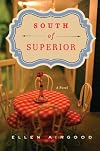
I LOVED THIS BOOK! Can't tell you how many times I said this out loud to my self, to my wife and anyone else around, while I was reading it. And I'm not really sure how to explain it, because it's such a quiet story; a sadly sweet, wise and wonderful look at all the ups and downs of regular folks, many of them barely scraping by, in a small town at the top of Michigan's Upper Peninsula (UP). And it's told in the most delightfully simple and ordinary language - none of that so-called show more "muscular prose" often employed by the products of countless MFA programs around the country. Because author Ellen Airgood, who has run a diner in Grand Marais, Michigan, for nearly twenty years, seems to have learned how to write by waitressing! Which, when you stop and think about it, would indeed offer endless opportunities to meet and observe people of all sorts and draw some interesting conclusions. And, since her fictional town of McAllaster is also a tourist town, just SOUTH OF SUPERIOR, i.e. on the stony shores of Lake Superior, the mix of humanity Airgood had to observe and draw from was even further leavened.
And Airgood is a masterful observer of people, and of all their strengths and weaknesses, faults and frailties. I think what makes this book so pleasant to read is the way the author, and her protagonist, 35 year-old Madeline Stone, have learned to focus on the positive things. Airgood seems to have absorbed this attitude very well and employs it to her advantage in the telling of her heroine's tale. Madeline, who was born in McAllaster but abandoned by her teenage unwed mother at a very young age, was raised in Chicago by a loving adoptive single mom, Emmy. After Emmy's death from cancer, Madeline feels unmoored and grief-stricken, and decides to leave her long-time waitressing job in the windy city and return to the town where she was born, hundreds of miles to the north. She breaks off her engagement and takes a pseudo-job in McAllaster as live-in helper with two aging sisters, Arbutus and Gladys. The latter had been the late-in-life companion to Madeline's now-deceased grandfather, Joe Stone. Madeline has many "issues" to work out in regard to her biological family, who had loomed large in the lives of McAllaster folks for generations. And that is what the story is all about. I'll let you read the product description for the non-spoiler story synopsis, okay? But here's mine: Sometimes motherhood goes beyond biology, is more than an accident of birth. Sometimes motherhood is a conscious decision that has nothing to do with biology. This first becomes clearly evident when Madeline begins to realize her love for a neglected wise-beyond-his-years four year-old boy, Greyson Hopkins. Grey is the son of Randi, a wild and undisciplined teenage unwed mother in McAllaster. And Madeline becomes Grey's caretaker following a sad if predictable chain of events. Sound familiar? Then you're starting to get why this book is so "together" - so GOOD.
"... it fell to Madeline to entertain and watch over him. It turned out she didn't mind this at all. Taking care of Greyson helped her keep her mind off herself. Plus she loved him."
And yes, there is an adult love interest for Madeline too, in the person of divorced and physically damaged Paul Garceau, a transplant from downstate who runs a pizzeria in McAllaster. But that's enough of the story. Here are some things I really loved about SOUTH OF SUPERIOR, smaller details that I connected with on a more personal level -
1) A nine o-clock curfew siren that blew every night in McAllaster, at which time the kids would run for home. I remember such a curfew from my own childhood more than fifty years ago, but this story takes place in the present. The curfew makes McAllaster seem even more caught in a time warp, but in a good and charming way.
2) The character of old Mary Feather, living alone in a makeshift shack in the woods, selling fish and maple syrup to the locals and tourists for a living, yet respected and loved by all the old-timers. She reminded me of "Apple Mary" an eccentric and mysterious character from my own childhood in the fifties, who also lived alone in a shack in the country, surrounded by a grove of old twisted apple trees. Seldom seen, she was a source of wonder to my brothers, friends and me every time we passed her place on the way to a nearby lake to go swimming.
3) The long abandoned and closed up Hotel Leppinen, which Madeline buys from Gladys and Arbutus and restores and reopens. Airgood bases this on an actual old hotel in Grand Marais, but I thought of a similar one I once walked through with my mother several years ago, then long closed, but retaining all of its ancient fixtures and furnishings. It was the Birch Lodge Resort and Sanitarium, dating back to 1911, on Carp Lake in the UP. After a bit of online research, I've learned the Birch Lodge has been bought and is being restored. Hooray! And shades of Madeline Stone and the Hotel Leppinen.
4) An expression Mary Feather uses about Greyson's hapless mother, Randi: "Some folks are just born to suck hind teat for life." My own grandfather used to use that expression, "sucking hind teat" to describe the loser as he added up our scores while playing Michigan 500 rummy with my brothers and me. It always made us boys snicker and my mom frown disapprovingly.
5) This spot-on description of the scrubland of much of the interior of Michigan's UP (and some of the Lower Peninsula too) -
"It got worse as they headed inland. They passed the scattered cabins and camps that were too lonesome and poor to be quaint. There were old trailers surrounded by broken-down cars and trucks, discarded toilets and cast-off woodstoves, black plastic garbage bags stuffed with God knew what. It all sat listless in the sun, as eternal as the big lake and the pointed firs. Dogs lay panting on short chains in bare yards, and everywhere was the barren, thin-lipped look of poverty."
This passage brought to mind the pages-long description from the opening of WOLF: A FALSE MEMOIR, the first novel of another Michigan writer, Jim Harrison, which I read in college forty years ago.
6) Although Madeline has a cat, Marley, which she brings with her from Chicago, and of which the two old sisters become very fond too, Airgood also makes a gracious and wise nod to dog lovers in this line, as old Mary Feather strokes her dog's head - "... the truth was that a dog was a good thing to have. A dog steadied you. Just the smell of a dog, the feel of its fur, the way a dog lived, up front and simple." Enough said. I have two dogs. Love 'em to death.
But I blather on and on, I know. I'd better stop. Suffice it to say that this "waitress" Ellen Airgood can write like nobody's business, and SOUTH OF SUPERIOR has taken its place on my list of favorite books. Five stars, hell! I'd give it TEN stars if I could. I will recommend it highly and without reservation to all of my booklover friends. show less
And Airgood is a masterful observer of people, and of all their strengths and weaknesses, faults and frailties. I think what makes this book so pleasant to read is the way the author, and her protagonist, 35 year-old Madeline Stone, have learned to focus on the positive things. Airgood seems to have absorbed this attitude very well and employs it to her advantage in the telling of her heroine's tale. Madeline, who was born in McAllaster but abandoned by her teenage unwed mother at a very young age, was raised in Chicago by a loving adoptive single mom, Emmy. After Emmy's death from cancer, Madeline feels unmoored and grief-stricken, and decides to leave her long-time waitressing job in the windy city and return to the town where she was born, hundreds of miles to the north. She breaks off her engagement and takes a pseudo-job in McAllaster as live-in helper with two aging sisters, Arbutus and Gladys. The latter had been the late-in-life companion to Madeline's now-deceased grandfather, Joe Stone. Madeline has many "issues" to work out in regard to her biological family, who had loomed large in the lives of McAllaster folks for generations. And that is what the story is all about. I'll let you read the product description for the non-spoiler story synopsis, okay? But here's mine: Sometimes motherhood goes beyond biology, is more than an accident of birth. Sometimes motherhood is a conscious decision that has nothing to do with biology. This first becomes clearly evident when Madeline begins to realize her love for a neglected wise-beyond-his-years four year-old boy, Greyson Hopkins. Grey is the son of Randi, a wild and undisciplined teenage unwed mother in McAllaster. And Madeline becomes Grey's caretaker following a sad if predictable chain of events. Sound familiar? Then you're starting to get why this book is so "together" - so GOOD.
"... it fell to Madeline to entertain and watch over him. It turned out she didn't mind this at all. Taking care of Greyson helped her keep her mind off herself. Plus she loved him."
And yes, there is an adult love interest for Madeline too, in the person of divorced and physically damaged Paul Garceau, a transplant from downstate who runs a pizzeria in McAllaster. But that's enough of the story. Here are some things I really loved about SOUTH OF SUPERIOR, smaller details that I connected with on a more personal level -
1) A nine o-clock curfew siren that blew every night in McAllaster, at which time the kids would run for home. I remember such a curfew from my own childhood more than fifty years ago, but this story takes place in the present. The curfew makes McAllaster seem even more caught in a time warp, but in a good and charming way.
2) The character of old Mary Feather, living alone in a makeshift shack in the woods, selling fish and maple syrup to the locals and tourists for a living, yet respected and loved by all the old-timers. She reminded me of "Apple Mary" an eccentric and mysterious character from my own childhood in the fifties, who also lived alone in a shack in the country, surrounded by a grove of old twisted apple trees. Seldom seen, she was a source of wonder to my brothers, friends and me every time we passed her place on the way to a nearby lake to go swimming.
3) The long abandoned and closed up Hotel Leppinen, which Madeline buys from Gladys and Arbutus and restores and reopens. Airgood bases this on an actual old hotel in Grand Marais, but I thought of a similar one I once walked through with my mother several years ago, then long closed, but retaining all of its ancient fixtures and furnishings. It was the Birch Lodge Resort and Sanitarium, dating back to 1911, on Carp Lake in the UP. After a bit of online research, I've learned the Birch Lodge has been bought and is being restored. Hooray! And shades of Madeline Stone and the Hotel Leppinen.
4) An expression Mary Feather uses about Greyson's hapless mother, Randi: "Some folks are just born to suck hind teat for life." My own grandfather used to use that expression, "sucking hind teat" to describe the loser as he added up our scores while playing Michigan 500 rummy with my brothers and me. It always made us boys snicker and my mom frown disapprovingly.
5) This spot-on description of the scrubland of much of the interior of Michigan's UP (and some of the Lower Peninsula too) -
"It got worse as they headed inland. They passed the scattered cabins and camps that were too lonesome and poor to be quaint. There were old trailers surrounded by broken-down cars and trucks, discarded toilets and cast-off woodstoves, black plastic garbage bags stuffed with God knew what. It all sat listless in the sun, as eternal as the big lake and the pointed firs. Dogs lay panting on short chains in bare yards, and everywhere was the barren, thin-lipped look of poverty."
This passage brought to mind the pages-long description from the opening of WOLF: A FALSE MEMOIR, the first novel of another Michigan writer, Jim Harrison, which I read in college forty years ago.
6) Although Madeline has a cat, Marley, which she brings with her from Chicago, and of which the two old sisters become very fond too, Airgood also makes a gracious and wise nod to dog lovers in this line, as old Mary Feather strokes her dog's head - "... the truth was that a dog was a good thing to have. A dog steadied you. Just the smell of a dog, the feel of its fur, the way a dog lived, up front and simple." Enough said. I have two dogs. Love 'em to death.
But I blather on and on, I know. I'd better stop. Suffice it to say that this "waitress" Ellen Airgood can write like nobody's business, and SOUTH OF SUPERIOR has taken its place on my list of favorite books. Five stars, hell! I'd give it TEN stars if I could. I will recommend it highly and without reservation to all of my booklover friends. show less
Tin Camp Road by Ellen Airgood is a very highly recommended literary domestic drama. This excellent, engaging, and genuine novel will hold your attention and heart from start to finish.
Laurel Hill and her intelligent, exuberant ten-year old daughter Skye have always been a team and managed to have a rich life even while living in poverty. The Hills have lived in the small town of Gallion on Lake Superior for four generations, so Laurel is determined to raise her daughter there while working show more several odd jobs. Her wandering mother lost the family home so Laurel and Skye are now living in a dilapidated rental house where the water and heat are frequently off and not fixed by their landlord. After losing their babysitter, Laurel now needs to leave Skye alone while she works. When their landlord tells them they have to be out in December because he wants to fix the house up as a short term rental for tourists, Laurel tries to find another option but can't. She ends up moving them out to the woods into an old trailer in the woods and Skye has to switch to a new school district.
Laurel fiercely loves Skye. She keeps an optimistic attitude and approach to parenting her daughter even while she realizes all the things she can't do. Her life is devoted to taking care of her daughter and she is determined to do it all herself. While I understand her tenacity and reticence, it is heartbreaking when Laurel doesn't ask for help from the people around her - people who care and would help. Heartbreaking events that follow their move out to the trailer result in some profound character growth and development. Laurel faces some facts, makes some hard choices, and learns a few important lessons along the way. Both Laurel and Skye are wonderful characters, as is the whole cast of supporting characters, the town of Gallion, and the area itself.
Tin Camp Road is a beautifully written and a realistic, genuine novel that will resonate with readers who appreciate literary fiction. Once I started reading this novel I was immersed in the plot and lost all track of time. The plot moves forward at an even pace until a shocking event that changes Laurel's outlook at life and makes her reexamine everything she believed was the best course of action. This is a realistic novel and the people, struggles, and weather are all described and depicted exactly as would be expected. The contrast between wealthy residents and their cluelessness of the poverty Laurel is experiencing is authentic. Laurel's determination to work any job and not feel sorry for herself is truly an admirable trait, which makes her growth in understanding that asking for help when you truly need it is not giving up an even stronger event. This would be an excellent choice for a book club.
Disclosure: My review copy was courtesy of Penguin Random House.
http://www.shetreadssoftly.com/2021/08/tin-camp-road.html
https://www.goodreads.com/review/show/4186006698 show less
Laurel Hill and her intelligent, exuberant ten-year old daughter Skye have always been a team and managed to have a rich life even while living in poverty. The Hills have lived in the small town of Gallion on Lake Superior for four generations, so Laurel is determined to raise her daughter there while working show more several odd jobs. Her wandering mother lost the family home so Laurel and Skye are now living in a dilapidated rental house where the water and heat are frequently off and not fixed by their landlord. After losing their babysitter, Laurel now needs to leave Skye alone while she works. When their landlord tells them they have to be out in December because he wants to fix the house up as a short term rental for tourists, Laurel tries to find another option but can't. She ends up moving them out to the woods into an old trailer in the woods and Skye has to switch to a new school district.
Laurel fiercely loves Skye. She keeps an optimistic attitude and approach to parenting her daughter even while she realizes all the things she can't do. Her life is devoted to taking care of her daughter and she is determined to do it all herself. While I understand her tenacity and reticence, it is heartbreaking when Laurel doesn't ask for help from the people around her - people who care and would help. Heartbreaking events that follow their move out to the trailer result in some profound character growth and development. Laurel faces some facts, makes some hard choices, and learns a few important lessons along the way. Both Laurel and Skye are wonderful characters, as is the whole cast of supporting characters, the town of Gallion, and the area itself.
Tin Camp Road is a beautifully written and a realistic, genuine novel that will resonate with readers who appreciate literary fiction. Once I started reading this novel I was immersed in the plot and lost all track of time. The plot moves forward at an even pace until a shocking event that changes Laurel's outlook at life and makes her reexamine everything she believed was the best course of action. This is a realistic novel and the people, struggles, and weather are all described and depicted exactly as would be expected. The contrast between wealthy residents and their cluelessness of the poverty Laurel is experiencing is authentic. Laurel's determination to work any job and not feel sorry for herself is truly an admirable trait, which makes her growth in understanding that asking for help when you truly need it is not giving up an even stronger event. This would be an excellent choice for a book club.
Disclosure: My review copy was courtesy of Penguin Random House.
http://www.shetreadssoftly.com/2021/08/tin-camp-road.html
https://www.goodreads.com/review/show/4186006698 show less
Madeline Stone travels to a small town on Lake Superior to care for an elderly family connection. Madeline is in search of her roots and the truth about the family that abandoned her as a small child, and in the process, finds her purpose, and of course true love. That makes it sound trite and formulaic, but this debut novel managed to hold my interest throughout. The characters were well developed and believable, the small town felt real, remote and timeless, and the stark beauty of the far show more northern town rang true. I was sorry to leave Madeline and McAllaster. show less
 This review was written for LibraryThing Early Reviewers.
Lists
Awards


You May Also Like


Statistics
- Works
- 4
- Members
- 695
- Popularity
- #36,411
- Rating
- 3.7
- Reviews
- 63
- ISBNs
- 18
