
Laurence Moroney
Author of The Fourth World (The Legend of the Locust)
About the Author
Series
Works by Laurence Moroney
AI and Machine Learning for Coders: A Programmer's Guide to Artificial Intelligence (2020) 24 copies, 2 reviews
Beginning Web Development, Silverlight, and ASP.NET AJAX: From Novice to Professional (2008) 19 copies
Tagged
Common Knowledge
There is no Common Knowledge data for this author yet. You can help.
Members
Reviews
AI and Machine Learning for Coders: A Programmer's Guide to Artificial Intelligence by Laurence Moroney
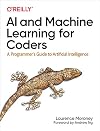
I’m a tad suspicious about listening to books that are too deep in the weeds with code. If they’re about programming concepts, audiobooks can be suitable, but if they involve code like this one, I like to have a physical picture of the lines of code. However, I was pleasantly surprised that this book conveyed many ideas despite communicating code aurally, too. Artificial intelligence (AI) and machine learning (ML) are huge topics today. I read this book just to supplement my broader show more knowledge, but while reading, I found a few applications that relate directly to my work. I’m going to try out TensorFlow, the software demoed here, in my work this week. I can see where it might be a lot more effective for my users than calling remote, server-based services from OpenAI.
This book features the Python-based TensorFlow as the main framework. It shows how to use it to build your own large-language model (LLM). When I started this book, I didn’t realize that it’d also demonstrate how to use TensorFlow in web situations, which is my main domain. TensorFlowJS can use an LLM built in Python to perform features in a website. This book also describes how an API can house AI/ML models from TensorFlow. Mobile devices and embedded systems like Raspberry Pi receive their own chapter, too, due to their limited processing capabilities.
Honestly, I did not have super-high expectations when I read this book. I just wanted to fill in my AI knowledge from a programmer’s perspective. I did not expect to apply the knowledge directly. Instead, I found my mind engaged with new ways to think about AI – even from a non-programmer’s perspective. I’m now able to better explain how to maximize AI use to my non-IT, scientific team. And I’m really chomping at the bit to see whether TensorFlowJS can meet the needs of my latest project. It’s a total joy when a book surprises with its intellectual depth and applicability. This book did both in spades, and I’m glad I listened to it! show less
This book features the Python-based TensorFlow as the main framework. It shows how to use it to build your own large-language model (LLM). When I started this book, I didn’t realize that it’d also demonstrate how to use TensorFlow in web situations, which is my main domain. TensorFlowJS can use an LLM built in Python to perform features in a website. This book also describes how an API can house AI/ML models from TensorFlow. Mobile devices and embedded systems like Raspberry Pi receive their own chapter, too, due to their limited processing capabilities.
Honestly, I did not have super-high expectations when I read this book. I just wanted to fill in my AI knowledge from a programmer’s perspective. I did not expect to apply the knowledge directly. Instead, I found my mind engaged with new ways to think about AI – even from a non-programmer’s perspective. I’m now able to better explain how to maximize AI use to my non-IT, scientific team. And I’m really chomping at the bit to see whether TensorFlowJS can meet the needs of my latest project. It’s a total joy when a book surprises with its intellectual depth and applicability. This book did both in spades, and I’m glad I listened to it! show less
AI and Machine Learning for Coders: A Programmer's Guide to Artificial Intelligence by Laurence Moroney
The book guides the reader through a whole bunch of different Python AI projects using TensorFlow's Keras API. The first part is devoted to training and writing models, while the second part talks about deployment and ethics. It doesn't explain the math behind machine learning at all.
I didn't read past Chapter 7, but the sentiment analysis model I built was really fun. I eventually deployed it using TensorFlow.js onto my website. I'll definitely read some other books about AI and machine show more learning, involving more math than this one. show less
I didn't read past Chapter 7, but the sentiment analysis model I built was really fun. I eventually deployed it using TensorFlow.js onto my website. I'll definitely read some other books about AI and machine show more learning, involving more math than this one. show less
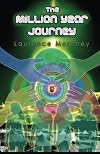
A bit better than the previous book.
Too much dialog, I kept finding myself going back a few pages going "who was fintan talking to again". Kinda some cool concepts/story.
Kinda Waiting for the next book
Too much dialog, I kept finding myself going back a few pages going "who was fintan talking to again". Kinda some cool concepts/story.
Kinda Waiting for the next book
You May Also Like


Associated Authors
Statistics
- Works
- 23
- Members
- 222
- Popularity
- #100,928
- Rating
- 3.3
- Reviews
- 3
- ISBNs
- 49
- Languages
- 2