
David Thomson (3) (1914–1988)
Author of The People of the Sea: A Journey in Search of the Seal Legend
For other authors named David Thomson, see the disambiguation page.
About the Author
David Thomson was born in India of Scottish parents in 1914. He was raised in England and in the fishing town of Nairn, in northwest Scotland. After leaving Oxford he was for many years the tutor to an Anglo-Irish family in County Roscommon, In 1943 he joined the BBC, where he had a long career as show more a writer and producer of radio documentaries. show less
Series
Works by David Thomson
The Irish Journals of Elizabeth Smith 1840 - 1850 — Editor — 1 copy
Tagged
Common Knowledge
- Legal name
- Thomson, David Robert Alexander
- Birthdate
- 1914-02-17
- Date of death
- 1988-02
- Gender
- male
- Education
- University of Oxford (Lincoln College)
University College School, London, England, UK
The King Alfred School - Occupations
- radio documentary writer
radio documentary producer - Organizations
- BBC
- Nationality
- UK
- Birthplace
- Quetta, India [now Pakistan]
- Places of residence
- Nairn, Scotland, UK
Derbyshire, England, UK
London, England, UK - Associated Place (for map)
- UK
Members
Reviews
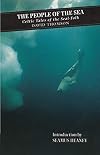
I bought this book some time ago, but it seemed destined to remain on my "to be read" shelf. Earlier this year, while on holiday in Scotland with a small tour group, I noticed one of my fellow passengers was reading this book and when I enquired about it, she was unable to tell me much, which of course piqued my interest. This was just one of a series of co-incidences in which the legend of the selkie were brought to my attention: just before, during and after the tour of Scotland.
As well as show more watching a few selkie-related movies when I returned from my trip, I resolved to read the book; however, being a member of a book club, I found myself reading other books, all the while "The People of the Sea: Celtic Legends And Myths", though taken down from the shelf, remained in my satchel (unread) just waiting to be started. So last Friday I picked up this book and I only put it down three times: once to drive home, the next because I wanted to savour the last tale and then, finally, when I finished it on Saturday night. The book was so enchanting I didn't want it to end.
I knew "The People of the Sea: Celtic Legends And Myths" would be different when I read Seamus Heaney's introduction and I was not to be disappointed.
"The People of the Sea: Celtic Legends And Myths" is somewhat of a memoir as the author, David Thomson, travels the western islands and coasts of Scotland and Ireland, in search of those who can tell the tales of the selchie (selkie) or sea-folk. First, Mr Thomson introduces the storyteller, he then sets the scene and atmosphere in which the story is being told and, finally, he recalls the conversation that illustrates the tale, bringing it fully to the light. There There is not always a straight line from beginning to end with these stories, as someone will interject with their own version of events, and then another, but the main speaker provides a continuous thread weaving all the information together. I must admit that I felt myself sitting there in the closeness of that store/pub in County Mayo along with Michael the Ferry and his passengers as they gave up their hidden stories; just as I felt right there, with the author, as he (we) paid keen attention to every storyteller in the book.
As Mr Thomson travels through the lands from which these stories emanate, he clearly illustrates the loss of the (Seanchaí) storytellers along with their myths, tales, lore and legends as modernisation takes hold*, so that I was made to keenly feel the loss of the culture where once people lived between reality and the otherworld. Like all things celtic (what a loaded term), the tone is slightly melancholic, but the stories are so full of wonder I was loathe to read the last tale, for I knew I would be sad indeed to reach the end with no more tales to be told and my journey of wonder into the past over.
I must admit that despite the way some of the stories are delivered, oft times in conversational form, they do lend themselves to be performed at storytelling nights, where both adults and children can appreciate and enjoy them.
I cannot recommend this book enough: it is simply warming even if some of the stories are meant as warnings. I think I shall always treasure "The People of the Sea: Celtic Legends And Myths" and re-read regularly, more particularly when it's cold, wet and the wind is lashing at the windows. If you have any interest in folk tales, fairy tales, the legend of the selkie, or the transformative powers of magic, you will probably enjoy this book.
Read it!
* In the time the author is writing and recording, radio as much as television is taking hold of the minds of the young, causing the decline. show less
As well as show more watching a few selkie-related movies when I returned from my trip, I resolved to read the book; however, being a member of a book club, I found myself reading other books, all the while "The People of the Sea: Celtic Legends And Myths", though taken down from the shelf, remained in my satchel (unread) just waiting to be started. So last Friday I picked up this book and I only put it down three times: once to drive home, the next because I wanted to savour the last tale and then, finally, when I finished it on Saturday night. The book was so enchanting I didn't want it to end.
I knew "The People of the Sea: Celtic Legends And Myths" would be different when I read Seamus Heaney's introduction and I was not to be disappointed.
"The People of the Sea: Celtic Legends And Myths" is somewhat of a memoir as the author, David Thomson, travels the western islands and coasts of Scotland and Ireland, in search of those who can tell the tales of the selchie (selkie) or sea-folk. First, Mr Thomson introduces the storyteller, he then sets the scene and atmosphere in which the story is being told and, finally, he recalls the conversation that illustrates the tale, bringing it fully to the light. There There is not always a straight line from beginning to end with these stories, as someone will interject with their own version of events, and then another, but the main speaker provides a continuous thread weaving all the information together. I must admit that I felt myself sitting there in the closeness of that store/pub in County Mayo along with Michael the Ferry and his passengers as they gave up their hidden stories; just as I felt right there, with the author, as he (we) paid keen attention to every storyteller in the book.
As Mr Thomson travels through the lands from which these stories emanate, he clearly illustrates the loss of the (Seanchaí) storytellers along with their myths, tales, lore and legends as modernisation takes hold*, so that I was made to keenly feel the loss of the culture where once people lived between reality and the otherworld. Like all things celtic (what a loaded term), the tone is slightly melancholic, but the stories are so full of wonder I was loathe to read the last tale, for I knew I would be sad indeed to reach the end with no more tales to be told and my journey of wonder into the past over.
I must admit that despite the way some of the stories are delivered, oft times in conversational form, they do lend themselves to be performed at storytelling nights, where both adults and children can appreciate and enjoy them.
I cannot recommend this book enough: it is simply warming even if some of the stories are meant as warnings. I think I shall always treasure "The People of the Sea: Celtic Legends And Myths" and re-read regularly, more particularly when it's cold, wet and the wind is lashing at the windows. If you have any interest in folk tales, fairy tales, the legend of the selkie, or the transformative powers of magic, you will probably enjoy this book.
Read it!
* In the time the author is writing and recording, radio as much as television is taking hold of the minds of the young, causing the decline. show less
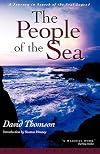
Love this book, but reading it is wonderfully dangerous: it makes me dream of wandering the quiet places of the north Atlantic, and I feel that I could leave for Scotland in a heartbeat. When I come to my senses (international travel is way too expensive for me right now), I always appreciate anew the living folklore all around me. Part of the beauty of this book is opening my eyes to what I already have: the poetry of home.
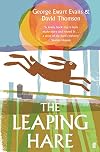
In the afterword to I Shall Wear Midnight, Sir Terry Pratchett references this book and its importance to the pervasive and hauntingly lovely hare imagery in his novel. My mission to borrow a copy was thwarted by the library, but my desire to acquire a copy at a reasonable price was aided by The Book Keeper, my local indie bookshop.
It was worth buying and worth reading, containing folklore, anecdotes, and facts, although apparently the facts about hares that we don't know, or probably know show more but not for certain, outnumber the provable facts. Hares still retain that aura of mystery despite the efforts of science. show less
It was worth buying and worth reading, containing folklore, anecdotes, and facts, although apparently the facts about hares that we don't know, or probably know show more but not for certain, outnumber the provable facts. Hares still retain that aura of mystery despite the efforts of science. show less

I loved reading this book. I knew about the selchie legend before I read it, but didn't know quite what to expect from the book. It is written in such a way as to take one gently back to an earlier era when people, language and culture were interwoven with the sea and telling folklore stories, an important part of knitting communities together and passing the time. The book flows with a lyricism and has a dreamlike quality like the sea itself.
Lists
Awards


You May Also Like


Associated Authors
Statistics
- Works
- 10
- Members
- 671
- Popularity
- #37,613
- Rating
- 3.9
- Reviews
- 8
- ISBNs
- 291
- Languages
- 12