
David Wilson (17) (1957–)
Author of A History Of British Serial Killing: The Shocking Account of Jack the Ripper, Harold Shipman and Beyond
For other authors named David Wilson, see the disambiguation page.
Works by David Wilson
A History Of British Serial Killing: The Shocking Account of Jack the Ripper, Harold Shipman and Beyond (2009) 59 copies, 1 review
Tagged
Common Knowledge
- Birthdate
- 1957-04-23
- Gender
- male
- Education
- University of Glasgow
University of Cambridge (Selwyn College)
Cambridge Institute of Criminology - Occupations
- criminologist
- Nationality
- UK
- Birthplace
- Sauchie, Clackmannanshire, Scotland, UK
- Associated Place (for map)
- Scotland, UK
Members
Reviews
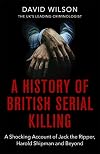
In 'A History of British Serial Killing', David Wilson sets out to use his background - first as a prison practitioner and later as an academic - to reframe how we understand serial killers. Rather than dwelling on the killers themselves, he focuses on categories of victims and the social conditions that allowed these crimes to continue. It’s a refreshing and necessary angle, at least in theory.
Listening to the audiobook, I found the structure clear and the intent admirable. Wilson tries show more to strike a balance between not being lurid or sensational while still engaging readers who come to the genre with a true-crime interest. I’m not entirely sure he lands it. At times the book seems torn between offering enough detail to satisfy curiosity and pulling back to avoid glamorising killers whilst it delivers a social angle. It occasionally ends up in a middle ground that doesn’t fully succeed at either.
What did work for me was the broader social lens. The book echoes the ethos of Laura Bates’ Fix the System, Not the Women' and it's refreshing to have a male voice highlighting systemic failures around child protection, violence against women, homophobia, and the blind spots that have historically shaped policing and public attitudes. There’s real value in that perspective, and I hope it reaches the people who most need to hear it.
But I couldn’t shake the feeling that the book stops short of being the call to action it seems positioned to be. Wilson identifies failures and vulnerabilities - like the heightened risks faced by homeless people - but doesn’t push far enough into what meaningful next steps could look like. Given this is the second edition, I expected the introduction’s framing to be developed more explicitly in the main text.
Overall, it’s an important contribution to the conversation around who society protects and who it fails to. I just wished it had taken its own arguments that one step further. show less
Listening to the audiobook, I found the structure clear and the intent admirable. Wilson tries show more to strike a balance between not being lurid or sensational while still engaging readers who come to the genre with a true-crime interest. I’m not entirely sure he lands it. At times the book seems torn between offering enough detail to satisfy curiosity and pulling back to avoid glamorising killers whilst it delivers a social angle. It occasionally ends up in a middle ground that doesn’t fully succeed at either.
What did work for me was the broader social lens. The book echoes the ethos of Laura Bates’ Fix the System, Not the Women' and it's refreshing to have a male voice highlighting systemic failures around child protection, violence against women, homophobia, and the blind spots that have historically shaped policing and public attitudes. There’s real value in that perspective, and I hope it reaches the people who most need to hear it.
But I couldn’t shake the feeling that the book stops short of being the call to action it seems positioned to be. Wilson identifies failures and vulnerabilities - like the heightened risks faced by homeless people - but doesn’t push far enough into what meaningful next steps could look like. Given this is the second edition, I expected the introduction’s framing to be developed more explicitly in the main text.
Overall, it’s an important contribution to the conversation around who society protects and who it fails to. I just wished it had taken its own arguments that one step further. show less
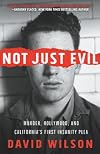
Hickman's crime, his apparent indifference, and his attempt at using the insanity plea for the first time in California makes for an interesting read. The expansive detail about Hollywood also makes for an interesting read. But combined as they are here, the two aspects don't gel as a singular story.
Before I clarify my statement, I want to say that the research appears to be impeccable. This is absolutely where the author shines. We are totally immersed in the past, with all the inhabitants show more of the era.
The writing is straightforward, more akin to news journalism than narrative nonfiction.
Hickman's crime is laid out for us, from his decision to kidnap Marion Parker, on to the murder, and throughout his trial. We also learn bits about Hickman's childhood and his crimes during early adulthood. Hickman makes for an intriguing character study in criminal behavior, during a time when psychology was in its infancy. Psychiatrists of the time had little understanding of psychopathic and narcissistic minds. Courts were only just beginning to form guidelines for what it meant to be criminally insane and therefore not legally responsible. Against this backdrop, we have a man attempting to manipulate the system to his advantage.
Hickman was obsessed with movies, attending the theater daily. I think it's important to note that his obsession was a product of his aversion to real life, and that whatever mental illness he suffered from was not caused or even necessarily enhanced by the movies he watched. Because he didn't want to work, he used robbery as a way to fund his obsession. Eventually robbery wasn't enough, and his desire for a big payoff led to kidnapping for ransom. This is the thread linking the other aspect of this book, which is the story of Hollywood's rise.
We learn a lot about Hollywood within these pages. The author takes us to the beginning, with silent movies, on to the emergence of sound and the conflict of dealing with this new phenomenon. We meet the major players of the era. We're given a lot of detail on rating systems, censorship, and the politics behind it all. Hollywood, like the legal system, was in a state of flux.
While the Hollywood story is thorough and interesting, I thought the connection to Hickman was tenuous at best. The depth of detail about Hollywood led me to believe that Hickman's movie obsession would play heavily into his defense, but this was not the case. In fact, his movie obsession was barely a blip in his defense. Hickman's decision to murder a little girl had nothing at all to do with the content of the movies he watched, and his lawyer made no attempt at the claim. Consequently, the book winds up feeling like two distinct and separate stories. The in-depth attention to all that went on in Hollywood has the misfortune of overshadowing the legal aspect of the first true insanity plea in a criminal case.
In his closing, the author attempts to equate Hickman's movie obsession with later societal influences of advertising and current influences of violent video games. This feels like way too much of a leap, particularly since Hickman's absorption in movies was never even remotely proven to have anything to do with his mental state or his choice to murder a little girl. The closing left me feeling as if the author began with an agenda, and then attempted to put the story together in a way that exposed media's impact on young and/or damaged minds.
*I was provided with an advance ebook copy by the publisher, via NetGalley, in exchange for my honest review.* show less
Before I clarify my statement, I want to say that the research appears to be impeccable. This is absolutely where the author shines. We are totally immersed in the past, with all the inhabitants show more of the era.
The writing is straightforward, more akin to news journalism than narrative nonfiction.
Hickman's crime is laid out for us, from his decision to kidnap Marion Parker, on to the murder, and throughout his trial. We also learn bits about Hickman's childhood and his crimes during early adulthood. Hickman makes for an intriguing character study in criminal behavior, during a time when psychology was in its infancy. Psychiatrists of the time had little understanding of psychopathic and narcissistic minds. Courts were only just beginning to form guidelines for what it meant to be criminally insane and therefore not legally responsible. Against this backdrop, we have a man attempting to manipulate the system to his advantage.
Hickman was obsessed with movies, attending the theater daily. I think it's important to note that his obsession was a product of his aversion to real life, and that whatever mental illness he suffered from was not caused or even necessarily enhanced by the movies he watched. Because he didn't want to work, he used robbery as a way to fund his obsession. Eventually robbery wasn't enough, and his desire for a big payoff led to kidnapping for ransom. This is the thread linking the other aspect of this book, which is the story of Hollywood's rise.
We learn a lot about Hollywood within these pages. The author takes us to the beginning, with silent movies, on to the emergence of sound and the conflict of dealing with this new phenomenon. We meet the major players of the era. We're given a lot of detail on rating systems, censorship, and the politics behind it all. Hollywood, like the legal system, was in a state of flux.
While the Hollywood story is thorough and interesting, I thought the connection to Hickman was tenuous at best. The depth of detail about Hollywood led me to believe that Hickman's movie obsession would play heavily into his defense, but this was not the case. In fact, his movie obsession was barely a blip in his defense. Hickman's decision to murder a little girl had nothing at all to do with the content of the movies he watched, and his lawyer made no attempt at the claim. Consequently, the book winds up feeling like two distinct and separate stories. The in-depth attention to all that went on in Hollywood has the misfortune of overshadowing the legal aspect of the first true insanity plea in a criminal case.
In his closing, the author attempts to equate Hickman's movie obsession with later societal influences of advertising and current influences of violent video games. This feels like way too much of a leap, particularly since Hickman's absorption in movies was never even remotely proven to have anything to do with his mental state or his choice to murder a little girl. The closing left me feeling as if the author began with an agenda, and then attempted to put the story together in a way that exposed media's impact on young and/or damaged minds.
*I was provided with an advance ebook copy by the publisher, via NetGalley, in exchange for my honest review.* show less
Awards

Statistics
- Works
- 14
- Members
- 177
- Popularity
- #121,426
- Rating
- 3.1
- Reviews
- 2
- ISBNs
- 266
- Languages
- 7