
Mike Davis (2)
Author of Princess Tina Ballet Book No 3
For other authors named Mike Davis, see the disambiguation page.
Series
Works by Mike Davis
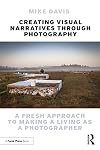
Creating Visual Narratives Through Photography: A Fresh Approach to Making a Living as a Photographer (2022) 7 copies, 1 review
Mike Davis at The Royal Ballet 6 copies
Princess Tina Ballet Book No 8 4 copies
The Romance of Ballet 3 copies
Princess Tina Ballet Book No 6 2 copies
Ballet in Camera 2 copies
Princess Tina Ballet Book No 9 2 copies
Jacqui's Ballet Book 1 copy
Princess Ballet Book No 2 1 copy
The Princess Ballet Book 6 1 copy
Tagged
Common Knowledge
- Gender
- male
- Occupations
- photographer
Members
Reviews
Creating Visual Narratives Through Photography: A Fresh Approach to Making a Living as a Photographer by Mike Davis
(Disclosure: I attended the University of Missouri with Davis and have contracted him to review my photography.)
Mike Davis' "Narratives" is a "desert isle" book indispensable to every practicing photographer and photo student. Along with Roland Barthes' "Camera Lucida" or Susan Sontag's "On Photography," and a tome of one's chosen photo genre, the marooned visual storyteller would have sufficient material to deepen their practice until rescued. (My choice for the additional book would be show more Magnum's "Contact Sheets" or that collective's "One Hundred Photo Postcards in a Box.” However, if the island had Wi-Fi, one could spend years perusing the works and words of the hundreds of photographers, editors, designers, and critics referenced in “Narratives.”)
Sontag, Barthes, Magnum, and Davis each provide a lifetime of ideas to sharpen one's artistic eye—Davis calls this 'finding one's voice'—but only his book uniquely directs photographers on how to make a living. Its central thesis is that only by constantly surveying and adjusting to the image marketplace while simultaneously honing rigorous practice habits can an image maker stay vital. "Narratives" reads like "Zen and the Art of Motorcycle Maintenance" mashed with the "Harvard Business Review." I might add "Popular Science" magazine because Davis provides many exercises, strategies, vocabulary, and anecdotes to improve one's creativity and business acumen.
There’s something for every level of practitioner. If the reader is a beginner or student, they’ll learn the ‘three-legged milk stool’ approach to building a photo. (Davis spent formative years on a Nebraska dairy farm, hence this metaphor.) Each leg signifies an element or idea to the photo---technical, aesthetic, and philosophical/psychological—and if anyone is absent, it will ‘wobble,’ that is, fall short of its potential. The sections (1-3) on these concepts are so thorough that even seasoned professionals will find value and perhaps discover a faulty habit holding them back.
The sequencing and selection chapter is paramount for today’s photo marketplace. Just about any client, whether from the editorial, commercial, public relations, or advertising worlds, expect photos that can be sequenced to tell a story. They'll likely want to publish them in multiple venues, like print, the web, posters, and even billboards. Providing them various options is incumbent, and "Narratives" suggests several ways to accomplish this demand.
"Making a Living" is covered in sections five, six, and the conclusion. From formulating a story idea and pitching it to best practices in working with clients to seeking funding, Davis elucidates these tasks with no-nonsense, actionable, heuristic steps. He cites books and websites that deal more deeply with the business of photography.
Finally, "Narratives" pulls no punches about the difficulty of hustling a living. Visual storytelling is a rewarding profession but requires extraordinary dedication. If this can't be exercised, one should find another career. There's no shame in this; he knows many who have left photography to practice something else and find satisfaction.
Davis included his photos to illustrate his concepts, even though the renowned photographers he's assigned, mentored, and edited would undoubtedly have been ecstatic to have their work published here. But a principle of "Narratives" is that an artist must continually 'seek his voice' and since he's doing this, too, it makes sense that his images were the best choice.
I simultaneously read Rick Rubin's "The Creative Act" with "Narratives." Rubin, of course, is one of the greatest music producers ever and has ideas like Davis about creativity. It's fascinating that the personality who has guided recordings by the Beastie Boys, Johnny Cash, Tom Petty, and Metallica, and the photo editor/director who has coached and edited photographers at National Geographic, the White House, The Albuquerque Tribune, and Syracuse University both reference Kintsugi, the Japanese art of reconstructing broken pottery with gold lacquer. Kintsugi is Rubin's and Davis' metaphor for embracing imperfection in the art we create and, therefore, in ourselves, which is vital for the artist's practice and self-care. (Davis knows a thing or two about music, too. In a passage about the photographer Roy Decarava, he says: “…Decarava’s photos merge sound with image…as if his camera were riffing jazz.”) Just as a photographer would benefit from reading "The Creative Act," a painter, writer, dancer, and musician could find inspiration in "Narratives."
Davis's book, however, is essential to every photographer's library. show less
Mike Davis' "Narratives" is a "desert isle" book indispensable to every practicing photographer and photo student. Along with Roland Barthes' "Camera Lucida" or Susan Sontag's "On Photography," and a tome of one's chosen photo genre, the marooned visual storyteller would have sufficient material to deepen their practice until rescued. (My choice for the additional book would be show more Magnum's "Contact Sheets" or that collective's "One Hundred Photo Postcards in a Box.” However, if the island had Wi-Fi, one could spend years perusing the works and words of the hundreds of photographers, editors, designers, and critics referenced in “Narratives.”)
Sontag, Barthes, Magnum, and Davis each provide a lifetime of ideas to sharpen one's artistic eye—Davis calls this 'finding one's voice'—but only his book uniquely directs photographers on how to make a living. Its central thesis is that only by constantly surveying and adjusting to the image marketplace while simultaneously honing rigorous practice habits can an image maker stay vital. "Narratives" reads like "Zen and the Art of Motorcycle Maintenance" mashed with the "Harvard Business Review." I might add "Popular Science" magazine because Davis provides many exercises, strategies, vocabulary, and anecdotes to improve one's creativity and business acumen.
There’s something for every level of practitioner. If the reader is a beginner or student, they’ll learn the ‘three-legged milk stool’ approach to building a photo. (Davis spent formative years on a Nebraska dairy farm, hence this metaphor.) Each leg signifies an element or idea to the photo---technical, aesthetic, and philosophical/psychological—and if anyone is absent, it will ‘wobble,’ that is, fall short of its potential. The sections (1-3) on these concepts are so thorough that even seasoned professionals will find value and perhaps discover a faulty habit holding them back.
The sequencing and selection chapter is paramount for today’s photo marketplace. Just about any client, whether from the editorial, commercial, public relations, or advertising worlds, expect photos that can be sequenced to tell a story. They'll likely want to publish them in multiple venues, like print, the web, posters, and even billboards. Providing them various options is incumbent, and "Narratives" suggests several ways to accomplish this demand.
"Making a Living" is covered in sections five, six, and the conclusion. From formulating a story idea and pitching it to best practices in working with clients to seeking funding, Davis elucidates these tasks with no-nonsense, actionable, heuristic steps. He cites books and websites that deal more deeply with the business of photography.
Finally, "Narratives" pulls no punches about the difficulty of hustling a living. Visual storytelling is a rewarding profession but requires extraordinary dedication. If this can't be exercised, one should find another career. There's no shame in this; he knows many who have left photography to practice something else and find satisfaction.
Davis included his photos to illustrate his concepts, even though the renowned photographers he's assigned, mentored, and edited would undoubtedly have been ecstatic to have their work published here. But a principle of "Narratives" is that an artist must continually 'seek his voice' and since he's doing this, too, it makes sense that his images were the best choice.
I simultaneously read Rick Rubin's "The Creative Act" with "Narratives." Rubin, of course, is one of the greatest music producers ever and has ideas like Davis about creativity. It's fascinating that the personality who has guided recordings by the Beastie Boys, Johnny Cash, Tom Petty, and Metallica, and the photo editor/director who has coached and edited photographers at National Geographic, the White House, The Albuquerque Tribune, and Syracuse University both reference Kintsugi, the Japanese art of reconstructing broken pottery with gold lacquer. Kintsugi is Rubin's and Davis' metaphor for embracing imperfection in the art we create and, therefore, in ourselves, which is vital for the artist's practice and self-care. (Davis knows a thing or two about music, too. In a passage about the photographer Roy Decarava, he says: “…Decarava’s photos merge sound with image…as if his camera were riffing jazz.”) Just as a photographer would benefit from reading "The Creative Act," a painter, writer, dancer, and musician could find inspiration in "Narratives."
Davis's book, however, is essential to every photographer's library. show less
Statistics
- Works
- 15
- Members
- 48
- Popularity
- #325,719
- Rating
- 4.0
- Reviews
- 1
- ISBNs
- 232
- Languages
- 9