
Peter Byrne (3)
Author of The Many Worlds of Hugh Everett III: Multiple Universes, Mutual Assured Destruction, and the Meltdown of a Nuclear Family
For other authors named Peter Byrne, see the disambiguation page.
Works by Peter Byrne
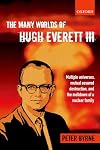
The Many Worlds of Hugh Everett III: Multiple Universes, Mutual Assured Destruction, and the Meltdown of a Nuclear Family (2010) 78 copies, 6 reviews
Jack Charlton 1 copy
Tagged
Common Knowledge
There is no Common Knowledge data for this author yet. You can help.
Members
Reviews
MANY WORLDS OF HUGH EVERETT 3RD C: Multiple Universes, Mutual Assured Destruction, and the Meltdown of a Nuclear Family by Peter Byrne

I would give this book 6 stars if I could. Why didn’t I know about it before? It’s an amazing book, granted for a pretty limited audience. Peter Byrne does a magnificent job of capturing a unique history and telling it engagingly, along the way covering some very complex technical subjects at an amazingly well laid out conceptual level.
Hugh Everett was a quantum physicist, game theorist, and mathematician. He was a core figure in what was happening in quantum physics and, separately, in show more war strategy from the 1950s on through the 1970s, until his death in 1982 at the age of just 51. Yet not very many people know much if anything about him. He packed a lot into his short life.
Let’s start with physics. As controversial a figure as he became (and may still be), it’s probably the safest of the grounds on which he built his life. Naturally, he didn’t stay there long.
Everett was a brilliant student in mathematics and physics at Princeton. John Wheeler, the famous physicist of gravitational theory, black holes, and most everything else, was Everett’s mentor.
Much of the book plays out an unstable triangle between Everett, Wheeler, and Wheeler’s own mentor and the most powerful figure in quantum theory at the time, Niels Bohr.
Famously, quantum theory describes a micro universe of particles in which the attributes of those particles are inherently indeterminate. Rather than fixed positions (and other properties), particles subsist as described in Schrödinger’s wave equation as occupying a range of potential position values (a “superposition”).
Those values are interpreted as probabilities — probabilities that, for each value, if the particle's position is measured, that value will be obtained. When the measurement actually takes place, all those potential values “collapse” into a single determinate one.
But until the measurement takes place, the particle itself is in the “superposition” state. It isn’t just our inability to determine the particle’s position that makes it indeterminate — rather the particle’s own inherent position is indeterminate until the moment it is measured and the probabilities collapse into a single value.
Why the probabilities collapse, and why a “measurement” causes or occasions it in some way is hard or impossible to explain.
I’m already headed into details, but I’ll just say that the standard (Copenhagen/Bohr) interpretation of quantum physics requires a separation between observer and the target of observation in order to make sense of that collapse (referred to as the “wave collapse”). The particle is treated as a particle in a quantum world, subject to indeterminacy, while the observer is treated as part of a classical world, with no such indeterminacy.
Otherwise, as we’ll see in Everett’s interpretation, quantum indeterminacy infects the observer as well.
Everett’s insight, expressed in his doctoral dissertation, was to make no such separation, to treat the observer as a quantum phenomenon himself/herself. Thus, the wave function in Everett’s interpretation becomes not a description of an isolated particle’s behavior, but a description of an entire universe of inter-related quantum elements.
When the “measurement” happens, i.e., when the value of the particle’s attributes is determined, rather than a “wave collapse,” for Everett, we get a “branching”. All of the potential values of the particle’s attributes are realized, but in different realities, with branched observers coupled with those values.
Because the observer is also part of that same quantum system, along with the particle, Everett’s interpretation branches the actual observer into multiples, each continuing on in a separate, parallel universe coupled to the measured value in that universe.
That’s a lot to swallow.
And of course not everybody, particularly Niels Bohr, wanted to swallow it. Its great virtue was that it rid quantum physics of that seemingly ad hoc division between the observer and the observed, a division that led to all sorts of metaphysical speculations about the special roles of consciousness and the causal effects of conscious observation and measurement in a quantum universe.
It rid quantum physics of the mystery of the wave collapse. But it gave us multiple, make that effectively infinite, universes, populated by innumerable versions of its observers, ourselves.
Everett’s theory was initially championed to Bohr by Wheeler, as Everett’s dissertation advisor. Wheeler acted as a kind of facilitator for a relationship between Everett and Bohr that never really happened. Bohr, and his followers, rejected Everett’s theory with prejudice, mixed maybe with a bit of insult. Everett actually visited Bohr in Copenhagen, ostensibly to hash out differences between the theories, but Bohr’s attitude seemed to be to insist that Everett had solved a non-problem, that there was nothing wrong with the “measurement paradox.”
At this point, Everett left academic physics, even with Wheeler’s encouragement to take an academic position and continue his research.
Despite that decision, Everett kept his ear to the quantum physics world, continuing to monitor ongoing reactions and mentions of his work. He occasionally even participated in discussions, but always as a kind of guest visitor.
I’ll skip ahead in the story to say that Everett’s work lay relatively dormant for decades, with few (but some) researchers stimulated and inspired by it to work out its details and consequences.
But over the last few decades, the “Everettian” interpretation has gone mainstream. It, or aspects of it, survive and prosper in mainstream quantum physics today, either in the “Many Worlds” theory largely worked out by Everett himself, or in theories derived from it (e.g., “Decoherence”). Max Tegmark, one of its most prominent advocates, refers to it as on a par with the greatest and most important theoretical work of the twentieth century, alongside such work as relativity theory.
Meanwhile, like I said, Everett had left academic physics. Where was he?
Of course! He was at the Pentagon. He was working as mathematical lead for the private nuclear strategy think tank and defense contractor, the Weapons Systems Evaluation Group (WSEG). These are the people who brought us war games at the professional, and potentially real, level.
Everett was particularly critical in mathematically modeling first strikes, retaliations, fallout radii, casualties, . . . — all the things that need to be understood before adoption of a nuclear strategy. These were the days in which the strategy of “mutual assured destruction” emerged.
Everett’s contributions included not just mathematical frameworks but software programming breakthroughs (especially breakthroughs enabling reductions of complex calculations), and strategic conclusions. On the latter, Everett was a major contributor to the realization that first strikes could not adequately disable the enemy (the Soviet Union) so as to prevent a devastating retaliatory attack. First strike was demonstrably suicide.
Everett’s participation in WSEG led to successor businesses and offshoots, also enabled by government contracts, although not all directly defense-related.
Everett was not a great businessman. I’ll let Peter Byrne tell all those stories. Everett often chased ahead of financial collapses, not always getting out into the clear but doing well enough to support himself and his family.
But now the family (I promise this is the last part, and I’ll make it quick).
Everett married and raised two children. He was not a successful family man. He was an alcoholic, chain-smoking philanderer. Oddly, though, likeable and even adored by his wife and children.
Inspired by the Kinsey Reports on sexuality, Everett enjoyed wife-swapping and less formal hound dogging. His wife Nancy was long-suffering, but at least in my reading, a sympathetic figure — she had her own interests as a writer, and she found outlets for self-expression within the family model of the time.
Everett was an emotionally distant father. His son Mark has said that the only time he can remember actual physical contact with his father was when he discovered his father lying on a bed after a heart attack, and lifted him from the bed. His father was dead and stiff.
Mark survived his upbringing and is around today, having helped Peter Byrne with conversations and with access to Everett’s papers, stored in Mark’s basement. Mark turned his dysfunctional family life into art, providing grist for his songwriting with his successful indie rock band, EELS.
Mark’s older sister, Liz, didn’t survive as long as Mark. After a very troubled life of addictions and misfortunes of all sorts, she died of a suicidal drug overdose in 1996, 14 years after her father died. She left a note saying that she was joining her father in a parallel universe.
Okay, that’s a long review. I know I went on and on, but that’s because this is such a great story told by Peter Byrne. The history of the Wheeler-Bohr-Everett would-be triangle would have been a great book by itself. But then the bigger context of personal life and Everett’s “second career” in war planning — that all takes it above and beyond. show less
Hugh Everett was a quantum physicist, game theorist, and mathematician. He was a core figure in what was happening in quantum physics and, separately, in show more war strategy from the 1950s on through the 1970s, until his death in 1982 at the age of just 51. Yet not very many people know much if anything about him. He packed a lot into his short life.
Let’s start with physics. As controversial a figure as he became (and may still be), it’s probably the safest of the grounds on which he built his life. Naturally, he didn’t stay there long.
Everett was a brilliant student in mathematics and physics at Princeton. John Wheeler, the famous physicist of gravitational theory, black holes, and most everything else, was Everett’s mentor.
Much of the book plays out an unstable triangle between Everett, Wheeler, and Wheeler’s own mentor and the most powerful figure in quantum theory at the time, Niels Bohr.
Famously, quantum theory describes a micro universe of particles in which the attributes of those particles are inherently indeterminate. Rather than fixed positions (and other properties), particles subsist as described in Schrödinger’s wave equation as occupying a range of potential position values (a “superposition”).
Those values are interpreted as probabilities — probabilities that, for each value, if the particle's position is measured, that value will be obtained. When the measurement actually takes place, all those potential values “collapse” into a single determinate one.
But until the measurement takes place, the particle itself is in the “superposition” state. It isn’t just our inability to determine the particle’s position that makes it indeterminate — rather the particle’s own inherent position is indeterminate until the moment it is measured and the probabilities collapse into a single value.
Why the probabilities collapse, and why a “measurement” causes or occasions it in some way is hard or impossible to explain.
I’m already headed into details, but I’ll just say that the standard (Copenhagen/Bohr) interpretation of quantum physics requires a separation between observer and the target of observation in order to make sense of that collapse (referred to as the “wave collapse”). The particle is treated as a particle in a quantum world, subject to indeterminacy, while the observer is treated as part of a classical world, with no such indeterminacy.
Otherwise, as we’ll see in Everett’s interpretation, quantum indeterminacy infects the observer as well.
Everett’s insight, expressed in his doctoral dissertation, was to make no such separation, to treat the observer as a quantum phenomenon himself/herself. Thus, the wave function in Everett’s interpretation becomes not a description of an isolated particle’s behavior, but a description of an entire universe of inter-related quantum elements.
When the “measurement” happens, i.e., when the value of the particle’s attributes is determined, rather than a “wave collapse,” for Everett, we get a “branching”. All of the potential values of the particle’s attributes are realized, but in different realities, with branched observers coupled with those values.
Because the observer is also part of that same quantum system, along with the particle, Everett’s interpretation branches the actual observer into multiples, each continuing on in a separate, parallel universe coupled to the measured value in that universe.
That’s a lot to swallow.
And of course not everybody, particularly Niels Bohr, wanted to swallow it. Its great virtue was that it rid quantum physics of that seemingly ad hoc division between the observer and the observed, a division that led to all sorts of metaphysical speculations about the special roles of consciousness and the causal effects of conscious observation and measurement in a quantum universe.
It rid quantum physics of the mystery of the wave collapse. But it gave us multiple, make that effectively infinite, universes, populated by innumerable versions of its observers, ourselves.
Everett’s theory was initially championed to Bohr by Wheeler, as Everett’s dissertation advisor. Wheeler acted as a kind of facilitator for a relationship between Everett and Bohr that never really happened. Bohr, and his followers, rejected Everett’s theory with prejudice, mixed maybe with a bit of insult. Everett actually visited Bohr in Copenhagen, ostensibly to hash out differences between the theories, but Bohr’s attitude seemed to be to insist that Everett had solved a non-problem, that there was nothing wrong with the “measurement paradox.”
At this point, Everett left academic physics, even with Wheeler’s encouragement to take an academic position and continue his research.
Despite that decision, Everett kept his ear to the quantum physics world, continuing to monitor ongoing reactions and mentions of his work. He occasionally even participated in discussions, but always as a kind of guest visitor.
I’ll skip ahead in the story to say that Everett’s work lay relatively dormant for decades, with few (but some) researchers stimulated and inspired by it to work out its details and consequences.
But over the last few decades, the “Everettian” interpretation has gone mainstream. It, or aspects of it, survive and prosper in mainstream quantum physics today, either in the “Many Worlds” theory largely worked out by Everett himself, or in theories derived from it (e.g., “Decoherence”). Max Tegmark, one of its most prominent advocates, refers to it as on a par with the greatest and most important theoretical work of the twentieth century, alongside such work as relativity theory.
Meanwhile, like I said, Everett had left academic physics. Where was he?
Of course! He was at the Pentagon. He was working as mathematical lead for the private nuclear strategy think tank and defense contractor, the Weapons Systems Evaluation Group (WSEG). These are the people who brought us war games at the professional, and potentially real, level.
Everett was particularly critical in mathematically modeling first strikes, retaliations, fallout radii, casualties, . . . — all the things that need to be understood before adoption of a nuclear strategy. These were the days in which the strategy of “mutual assured destruction” emerged.
Everett’s contributions included not just mathematical frameworks but software programming breakthroughs (especially breakthroughs enabling reductions of complex calculations), and strategic conclusions. On the latter, Everett was a major contributor to the realization that first strikes could not adequately disable the enemy (the Soviet Union) so as to prevent a devastating retaliatory attack. First strike was demonstrably suicide.
Everett’s participation in WSEG led to successor businesses and offshoots, also enabled by government contracts, although not all directly defense-related.
Everett was not a great businessman. I’ll let Peter Byrne tell all those stories. Everett often chased ahead of financial collapses, not always getting out into the clear but doing well enough to support himself and his family.
But now the family (I promise this is the last part, and I’ll make it quick).
Everett married and raised two children. He was not a successful family man. He was an alcoholic, chain-smoking philanderer. Oddly, though, likeable and even adored by his wife and children.
Inspired by the Kinsey Reports on sexuality, Everett enjoyed wife-swapping and less formal hound dogging. His wife Nancy was long-suffering, but at least in my reading, a sympathetic figure — she had her own interests as a writer, and she found outlets for self-expression within the family model of the time.
Everett was an emotionally distant father. His son Mark has said that the only time he can remember actual physical contact with his father was when he discovered his father lying on a bed after a heart attack, and lifted him from the bed. His father was dead and stiff.
Mark survived his upbringing and is around today, having helped Peter Byrne with conversations and with access to Everett’s papers, stored in Mark’s basement. Mark turned his dysfunctional family life into art, providing grist for his songwriting with his successful indie rock band, EELS.
Mark’s older sister, Liz, didn’t survive as long as Mark. After a very troubled life of addictions and misfortunes of all sorts, she died of a suicidal drug overdose in 1996, 14 years after her father died. She left a note saying that she was joining her father in a parallel universe.
Okay, that’s a long review. I know I went on and on, but that’s because this is such a great story told by Peter Byrne. The history of the Wheeler-Bohr-Everett would-be triangle would have been a great book by itself. But then the bigger context of personal life and Everett’s “second career” in war planning — that all takes it above and beyond. show less
The Many Worlds of Hugh Everett III: Multiple Universes, Mutual Assured Destruction, and the Meltdown of a Nuclear Family by Peter Byrne
My brain nearly melted reading this. The Many Worlds idea has been used in fiction for a long time, usually in science fiction. The concept is easy enough to portray- the universe splits and in the split-offs results diverge from the universe the characters originally occupied. A trope oft used. The physics and philosophy describing how such splitting could be possible is anything but easy to comprehend. It gets messy real fast. Attempts at clarification introduce even more messiness. Then show more head pains ensue.
Everett wrote his dissertation on branching universes in 1957. It was bold and audacious. Most physicists that saw it said- Good Grief! We have to deal with this crazy paper? No thanks! And it was mostly ignored for ten to fifteen years. But it wouldn't go away and kept picking up new adherents over time. More- Good Grief! We still have to deal with this? Nobody was able to kill it dead. The cosmologists found useful things there and it has been in play ever since with many additions and refinements.
Everett never published another paper on quantum mechanics. He avoided the fray for the rest of his life with only an exception or two. He went into operations research for the defense sector. There he was a Cold Warrior working with the equations of first strikes, second strikes, and the possible deaths of hundreds of millions of people. Grim stuff indeed. Everett loved it though. He treated life as a game and his life as a part of his beloved game theory. He was a hawk in the Cold War environs but a hedonist in his personal life. He and his wife became swingers. Later he started a travel business with his girlfriend. The Everetts never separated or divorced. Everett drank his lunch, was a chain smoker, and ate like there was no such thing as cholesterol.
His son and daughter were allowed free reign. There was no discipline. Because Everett's focus and immersion in his thoughts and his career there was also little attention paid to the children either. They were almost strangers. His daughter was alcoholic as was Hugh. She also had substance abuse problems and was suicidal. Hugh only made it to the age of fifty-two. He succombed to a heart attack. Liz, the daughter, didn't even live that long. She was thirty-nine when she overdosed. Hugh's wife died not long after from lung cancer. It was probably contracted from her husband's chain smoking.
This left Mark, the son, alone in the world at a fairly young age. He had escaped the family home by going to California and pursuing a music career. He formed The Eels, and did solo stuff also. Ten years after being left alone he started trying to make a bit of sense of his family. There was a BBC documentary focusing on his father, Parallel Worlds, Parallel Lives. He also wrote a memoir that was an Early Reviewer book on LibraryThing. It's called Things the Grandchildren Should Know.
This biography was a thorough examination of Everett's life and his professional accomplishments. He was far from a saint, probably not a devil; more of a smart average-Joe trying to muddle through life by avoiding parts of reality with the desensitizing effects of physical pleasure. show less
Everett wrote his dissertation on branching universes in 1957. It was bold and audacious. Most physicists that saw it said- Good Grief! We have to deal with this crazy paper? No thanks! And it was mostly ignored for ten to fifteen years. But it wouldn't go away and kept picking up new adherents over time. More- Good Grief! We still have to deal with this? Nobody was able to kill it dead. The cosmologists found useful things there and it has been in play ever since with many additions and refinements.
Everett never published another paper on quantum mechanics. He avoided the fray for the rest of his life with only an exception or two. He went into operations research for the defense sector. There he was a Cold Warrior working with the equations of first strikes, second strikes, and the possible deaths of hundreds of millions of people. Grim stuff indeed. Everett loved it though. He treated life as a game and his life as a part of his beloved game theory. He was a hawk in the Cold War environs but a hedonist in his personal life. He and his wife became swingers. Later he started a travel business with his girlfriend. The Everetts never separated or divorced. Everett drank his lunch, was a chain smoker, and ate like there was no such thing as cholesterol.
His son and daughter were allowed free reign. There was no discipline. Because Everett's focus and immersion in his thoughts and his career there was also little attention paid to the children either. They were almost strangers. His daughter was alcoholic as was Hugh. She also had substance abuse problems and was suicidal. Hugh only made it to the age of fifty-two. He succombed to a heart attack. Liz, the daughter, didn't even live that long. She was thirty-nine when she overdosed. Hugh's wife died not long after from lung cancer. It was probably contracted from her husband's chain smoking.
This left Mark, the son, alone in the world at a fairly young age. He had escaped the family home by going to California and pursuing a music career. He formed The Eels, and did solo stuff also. Ten years after being left alone he started trying to make a bit of sense of his family. There was a BBC documentary focusing on his father, Parallel Worlds, Parallel Lives. He also wrote a memoir that was an Early Reviewer book on LibraryThing. It's called Things the Grandchildren Should Know.
This biography was a thorough examination of Everett's life and his professional accomplishments. He was far from a saint, probably not a devil; more of a smart average-Joe trying to muddle through life by avoiding parts of reality with the desensitizing effects of physical pleasure. show less
The Many Worlds of Hugh Everett III: Multiple Universes, Mutual Assured Destruction, and the Meltdown of a Nuclear Family by Peter Byrne
“This is the mystery: when we measure the position of an atomic particle we record it as existing in a definite place, not in all of the many places it occupies according to its smoothly evolving wave function. The emergence of a single position from the set of all physically possible positions is inescapable; it creates a logical discontinuity, a gap, a fissure, an interruption in the flow of the Schrödinger equation; it creates a problem.”
In “The Many Worlds of Hugh Everett III - show more Multiple Universes, Mutual Assured Destruction, and the Meltdown of a Nuclear Family” by Peter Byrne
I suspect that the reason why the Copenhagen and Many Worlds interpretations of QM are the most well-known is that they are the easiest to explain in classical terms, and therefore most accessible to those who have not already completed an undergraduate level course in QM. You can also find a discussion of the different interpretations in The Road to Reality, by Roger Penrose, but it is heavy going and not recommended unless you have a background in Physics (or Math) to degree-level. Essentially, Penrose discusses both the two interpretations above and three other interpretations: environmental decoherence, consistent histories and pilot wave; and comments on the strengths and weaknesses of each. He argues that none of them adequately solve the "measurement problem" and that there must be another, either so-far undiscovered or incompletely worked out, interpretation to be found. [This is a serious simplification of what Penrose writes in the book].
Oh, and the proof for other intelligent life in the universe is simple- physicists tell us that nature is a wave particle duality, with particles being something like placeholders for natural forces, that is particles are not individual, every like particle is identical to every other like particle. the wave function that underlies reality means that events are a result of colliding wave fronts, thus they can't occur only once, events can be rare, they cannot be unique- therefore if life occurred here it has to have occurred elsewhere as a logical certainty, nature doesn't do anything just once, there are unique locations there are no unique events. The only way for intelligent if to have occurred only here would be a supernatural explanation.
Is reality the result of colliding wave fronts or entangled fields, being these fields the ones that engender elemental particles which are everywhere, and therefore the entanglement producing life must be everywhere as well?
Not quite. It all depends on statistical probability. If the odds of a particle doing x is greater than the chances of it doing it in the lifetime of the universe, it may never do x. Me walking through a wall is a good example - all the particles in me and all the particles in wall would have to align so that none collide in the Very Long Time (for a particle or group of particles to remain in perfect alignment) it would take me to walk through the wall. The odds of that happening are greater than the lifetime of the universe (although it still could happen at any moment too...) When you're talking an almost infinite range of possibilities, but with a large, but still finite amount of matter/particles, there is plenty of room for unique events which might never repeat in the lifetime of the universe (or may repeat many times equally).
For any casual reader not familiar with the double-slit experiment, a laser beam is directed at a plate which is solid except for two parallel slits (for instance; there are many variants in the broader experimental realm). Then the light passing through the slits is observed on a screen behind the plate. These sorts of experiment yield much interesting (and initially much unexpected) data, and these data have helped to progress analysis of a variety of puzzles in physics.
So far, so good.
The problems arise when all sorts of speculations, far beyond the data, are developed into a quasi-religious dogma of reality, which can loosely be entitled the many-worlds interpretation (MWI) of quantum mechanics. Just at the level of this simple double-slit experiment, without exploring the wilder shores of MWI, the devotees of the interpretation believe that the light passing through the apparatus of whatever configuration diverges into a vast / infinite number of other universes. That is, for one given experiment - one universe, world, lab, workbench, laser, plate, screen - the output of that local experiment diverges into an infinite number of universes. One photon emitted by the laser diverges into an infinite number of universes at the point of emission from the laser, and diverges again when it passes through the slits, and even diverges again if you close one of the slits. And that the combination (the cross-product) of all of these sets of an infinite number of universes is also then real. Don't underestimate what they are claiming, an infinite number of universes is created at this point, each new universe populated with a universe-worth of matter and energy which (somehow and “somewhen” undefined by the MWI) simply appears from nowhere.
I would respectfully suggest that the MWI devotees have rather over-interpreted the data from a laser beam passing through a slitted plate.
A final coda:
“Among Everett’s basement papers were notes that he had made after the American Institute of Physics asked him to prioritize his top five scientific capabilities. At the bottom of the list, he put ‘servomechanisms.’ Followed by ‘operations research.’ Skill number three was ‘relativity and gravity.’ Two was ‘decision game theory.’ And at the top of the list, in pride of first place: ‘quantum mechanics.’”
In “The Many Worlds of Hugh Everett III - Multiple Universes, Mutual Assured Destruction, and the Meltdown of a Nuclear Family” by Peter Byrne
Bottom-line: I explained Everettian theory much better when I reviewed Adam Becker’s “What is Real - The Unfinished Quest for theMeaning of Quantum Physics”. I’m not “in the zone” today…so, this is all you get for now. I’m moving on to finish reading Wallace’s “Emergent Multiverse” now. show less
In “The Many Worlds of Hugh Everett III - show more Multiple Universes, Mutual Assured Destruction, and the Meltdown of a Nuclear Family” by Peter Byrne
I suspect that the reason why the Copenhagen and Many Worlds interpretations of QM are the most well-known is that they are the easiest to explain in classical terms, and therefore most accessible to those who have not already completed an undergraduate level course in QM. You can also find a discussion of the different interpretations in The Road to Reality, by Roger Penrose, but it is heavy going and not recommended unless you have a background in Physics (or Math) to degree-level. Essentially, Penrose discusses both the two interpretations above and three other interpretations: environmental decoherence, consistent histories and pilot wave; and comments on the strengths and weaknesses of each. He argues that none of them adequately solve the "measurement problem" and that there must be another, either so-far undiscovered or incompletely worked out, interpretation to be found. [This is a serious simplification of what Penrose writes in the book].
Oh, and the proof for other intelligent life in the universe is simple- physicists tell us that nature is a wave particle duality, with particles being something like placeholders for natural forces, that is particles are not individual, every like particle is identical to every other like particle. the wave function that underlies reality means that events are a result of colliding wave fronts, thus they can't occur only once, events can be rare, they cannot be unique- therefore if life occurred here it has to have occurred elsewhere as a logical certainty, nature doesn't do anything just once, there are unique locations there are no unique events. The only way for intelligent if to have occurred only here would be a supernatural explanation.
Is reality the result of colliding wave fronts or entangled fields, being these fields the ones that engender elemental particles which are everywhere, and therefore the entanglement producing life must be everywhere as well?
Not quite. It all depends on statistical probability. If the odds of a particle doing x is greater than the chances of it doing it in the lifetime of the universe, it may never do x. Me walking through a wall is a good example - all the particles in me and all the particles in wall would have to align so that none collide in the Very Long Time (for a particle or group of particles to remain in perfect alignment) it would take me to walk through the wall. The odds of that happening are greater than the lifetime of the universe (although it still could happen at any moment too...) When you're talking an almost infinite range of possibilities, but with a large, but still finite amount of matter/particles, there is plenty of room for unique events which might never repeat in the lifetime of the universe (or may repeat many times equally).
For any casual reader not familiar with the double-slit experiment, a laser beam is directed at a plate which is solid except for two parallel slits (for instance; there are many variants in the broader experimental realm). Then the light passing through the slits is observed on a screen behind the plate. These sorts of experiment yield much interesting (and initially much unexpected) data, and these data have helped to progress analysis of a variety of puzzles in physics.
So far, so good.
The problems arise when all sorts of speculations, far beyond the data, are developed into a quasi-religious dogma of reality, which can loosely be entitled the many-worlds interpretation (MWI) of quantum mechanics. Just at the level of this simple double-slit experiment, without exploring the wilder shores of MWI, the devotees of the interpretation believe that the light passing through the apparatus of whatever configuration diverges into a vast / infinite number of other universes. That is, for one given experiment - one universe, world, lab, workbench, laser, plate, screen - the output of that local experiment diverges into an infinite number of universes. One photon emitted by the laser diverges into an infinite number of universes at the point of emission from the laser, and diverges again when it passes through the slits, and even diverges again if you close one of the slits. And that the combination (the cross-product) of all of these sets of an infinite number of universes is also then real. Don't underestimate what they are claiming, an infinite number of universes is created at this point, each new universe populated with a universe-worth of matter and energy which (somehow and “somewhen” undefined by the MWI) simply appears from nowhere.
I would respectfully suggest that the MWI devotees have rather over-interpreted the data from a laser beam passing through a slitted plate.
A final coda:
“Among Everett’s basement papers were notes that he had made after the American Institute of Physics asked him to prioritize his top five scientific capabilities. At the bottom of the list, he put ‘servomechanisms.’ Followed by ‘operations research.’ Skill number three was ‘relativity and gravity.’ Two was ‘decision game theory.’ And at the top of the list, in pride of first place: ‘quantum mechanics.’”
In “The Many Worlds of Hugh Everett III - Multiple Universes, Mutual Assured Destruction, and the Meltdown of a Nuclear Family” by Peter Byrne
Bottom-line: I explained Everettian theory much better when I reviewed Adam Becker’s “What is Real - The Unfinished Quest for theMeaning of Quantum Physics”. I’m not “in the zone” today…so, this is all you get for now. I’m moving on to finish reading Wallace’s “Emergent Multiverse” now. show less
Statistics
- Works
- 2
- Members
- 79
- Popularity
- #226,896
- Rating
- 4.5
- Reviews
- 6
- ISBNs
- 80
- Languages
- 1