
David Nicholls (3)
Author of The Cambridge History of American Music
For other authors named David Nicholls, see the disambiguation page.
About the Author
David Nicholls was born in 1966 in Eastleigh, Hampshire, United Kingdom. He studied English literature and drama at the University of Bristol. When he graduated he won a scholarship to study at the American Musical and Dramatic Academy in New York. He appeared in plays at the Battersea Arts Centre, show more the Finborough, West Yorkshire Playhouse, Birmingham Rep, and had a three year stint at the Royal National Theatre, understudying and playing small parts. During this period he took a job at BBC Radio Drama as a script reader/researcher and he developed an adaptation of Sam Shepard's stage-play Simpatico with the director Matthew Warchus. He also wrote his first original script, Waiting, which was later optioned by the BBC. Simpatico was turned into a feature film in 1999 which allowed him to start writing full-time. I Saw You won best single play at the annual BANFF television festival. He has been twice nominated for BAFTA awards. His first novel, Starter for 10, was featured on the first Richard and Judy Book Club. His other novels include The Understudy, One Day, which won the Galaxy Book Award, and Us. (Bowker Author Biography) show less
Works by David Nicholls
Tagged
Common Knowledge
- Gender
- male
Members
Reviews
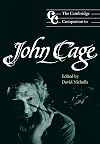
On the whole, this is a very strong anthology in the Cambridge Companion series. Divided into three parts (Aesthetic contexts; Sounds,words, images; Interaction and Influence), the book investigates the different facets of Cage's life and career using a wide variety of methodologies. There are surveys of his contributions in a particular area such as Kathan Brown's essay "Visual Art" (Ch. 7) and most notably, David Patterson's "Words and Writings," which, for my money, is one of the best show more examples of a bibliographic essay I've seen. For the most part, the language and content is accessible, although there are a few instances of "insider's club" name-dropping without description or annotation. For those heavily invested in analysis of Cage's music, it would be a good idea to have The Music of John Cage by James Pritchett close at hand, as it is one of the most often cited sources in the anthology. David Bernstein's "Cage and High Modernism" essay gives a necessarily simplified and succinct explanation of Cage's use of the I Ching, which is useful as many sources simply gloss over it. William Brooks, in his contribution "Music II: from the late 1960s" traces threads from Cage's own descriptions of materials, method, structure, and form (see Cage's "Defense of Satie" (1948), parsing it into a discussion of works with a haiku-based structure, works that use graphic materials, works that use ambient sounds, and those works that alternate sound and silence. Leta Miller's "Cage's Collaborations" provides a nuanced examination of the different ways in which Cage "collaborated" and the questions (and some answers) that arise regarding artistic collaboration as a whole. John Holzaepfel examines one of Cage's most famous collaborations ("Cage and Tudor"), illuminating the mostly symbiotic relationship and how Tudor's involvement shaped both the works and the reception thereof.
Some of the repeated information is cross-referenced and acknowledged, some of it is not. The redundancies are only mildly troubling (in terms of reading experience) should you read it cover to cover. Overall, David Nicholls did a fine job of editing the book and most of the essays seem to have a consciousness of the whole. Helpful too is the "Chronology" on pp. xii - xiii, especially since, as many of the essays note, a chronological discussion is not always the best approach to examining Cage. show less
Some of the repeated information is cross-referenced and acknowledged, some of it is not. The redundancies are only mildly troubling (in terms of reading experience) should you read it cover to cover. Overall, David Nicholls did a fine job of editing the book and most of the essays seem to have a consciousness of the whole. Helpful too is the "Chronology" on pp. xii - xiii, especially since, as many of the essays note, a chronological discussion is not always the best approach to examining Cage. show less
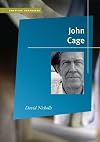
Often Music and Art are regarded as separate disciplines, but with John Cage's work these categories are indistinguishable. I found this book to be inspiring yet highly technical in spots - too technical for my limited understanding of music theory.
Statistics
- Works
- 5
- Members
- 90
- Popularity
- #205,794
- Rating
- 3.9
- Reviews
- 2
- ISBNs
- 457
- Languages
- 25
- Favorited
- 1