
Daniel Jackson (3) (1963–)
Author of Software Abstractions: Logic, Language, and Analysis
For other authors named Daniel Jackson, see the disambiguation page.
About the Author
Daniel Jackson is Professor in the Department of Electrical Engineering and Computer Science and leads the Software Design Group at the Computer Science and Artificial Intelligence Lab at MIT.
Works by Daniel Jackson
Tagged
Common Knowledge
Members
Reviews
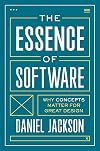
In today's software design, much focus hones in on users' experience with the interface. Teams make large efforts to make that experience as pleasing as possible so as not to drive away customers. However, they don't place as much emphasis on the conceptual nature of software - what concepts users extract from the software and what concepts the software requires for effective use. Since the advent of the GUI, today's software conveys intellectual matter that help users take up and use show more products effectively. These concepts are what Daniel Jackson, an eminent MIT professor, want to focus on. In this book, he describes how working on software concepts can translate into more effective products.
With its quasi-philosophical approach, this book treads new ground on how designers should think about their software. User-experience experts are now ubiquitous in industry, but Jackson's approach requires thought and philosophical mastery. He'll continue to challenge future designers to think over their designs better. He forces readers to think about software to a degree unmatched in my lifelong reading.
As a limitation, the book can become pedantic at times... as might be expected from an MIT professor. He tries to keep much of the scholarly back-and-forth to hundreds of pages of endnotes, but the book reads like a textbook, not an engaging conversational piece. Because his content takes a new perspective, I don't find this limitation anywhere near fatal, but software folks who like trendy books will find themselves disappointed. In contrast, scholars of software will find themselves excited.
This book will have lasting influence on the field of software design. Graduate school courses can easily use this book to spark discussions, and workplaces should have discussion groups to adapt its insights. Although appreciating its contents requires some degree of intellectual curiosity, anyone from frontline programmers, software architects, user-experiences experts, and philosophers of computing can benefit from this tour de force. It should continue to teach well in coming decades. show less
With its quasi-philosophical approach, this book treads new ground on how designers should think about their software. User-experience experts are now ubiquitous in industry, but Jackson's approach requires thought and philosophical mastery. He'll continue to challenge future designers to think over their designs better. He forces readers to think about software to a degree unmatched in my lifelong reading.
As a limitation, the book can become pedantic at times... as might be expected from an MIT professor. He tries to keep much of the scholarly back-and-forth to hundreds of pages of endnotes, but the book reads like a textbook, not an engaging conversational piece. Because his content takes a new perspective, I don't find this limitation anywhere near fatal, but software folks who like trendy books will find themselves disappointed. In contrast, scholars of software will find themselves excited.
This book will have lasting influence on the field of software design. Graduate school courses can easily use this book to spark discussions, and workplaces should have discussion groups to adapt its insights. Although appreciating its contents requires some degree of intellectual curiosity, anyone from frontline programmers, software architects, user-experiences experts, and philosophers of computing can benefit from this tour de force. It should continue to teach well in coming decades. show less
Statistics
- Works
- 3
- Members
- 123
- Popularity
- #162,200
- Rating
- 3.7
- Reviews
- 1
- ISBNs
- 48