
David Clarke (3)
Author of Skara Brae (Historic Scotland: Official Souvenir Guide)
For other authors named David Clarke, see the disambiguation page.
David Clarke (3) has been aliased into D. V Clarke.
Works by David Clarke
Works have been aliased into D. V Clarke.
Skara Brae World Heritage Site 2 copies
Tagged
Common Knowledge
- Gender
- male
Members
Reviews

Skara Brae is a neolithic village on the Orkney Islands that was buried under sand until a storm partly uncovered it in 1850. The interiors of the houses were excavated so that today visitors can walk around and look down into them. I was immensely fascinated when I visited in 2016, and even touched by the humanity of it all. It is so special not only because of the village's age - it is about 4500 years old - but because there is furniture made of stone. You can see hearths, beds, storage show more areas and dressers (or altars), and it looks all just so human, even cosy, that it just made me feel how similar humans were to us even such a long time ago. Our basic needs have not changed, and I think that is amazing.
This slim book contains a lot of information about the site of Skara Brae, but it is also easily readable and I learned many things while finally reading this (and probably a lot that I had simply forgotten).
It is divided into three parts.
The first part is like a guided tour of Skara Brae and it explains the layout of the village and the different houses. There are seven houses and one building that may have been a workshop, although the village was probably larger and a part of it was swallowed by the sea at one point.
The second part tells the reader about life at Skara Brae: Food, work, clothing, beliefs etc. The author, who was one of the leaders of the last excavation that took place there (in the 1970s), always takes care to clarify if something is only speculation or if it is supported by evidence, and what kind of evidence.
The last part of the book gives an overview of the different excavations, of Skara Brae's relationship to other neolithic places on the Orkney Islands and Britain, and even to places further away.
Throughout the book, the text is supported by photographs and illustrations that make it easier to understand everything.
Of course, in such a short book most topics can only be touched upon, but it is really good for what it is, providing a summary of the most important information about the fascinating site of Skara Brae. show less
This slim book contains a lot of information about the site of Skara Brae, but it is also easily readable and I learned many things while finally reading this (and probably a lot that I had simply forgotten).
It is divided into three parts.
The first part is like a guided tour of Skara Brae and it explains the layout of the village and the different houses. There are seven houses and one building that may have been a workshop, although the village was probably larger and a part of it was swallowed by the sea at one point.
The second part tells the reader about life at Skara Brae: Food, work, clothing, beliefs etc. The author, who was one of the leaders of the last excavation that took place there (in the 1970s), always takes care to clarify if something is only speculation or if it is supported by evidence, and what kind of evidence.
The last part of the book gives an overview of the different excavations, of Skara Brae's relationship to other neolithic places on the Orkney Islands and Britain, and even to places further away.
Throughout the book, the text is supported by photographs and illustrations that make it easier to understand everything.
Of course, in such a short book most topics can only be touched upon, but it is really good for what it is, providing a summary of the most important information about the fascinating site of Skara Brae. show less
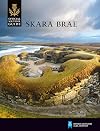
Obviously a very brief overview of this remarkable archaeological site: a small stone village, half buried in the dune sand, on a remote island group (the Orkneys), inhabited between (approximately) 2900 and 2500 BCE. Strangely, no human remains have been found at all, and the status of the village remains unclear: was it a farming village, a religious community, an elite enclave, or a village specializing in tool production?
Lists
You May Also Like
Associated Authors
Statistics
- Works
- 4
- Members
- 64
- Popularity
- #264,967
- Rating
- 4.3
- Reviews
- 2
- ISBNs
- 242
- Languages
- 6