
Rita James Simon (1931–2013)
Author of In Their Own Voices: Transracial Adoptees Tell Their Stories
About the Author
Rita J. Simon is university professor in the School of Public Affairs at the Washington College of Law at American University. (Bowker Author Biography)
Works by Rita James Simon
As we saw the thirties; essays on social and political movements of a decade (1967) — Editor — 17 copies
In Their Siblings’ Voices: White Non-Adopted Siblings Talk About Their Experiences Being Raised with Black and Biracial Brothers and Sisters (2009) 14 copies
The Crimes Women Commit: The Punishments They Receive (Global Perspectives on Social Issues) (1990) 10 copies, 1 review
the insanity defense: a critical assessment of law and policy in the post-hinckley era (1988) 3 copies
Public opinion in the United States : studies of race, religion, gender, and issues that matter (2017) 2 copies
Transracial Adoptees and Their Families: A Study of Identity and Commitment (1987) 2 copies, 2 reviews
As we saw the thirties 2 copies
Tagged
Common Knowledge
- Legal name
- Simon, Rita Mintz James
- Birthdate
- 1931-11-26
- Date of death
- 2013-07-25
- Gender
- female
- Education
- University of Chicago (PhD|Sociology1957)
- Nationality
- USA
- Birthplace
- Brooklyn, New York, USA
- Place of death
- Bloomington, Indiana, USA
- Associated Place (for map)
- USA
Members
Reviews
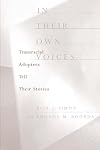
The book is a collection of twenty-four interviews (twelve men, twelve women) of biracial and black adults who were adopted by white parents. Unquestionably worth the read for anyone interested in the topic. While there are recurring themes in the responses of the interviewees, nothing is redundant: each individual adds another layer to the reader's understanding. I especially enjoyed reading those highly self-aware adoptees who were able to explain how their own personalities molded their show more experiences.
At times the interviewer's questions seem to lead to specific answers, more in an anticipatory fashion than a manipulative one. Still, it felt odd until one of the adoptees mentioned conversation that occurred "before taping." The interviewer really is anticipating responses based on prior knowledge. It's a subtle distinction but one I'm glad is clarified. Also noteworthy is a description on the back cover that this work is a "supplement" to empirical research contributed to the field of study by these authors. This is not intended to be a scholarly work in the same way; this is the humanizing element (and as such is perfect for my purpose as a reader). One thing I'm left wondering is how today's twenty- and thirty-year-old adoptees would respond to some of the social/racial issues, compared to the responses of these adoptees (who were born in the late 1960s-early 1970s and were interviewed in the 1990s).
My perspective was broadened by this book. I was given answers to questions I never would have thought to ask. I'm not only better informed but also feel personally enriched by the glimpse into these life stories. show less
At times the interviewer's questions seem to lead to specific answers, more in an anticipatory fashion than a manipulative one. Still, it felt odd until one of the adoptees mentioned conversation that occurred "before taping." The interviewer really is anticipating responses based on prior knowledge. It's a subtle distinction but one I'm glad is clarified. Also noteworthy is a description on the back cover that this work is a "supplement" to empirical research contributed to the field of study by these authors. This is not intended to be a scholarly work in the same way; this is the humanizing element (and as such is perfect for my purpose as a reader). One thing I'm left wondering is how today's twenty- and thirty-year-old adoptees would respond to some of the social/racial issues, compared to the responses of these adoptees (who were born in the late 1960s-early 1970s and were interviewed in the 1990s).
My perspective was broadened by this book. I was given answers to questions I never would have thought to ask. I'm not only better informed but also feel personally enriched by the glimpse into these life stories. show less
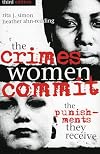
This is a very fascinating book about trends in women’s incarceration mostly in the US. I’m in a class about mass incarceration so I already knew that most of the time women commit different types of crime than men or for different reasons. Most women who commit what could be considered a violent crime are acting against an abuser. It was interesting to see more statistics on this topic and some broader analysis of why women may commit certain crimes. It’s under researched area but show more more and more people are looking into the topic as incarceration rates for women rise. This is very academic but still easy to read. It’s a bit outdated as it came out in 2005 but if your looking for an introduction to the topic I would definitely suggest this book. show less
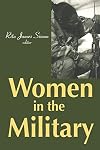
Essays include one by Lorry Fenner, Brenda Moore (on Black women equal opportunity and the Navy) Mady and David Segal on men women and enlistment trends, and anti-feminist essays by Marie De Young and Laura Miller. I found the essay on "Women and Readiness" by William Neill extremely interesting - he takes a "bottom line" approach to the issue and says simply that the modern day military cannot function without women, so it had better find ways (such as strength training) that allow women to show more contribute in the most efficient way possible. show less
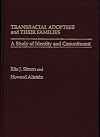
When Black Kids Get White Parents
Awards

You May Also Like


Associated Authors
Statistics
- Works
- 36
- Members
- 195
- Popularity
- #112,376
- Rating
- 4.1
- Reviews
- 6
- ISBNs
- 70