
Jane Jeong Trenka
Author of The Language of Blood
About the Author
Image credit: Jane Jeong Trenka
Works by Jane Jeong Trenka
Tagged
Common Knowledge
- Birthdate
- 1972
- Gender
- female
- Nationality
- South Korea (birth)
- Places of residence
- Minnesota, USA
Korea - Associated Place (for map)
- Minnesota, USA
Members
Reviews
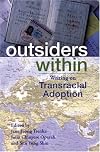
This was a difficult book to read. It is made up of "stories" or articles written by adult transracial/national adoptees. As an adoptive parent I like to read what the experts are saying as they reach adulthood. This book is not a place to look for a warm fuzzy.
The articles are written by different nationalities, all with their own experiences and stories to tell. Most have something they wish their adoptive parents had done differently -- but most also say they still have wonderful show more relationships with those parents even as they point out the hard stuff.
What this book really, really brought home to me is that as adoptive parents, as our children become young adults we need to make sure they are aware of and take advantage of adult adoptee groups if they are interested. Over and over the adoptee's relate that they never felt a 100% fit in their white homes or communities or in their native communities. In one group they don't look like a match, and in the group they match they act too white or American (or British or Canadian....). The place they all seem to point out as a "safe" place that they fit in and were understood were in the adoptee groups. NOT parent/adoptee groups, their own group where they are free to express themselves without hurting their loved ones.
Another thing that so many of them pointed out is that so much of the "research" and studies on transracial/national adoption with all the good results, first tend to be based on younger children, and second, the experts tend to be white social workers, doctors, adoption workers, adoptive parents ,etc., not from actual adoptees. Hopefully that will change in the future because most of these adoptee's tend to discount those findings as done by people without a clue or with an agenda to support.
A good read. This is a book I will keep. show less
The articles are written by different nationalities, all with their own experiences and stories to tell. Most have something they wish their adoptive parents had done differently -- but most also say they still have wonderful show more relationships with those parents even as they point out the hard stuff.
What this book really, really brought home to me is that as adoptive parents, as our children become young adults we need to make sure they are aware of and take advantage of adult adoptee groups if they are interested. Over and over the adoptee's relate that they never felt a 100% fit in their white homes or communities or in their native communities. In one group they don't look like a match, and in the group they match they act too white or American (or British or Canadian....). The place they all seem to point out as a "safe" place that they fit in and were understood were in the adoptee groups. NOT parent/adoptee groups, their own group where they are free to express themselves without hurting their loved ones.
Another thing that so many of them pointed out is that so much of the "research" and studies on transracial/national adoption with all the good results, first tend to be based on younger children, and second, the experts tend to be white social workers, doctors, adoption workers, adoptive parents ,etc., not from actual adoptees. Hopefully that will change in the future because most of these adoptee's tend to discount those findings as done by people without a clue or with an agenda to support.
A good read. This is a book I will keep. show less

Outsiders Within is a really interesting anthology that covers a lot of issues surrounding transracial and transnational adoption. It is very thorough and covers not only the problems that many adoptees have faced over the years, but why transnational adoption has occurred in such great numbers and asks the important questions such as why have the underlying reasons behind transnational adoption not been addressed?
It was interesting to see one of the side-effects of the women's movement in show more the 1970s. With fewer young women being coerced into carrying unplanned pregnancies to term and giving the babies up for adoption, upper and middle class white couples experienced a dearth of white babies to adopt, hence they turned to other countries for adoption. show less
It was interesting to see one of the side-effects of the women's movement in show more the 1970s. With fewer young women being coerced into carrying unplanned pregnancies to term and giving the babies up for adoption, upper and middle class white couples experienced a dearth of white babies to adopt, hence they turned to other countries for adoption. show less
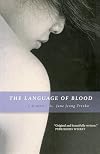
Using a variety of styles and narratives, Korean adoptee Trenka tells of the experience of a violent stalker in Minnesota, racism, going to Korea to find her mother who soon died with cancer, an older sister, and ultimately, love. A search for what is Korean and her Korean American identity. The prose is as luminous and carefully beautiful as the reviews say,. I came away with a sense of the writer's youth, and how her search has perhaps only now really begun.
This is a book written by an adult Korean adoptee. It is worth the read. The author tells her story and how she adjusted to life in general. Its is an encouraging as it is discouraging. I think we can learn much from the adopted children of Korea. This book gives great examples of how NOT to treat your adopted children. I highly recommend adoptive parents read it.
Lists
Awards

You May Also Like


Associated Authors
Statistics
- Works
- 3
- Members
- 192
- Popularity
- #113,796
- Rating
- 4.0
- Reviews
- 6
- ISBNs
- 6