
Rickie Solinger
Author of Wake Up Little Susie
About the Author
Rickie Solinger is a historian and curator and the author or editor of many books about reproductive politics, including Wake Up Little Susie: Single Pregnancy and Race before Roe v. Wade and, with Loretta Ross, Reproductive Justice: An Introduction.
Image credit: Publicity photo
Works by Rickie Solinger
Beggars and Choosers: How the Politics of Choice Shapes Adoption, Abortion, and Welfare in the United States (2001) 81 copies, 3 reviews
Reproductive States: Global Perspectives on the Invention and Implementation of Population Policy (2015) 20 copies
Associated Works
Unequal Sisters: A Multicultural Reader in U.S. Women's History {Third Edition} (2000) — Contributor, some editions — 107 copies
Unequal Sisters: A Multicultural Reader in U.S. Women's History {Second Edition} (1994) — Contributor — 98 copies
Comics for Choice: Illustrated Abortion Stories, History, and Politics (2017) — Contributor — 87 copies, 5 reviews
Tagged
Common Knowledge
- Birthdate
- 1947-04-21
- Gender
- female
- Education
- The Graduate Center of the City University of New York
- Awards and honors
- Lerner-Scott Award (1992)
Catherine Prelinger Award (2000) - Relationships
- Mink, Gwendolyn (co-editor)
Members
Reviews
Beggars and choosers : how the politics of choice shapes adoption, abortion, and welfare in the United States by Rickie Solinger
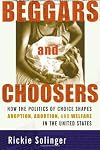
This book was hard for me to rate because while parts of it are phenomenal, there are sections where I wished she would have pushed the theoretical issues a little bit more. Overall though, this is a phenomenally important book that everyone should read. Sollinger explores the ways in which the language of reproductive "choice" works to constrain reproductive "rights."
highlights:
-"Given the popular definitions of good choice makers and bad, I believe it is crucial to consider the degree to show more which one woman's possession of reproductive choice may actually depend on or deepen another woman's reproductive vulnerability." From page seven
-Sollinger's analysis of the iconic figures of the Back Alley Butcher and the Welfare Queen
-exposition of the deep paradoxes inherent in US policy toward motherhood: forcing poor single, mothers of infants to go to work (without providing subsidized day care), while simultaneously giving tax credits to middle class women to stay home; foster mothers are given 2/3 more money to care for children than the children's mother's receive from welfare, etc.
Things I wish she would have pushed further:
-feminist theory of motherhood: Sollinger describes the difficulties Concerned United Birthmother's had getting the support of second-wave feminists, because these feminists were reacting against the idea of biological motherhood as the defining characteristic of a woman's life. How can we create a feminist theory of motherhood that recognizes a woman's right NOT to be a mother while recognizing the profound psychological effects that separating a child from its birthmother has on that mother? Sollinger quite thoroughly explores the ways in which United States' culture has been reconstructing motherhood as a consumer activity, but seems at the same time to suggest that there is some essential motherhood that exists beyond culture. How do we respect cultural differences in constructions of motherhood without Othering poor and third world mothers as 'illegitimate' mothers? show less
highlights:
-"Given the popular definitions of good choice makers and bad, I believe it is crucial to consider the degree to show more which one woman's possession of reproductive choice may actually depend on or deepen another woman's reproductive vulnerability." From page seven
-Sollinger's analysis of the iconic figures of the Back Alley Butcher and the Welfare Queen
-exposition of the deep paradoxes inherent in US policy toward motherhood: forcing poor single, mothers of infants to go to work (without providing subsidized day care), while simultaneously giving tax credits to middle class women to stay home; foster mothers are given 2/3 more money to care for children than the children's mother's receive from welfare, etc.
Things I wish she would have pushed further:
-feminist theory of motherhood: Sollinger describes the difficulties Concerned United Birthmother's had getting the support of second-wave feminists, because these feminists were reacting against the idea of biological motherhood as the defining characteristic of a woman's life. How can we create a feminist theory of motherhood that recognizes a woman's right NOT to be a mother while recognizing the profound psychological effects that separating a child from its birthmother has on that mother? Sollinger quite thoroughly explores the ways in which United States' culture has been reconstructing motherhood as a consumer activity, but seems at the same time to suggest that there is some essential motherhood that exists beyond culture. How do we respect cultural differences in constructions of motherhood without Othering poor and third world mothers as 'illegitimate' mothers? show less
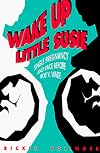
What it meant to be pregnant and unwed in the US from 1945 to 1965. Basically, it sucked. But, it sucked for white women and black rather differently. Both were expected to be ashamed, but white women were usually forced into maternity homes, where they could be pregnant in secret, and then give their infant up for a secret adoption (nevertheless, according to a 1957 survey, some ~30% of white women kept their babies). But because there was a demand from prospective adopters for white show more babies, but not black babies, black women were not offered places in maternity homes, and were expected to raise their babies. Amazingly, white women who petitioned to be allowed to raise their babies were judged unfit by reason of mental instability (after all, what sane woman would ever want to be an unwed mother!), while black women who tried to give their babies up for adoption had a hard time of it--some where even charged with child abandonment! And as for abortions--just by petitioning to have one, a woman proved herself to be so lacking in morality that she deserved the punishment of bearing and raising a child.
So many white unmarried women had the pain of a forced adoption, whereas many black unmarried women had the pain of forced child-rearing. And then, for extra fun, the black women who were forced to keep their children were thought to prove that black people were just naturally so animalistic that they couldn't think straight enough to not have sex and bear lots of babies. And ooh, also, they were the cause of all social programs and poverty in America! Which is particularly funny, cuz most social programs not only paid barely enough to keep people alive, but also, excluded people of color!
This was a stunning book, and I pretty much wanted to cry and rage half the time I was reading it. I found it such hard going, in fact, that I ran out of library time and have to return it, having only skimmed the last few chapters. I'm sure there's some important stuff in here that I've missed.
A few quotes I found particularly worthwhile:
"Race, in the end, was the most accurate predictor of an unwed mother's parents' response to her pregnancy; of society's reaction to her plight; of where and how she would spend the months of her pregnancy; and most important, the most accurate predictor of what she would do with the 'fatherless' child she bore, and of how being mother to such a child would affect the rest of her life...race-specific public and private responses to single pregnancy, between 1945 and 1965, have profoundly influenced the race-rent politics of female fertility in our time."
"An unmarried black pregnant girl looking for help in the early decades of the twentieth century could probably have found assistance only within her own family and community. Most maternity homes excluded blacks; most of the few government assistance programs that existed excluded unmarried mothers."
"White illegitimacy was generally not perceived as a 'cultural' or racial defect, or as a public expense, so the stigma suffered by the white unwed mother was individual and familial. Black women, illegitimately pregnant, were not shamed but simply blamed, blamed for the population explosion, for escalating welfare costs, for the existence of unwanted babies, and blamed for the tenacious grip of poverty on blacks in America. There was no redemption possible for these women, only the retribution of sterilization, harassment by welfare officials, and public policies that threatened to starve them and their babies." show less
So many white unmarried women had the pain of a forced adoption, whereas many black unmarried women had the pain of forced child-rearing. And then, for extra fun, the black women who were forced to keep their children were thought to prove that black people were just naturally so animalistic that they couldn't think straight enough to not have sex and bear lots of babies. And ooh, also, they were the cause of all social programs and poverty in America! Which is particularly funny, cuz most social programs not only paid barely enough to keep people alive, but also, excluded people of color!
This was a stunning book, and I pretty much wanted to cry and rage half the time I was reading it. I found it such hard going, in fact, that I ran out of library time and have to return it, having only skimmed the last few chapters. I'm sure there's some important stuff in here that I've missed.
A few quotes I found particularly worthwhile:
"Race, in the end, was the most accurate predictor of an unwed mother's parents' response to her pregnancy; of society's reaction to her plight; of where and how she would spend the months of her pregnancy; and most important, the most accurate predictor of what she would do with the 'fatherless' child she bore, and of how being mother to such a child would affect the rest of her life...race-specific public and private responses to single pregnancy, between 1945 and 1965, have profoundly influenced the race-rent politics of female fertility in our time."
"An unmarried black pregnant girl looking for help in the early decades of the twentieth century could probably have found assistance only within her own family and community. Most maternity homes excluded blacks; most of the few government assistance programs that existed excluded unmarried mothers."
"White illegitimacy was generally not perceived as a 'cultural' or racial defect, or as a public expense, so the stigma suffered by the white unwed mother was individual and familial. Black women, illegitimately pregnant, were not shamed but simply blamed, blamed for the population explosion, for escalating welfare costs, for the existence of unwanted babies, and blamed for the tenacious grip of poverty on blacks in America. There was no redemption possible for these women, only the retribution of sterilization, harassment by welfare officials, and public policies that threatened to starve them and their babies." show less
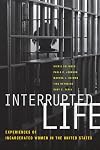
Interrupted Life is a gripping collection of writings by and about imprisoned women in the United States, a country that jails a larger percentage of its population than any other nation in the world. This eye-opening work brings together scores of voices from both inside and outside the prison system including incarcerated and previously incarcerated women, their advocates and allies, abolitionists, academics, and other analysts. In vivid, often highly personal essays, poems, stories, show more reports, and manifestos, they offer an unprecedented view of the realities of women's experiences as they try to sustain relations with children and family on the outside, struggle for healthcare, fight to define and achieve basic rights, deal with irrational sentencing systems, remake life after prison; and more. Together, these powerful writings are an intense and visceral examination of life behind bars for women, and, taken together, they underscore the failures of imagination and policy that have too often underwritten our current prison system. show less
Beggars and Choosers: How the Politics of Choice Shapes Adoption, Abortion, and Welfare in the United States by Rickie Solinger
I can't even begin to tell you how startling I found this book. The number of topics to which I had devoted little or no thought previously. How well she documented and expressed opinions that I did have. Which is not to say that I agreed with her every point, nor that her every point was groundbreaking. Many of the arguments my sister found shocking I found reasonable (though mostly because we drew different conclusions from them). A good word to sum up this book is: eye-opening. Rather show more than supporting a view I already had, this book challenged me to think more about the subject. And especially to read more on the subject. show less
Awards

You May Also Like


Associated Authors
Statistics
- Works
- 14
- Also by
- 3
- Members
- 593
- Popularity
- #42,348
- Rating
- 4.0
- Reviews
- 9
- ISBNs
- 46