
Jennifer Baumgardner
Author of Manifesta: Young Women, Feminism, and the Future
About the Author
Jennifer Baumgardner (pictured pregnant on the cover with director Gillian Aldrich) is the producer/creator of the award-winning film I Had an Abortion. She is the coauthor (with Amy Richards) of Manifesta: Young Women, Feminism, and the Future and Grassroots: A Field Guide for Feminist Activism show more (both Farrar, Straus & Giroux). Her most recent book is Look Both Ways: Bisexual Politics (FSG, 2007). She writes regularly for women's magazines like Glamour, Elle, and Redbook, as well as more political outlets such as the Nation, Harper's, and NPR's All Things Considered. She lives in New York City show less
Works by Jennifer Baumgardner
What is Feminism? 4 copies
Associated Works
Dear John, I Love Jane: Women Write About Leaving Men for Women (2010) — Contributor — 116 copies, 7 reviews
The Good Mother Myth: Redefining Motherhood to Fit Reality (2013) — Contributor — 47 copies, 2 reviews
Sex and Sensibility: 28 True Romances from the Lives of Single Women (2005) — Contributor — 28 copies
Tagged
Common Knowledge
- Birthdate
- 1970-05-15
- Gender
- female
- Education
- Lawrence University (1992)
- Occupations
- writer
editor - Organizations
- Soapbox Inc.
- Nationality
- USA
- Places of residence
- Fargo, North Dakota, USA
Brooklyn, New York, USA - Map Location
- USA
Members
Reviews
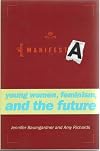
From my Cannonball Read V review ...
As I close in on the full Cannonball, I'm trying to wrap up a lot of books that I've put down over the course of the year. There's a science book, one of the Song of Ice and Fire series, another etiquette book, and one on goddesses (seriously). And then there’s this one, which I started way back in January. Why the ten month break between starting and finishing it? Well … I just did not like it.
Manifesta is on a lot of 'must read' feminism book lists, show more but I found it to be mediocre. The writing isn't bad - it's not like Cinderella's Lost Diary or whatever that unfortunate book was that Cannonballers were offered for free earlier this year. My problem is that it’s not actually what it claims to be - a feminism manifesto. It's more like a thrown-together anthology of white feminism, with some 'picture this' writing thrown in. The chapters feel disjointed, and I'm not entirely clear what the authors sought to do with this book. Were they trying to say what the 'third wave' feminists are contributing to feminism as a whole? Were they trying to explore what previous feminists did (and how that was and was not successful)? Trying to outline what we should be doing going forward? I think a book could be successful in doing all three, but that’s not this book.
In addition to the book feeling disjointed and unfocused, there were so many areas where they missed opportunities to really explore feminism - warts and all. There was even one point where I wanted to just throw the book out the window, but was nearly 200 pages in so I just stuck it out. That moment was during a discussion of toys for young girls, and the issues with Barbie, and the attempts to push Mattel to sell Barbies that look more like all girls – so not just blond, white Barbies. The authors passed that off as “PC,” and they meant that as an insult. Any book that uses the concept of "Politically Correct" as though it is derogatory just isn't a good book in my opinion. Saying something is 'politically correct' means that it's showing some empathy to people, and recognizing that straight, white, cis people aren't all who matter.
That very specific issue is one example of the larger problem with this book - it's so, very, very white. Yes, the authors mention contributions from women of color (usually in passing), but they don't acknowledge any of the larger issues with mainstream white feminism. They buy into the "women fought to join the workforce and stay there after the war" story, for example, but don't acknowledge that many women of color had already been working for decades. They don't recognize the complexity of race, gender and sexuality - it's a lot of Gloria Steinem and one reference to bell hooks.
Going forward, I'll be avoiding these generic overviews of feminism, whether targeting and young women or not. I'm more interested in learning about the full history of feminism, and womanism, and reading books that look at the bigger issues of intersectionality that mainstream feminism keeps ignoring. show less
As I close in on the full Cannonball, I'm trying to wrap up a lot of books that I've put down over the course of the year. There's a science book, one of the Song of Ice and Fire series, another etiquette book, and one on goddesses (seriously). And then there’s this one, which I started way back in January. Why the ten month break between starting and finishing it? Well … I just did not like it.
Manifesta is on a lot of 'must read' feminism book lists, show more but I found it to be mediocre. The writing isn't bad - it's not like Cinderella's Lost Diary or whatever that unfortunate book was that Cannonballers were offered for free earlier this year. My problem is that it’s not actually what it claims to be - a feminism manifesto. It's more like a thrown-together anthology of white feminism, with some 'picture this' writing thrown in. The chapters feel disjointed, and I'm not entirely clear what the authors sought to do with this book. Were they trying to say what the 'third wave' feminists are contributing to feminism as a whole? Were they trying to explore what previous feminists did (and how that was and was not successful)? Trying to outline what we should be doing going forward? I think a book could be successful in doing all three, but that’s not this book.
In addition to the book feeling disjointed and unfocused, there were so many areas where they missed opportunities to really explore feminism - warts and all. There was even one point where I wanted to just throw the book out the window, but was nearly 200 pages in so I just stuck it out. That moment was during a discussion of toys for young girls, and the issues with Barbie, and the attempts to push Mattel to sell Barbies that look more like all girls – so not just blond, white Barbies. The authors passed that off as “PC,” and they meant that as an insult. Any book that uses the concept of "Politically Correct" as though it is derogatory just isn't a good book in my opinion. Saying something is 'politically correct' means that it's showing some empathy to people, and recognizing that straight, white, cis people aren't all who matter.
That very specific issue is one example of the larger problem with this book - it's so, very, very white. Yes, the authors mention contributions from women of color (usually in passing), but they don't acknowledge any of the larger issues with mainstream white feminism. They buy into the "women fought to join the workforce and stay there after the war" story, for example, but don't acknowledge that many women of color had already been working for decades. They don't recognize the complexity of race, gender and sexuality - it's a lot of Gloria Steinem and one reference to bell hooks.
Going forward, I'll be avoiding these generic overviews of feminism, whether targeting and young women or not. I'm more interested in learning about the full history of feminism, and womanism, and reading books that look at the bigger issues of intersectionality that mainstream feminism keeps ignoring. show less
I had a lot of mixed reactions to this book. I was wary to the book to begin with, as it was shoved at me by my sister after she wrote a rather scathing review of the book. From this I was expecting to be annoyed by the book but also curiously looking for some redeeming factors to temper my sister’s hostility.
Unfortunately, most of the annoying stuff is packed right up front in the first few chapters. Which is why when I started reading this book the first time, I only made it about ten show more pages in before I put it back in the bookshelf, not to touch it again for at least a year. This second time I was determined to make it through, and happily, after the closing of chapter one, the book gets a lot more readable. What’s so bad about chapter one, you may ask? Well, nearly everything that my sister rants about in her review happens in chapter one. All women and all men are painted in very broad strokes, seemingly based on conclusions drawn from the small group of people that the authors personally know and hang out with. (Note to Jennifer and Amy: I don’t care how diverse your group of friends is demographically. Not all people in the world live like people in New York City. Not all people in the United States live like people in New York City.) At the end of this chapter, what I wanted most was to write a letter to the authors telling them how far my marriage falls outside of their definition of that relationships. For example: my husband cooks dinner 90% of the time, washes the dishes 98% of the time, and picks up my socks after me about as often as I pick up after his. I get the impression that they would possibly faint when presented with evidence that such a man exists in the world.
After Chapter One, though, it gets better. Unlike my sister, I didn’t really know that much about the history of feminism, so I found a lot of that information very interesting. Yes, the authors are sometimes naive and overly simplistic, but they’re young, and they are representing themselves as such, so for those sins I easily forgive them. There are things that I would have liked the book to do that it didn’t, but I don’t find much reason to complain about that. I appreciated the critique of ”movement feminists” not doing enough to involve young women in the movement (or going about it poorly when they do) and also the reassurances that there are a significant number of young feminist activists out there – that we’re just working on small, diverse projects in the absence of a single banner-issue to bring us all together and prove our strength in numbers.
So I guess just be conscious of what you’re looking for when thinking about this book. It’s not going to justify feminism as a movement. But it will provide evidence that young feminists exist, we’ve just got some organizational problems. show less
Unfortunately, most of the annoying stuff is packed right up front in the first few chapters. Which is why when I started reading this book the first time, I only made it about ten show more pages in before I put it back in the bookshelf, not to touch it again for at least a year. This second time I was determined to make it through, and happily, after the closing of chapter one, the book gets a lot more readable. What’s so bad about chapter one, you may ask? Well, nearly everything that my sister rants about in her review happens in chapter one. All women and all men are painted in very broad strokes, seemingly based on conclusions drawn from the small group of people that the authors personally know and hang out with. (Note to Jennifer and Amy: I don’t care how diverse your group of friends is demographically. Not all people in the world live like people in New York City. Not all people in the United States live like people in New York City.) At the end of this chapter, what I wanted most was to write a letter to the authors telling them how far my marriage falls outside of their definition of that relationships. For example: my husband cooks dinner 90% of the time, washes the dishes 98% of the time, and picks up my socks after me about as often as I pick up after his. I get the impression that they would possibly faint when presented with evidence that such a man exists in the world.
After Chapter One, though, it gets better. Unlike my sister, I didn’t really know that much about the history of feminism, so I found a lot of that information very interesting. Yes, the authors are sometimes naive and overly simplistic, but they’re young, and they are representing themselves as such, so for those sins I easily forgive them. There are things that I would have liked the book to do that it didn’t, but I don’t find much reason to complain about that. I appreciated the critique of ”movement feminists” not doing enough to involve young women in the movement (or going about it poorly when they do) and also the reassurances that there are a significant number of young feminist activists out there – that we’re just working on small, diverse projects in the absence of a single banner-issue to bring us all together and prove our strength in numbers.
So I guess just be conscious of what you’re looking for when thinking about this book. It’s not going to justify feminism as a movement. But it will provide evidence that young feminists exist, we’ve just got some organizational problems. show less
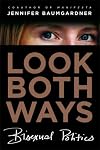
When I read about this book in the Utne Reader, I couldn't wait to buy it. A modern, young, memoir-style account of bisexuality and politics is not one of the most common book styles around- yet just what I had been yearning for. Baumgardner's book fills a void for this type of irreverent, fresh take on post-feminist bisexuality within the context of second-wave political lesbianism. It was disappointing, however, to finish the book feeling like I had read a memoir in which the data (second show more wave feminism) was made to fit the theory (bisexuality) rather than the other way around. I felt more like I was reading about why straight women sometimes like women, rather than about people who truly have no criteria for sex when it comes to their lovers or partners. I recommend it, just don't set your hopes too high. show less
A must-read for all young women so as to remind us what our mothers and grandmothers faught so hard for and to also remind us of our responsibility to our own children and young women of the future. Manifesta is inspiring and the kick-in-the-butt that every young inactive feminist needs.
Lists
Awards


You May Also Like


Associated Authors
Statistics
- Works
- 7
- Also by
- 8
- Members
- 1,598
- Popularity
- #16,136
- Rating
- 3.6
- Reviews
- 12
- ISBNs
- 16
- Favorited
- 2