
Laura Kaplan
Author of The Story of Jane: The Legendary Underground Feminist Abortion Service
Works by Laura Kaplan
The Story of Jane: The Legendary Underground Feminist Abortion Service (1996) 419 copies, 13 reviews
Jane 1 copy
Tagged
Common Knowledge
- Birthdate
- 20th Century
- Gender
- female
- Nationality
- USA
- Associated Place (for map)
- USA
Members
Reviews
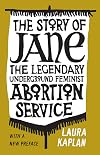
Jane was an underground abortion network made up of women’s liberation activists which was active in the Chicago area in the years immediately prior to the Roe v. Wade decision. The Story of Jane is an examination of this amazing example of grassroots organising, written by one of the women involved. More than once I was astounded by the things the members of Jane were willing to do in order to make safe abortions available to as many women as possible, and by their logistical savvy. This show more is essential reading for anyone looking to understand the history of feminism and the struggle for reproductive rights. My hope is that it won’t become essential reading for American women who find themselves needing to rebuild Jane in the near future. show less

This was such an eye-opener for me – a whole chapter of the pre-Roe v. Wade fight for women to control their own bodies that I had no idea even happened. I spent the whole read text-screaming random bits of it to my friends, my mind was so blown. More people should talk about this – about how it happened, why it was necessary, and why it’s so important to protect the abortion access we have now so we don’t have to go back to this era. Women deciding that begging male doctors and male show more hospital boards for permission to have an abortion was dangerous and messed up and deciding to do something about it! Realizing the underground market for abortions was just as dangerous and doing something about that! Bullying an abortionist into working on their terms and also into teaching them the procedures! They had a tangential relationship with a network of the clergy who referred women for abortions and used their societal status to lobby for legal abortion access (where did those guys go?)! We can’t even get people to call their reps on a regular basis these days, and these women helped an estimated 11,000 women over the course of the organization’s run. I can’t even imagine directly helping 11,000 people – I definitely shed some tears on the train over the narratives.
Because once you get over the sheer, mind-blowing factor of the work they were doing, you’d have to be heartless not to be affected by the emotional burden they carried. It’s one thing to know statistics on how many women have abortions, some facts about the era, and quite another to read about these women being absolutely buried by women seeking their service. Desperate women, whether they were seeking to protect their health, their relationships, or just their lives in general. Desperate enough to seek the underground abortion market when with a lot of it you ran the risk of butchery or assault. They not only provided safe abortions, they educated women about their own bodies, how birth control worked, and how the abortion was actually going to work. They made sure the women left feeling like they had actively made an important choice about their future and were a part of the whole process, rather than leaving feeling condescended to and patronized like in the medical system of the time. And they did this all while working underground and virtually unsupported by anyone else. It just really drives it home that women come to a need to control their own bodies from many angles, and it was really important for me that this book took the time to detail the backgrounds of the women involved so you could see that reproductive rights effect every woman, regardless of age, marital status, or race, and yet all of those factors need to be addressed when providing care to women. It was important to me that the members of Jane from the start made their service available to women of color, took steps to make sure it was accessible to them, knew that the optics of a group of white women providing abortions to black women could look bad, attempted to address it, and continued to put the needs of the individual women who came to them first. It was important to me that the focus in Jane was always on how to best serve the women who came to them for help. It was important to me that it was about the work that needed done, and not just the ideals and politics involved.
I could go on about this book for ages, and probably will if anyone ever gets me started on it. I definitely recommend it – it’s got a really compelling style and it just keeps throwing emotional hooks and mind-boggling events at you. It really hit me that this so easily could have been me, had I been born in another time – either as one of the counselors who got involved in the organization (one of them graduated from IU before getting involved) or as a woman who needed that service. It makes me so grateful who put in the work and pushed for the awareness and movement so that I don’t have to live under these circumstances. I want to buy 300 copies of this book and start chucking it at people’s heads while screaming “Banning abortion does not end abortion!” We can’t go back. We won’t go back. show less
Because once you get over the sheer, mind-blowing factor of the work they were doing, you’d have to be heartless not to be affected by the emotional burden they carried. It’s one thing to know statistics on how many women have abortions, some facts about the era, and quite another to read about these women being absolutely buried by women seeking their service. Desperate women, whether they were seeking to protect their health, their relationships, or just their lives in general. Desperate enough to seek the underground abortion market when with a lot of it you ran the risk of butchery or assault. They not only provided safe abortions, they educated women about their own bodies, how birth control worked, and how the abortion was actually going to work. They made sure the women left feeling like they had actively made an important choice about their future and were a part of the whole process, rather than leaving feeling condescended to and patronized like in the medical system of the time. And they did this all while working underground and virtually unsupported by anyone else. It just really drives it home that women come to a need to control their own bodies from many angles, and it was really important for me that this book took the time to detail the backgrounds of the women involved so you could see that reproductive rights effect every woman, regardless of age, marital status, or race, and yet all of those factors need to be addressed when providing care to women. It was important to me that the members of Jane from the start made their service available to women of color, took steps to make sure it was accessible to them, knew that the optics of a group of white women providing abortions to black women could look bad, attempted to address it, and continued to put the needs of the individual women who came to them first. It was important to me that the focus in Jane was always on how to best serve the women who came to them for help. It was important to me that it was about the work that needed done, and not just the ideals and politics involved.
I could go on about this book for ages, and probably will if anyone ever gets me started on it. I definitely recommend it – it’s got a really compelling style and it just keeps throwing emotional hooks and mind-boggling events at you. It really hit me that this so easily could have been me, had I been born in another time – either as one of the counselors who got involved in the organization (one of them graduated from IU before getting involved) or as a woman who needed that service. It makes me so grateful who put in the work and pushed for the awareness and movement so that I don’t have to live under these circumstances. I want to buy 300 copies of this book and start chucking it at people’s heads while screaming “Banning abortion does not end abortion!” We can’t go back. We won’t go back. show less
there's a lot going through my head after reading this book; let's see if i can put any of it into cogent sentences. so first of all, wow. the women in these pages are amazing. it makes me want to tap my radical side and just get out there and do something already, not just talk talk talk about all the problems with oppression i see in this world. to believe in something and to go for it, to make it happen, whatever the cost - that makes a powerful read. on the flipside, second of all, wow. show more the women in these pages play into the patriarchy in really interesting ways. i've been talking a lot lately about nonprofits and the possibly inherent problems with hierarchy that we see, as well as the divide between decision makers and those on the frontlines. this book shows how people out there making a real difference, doing radical work (the women who ran this service ended up actually providing the abortions themselves) end up with this power dynamic that the feminist movement (and their own organization, at the beginning) fights against. and third of all, wow. i knew that i have a pretty flimsy foundation of understanding around abortion and reproductive rights, but i never thought about how once roe v wade was passed, that there was still a huge amount of fighting to do. the christian groups that fight abortion (and who were a part of getting it legalized in the first place) make us focus on just keeping abortion legal, instead of the real issues - putting abortion into the hands of the women who are choosing to have them, giving them those decision-making powers. legalized abortion has just put doctors in power, not the women being affected. to say we don't need to fight about this is like saying that because we have a black president that we are in a post-racist society and that because women can be doctors and lawyers we live in a post-sexist society.
my mind is cracked and open after reading this. i don't think it's purpose was to galvanize people into action, but that might be the result for me.
"More and more, women are viewed as the enemy of children, requiring the State's intervention to protect their developing children from them. But, in reality, women still conceive, nurture, give birth to and, in most cases, are the primary caregivers of children. Women are being reduced, once again, to the incubators of future generations with total responsibility but no power."
"As to the question of whether abortion was murder, murder was a legal term applying to human beings, and a fetus, in their view, was not a human being. To give it the same or greater value than a living woman was an indication of how little women were valued, as if their only worth was the children they produced."
"'It felt to me that by doing this one little thing you could change a woman's life. You didn't have to change her values or walk her through any kind of experience. All you had to do was give her a choice.'" show less
my mind is cracked and open after reading this. i don't think it's purpose was to galvanize people into action, but that might be the result for me.
"More and more, women are viewed as the enemy of children, requiring the State's intervention to protect their developing children from them. But, in reality, women still conceive, nurture, give birth to and, in most cases, are the primary caregivers of children. Women are being reduced, once again, to the incubators of future generations with total responsibility but no power."
"As to the question of whether abortion was murder, murder was a legal term applying to human beings, and a fetus, in their view, was not a human being. To give it the same or greater value than a living woman was an indication of how little women were valued, as if their only worth was the children they produced."
"'It felt to me that by doing this one little thing you could change a woman's life. You didn't have to change her values or walk her through any kind of experience. All you had to do was give her a choice.'" show less
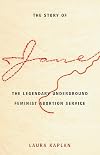
An exciting and informative read from start to finish, Jane is the story of an underground feminist abortion referral service which moved to providing abortions themselves four years before Roe v Wade. The book is based on interviews with many people who participated in the group, all woven into an engaging story. The way the book was written made me invested in the people and what they were doing - from running from a police raid to the excitement and tension of moving from a referral to an show more abortion provision service to the stress, frustration and will to survive coming out of their encounters with the state.
On top of the story itself, I found some of the most thought-provoking parts of the book to be when the author examines instances of group dynamics and practice in an intentionally non-hierarchical setting. Much like groups that I've been involved with, the group featured in the book experiences issues with informal leadership, skill sharing, burnout, and racial inclusion/exclusion. I found it fascinating to hear how these dynamics played out and changed over time and with the different circumstances encountered by the group. show less
On top of the story itself, I found some of the most thought-provoking parts of the book to be when the author examines instances of group dynamics and practice in an intentionally non-hierarchical setting. Much like groups that I've been involved with, the group featured in the book experiences issues with informal leadership, skill sharing, burnout, and racial inclusion/exclusion. I found it fascinating to hear how these dynamics played out and changed over time and with the different circumstances encountered by the group. show less
Lists
You May Also Like


Statistics
- Works
- 4
- Members
- 427
- Popularity
- #57,178
- Rating
- 4.3
- Reviews
- 13
- ISBNs
- 13
- Languages
- 1