
William Reid (1) (1920–1998)
Author of The Raven Steals the Light
For other authors named William Reid, see the disambiguation page.
About the Author
Image credit: William (Bill) Reid (1)
Works by William Reid
Associated Works
Tagged
Common Knowledge
- Legal name
- Reid Jr., William Ronald
- Other names
- Bill Reid
- Birthdate
- 1920-01-12
- Date of death
- 1998-03-13
- Gender
- male
- Education
- Ryerson University
- Occupations
- artist
Printmaker
sculptor
radio announcer - Organizations
- Canadian Broadcasting Corporation
- Awards and honors
- Order of British Columbia
- Relationships
- Harris, Christie (wife)
- Nationality
- Canada
- Birthplace
- Victoria, British Columbia, Canada
- Places of residence
- Vancouver, British Columbia, Canada
Toronto, Ontario, Canada - Place of death
- Vancouver, British Columbia, Canada
- Burial location
- Tanu Island, Haida Gawii, Canada
- Associated Place (for map)
- British Columbia, Canada
Members
Reviews

I almost overlooked this book as I browsed through the stacks of second hand offerings at my local thrift shop.Given its slender size, it was easy to miss in the stacks. It was the subtitle "Drawings by Bill Reid" that caught my eye. That was a name I recognized. An aboriginal artist and sculptor from the remote shores of western Canada, now known as Haida Gwai, his masterpieces are on display around the world.
It is through storytelling that the aboriginal people of Haida Gwai have passed show more down their mythology of origin. Bill Reid dedicates this book to one of these storytellers, Henry Young of Skidgate. Bill first encountered Henry as a young man of twenty when Henry was in his eighties. In collaboration with poet Robert Bringhurst, Bill brings ten of these wondrous, strange tales to life with lyrical language and fine artwork.
I began exploring this book in my usual comfy chair, reading to myself. I quickly realized that this was "story time" and started to read aloud to myself. I am so glad I did. I soon was immersed in the culture and history of Haida Gwaii, feeling the moisture of the coast on my face while listening to the forest that surrounded me. It was a delightful afternoon of time travel. show less
It is through storytelling that the aboriginal people of Haida Gwai have passed show more down their mythology of origin. Bill Reid dedicates this book to one of these storytellers, Henry Young of Skidgate. Bill first encountered Henry as a young man of twenty when Henry was in his eighties. In collaboration with poet Robert Bringhurst, Bill brings ten of these wondrous, strange tales to life with lyrical language and fine artwork.
I began exploring this book in my usual comfy chair, reading to myself. I quickly realized that this was "story time" and started to read aloud to myself. I am so glad I did. I soon was immersed in the culture and history of Haida Gwaii, feeling the moisture of the coast on my face while listening to the forest that surrounded me. It was a delightful afternoon of time travel. show less
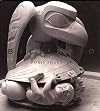
I had no reason to pick up my copy of Bill Reid when I did, having never heard of the man and not being particularly interested in the art of the Northwest Coast Indians. But somehow after I first glimpsed it, it nagged at me until I gave in.
This biography doubling as a look over the shoulder of a versatile artist and into a whole culture opened new worlds to me.
Bill Reid single-handedly revived an artistic tradition that was on the verge of vanishing, and one whose power of show more conceptualization and bold stylization is well worth studying by today's designers. This he did with daunting versatility in scale and material, from wooden totem poles to golden rings. A great number of his works are shown in this volume and better yet, discussed, allowing full appreciation of the thought behind the forms. Beyond this, it is Haida art as a whole that is evoked and explained, and I don't think it's possible to finish reading without gaining a fascination for it. Personally my impression of that art went from "tight mess of eyes and teeth" that did nothing to my aesthetic sensibilities to "stunning conceptual stylization of reality" that humbled and challenged my designer nature. Bill Reid's works are not just masterpieces of the medium they were made in, they are cultural artifacts.
This superb book, winner of two awards, may address a niche: specific artisans building a library, or students of ethnic or American Indian cultures. Yet if it got me totally enthused about both the man and the people, it would probably convert anyone who can appreciate ancient artistic traditions. show less
This biography doubling as a look over the shoulder of a versatile artist and into a whole culture opened new worlds to me.
Bill Reid single-handedly revived an artistic tradition that was on the verge of vanishing, and one whose power of show more conceptualization and bold stylization is well worth studying by today's designers. This he did with daunting versatility in scale and material, from wooden totem poles to golden rings. A great number of his works are shown in this volume and better yet, discussed, allowing full appreciation of the thought behind the forms. Beyond this, it is Haida art as a whole that is evoked and explained, and I don't think it's possible to finish reading without gaining a fascination for it. Personally my impression of that art went from "tight mess of eyes and teeth" that did nothing to my aesthetic sensibilities to "stunning conceptual stylization of reality" that humbled and challenged my designer nature. Bill Reid's works are not just masterpieces of the medium they were made in, they are cultural artifacts.
This superb book, winner of two awards, may address a niche: specific artisans building a library, or students of ethnic or American Indian cultures. Yet if it got me totally enthused about both the man and the people, it would probably convert anyone who can appreciate ancient artistic traditions. show less
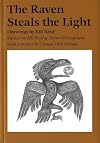
Anyone who ever watched the great CBS series will remember how important the Raven was to the Native Americans living in that small village. In this case, the microcosm truly did represent the world outside.
Raven is a "trickster god." These deities are found throughout the world. They represent chaos, a concept that does not translate well to Christian theology. It is not, as some theologians would have it, equivalent to evil. Instead, it simply represents the state of the universe before show more the creator god organized it. Tricksters are often extremely naive in the way they approach "life." They are usually easily defeated by other characters in the believers' mythos, and often seen as objects of ridicule and humor. It is likely that the concept of the Christian devil began as a trickster before the emphasis on the sufferings of Jesus on behalf of humanity became an important part of the religion. Loki, in Norse mythology, is a trickster, as is Coyote in the Apache mythos.
The back cover of this book further explains:
"The ten delightful Native American stories ... retellings of Haida myths and folktales. They ranger from bawdy tales of how the firt Haida were brought to the Queen Charlotte Islands, to poignant narratives of the complexities of love in a world where animals speak, dreams come alive, and demigods, monsters, and people live side by side.
Have fun reading this book. And remember that chaos is always only a sneeze away. show less
Raven is a "trickster god." These deities are found throughout the world. They represent chaos, a concept that does not translate well to Christian theology. It is not, as some theologians would have it, equivalent to evil. Instead, it simply represents the state of the universe before show more the creator god organized it. Tricksters are often extremely naive in the way they approach "life." They are usually easily defeated by other characters in the believers' mythos, and often seen as objects of ridicule and humor. It is likely that the concept of the Christian devil began as a trickster before the emphasis on the sufferings of Jesus on behalf of humanity became an important part of the religion. Loki, in Norse mythology, is a trickster, as is Coyote in the Apache mythos.
The back cover of this book further explains:
"The ten delightful Native American stories ... retellings of Haida myths and folktales. They ranger from bawdy tales of how the firt Haida were brought to the Queen Charlotte Islands, to poignant narratives of the complexities of love in a world where animals speak, dreams come alive, and demigods, monsters, and people live side by side.
Have fun reading this book. And remember that chaos is always only a sneeze away. show less
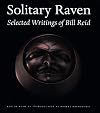
Bill Reid was/is the cultural leader of the Haida Nation (Queen Charlotte Islands). His sculptures are recognized as archetypal forms of the nation's soul. He was half Haida and half Scottish. He is schorlarly, playfull, artistic, literate and humanistic. He came to the Haida culture later in life. The selections of pieces in this book are extremely well balanced including biography, poems, stories and essays. This is a foundational book. Here is a selection that I especially like:
The Myth show more of the Land Bridge
In the world today there is a commonly held belief that, thousands of years ago as the world today counts time, Mongolian nomads crossed a land bridge to enter the western hemisphere and became the people now known as the American Indians.
The truth, of course, is that the Raven found our forefathers in a clamshell on the beach at Naikiun. At his bidding, they entered a world peopled by birds, beasts and creatures of great power and stature, and, with them, gave rise to the powerful families and their way of life.
At least, that's a little bit of the truth.
Another small part of it is that, after the flood, the Great Halibut was stranded near the mouth of the Nimpkish River where he shed his tail and fins and skin, and became the forest man. The Thunderbird then took off his wings and beak and feathers to become the second man, and helped the Halibut build the first house in which mankind spent his infancy.
And the Sxwaixwe rose out of the Fraser. Needing a wife, he created a woman from the hemlock on the bank, and she, in time, gave birth to the children who became parents of all men.
There is , it can be said, some scanty evidence to support the myth of the land bridge. But there is an enormous wealth of proof to confirm that the other truths are all valid.
Solitary Raven
Selected Writings of Bill Reid
2000, University of Washington Press show less
The Myth show more of the Land Bridge
In the world today there is a commonly held belief that, thousands of years ago as the world today counts time, Mongolian nomads crossed a land bridge to enter the western hemisphere and became the people now known as the American Indians.
The truth, of course, is that the Raven found our forefathers in a clamshell on the beach at Naikiun. At his bidding, they entered a world peopled by birds, beasts and creatures of great power and stature, and, with them, gave rise to the powerful families and their way of life.
At least, that's a little bit of the truth.
Another small part of it is that, after the flood, the Great Halibut was stranded near the mouth of the Nimpkish River where he shed his tail and fins and skin, and became the forest man. The Thunderbird then took off his wings and beak and feathers to become the second man, and helped the Halibut build the first house in which mankind spent his infancy.
And the Sxwaixwe rose out of the Fraser. Needing a wife, he created a woman from the hemlock on the bank, and she, in time, gave birth to the children who became parents of all men.
There is , it can be said, some scanty evidence to support the myth of the land bridge. But there is an enormous wealth of proof to confirm that the other truths are all valid.
Solitary Raven
Selected Writings of Bill Reid
2000, University of Washington Press show less
Awards

You May Also Like
Associated Authors
Statistics
- Works
- 8
- Also by
- 2
- Members
- 472
- Popularity
- #52,189
- Rating
- 4.5
- Reviews
- 11
- ISBNs
- 62
- Languages
- 6