
Robert Dunbar (1)
Author of The Pines
For other authors named Robert Dunbar, see the disambiguation page.
About the Author
Image credit: author of THE PINES and THE SHORE
Works by Robert Dunbar
Associated Works
Piercing the Darkness Anthology: A Charity Anthology for the Children’s Literacy Initiative (2014) — Contributor — 7 copies
Tagged
Common Knowledge
- Gender
- male
Members
Reviews

I finished this novella last night and I am still rolling it over and over again in my mind. It clearly deserves a re-read. Sometimes it makes all the difference to read the first line of a novel when you already know the last. Dunbar is one of the few novelists good enough to deserve a re-read.
All through my reading I got the feeling that Dunbar was laughing a snarky laugh as he teases the reader. I don't want to give away the numerous punchlines because I enjoyed them but just remember show more your fairy tales and if that isn't enough I really can't help you. And I feel that we must remember that fairy tales were written to teach moral truths to the reader.
We follow several marginal characters who live in or travel through a marginal area on the outskirts of town. Similarly, Rosario and the male protagonist with the porn star name (Dick Wood---yes, I actually heard Dunbar laughing when I read that name the first time) live on the periphery of their own lives.
"Blessed is the creature that knows its purpose." Neither the monster nor the human characters have any sense of purpose. The monster acts not from any evil desire; it merely feeds. And grows. Like an oil spill on the ocean. Yet it also is evolving.
The humans protagonists are not much better off. They seem unsure how to extract themselves from a life-threatening situation, how to escape the monster that pursues them, or even if they have the energy to try. They are like so many of us who watch the encroachment of biological (and human) forces of our own making that are rapidly destroying the world around us while we sit in front of our televisions wondering what show we will watch next, lacking the drive to save ourselves. We grow frustrated at Rosario and Dick's indifference to their own fate but are we any better? What is Dunbar saying here?
Is this what we have become? Uninterested in our own fate? Is this monster a hodgepodge of malevolence created by our own destructive indifference and ennui?
Dunbar's novel doesn't try to make us jump us as much as it tries to make us think. And the thoughts it brought up for me were the stuff of nightmares. show less
All through my reading I got the feeling that Dunbar was laughing a snarky laugh as he teases the reader. I don't want to give away the numerous punchlines because I enjoyed them but just remember show more your fairy tales and if that isn't enough I really can't help you. And I feel that we must remember that fairy tales were written to teach moral truths to the reader.
We follow several marginal characters who live in or travel through a marginal area on the outskirts of town. Similarly, Rosario and the male protagonist with the porn star name (Dick Wood---yes, I actually heard Dunbar laughing when I read that name the first time) live on the periphery of their own lives.
"Blessed is the creature that knows its purpose." Neither the monster nor the human characters have any sense of purpose. The monster acts not from any evil desire; it merely feeds. And grows. Like an oil spill on the ocean. Yet it also is evolving.
The humans protagonists are not much better off. They seem unsure how to extract themselves from a life-threatening situation, how to escape the monster that pursues them, or even if they have the energy to try. They are like so many of us who watch the encroachment of biological (and human) forces of our own making that are rapidly destroying the world around us while we sit in front of our televisions wondering what show we will watch next, lacking the drive to save ourselves. We grow frustrated at Rosario and Dick's indifference to their own fate but are we any better? What is Dunbar saying here?
Is this what we have become? Uninterested in our own fate? Is this monster a hodgepodge of malevolence created by our own destructive indifference and ennui?
Dunbar's novel doesn't try to make us jump us as much as it tries to make us think. And the thoughts it brought up for me were the stuff of nightmares. show less
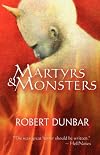
Robert Dunbar's book is my 666th rated book..... I am sure that this will make him smile and give off an evil laugh.
I was amazed by this collection. First of all, the stories didn't seem like they were even from the same author. Did the same guy write the pitch black "Gray Soil" and the laugh out loud humorous southern gothic "The Folly?" A complaint I often have when reading a story collection by one author is that the stories start to sound the same.
Not so here; which means a particular show more reader might not like every story. I don't think you are supposed to. I don't think Dunbar writes stories that he hopes everyone likes. That is always the case with artistic integrity. He writes. We read.
Some stories hit me as deeply as anything I have ever read. My personal favorites were "Like a Story," "High Rise," "Gray Soil," "Mal de Mer," "Red Soil," "The Folly," and "Explanations." I also enjoyed "Getting Wet" and "Are We Dead Yet" as they told a continuous story.
It is tempting to say that "Like a Story" reminds me of Gifune or "Mal de Mer" is sort of Lovecraftian at least in theme (although certainly not in writing style) but I will resist that temptation. Why compare writers? Dunbar is clearly an original with his own voice.
I can say that if you like dark fiction (because most of these stories are dark, even The Folly which is the lightest of the bunch) that is well written and original; if you are not afraid to go to places that may make you uncomfortable; if you are willing to read an author that is different from anyone else you have read----then try this one out.
By the way, in an age of throw away titles or merely using the title of the best known story, the title of this collection is very appropriate and adds to the understanding. The characters here are martyrs and monsters and sometimes they are both. show less
I was amazed by this collection. First of all, the stories didn't seem like they were even from the same author. Did the same guy write the pitch black "Gray Soil" and the laugh out loud humorous southern gothic "The Folly?" A complaint I often have when reading a story collection by one author is that the stories start to sound the same.
Not so here; which means a particular show more reader might not like every story. I don't think you are supposed to. I don't think Dunbar writes stories that he hopes everyone likes. That is always the case with artistic integrity. He writes. We read.
Some stories hit me as deeply as anything I have ever read. My personal favorites were "Like a Story," "High Rise," "Gray Soil," "Mal de Mer," "Red Soil," "The Folly," and "Explanations." I also enjoyed "Getting Wet" and "Are We Dead Yet" as they told a continuous story.
It is tempting to say that "Like a Story" reminds me of Gifune or "Mal de Mer" is sort of Lovecraftian at least in theme (although certainly not in writing style) but I will resist that temptation. Why compare writers? Dunbar is clearly an original with his own voice.
I can say that if you like dark fiction (because most of these stories are dark, even The Folly which is the lightest of the bunch) that is well written and original; if you are not afraid to go to places that may make you uncomfortable; if you are willing to read an author that is different from anyone else you have read----then try this one out.
By the way, in an age of throw away titles or merely using the title of the best known story, the title of this collection is very appropriate and adds to the understanding. The characters here are martyrs and monsters and sometimes they are both. show less
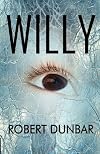
Willy begins with the arrival of an unnamed adolescent at his next stop in the institutional cycle, a school for boys with emotional problems. His last doctor has suggested that he keep a diary, and so begins the story of a withdrawn child shuttled to a school that is so decrepit it barely functions. There he meets his new roommate, a boy named Willy, whose charisma draws the other young men to him.
Within the first few pages, Robert Dunbar thoroughly places you in the young diarist’s head, show more and it is heartbreaking to read the thoughts of a child with such low self-esteem. No one encourages him or attempts to draw him from his shell, except for the principal of the school and eventually Willy.
With the arrival of Willy, the diarist begins a subtle transformation that Dunbar communicates with eloquent prose. I was reminded of Flowers for Algernon as I read the diarist’s words grow from those of an isolated child to become the thoughts of a young man. Yet Dunbar doesn’t overreach by creating an adult clothed in an adolescent’s body; he stays true to the diarist’s character and he shows us how love can transform and damn a soul.
This is the kind of novel that makes me yearn for a book club that discussed superior dark fiction. With Willy, the reader gets the best of both worlds–an excellent story for the casual reader, but if you’re like me and like to look a little closer, Willy is a tale of depth both in terms of story and characterization.
This is Robert Dunbar’s finest novel to date and certainly my favorite. show less
Within the first few pages, Robert Dunbar thoroughly places you in the young diarist’s head, show more and it is heartbreaking to read the thoughts of a child with such low self-esteem. No one encourages him or attempts to draw him from his shell, except for the principal of the school and eventually Willy.
With the arrival of Willy, the diarist begins a subtle transformation that Dunbar communicates with eloquent prose. I was reminded of Flowers for Algernon as I read the diarist’s words grow from those of an isolated child to become the thoughts of a young man. Yet Dunbar doesn’t overreach by creating an adult clothed in an adolescent’s body; he stays true to the diarist’s character and he shows us how love can transform and damn a soul.
This is the kind of novel that makes me yearn for a book club that discussed superior dark fiction. With Willy, the reader gets the best of both worlds–an excellent story for the casual reader, but if you’re like me and like to look a little closer, Willy is a tale of depth both in terms of story and characterization.
This is Robert Dunbar’s finest novel to date and certainly my favorite. show less
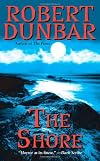
When a series of gruesome murders hit the small coastal town of Edgeharbor, NJ, policewoman Katherine "Kit" Lonergan begins to investigate---and her interest grows deeper when she learns the killer just may be a legendary creature, although she doesn't want to believe something so far-fetched.
Despite Dunbar's fantastic, poetic writing style, I must admit that I found the first 200 pages to be a bit slow-paced, and I began to worry this just wasn't going to live up to THE PINES. BUT, this is show more exactly when Dunbar lets the bottom drop out, and by employing an eerie Jersey Devil/werewolf mythos, a bar scene of strange locals reminiscent of THE WICKER MAN, and an X-Files-type incestuous family-plot, THE SHORE's final 100 pages bust loose with some edge-of-your seat suspense and chills that made sludging through the first 70% well worth it (not to mention a finale on a sinking boardwalk that's to die for).
I was happy to finally spend time at Dunbar's SHORE; I just wish it didn't take so long for the chills to kick in (although I have to give two huge thumbs up for chapter 15: it'll scare the devil outta ya!). show less
Despite Dunbar's fantastic, poetic writing style, I must admit that I found the first 200 pages to be a bit slow-paced, and I began to worry this just wasn't going to live up to THE PINES. BUT, this is show more exactly when Dunbar lets the bottom drop out, and by employing an eerie Jersey Devil/werewolf mythos, a bar scene of strange locals reminiscent of THE WICKER MAN, and an X-Files-type incestuous family-plot, THE SHORE's final 100 pages bust loose with some edge-of-your seat suspense and chills that made sludging through the first 70% well worth it (not to mention a finale on a sinking boardwalk that's to die for).
I was happy to finally spend time at Dunbar's SHORE; I just wish it didn't take so long for the chills to kick in (although I have to give two huge thumbs up for chapter 15: it'll scare the devil outta ya!). show less
Awards


You May Also Like


Associated Authors
Statistics
- Works
- 8
- Also by
- 2
- Members
- 318
- Popularity
- #74,347
- Rating
- 3.3
- Reviews
- 14
- ISBNs
- 23
