
David Stewart (1) (1954–)
Author of You Wouldn't Want to be an Egyptian Mummy!
For other authors named David Stewart, see the disambiguation page.
Series
Works by David Stewart
You Wouldn't Want to Sail on the Titanic!: One Voyage You'd Rather Not Make (2001) 458 copies, 10 reviews
You Wouldn't Want to Be Tutankhamen!: A Mummy Who Really Got Meddled With (2007) 150 copies, 5 reviews
You Wouldn't Want to be a Roman Soldier!: Barbarians You'd Rather Not Meet (2006) 133 copies, 2 reviews
You Wouldn't Want to Explore With Sir Francis Drake!: A Pirate You'd Rather Not Know (2005) 127 copies, 5 reviews
Tagged
Common Knowledge
- Legal name
- Salariya, David Stewart
- Other names
- Branigan, K.
Salariya, David
Stewart, David Evelyn (this name is error by his publisher)
Marlborough, Max (pseudonym) - Birthdate
- 1954-07-28
- Gender
- male
- Education
- Duncan of Jordanstone College of Art and Design, University of Dundee
University of Sussex - Occupations
- author
artist
designer
publisher
illustrator - Organizations
- Society of Authors
Royal Society of Arts
Independent Publishers Guild - Short biography
- [from author/illustrator's Linked In page]
David Salariya creates concepts for book series, designs, illustrates writes and publishes books for children' with a desire to promote lifelong literacy, representation and inclusion to a diverse audience.
1989 Founder of The Salariya Book Company Ltd and its imprints Book House, Scribblers and Scribo with a backlist of over 1200 titles sold globally and translated into over thirty-five languages. In 2022 he sold his business to Bonnier UK.
Writes as David Stewart, David Salariya and Max Marlborough.
Fellow of The Royal Society of Arts.
Born in Dundee in 1954. David studied Illustration & Printmaking at Duncan of Jordanstone College of Art, trained to be an art teacher at Sussex University. He designed and illustrated books for Readers Digest, Macmillan, Giunti Marzocco, Simon & Schuster, Franklin Watts, Kingfisher Books, Fabbri Editori, National Geographic and many more. - Nationality
- UK
- Places of residence
- Dundee, Angus, Scotland, UK
Brighton, Sussex, England, UK - Associated Place (for map)
- UK
Members
Reviews
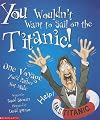
SHORT REVIEW: This books does some things very well, but it has some content that might be misleading and confusing for children.
LONG REVIEW (Feel free to skim): I have mixed feelings about this book. On the one hand, it has a lot going for it. It sticks with the series’ usual practice of looking at grisly history with wry gallows humor; the somewhat light approach and goofy pictures take the edge off what might have been a very dark read, and yet the book never takes this too far. It show more NEVER makes fun of the disaster or the victims, and it NEVER tries to soften the truth of what happened that awful night. The book also does a good job of giving what might be considered dry, tedious facts in an entertaining manner; for example, cartoon figures will have a speech-bubble conversation in which they casually bring up information about the ship's size and cargo. This is more interesting than simply reading a list of figures.
I like that the book takes time to explore other perspectives. In real life, Ismay's reputation never recovered from the stigma of taking a seat in a life boat. Even some modern books still condemn him for that. Here, however, readers are invited to experience the sinking from his point of view. I mean that literally: the book is written in second-person, and "you" do various things that Ismay did. It's fun, but it's also a much more even-handed approach than I've seen in other Titanic books. My favorite part of this book is when they talk about the workers on the ship. There is one scene in the book when a stoker is complaining about how little he makes for all his hard work. And it definitely shows his hard, physically demanding work. But the book also shows that although the stoker probably had a more demanding job than, say, the able seamen, he was also making more money than the able seamen. And even the able seamen, for their 8-hour days, were making more money than the stewardesses in their 17-hour days. This information is interesting, and it makes it easier for children to understand the many different kinds of jobs that were done on the ship, and the different people who did them.
I didn't like that this book is sloppy. It takes shortcuts. For example, in comparing salaries, some of the wages are adjusted for today's dollars, and some are not. I think they should be consistent. It will be difficult enough for a child to understand just how far $27 could go in 1912, but it will be impossible for them to get a sense of scale when they're comparing it to some other salary in today's money. The stewardesses worked long hours, yes, which makes me wonder when the other people were working. What were the stokers' hours? How do the jobs compare?
Worse than leaving information out, the book includes much that is either incorrect or misleading. At the end of the book, for example, it mentions that only one person was saved out of the water. Since there isn’t ANY other context for this, and since there is no source given for this, I have no idea what to make of it. ONE person only? Who was this one individual? Was it Jack Thayer, who survived the plunge into the water? Or Second Officer Lightoller, who was swept into the Atlantic when the ship sank from under him, and who was saved from the water? Colonel Gracie? Harold Bride? Or the Chief Baker, who swam around by himself for a long time before being rescued from the water? All of these people lived to tell about their experiences on the sip—and this is just off the top of my head. Fifth Officer Lowe pulled at least 14 people living from the water, and of these, 6 survived. And Lowe’s boat was only 1 of 3 boats that, after being launched, either stayed nearby to pick up survivors from the water or returned after the sinking to rescue whom they could. And in addition to these three boats, there were two others, Collapsibles A and B, that were never launched, but which were still on the ship when it sank, and whose passengers almost exclusively came from the water. So this book’s comment is either flat-out wrong, or I’m not understanding it the way they meant it. Either way, it muddles the situation, rather than clarifies it. Similarly, I didn’t like how much the book piggybacks off the 1997 Titanic film. The design of some characters mimics the actors and actresses of the film. The purple striped dress Rose wears in the film is seen here, along with some other visuals that nod to the movie. But it's dangerous to take a certain idea from a very long epic film, and portray just part of it in a few illustrations. This is how things get missed. One thing the movie did very well was show the many difficulties faced by the poor immigrants on the ship. There were definite language barriers, which were problematic enough before the collision, and fatal for many afterward. There were financial difficulties, too. Many of these passengers were already facing an uncertain future. Would they find a job? Would they have a home? Many of the steerage passengers had left relatives behind, or were planning to meet up with relatives who had traveled earlier. It was not uncommon for one family member to go to America to seek employment while the rest of the family would wait. But which movie scene does this book select? The party scene where they're all dancing. It was a fine scene in the film because it came in context. This book has one two-page tour-of-the-ship spread, and it shows the first class passengers as super boring and the third class passengers as carefree, happy-go-lucky people. In real life, these people probably had music and celebration, but they also had strength and courage to try to make a new life elsewhere. They weren't blind to reality: they were aware of the difficulties they would face in a foreign country and were determined rise above them all. It makes me sad that a hardworking group of people facing very real problems were only shown in their only big pre-collision scene having a silly dance. It makes the immigrant experience seem like one long birthday party. show less
LONG REVIEW (Feel free to skim): I have mixed feelings about this book. On the one hand, it has a lot going for it. It sticks with the series’ usual practice of looking at grisly history with wry gallows humor; the somewhat light approach and goofy pictures take the edge off what might have been a very dark read, and yet the book never takes this too far. It show more NEVER makes fun of the disaster or the victims, and it NEVER tries to soften the truth of what happened that awful night. The book also does a good job of giving what might be considered dry, tedious facts in an entertaining manner; for example, cartoon figures will have a speech-bubble conversation in which they casually bring up information about the ship's size and cargo. This is more interesting than simply reading a list of figures.
I like that the book takes time to explore other perspectives. In real life, Ismay's reputation never recovered from the stigma of taking a seat in a life boat. Even some modern books still condemn him for that. Here, however, readers are invited to experience the sinking from his point of view. I mean that literally: the book is written in second-person, and "you" do various things that Ismay did. It's fun, but it's also a much more even-handed approach than I've seen in other Titanic books. My favorite part of this book is when they talk about the workers on the ship. There is one scene in the book when a stoker is complaining about how little he makes for all his hard work. And it definitely shows his hard, physically demanding work. But the book also shows that although the stoker probably had a more demanding job than, say, the able seamen, he was also making more money than the able seamen. And even the able seamen, for their 8-hour days, were making more money than the stewardesses in their 17-hour days. This information is interesting, and it makes it easier for children to understand the many different kinds of jobs that were done on the ship, and the different people who did them.
I didn't like that this book is sloppy. It takes shortcuts. For example, in comparing salaries, some of the wages are adjusted for today's dollars, and some are not. I think they should be consistent. It will be difficult enough for a child to understand just how far $27 could go in 1912, but it will be impossible for them to get a sense of scale when they're comparing it to some other salary in today's money. The stewardesses worked long hours, yes, which makes me wonder when the other people were working. What were the stokers' hours? How do the jobs compare?
Worse than leaving information out, the book includes much that is either incorrect or misleading. At the end of the book, for example, it mentions that only one person was saved out of the water. Since there isn’t ANY other context for this, and since there is no source given for this, I have no idea what to make of it. ONE person only? Who was this one individual? Was it Jack Thayer, who survived the plunge into the water? Or Second Officer Lightoller, who was swept into the Atlantic when the ship sank from under him, and who was saved from the water? Colonel Gracie? Harold Bride? Or the Chief Baker, who swam around by himself for a long time before being rescued from the water? All of these people lived to tell about their experiences on the sip—and this is just off the top of my head. Fifth Officer Lowe pulled at least 14 people living from the water, and of these, 6 survived. And Lowe’s boat was only 1 of 3 boats that, after being launched, either stayed nearby to pick up survivors from the water or returned after the sinking to rescue whom they could. And in addition to these three boats, there were two others, Collapsibles A and B, that were never launched, but which were still on the ship when it sank, and whose passengers almost exclusively came from the water. So this book’s comment is either flat-out wrong, or I’m not understanding it the way they meant it. Either way, it muddles the situation, rather than clarifies it. Similarly, I didn’t like how much the book piggybacks off the 1997 Titanic film. The design of some characters mimics the actors and actresses of the film. The purple striped dress Rose wears in the film is seen here, along with some other visuals that nod to the movie. But it's dangerous to take a certain idea from a very long epic film, and portray just part of it in a few illustrations. This is how things get missed. One thing the movie did very well was show the many difficulties faced by the poor immigrants on the ship. There were definite language barriers, which were problematic enough before the collision, and fatal for many afterward. There were financial difficulties, too. Many of these passengers were already facing an uncertain future. Would they find a job? Would they have a home? Many of the steerage passengers had left relatives behind, or were planning to meet up with relatives who had traveled earlier. It was not uncommon for one family member to go to America to seek employment while the rest of the family would wait. But which movie scene does this book select? The party scene where they're all dancing. It was a fine scene in the film because it came in context. This book has one two-page tour-of-the-ship spread, and it shows the first class passengers as super boring and the third class passengers as carefree, happy-go-lucky people. In real life, these people probably had music and celebration, but they also had strength and courage to try to make a new life elsewhere. They weren't blind to reality: they were aware of the difficulties they would face in a foreign country and were determined rise above them all. It makes me sad that a hardworking group of people facing very real problems were only shown in their only big pre-collision scene having a silly dance. It makes the immigrant experience seem like one long birthday party. show less
"You Wouldn't Want to Sail On the Titanic" is a delightful book, both informative and hilarious. Though it is clearly being aimed at a younger audience than what I am used to reading, it has an appeal to a wider age range then the three Titanic kids-nonfiction books I reviewed yesterday (see my reviews for "A Pig on the Titanic", "The Titanic Disaster: A True Book" and "Remembering the Titanic"). In fact, this book would really be ideal for middle schoolers and might even be of use to high show more schoolers, though mostly for the statistics and pictures.
This book is very engaging and full of delightful drawings, many of them based off of historical pictures. Also, the little asides from the people, such as the three Firemen commenting on the boilers on Titanic: "There are 29 boilers on this ship!", says one. While the second says, "Yes, each 16.3 ft. high!" And the third fireman's comments relate to his low compensation for his work with, "Bloomin' backbreaking work for $27 a month". The Handy Hints section is along the same vein, sly commentary on the times.
I really enjoyed this book and plan on adding a copy of it to both my personal collection and to my growing classroom collection. show less
This book is very engaging and full of delightful drawings, many of them based off of historical pictures. Also, the little asides from the people, such as the three Firemen commenting on the boilers on Titanic: "There are 29 boilers on this ship!", says one. While the second says, "Yes, each 16.3 ft. high!" And the third fireman's comments relate to his low compensation for his work with, "Bloomin' backbreaking work for $27 a month". The Handy Hints section is along the same vein, sly commentary on the times.
I really enjoyed this book and plan on adding a copy of it to both my personal collection and to my growing classroom collection. show less
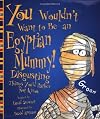
This non-fiction picture book describes (in vivid detail!) the process of mummification. A wide range of topics are covered, from “Removing the Organs” to “Animal Mummies”. The book features a glossary at the back with descriptions of Egyptian words, gods, etc. Another fun feature is the “Handy Hints” in each section highlighting particularly important or interesting facts.
This book, even with its graphic and rather gut wrenching content, was highly educational and rather amusing show more to read. The author and illustrator have injected humour into a rather gory topic and have made it interesting for readers of all ages to learn about the complicated process of mummification. The entire process is outlined in detail but in terms that are accessible to even young readers. Examples of tools, jars, how-to-wrap diagrams, masks, tips and tricks, etc. are given that enhance the basic “story” that happening simultaneously. I really like how the last few “chapters” talk about the more recent incidences of mummies (the discovery of King Tut’s tomb, famous mummies in movies, etc.). Overall, I really enjoyed this book and appreciated the picture book format as it lends itself well to the content and style of the author and illustrator. show less
This book, even with its graphic and rather gut wrenching content, was highly educational and rather amusing show more to read. The author and illustrator have injected humour into a rather gory topic and have made it interesting for readers of all ages to learn about the complicated process of mummification. The entire process is outlined in detail but in terms that are accessible to even young readers. Examples of tools, jars, how-to-wrap diagrams, masks, tips and tricks, etc. are given that enhance the basic “story” that happening simultaneously. I really like how the last few “chapters” talk about the more recent incidences of mummies (the discovery of King Tut’s tomb, famous mummies in movies, etc.). Overall, I really enjoyed this book and appreciated the picture book format as it lends itself well to the content and style of the author and illustrator. show less
"You Wouldn't Want to Sail On the Titanic" is a delightful book, both informative and hilarious. Though it is clearly being aimed at a younger audience than what I am used to reading, it has an appeal to a wider age range then the three Titanic kids-nonfiction books I reviewed yesterday (see my reviews for "A Pig on the Titanic", "The Titanic Disaster: A True Book" and "Remembering the Titanic"). In fact, this book would really be ideal for middle schoolers and might even be of use to high show more schoolers, though mostly for the statistics and pictures.
This book is very engaging and full of delightful drawings, many of them based off of historical pictures. Also, the little asides from the people, such as the three Firemen commenting on the boilers on Titanic: "There are 29 boilers on this ship!", says one. While the second says, "Yes, each 16.3 ft. high!" And the third fireman's comments relate to his low compensation for his work with, "Bloomin' backbreaking work for $27 a month". The Handy Hints section is along the same vein, sly commentary on the times.
I really enjoyed this book and plan on adding a copy of it to both my personal collection and to my growing classroom collection. show less
This book is very engaging and full of delightful drawings, many of them based off of historical pictures. Also, the little asides from the people, such as the three Firemen commenting on the boilers on Titanic: "There are 29 boilers on this ship!", says one. While the second says, "Yes, each 16.3 ft. high!" And the third fireman's comments relate to his low compensation for his work with, "Bloomin' backbreaking work for $27 a month". The Handy Hints section is along the same vein, sly commentary on the times.
I really enjoyed this book and plan on adding a copy of it to both my personal collection and to my growing classroom collection. show less
Awards


You May Also Like


Associated Authors
Statistics
- Works
- 45
- Members
- 1,950
- Popularity
- #13,197
- Rating
- 3.8
- Reviews
- 34
- ISBNs
- 269
- Languages
- 8

