
Shelley Tanaka
Author of On Board the Titanic: What It Was Like When the Great Liner Sank
About the Author
Image credit: writersunion.ca
Series
Works by Shelley Tanaka
Secrets of the Mummies : Uncovering the Bodies of Ancient Egyptians (Uncovering the Bodies of Ancient Egyptians) (1999) 394 copies, 2 reviews
Anastasia's Album: The Last Tsar's Youngest Daughter Tells Her Own Story (1998) — Illustrator — 358 copies, 8 reviews
The Disaster of the Hindenburg: The Last Flight of the Greatest Airship Ever Built (1993) 215 copies, 1 review
Discovering the Iceman : what was it like to find a 5,300-year-old mummy? (1996) 75 copies, 1 review
One More Border: The True Story of One Family's Escape from War-Torn Europe (1998) — Illustrator — 56 copies, 4 reviews
Takana, Shelley (About) 1 copy
On Board the Titanic 1 copy
Associated Works
Definitely Not for Little Ones: Some Very Grimm Fairy-tale Comics (1998) — Translator, some editions — 51 copies, 3 reviews
Tagged
Common Knowledge
- Legal name
- Shelley Tanaka
- Birthdate
- 1950-06-28
- Gender
- female
- Education
- Queen's University at Kingston
University of Toronto (M.A.) - Nationality
- Canada
- Birthplace
- Toronto, Ontario, Canada
- Places of residence
- Toronto, Ontario, Canada
Don Mills, Ontario, Canada
Kingston, Ontario, Canada - Associated Place (for map)
- Ontario, Canada
Members
Reviews
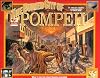
Books concerning the famous Pompeiian disaster usually fall into two categories: stories and interpretations of how everyoe died, and explanations of what happened on the day of the eruption. This book does both, and does so by splitting things into parts. The main narrative of the book is a sort of speculative history of one Eros, freedman of Pompeii, while the inserts found throughout the book explain and expand upon the various cultural activities described. By acting as the cultural show more everyman, Eros becomes a guide to the ins and outs of day to day life in an ancient Roman town. The reader experiences his last days and how life might go for what was, essentially, a lower-middle class citizen. The inserts act as the more scientific or clinical part of the understanding of this world, and help explain what the story leaves out, like what garum is (ancient condiment) or what a Roman bath or household was like. This works well as a companion book to any work on Pompeii, especially for younger readers from the 3rd grade onwards. Shelley Tanaka writes a compelling look at the life of the avreage Roman, and although she hasn't many awards to her name, her experience with writing for a young audience while keeeping the story engaging for anyone is well-evident. show less
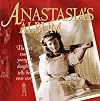
I thought this book was gorgeous. The history of Nicholas II and Alexandra's family up to the revolution was presented with their own family photos as illustration. It was a bit jarring to realize that like many families today the Russian monarchy enjoyed taking snapshots of their children. Family photos tend to reveal things that posed portraits do not. With this book, which is arranged chronologically we see glimpses of silly little girls and their parents. I particularly liked the photo show more of the daughters rollerskating on the deck of the Tsar's yacht, and the photo of the girls with shaved heads after their bouts with measles. History is made real when the persons involved can evoke a feeling be it good or bad. It's easy to understand political motivations for the revolution, but at the same time the monarchy were individuals as well. This book does a nice job of causing real thought by presenting people rather than figureheads, they way they saw each other. show less

I am not a huge fan of biographies, so was pleasantly surprised with how much I enjoyed this book. One thing I specifically enjoyed was the language. It was written in a way that made it seem like a story as opposed to a biography of someone's life. There were very specific details and great use of imagery that helped me imagine what it was really like to live in Amelia Earhart's time. For example, one of the opening scenes in the book described a childhood experience of being at the county show more fair. The author describes how the smell of animal manure mixed with the smell of the fair food, and how everyone dressed up in "hats and jackets and long dresses," even though it was the summer. Although this information may seem unimportant to Amelia's life as a whole, it really helped set the mood of what it was like to live in the early 1900s. This use of language helped turn a dry informational text into a dynamic story, while still maintaining all of the facts about Amelia's life. Another positive thing about this book was it's use of informational illustrations. The book included text boxes on the side of the page with information such as timelines, the history of air travel, and information on other female aviators. This supplemental information was presented in a way that was both easy and interesting to read. Although the main idea of the book was to educate the reader on the life of Amelia Earhart, its use of additional historical information gave it an extra something special that pushed it from a "good book" to a "great book." show less
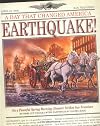
I LOVED this book! I found it when we reviewed series books in class and had to go to the library to find another book about the same topic. I couldn't put it down! I actually came home and finished reading it the same night. I love history in general, but I realized that I know virtually nothing about San Francisco or its historical setting. I found the pictures and the illustration fascinating for two reasons -- the profound impact of the earthquake knocking buildings over and sinking them show more into the ground, but also because the time period and the architecture are so similar to Chicago and St. Paul, where I grew up. Because of that similarity, I kept picturing what would have happened if half of St. Paul had burned down in such recent history as 1906! The house where I grew up in St. Paul was itself built in 1908 and resembled some of the homes shown in the book.
I loved the inclusion of various kinds of visual images from both paintings and illustrations to handbills from the mayor on public health issues,, before-and-after photographs, and other artifacts, like a melted china cup and saucer. The book also included a detailed map showing which parts of the city burned in relationship to major landmarks described, and explained the basics of plate tectonics so the reader could understand how the earth's plates shifted to impact the city.
I was engrossed in the personal narratives of the children involved, telling their experience of the event. I can't really think of a specific purpose I would use this book for, but I definitely think my students would like it! show less
I loved the inclusion of various kinds of visual images from both paintings and illustrations to handbills from the mayor on public health issues,, before-and-after photographs, and other artifacts, like a melted china cup and saucer. The book also included a detailed map showing which parts of the city burned in relationship to major landmarks described, and explained the basics of plate tectonics so the reader could understand how the earth's plates shifted to impact the city.
I was engrossed in the personal narratives of the children involved, telling their experience of the event. I can't really think of a specific purpose I would use this book for, but I definitely think my students would like it! show less
Lists
Awards


Anastasia's Album: The Last Tsar's Youngest Daughter Tells Her Own Story (Winner – Non-Fiction – 1998)
Discovering the Iceman : what was it like to find a 5,300-year-old mummy? (Nominee – Non-Fiction – 1998)


You May Also Like


Associated Authors
Statistics
- Works
- 33
- Also by
- 5
- Members
- 5,344
- Popularity
- #4,660
- Rating
- 4.0
- Reviews
- 129
- ISBNs
- 180
- Languages
- 6
- Favorited
- 1