
Jim Kelly (1) (1957–)
Author of The Water Clock
For other authors named Jim Kelly, see the disambiguation page.
Series
Works by Jim Kelly
The Cambridgeshire Fens Mysteries 3 copies
Associated Works
Tagged
Common Knowledge
- Canonical name
- Kelly, Jim
- Birthdate
- 1957
- Gender
- male
- Education
- Our Lady of Lourdes Primary School
Finchley Catholic Grammar School
Sheffield University - Occupations
- novelist
journalist - Agent
- Faith Evans Associates
- Relationships
- Gillies, Midge (wife)
- Nationality
- UK
- Birthplace
- Barnet, Hertfordshire, England, UK
- Places of residence
- Ely, Cambridgeshire, England, UK
Barnet, Hertfordshire, England, UK
Sheffield, South Yorkshire, England, UK - Associated Place (for map)
- England, UK
Members
Reviews
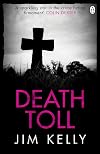
Some secrets just won't stay buried and in a graveyard in North Norfolk, the council have unearthed a mystery. Due for redevelopment, the graves are being emptied. Workers digging down discover a body, the problem being that in this case, it's a body that should not be there. A murder victim in a shallow grave means that it's time for Detectives Shaw and Valentine to dig up the evidence and solve the mystery. Who is the gravecrasher, what are the secrets of the mysterious artefacts buried show more with him and, given the hole in his skull, who killed him and buried him?
The opening scenes of the book, with mist pouring into the open graves at the excavated graveyard and a ghostly ship slipping by in the fog, set the scene - the past has been buried and the truth is obscured.
This is a book about how acts in the past have consequences in the present, about secrets and about family. In particular it's about Norfolk families and their reluctance to accept outsiders and it's about the family of the church, where transgression is not tolerated and sins are not forgiven, or forgotten.
One day a crime writer may write a book about a detective with a balanced work and family life, who clocks off at five and goes home to dinner with the wife and kids. Shaw and Valentine do not have a balanced work and family life. Shaw appears to need little if any sleep and Valentine spends most of his nights in an illegal Chinese gambling den. In Death Toll, Shaw appears to see his daughter more in photo text messages than in the flesh, while Valentine has a rare family encounter, revealing how empty his personal life is. For detectives, they can be a little slow on the uptake about their own deficiencies although both have moments of realisation by the end of the novel.
If Shaw and Valentine are going to be up all night, they are likely to be in good company. After an atmospheric to the point of spooky opening, with Shaw and Valentine trying to make headway through the fog of the mystery that surrounds the discovery in the grave, the book gets a little bogged down as characters are introduced and motivations analysed. It is very much police procedure and at one point I felt the need for one of those huge whiteboards with photographs of the suspects and a bunch of coloured pens to draw arrows connecting suspect to suspect, because there is no shortage of suspects or suspicion. Even though, as is remarked upon during the course of the investigation, Norfolk family trees have few branches, this one does have three generations and while the line of descent may be straight, it's far from straightforward.
Plodding police procedure grinds along until there is what might be termed a 'development' and might otherwise be termed something of a shocker of an incident that baffles the detectives but jump starts the plot and injects vigour into the pace. From then on it is a race to the finish and it's the reader rather than the detectives who will be staying up nights to conclude the case.
What Kelly conveys best is a sense of place. In fairness, he has an advantage. East Anglia provides ideal crime writing geography, combining a lonely, scenic, countryside ripe with sinister goings on and isolated hamlets that are the home to shameful secrets. Here the scene is a seaside out of season and it's conveyed well, there's an appropriate chill from the descriptions of snow on the beach, an image as unusual as murder should be.
Death Toll also comes with an unusual reward for the reader, when the crime writing convention of a detective who is always one step ahead is turned on its head and Kelly is generous enough to drop enough clues for the reader to work out, if not a whodunit, then at least a howdunit.
A convoluted plot with, appropriately for a story set near the sea, a number of red herrings, has a straightforward conclusion but with the mystery, like the mist, sustained to the very end, it's a satisfying one. show less
The opening scenes of the book, with mist pouring into the open graves at the excavated graveyard and a ghostly ship slipping by in the fog, set the scene - the past has been buried and the truth is obscured.
This is a book about how acts in the past have consequences in the present, about secrets and about family. In particular it's about Norfolk families and their reluctance to accept outsiders and it's about the family of the church, where transgression is not tolerated and sins are not forgiven, or forgotten.
One day a crime writer may write a book about a detective with a balanced work and family life, who clocks off at five and goes home to dinner with the wife and kids. Shaw and Valentine do not have a balanced work and family life. Shaw appears to need little if any sleep and Valentine spends most of his nights in an illegal Chinese gambling den. In Death Toll, Shaw appears to see his daughter more in photo text messages than in the flesh, while Valentine has a rare family encounter, revealing how empty his personal life is. For detectives, they can be a little slow on the uptake about their own deficiencies although both have moments of realisation by the end of the novel.
If Shaw and Valentine are going to be up all night, they are likely to be in good company. After an atmospheric to the point of spooky opening, with Shaw and Valentine trying to make headway through the fog of the mystery that surrounds the discovery in the grave, the book gets a little bogged down as characters are introduced and motivations analysed. It is very much police procedure and at one point I felt the need for one of those huge whiteboards with photographs of the suspects and a bunch of coloured pens to draw arrows connecting suspect to suspect, because there is no shortage of suspects or suspicion. Even though, as is remarked upon during the course of the investigation, Norfolk family trees have few branches, this one does have three generations and while the line of descent may be straight, it's far from straightforward.
Plodding police procedure grinds along until there is what might be termed a 'development' and might otherwise be termed something of a shocker of an incident that baffles the detectives but jump starts the plot and injects vigour into the pace. From then on it is a race to the finish and it's the reader rather than the detectives who will be staying up nights to conclude the case.
What Kelly conveys best is a sense of place. In fairness, he has an advantage. East Anglia provides ideal crime writing geography, combining a lonely, scenic, countryside ripe with sinister goings on and isolated hamlets that are the home to shameful secrets. Here the scene is a seaside out of season and it's conveyed well, there's an appropriate chill from the descriptions of snow on the beach, an image as unusual as murder should be.
Death Toll also comes with an unusual reward for the reader, when the crime writing convention of a detective who is always one step ahead is turned on its head and Kelly is generous enough to drop enough clues for the reader to work out, if not a whodunit, then at least a howdunit.
A convoluted plot with, appropriately for a story set near the sea, a number of red herrings, has a straightforward conclusion but with the mystery, like the mist, sustained to the very end, it's a satisfying one. show less
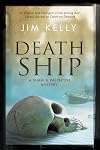
Detectives DI Peter Shaw & DS George Valentine of the Lynn CID are back in their 7th outing & there’s no shortage of case work to keep them busy.
Down the road in Hunstanton, a Dutch tourist has been reported as missing. Dirk Hartog kept to himself but as they retrace his steps they discover he was interested in an old shipwreck & spent a lot of time on the water. Now he’s gone & so is his diving equipment.
There’s also rising tension about the new pier that’s being built. It’s show more going to be a huge tourist draw with games, rides & shops. Not only will this take from local businesses but the design is not what they agreed to. Eco-types (or as George calls them, “lentil freaks”) have joined unhappy residents & peaceful protests are starting to give way to more aggressive acts of sabotage.
But the weirdest investigation involves the search for a little old lady who is handing out candy laced with rat poison in the queue at a bus stop.
As usual with this series, you’re going to need a thinking cap with a snug fit. As the story lines progress, the author provides a slow drip of clues that you rearrange like puzzle pieces as each twist is revealed. George & Peter have to dig deep when it becomes clear a couple of the investigations have strong ties to a decades old maritime disaster but those old enough to remember aren’t talking.
The setting is on the Norfolk coast & that’s important as it informs how many of the characters think & live.There’s such a strong sense of place here that at times I swear you can hear the waves & smell the salty air.
The procedural aspect of the book is well paced & plot lines are woven together seamlessly by the end. The narrative is definitely character driven. There’s a large cast from all walks of life & each feels authentic as they add something to the story. And for fans, it’s a pleasure to catch up with the MC’s personal lives. In this outing Peter’s wife learns a stunning family secret & George is under pressure from his new wife to pack up & move to the seashore.
In the end it’s about secrets, greed & family ties. It’s a smart & atmospheric read you’ll want to carry around so you can sneak in a few more pages when you get the chance. show less
Down the road in Hunstanton, a Dutch tourist has been reported as missing. Dirk Hartog kept to himself but as they retrace his steps they discover he was interested in an old shipwreck & spent a lot of time on the water. Now he’s gone & so is his diving equipment.
There’s also rising tension about the new pier that’s being built. It’s show more going to be a huge tourist draw with games, rides & shops. Not only will this take from local businesses but the design is not what they agreed to. Eco-types (or as George calls them, “lentil freaks”) have joined unhappy residents & peaceful protests are starting to give way to more aggressive acts of sabotage.
But the weirdest investigation involves the search for a little old lady who is handing out candy laced with rat poison in the queue at a bus stop.
As usual with this series, you’re going to need a thinking cap with a snug fit. As the story lines progress, the author provides a slow drip of clues that you rearrange like puzzle pieces as each twist is revealed. George & Peter have to dig deep when it becomes clear a couple of the investigations have strong ties to a decades old maritime disaster but those old enough to remember aren’t talking.
The setting is on the Norfolk coast & that’s important as it informs how many of the characters think & live.There’s such a strong sense of place here that at times I swear you can hear the waves & smell the salty air.
The procedural aspect of the book is well paced & plot lines are woven together seamlessly by the end. The narrative is definitely character driven. There’s a large cast from all walks of life & each feels authentic as they add something to the story. And for fans, it’s a pleasure to catch up with the MC’s personal lives. In this outing Peter’s wife learns a stunning family secret & George is under pressure from his new wife to pack up & move to the seashore.
In the end it’s about secrets, greed & family ties. It’s a smart & atmospheric read you’ll want to carry around so you can sneak in a few more pages when you get the chance. show less
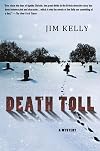
The words that most clearly convey the theme of DEATH TOLL are spoken by Mark Antony is Shakespeare’s “Julius Caesar” – “the evil that men do live after them….”
The story opens on December 12, 2010. The bodies buried at a cemetery are being moved to higher ground to avoid flooding. When the grave of Nora Tilden, buried in 1982, is opened, grave diggers are shocked to find another body, a skeleton, on top of the casket. The body had to have been thrown into Nora’s grave on the show more day she was buried. Nora was the owner of the Flask, a popular pub, which she inherited from her father, Arthur Melville. Nora is a hard woman and her relationship with her husband, Alby, is stormy, that is, until the night Alby pushed Nora down the stairs. With Nora dead and her father in prison, their daughter, Lizzie, becomes the owner of the Flask.
As was her mother, Lizzie is only nineteen when the business is passed to her. Alby wants to protect her so he contacts her aunt, Bea, Nora’s younger sister who has been living for many years in the United States, asking her to return to East Lynn to help Lizzie. Bea does as requested and moves back to her home town with her son, Pat, who is twenty.
The major players are now in place but they are by no means the only characters who will walk across this stage. The catalyst of the story is Latrell Garrison, an American GI, a black man, who marries Bea. Together they have their son, Pat. When Bea returns to East Lynn with Pat, the resentments created by Latrell’s presence awaken. Pat doesn’t have an easy time and when he disappears Bea doesn’t look for him, believing that he returned to the United States. Now Pat has been found in Nora’ grave. Detective Inspector Peter Shaw and Detective Sergeant George Valentine are assigned this very cold case.
On their own, Shaw and Valentine have been working on another cold case, the murder of Jonathan Tessier, a nine year-old who knew too much about a puppy. Shaw is determined to solve the case because it is the one his father couldn’t let go. Valentine wants the solution to be found because a misuse of evidence cost him his rank and derailed a trial. Shaw and Valentine are both in danger of losing their jobs if they antagonize the chief suspect, a wealthy and respected solicitor.
DEATH TOLL is a saga, a big story about a family. Arthur Melville fathered Nora and Bea. Nora gives birth to Mary, who died when still an infant, and Lizzie. Bea is the mother of Pat, the mixed race child she has with Latrell. As other characters are introduced, the frailty of the bonds of the descendants of Arthur Melville are revealed.
DEATH TOLL is a saga that addresses big issues as they impact on one family. There is the hatred between Bea and Nora that surfaced when Bea decides to go to America with Latrell. Nora swore that she would never speak to Bea again if she left with him. Nora isn’t a racist; she doesn’t want Bea to be out from under her control. Nora keeps her word. She never speaks to Bea again. Racism is the elephant in the parlor of East Lynn. Latrell was welcome, a well-liked man. But by the time Pat arrives in East Lynn, PEN, the Party of English Nationalism, is gaining supporters among the electorate and a black man is suspect.
Overshadowing life in East Lynn is incest, literally and figuratively. There are frequent references to Leviticus , the third book of the Bible. Leviticus describes the punishment in store for those who violate the boundary that protects the family unit. Incest among the players and characters in East Lynn is a poison that is destroying the family Arthur Melville established.
DEATH TOLL is a book that cannot be put down. From the beginning scene, when Nora’s grave is found to contain the body of another victim, everyone must question their relationships. Trust is violated. Secrets are hiding in plain sight. The evil that men do live after them and engulf their posterity, an inheritance that poisons the lives of those who should not be punished for the sins of their fathers. This is an exceptionally engrossing book and a satisfying mystery.
ET IN ARCADIA EGO, (I also lived in Arcadia (paradise) is engraved on Nora’s grave stone. On one hand, it is a gross mistake. There was nothing of paradise in East Lynn. But another interpretation of the phrase has Death uttering the words. No matter the place, no matter the innocent, death can be found lurking in the shadows.
The author does the reader a considerable favor by including a family tree on page 164. show less
The story opens on December 12, 2010. The bodies buried at a cemetery are being moved to higher ground to avoid flooding. When the grave of Nora Tilden, buried in 1982, is opened, grave diggers are shocked to find another body, a skeleton, on top of the casket. The body had to have been thrown into Nora’s grave on the show more day she was buried. Nora was the owner of the Flask, a popular pub, which she inherited from her father, Arthur Melville. Nora is a hard woman and her relationship with her husband, Alby, is stormy, that is, until the night Alby pushed Nora down the stairs. With Nora dead and her father in prison, their daughter, Lizzie, becomes the owner of the Flask.
As was her mother, Lizzie is only nineteen when the business is passed to her. Alby wants to protect her so he contacts her aunt, Bea, Nora’s younger sister who has been living for many years in the United States, asking her to return to East Lynn to help Lizzie. Bea does as requested and moves back to her home town with her son, Pat, who is twenty.
The major players are now in place but they are by no means the only characters who will walk across this stage. The catalyst of the story is Latrell Garrison, an American GI, a black man, who marries Bea. Together they have their son, Pat. When Bea returns to East Lynn with Pat, the resentments created by Latrell’s presence awaken. Pat doesn’t have an easy time and when he disappears Bea doesn’t look for him, believing that he returned to the United States. Now Pat has been found in Nora’ grave. Detective Inspector Peter Shaw and Detective Sergeant George Valentine are assigned this very cold case.
On their own, Shaw and Valentine have been working on another cold case, the murder of Jonathan Tessier, a nine year-old who knew too much about a puppy. Shaw is determined to solve the case because it is the one his father couldn’t let go. Valentine wants the solution to be found because a misuse of evidence cost him his rank and derailed a trial. Shaw and Valentine are both in danger of losing their jobs if they antagonize the chief suspect, a wealthy and respected solicitor.
DEATH TOLL is a saga, a big story about a family. Arthur Melville fathered Nora and Bea. Nora gives birth to Mary, who died when still an infant, and Lizzie. Bea is the mother of Pat, the mixed race child she has with Latrell. As other characters are introduced, the frailty of the bonds of the descendants of Arthur Melville are revealed.
DEATH TOLL is a saga that addresses big issues as they impact on one family. There is the hatred between Bea and Nora that surfaced when Bea decides to go to America with Latrell. Nora swore that she would never speak to Bea again if she left with him. Nora isn’t a racist; she doesn’t want Bea to be out from under her control. Nora keeps her word. She never speaks to Bea again. Racism is the elephant in the parlor of East Lynn. Latrell was welcome, a well-liked man. But by the time Pat arrives in East Lynn, PEN, the Party of English Nationalism, is gaining supporters among the electorate and a black man is suspect.
Overshadowing life in East Lynn is incest, literally and figuratively. There are frequent references to Leviticus , the third book of the Bible. Leviticus describes the punishment in store for those who violate the boundary that protects the family unit. Incest among the players and characters in East Lynn is a poison that is destroying the family Arthur Melville established.
DEATH TOLL is a book that cannot be put down. From the beginning scene, when Nora’s grave is found to contain the body of another victim, everyone must question their relationships. Trust is violated. Secrets are hiding in plain sight. The evil that men do live after them and engulf their posterity, an inheritance that poisons the lives of those who should not be punished for the sins of their fathers. This is an exceptionally engrossing book and a satisfying mystery.
ET IN ARCADIA EGO, (I also lived in Arcadia (paradise) is engraved on Nora’s grave stone. On one hand, it is a gross mistake. There was nothing of paradise in East Lynn. But another interpretation of the phrase has Death uttering the words. No matter the place, no matter the innocent, death can be found lurking in the shadows.
The author does the reader a considerable favor by including a family tree on page 164. show less
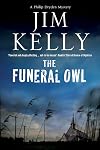
This is the latest in the excellent series from Jim Kelly & there's something comfortable & familiar about picking it up. For fans, it's a chance to catch up with the characters whose lives you've become invested in.
Dryden is now the editor of The Crow & he's opened up an office in a neighbouring town on the fens. Laura is working with the BBC & their only worry is why baby Eden isn't walking yet. Humph continues to be Dryden's chauffeur (with Boudicca riding shotgun) while working on his show more Albanian in his spare time. But his focus is on Grace, his eldest daughter, who has become a troubled 15 year old.
Dryden believes the key to the paper's success is chasing down the local stories that matter to his readers. There's been a string of metal thefts in the area & while checking out the latest hit at a church in Brimstone Hill, he finds the body of a young man, tied to a cross. He's identified as a member of one of the chinese gangs that is at war with another.
But as usual, it's not the only story Dryden is working on. Someone is brewing up bootleg vodka that is just this side of poison, a teenage math whiz has gone missing & the vicar in Brimstone Hill wants to kick out the retired sexton. The last thing he needs is for DC Powell to bring him a cold case involving home invasions in 1999 that ended in the murder of a local man.
Part of the fun in reading these books is trying to figure out which stories are related as Dryden runs around the fens chasing after leads. To some extent they all are in a place where neighbours know each others business & memories are long. But this wild, sometimes bleak landscape has always attracted those looking for a place to hide themselves & their secrets. The author does an excellent job describing the area & its' people, providing an atmospheric, moody backdrop as the pace picks up. Because he lives there, these stories are personal for Dryden & sometimes he has to choose between what's good for the paper & his own feelings. Kelly's lyrical prose lends itself to creating these small intimate moments within the larger picture of the overall plot.
Early in the book, Dryden received a photo from a reader. It was of a funeral owl, rarely seen & so called for its' reputation as an omen of death. Might be something to that myth because soon the body count is rising & Dryden finds himself in danger as he unravels the secrets & histories of those involved.
Kelly has another winner here. The plot is tight & intricate, the dialogue is smart & true to each character and the book is paced so as to draw you in before taking off as Dryden starts to fit all the pieces together. The characters are well written, individual & flawed just like the rest of us & you care about them and their personal lives. There is a recurring theme of memories, what you allow yourself to remember & what you actively try to forget and the effect that has on those around you.
If you haven't read Kellt before, start at the beginning. There is a huge back story concerning Dryden's life before & after marrying Laura & bits of that history come up in each book. Recommend for fans of Elly Griffiths, Peter May's Lewis series, Anne Cleeves Shetland series & Steve Robinson. show less
Dryden is now the editor of The Crow & he's opened up an office in a neighbouring town on the fens. Laura is working with the BBC & their only worry is why baby Eden isn't walking yet. Humph continues to be Dryden's chauffeur (with Boudicca riding shotgun) while working on his show more Albanian in his spare time. But his focus is on Grace, his eldest daughter, who has become a troubled 15 year old.
Dryden believes the key to the paper's success is chasing down the local stories that matter to his readers. There's been a string of metal thefts in the area & while checking out the latest hit at a church in Brimstone Hill, he finds the body of a young man, tied to a cross. He's identified as a member of one of the chinese gangs that is at war with another.
But as usual, it's not the only story Dryden is working on. Someone is brewing up bootleg vodka that is just this side of poison, a teenage math whiz has gone missing & the vicar in Brimstone Hill wants to kick out the retired sexton. The last thing he needs is for DC Powell to bring him a cold case involving home invasions in 1999 that ended in the murder of a local man.
Part of the fun in reading these books is trying to figure out which stories are related as Dryden runs around the fens chasing after leads. To some extent they all are in a place where neighbours know each others business & memories are long. But this wild, sometimes bleak landscape has always attracted those looking for a place to hide themselves & their secrets. The author does an excellent job describing the area & its' people, providing an atmospheric, moody backdrop as the pace picks up. Because he lives there, these stories are personal for Dryden & sometimes he has to choose between what's good for the paper & his own feelings. Kelly's lyrical prose lends itself to creating these small intimate moments within the larger picture of the overall plot.
Early in the book, Dryden received a photo from a reader. It was of a funeral owl, rarely seen & so called for its' reputation as an omen of death. Might be something to that myth because soon the body count is rising & Dryden finds himself in danger as he unravels the secrets & histories of those involved.
Kelly has another winner here. The plot is tight & intricate, the dialogue is smart & true to each character and the book is paced so as to draw you in before taking off as Dryden starts to fit all the pieces together. The characters are well written, individual & flawed just like the rest of us & you care about them and their personal lives. There is a recurring theme of memories, what you allow yourself to remember & what you actively try to forget and the effect that has on those around you.
If you haven't read Kellt before, start at the beginning. There is a huge back story concerning Dryden's life before & after marrying Laura & bits of that history come up in each book. Recommend for fans of Elly Griffiths, Peter May's Lewis series, Anne Cleeves Shetland series & Steve Robinson. show less
Lists
Awards


You May Also Like


Associated Authors
Statistics
- Works
- 19
- Also by
- 2
- Members
- 1,801
- Popularity
- #14,289
- Rating
- 3.6
- Reviews
- 63
- ISBNs
- 204
- Languages
- 5
- Favorited
- 2
