
Chris Barnard (1) (1939–2015)
Author of Bundu
For other authors named Chris Barnard, see the disambiguation page.
Works by Chris Barnard
Klopdisselboom 2 copies
Associated Works
Windroos: Verhale deur 10 Sestigers — Contributor — 2 copies
Tagged
Common Knowledge
- Canonical name
- Barnard, Chris
- Legal name
- Barnard, Christian Johan
- Other names
- Barnard, Christiaan Johan
- Birthdate
- 1939-06-15
- Date of death
- 2015-12-28
- Gender
- male
- Education
- University of Pretoria, Pretoria, South Africa
- Occupations
- Schriftsteller
- Organizations
- Sestigers
- Nationality
- South Africa
- Birthplace
- Mataffin, Nelspruit, South Africa
- Place of death
- Pretoria, South Africa
- Associated Place (for map)
- South Africa
Members
Reviews
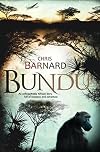
Bundu is a beautifully-written novel by award-winning Afrikaans author, Chris Barnard. At times frustrating, appalling, heart-breaking and wonderful, Bundu exposes a side of Africa that few ever see. In the midst of it all, goodness rises from this motley crew of heroes and a romance builds as life boils down to its simplest forms.
Reviewed for TripFiction, the full text can be found here -
http://www.tripfiction.com/review/beautifully-written-book-award-winning-afrikaa...
Reviewed for TripFiction, the full text can be found here -
http://www.tripfiction.com/review/beautifully-written-book-award-winning-afrikaa...
That deep concealed place to which everything is connected and where everything interlocks and from which everything radiates in invisible trajectories may be unreachably far. My purpose had always been gradually to learn to understand more of the cohesion of all the disparate elements of nature. Somewhere, someday, research would bring us to the symbiosis that contains all things. The drought was destroying the little that conservation had achieved in fifty years in the region. Was there a show more reason for this or was it just happening because it was happening? The little that I knew had time after time confirmed that nature had no use for chance. Theologians would talk of a Divine Plan – but that was not what I meant by my Great Process, even though I did spell it with capital letters, and even though it could be one and the same thing. But too many people tend to place the so-called Divine Plan stamp on everything they don't understand and then regard it as settled.
Brand de la Rey is an environmental researcher in the bundu region on the South Africa-Mozambique border. His closest neighbor is a Catholic mission station staffed by a barely competent doctor, a nurse, two or three nuns, and a handyman. Three years of drought have taken a toll and precipitated a crisis. Starving people arrive daily at the mission, and the small facility is soon stretched beyond its capacity to feed and care for so many people. Something must be done to relieve the mission of this unbearable burden. There is usually a reason when people choose to live at the ends of civilization. Somehow the loners who inhabit the region will have to work with each other to secure outside help.
It's difficult to read descriptions of sick and starving people, yet it seems that Barnard has spared readers from its worst horrors. Brand, the first-person narrator, is a scientist, not a philosopher, and while his descriptions can be graphic, he doesn't dwell on the images. The short novel focuses more on action than thought, which I suppose reflects how we often handle crises. We do what's required in an emergency and think about it later, after it's all over. If there's a weakness in the book, it's that Barnard raises issues but doesn't take time to explore them – governmental responsibility for humanitarian assistance; the role of non-governmental organizations like the Red Cross; the psychology of aid workers; language, cultural, and gender barriers in communication; and the eternal theological questions surrounding God's role in permitting, causing, or alleviating suffering.
I would recommend this to readers preparing for careers in international aid/disaster relief or in medical missions. I think it would also work well as a reading group selection since it's a fairly quick read and provides a lot of fodder for discussion. show less
Brand de la Rey is an environmental researcher in the bundu region on the South Africa-Mozambique border. His closest neighbor is a Catholic mission station staffed by a barely competent doctor, a nurse, two or three nuns, and a handyman. Three years of drought have taken a toll and precipitated a crisis. Starving people arrive daily at the mission, and the small facility is soon stretched beyond its capacity to feed and care for so many people. Something must be done to relieve the mission of this unbearable burden. There is usually a reason when people choose to live at the ends of civilization. Somehow the loners who inhabit the region will have to work with each other to secure outside help.
It's difficult to read descriptions of sick and starving people, yet it seems that Barnard has spared readers from its worst horrors. Brand, the first-person narrator, is a scientist, not a philosopher, and while his descriptions can be graphic, he doesn't dwell on the images. The short novel focuses more on action than thought, which I suppose reflects how we often handle crises. We do what's required in an emergency and think about it later, after it's all over. If there's a weakness in the book, it's that Barnard raises issues but doesn't take time to explore them – governmental responsibility for humanitarian assistance; the role of non-governmental organizations like the Red Cross; the psychology of aid workers; language, cultural, and gender barriers in communication; and the eternal theological questions surrounding God's role in permitting, causing, or alleviating suffering.
I would recommend this to readers preparing for careers in international aid/disaster relief or in medical missions. I think it would also work well as a reading group selection since it's a fairly quick read and provides a lot of fodder for discussion. show less
Somewhere along a border between Mozambique and South Africa, along a border that moves its position according to what is considered politically expedient at a moment in time, a severe drought is devastating everything. A small clinic, long since forgotten by the high and mighty finds it has become the refuge for hundreds of desperate people, daily more pour in until they become overwhelmed by this deluge with no sign of outside help. This leaves a disparate group of individuals trying to show more find the necessary supplies to feed all, which soon runs out, leaving them with no alternative but to find a new way to solve this dilemma – a drastic, crazy and illegal plan is soon hatched.
Bundu is an old fashioned adventure tale, and a love story set in a harsh landscape decimated by drought, it is also about how people survive in this environment, not merely on a physical level, but what mechanisms, habits, beliefs they rely on to communicate with the world. This book is not one I would normally read, in fact based on the blurb on the cover I would not have picked it out from other books on a shelf, as I said above it is a good old fashion tale of love and adventure. There is nothing wrong with it being that, except this is on The Independent Foreign Fiction prize longlist, meaning it needs to have something else to compete on a level playing field with the other contenders: it must have more depth, gravitas etc. Bundu does, although on one level it is a tale of love and adventure, and yet it is also a study of the characters, a motley gathering of the washed up and lonely, all of whom are seeking some resolution, some answers.
http://parrishlantern.blogspot.co.uk/2013/04/bundu-chris-barnard-iffp.html show less
Bundu is an old fashioned adventure tale, and a love story set in a harsh landscape decimated by drought, it is also about how people survive in this environment, not merely on a physical level, but what mechanisms, habits, beliefs they rely on to communicate with the world. This book is not one I would normally read, in fact based on the blurb on the cover I would not have picked it out from other books on a shelf, as I said above it is a good old fashion tale of love and adventure. There is nothing wrong with it being that, except this is on The Independent Foreign Fiction prize longlist, meaning it needs to have something else to compete on a level playing field with the other contenders: it must have more depth, gravitas etc. Bundu does, although on one level it is a tale of love and adventure, and yet it is also a study of the characters, a motley gathering of the washed up and lonely, all of whom are seeking some resolution, some answers.
http://parrishlantern.blogspot.co.uk/2013/04/bundu-chris-barnard-iffp.html show less

Goeie boek. Lees dit aandagtig. Die boek los jou met baie vrae en moontlike oplossings. Barnard het 'n uitsonderlike vermoë om alles in detail te beskryf. Jy sien wat hulle sien.
Lists
Awards


You May Also Like
Associated Authors
Statistics
- Works
- 22
- Also by
- 1
- Members
- 108
- Popularity
- #179,296
- Rating
- 3.1
- Reviews
- 4
- ISBNs
- 48
- Languages
- 2
