
David J. O'Brien (1) (1938–)
Author of Catholic Social Thought: The Documentary Heritage
For other authors named David J. O'Brien, see the disambiguation page.
Series
Works by David J. O'Brien
Associated Works
Engineering Education and Practice: Embracing a Catholic Vision (ND Studies in Ethics and Culture) (2011) — Contributor — 4 copies
Tagged
Common Knowledge
- Other names
- O'Brien, David Joseph (birth name)
- Birthdate
- 1938-07-20
- Gender
- male
- Education
- University of Notre Dame (BA|1960)
University of Rochester (PhD|1965) - Organizations
- American Historical Association
Organization of American Historians
American Catholic Historical Association
American Society of Church History
Canadian Association for American Studies - Nationality
- USA
- Birthplace
- Pittsfield, Massachusetts, USA
- Places of residence
- Worcester, Massachusetts, USA
- Associated Place (for map)
- Massachusetts, USA
Members
Reviews
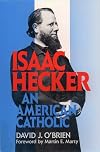
Susan called this a dull book, and in a sense she’s correct. But it was interesting to learn about conversion experience and missionary zeal in American history. It was most fun to be reading about young Hecker’s time in Transcendental community in Concord at the time I was riding a train to Concord for Patriots Day. Most impressive is Hecker’s openness and acceptance of all to the Catholic Church at a time of great parochialism.
“…he was struck once again by the sharp racial and show more cultural divisions in the church. It was difficult to get the “Celtic mind” to appreciate the internal character of the church as to get the “Teutonic mind” to appreciate “her divine external constitution and the importance of authority, discipline, and liturgy.” - p. 267-8
“Isaac Hecker’s promised land was something more that a gigantic cathedral. The future triumph of the church would take place not when the existing Catholic Church persuaded everyone to joint it, but when all men and women, freely and spontaneously, responded to the spirit and lived in peace, justice and harmony with God and one another. Conversion was required of Catholics and non-Catholics alike, and ti embraced the institutions and culture within which they lived. When converted men and women united in the church of Christ, lived wholly Christian and human lives, politics, society, art, science, literature, economics, in fact all areas of human life, would be informed by the truth of Christianity and ordered toward the end of human existence, union with God.
The religious question came first, for the individual and for society at large. America’s social problems would be fully solved only when America became Catholic. Americans would become Catholic only when they found Catholicism credible. Catholics, therefore, had to be model citizens as well as models of holiness. The church’s engagement with society and politics, at its best, would bear witness to its conviction that, through its teaching and ministry, solutions to human problems could be found, solutions compatible, even identical with the deepest hopes and aspirations of the American people. It was a noble vision, located far beyond the narrow parochialism of the contemporary church.” – p. 321 show less
“…he was struck once again by the sharp racial and show more cultural divisions in the church. It was difficult to get the “Celtic mind” to appreciate the internal character of the church as to get the “Teutonic mind” to appreciate “her divine external constitution and the importance of authority, discipline, and liturgy.” - p. 267-8
“Isaac Hecker’s promised land was something more that a gigantic cathedral. The future triumph of the church would take place not when the existing Catholic Church persuaded everyone to joint it, but when all men and women, freely and spontaneously, responded to the spirit and lived in peace, justice and harmony with God and one another. Conversion was required of Catholics and non-Catholics alike, and ti embraced the institutions and culture within which they lived. When converted men and women united in the church of Christ, lived wholly Christian and human lives, politics, society, art, science, literature, economics, in fact all areas of human life, would be informed by the truth of Christianity and ordered toward the end of human existence, union with God.
The religious question came first, for the individual and for society at large. America’s social problems would be fully solved only when America became Catholic. Americans would become Catholic only when they found Catholicism credible. Catholics, therefore, had to be model citizens as well as models of holiness. The church’s engagement with society and politics, at its best, would bear witness to its conviction that, through its teaching and ministry, solutions to human problems could be found, solutions compatible, even identical with the deepest hopes and aspirations of the American people. It was a noble vision, located far beyond the narrow parochialism of the contemporary church.” – p. 321 show less
Awards

You May Also Like


Associated Authors
Statistics
- Works
- 8
- Also by
- 2
- Members
- 435
- Popularity
- #56,231
- Rating
- 3.5
- Reviews
- 1
- ISBNs
- 35