

Paul Christopher (1) (1949–)
Author of The Sword of the Templars
For other authors named Paul Christopher, see the disambiguation page.
Paul Christopher (1) has been aliased into Christopher Hyde.
Series
Works by Paul Christopher
Works have been aliased into Christopher Hyde.
Tagged
Common Knowledge
- Legal name
- Hyde, Christopher
- Other names
- Christopher, Paul
Holt, A.J. - Birthdate
- 1949-05-26
- Gender
- male
- Short biography
- Christopher Hyde has worked as a researcher, editor, TV interviewer specialising in stories of technology, intelligence and the environment.
He also writes using the pseudonyms
A.J. Holt.
Paul Christopher. - Nationality
- Canada
- Birthplace
- Ottawa, Ontario, Canada
- Map Location
- Canada
Members
Reviews
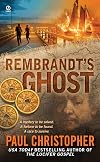
The author of this book seems to think that for any written work of fantasy you need: stunning people, as many pop-culture references as possible, descriptions of as many exotic locations as you can find on wikipedia and most of all every stereotype in existence. Your readers will then fill in the important blanks and buy your next novel.
Paul Christopher gets as many details right as he gets them wrong. His research into Dutch culture is as accurate as his strange misspellings of words show more anyone using Google translate can figure out. Perhaps this is the very first novel completely spun from Wikipedia?
Besides the sloppiness of all the local cultural and physical details, the author didn't seem to have re-read his own story. At one point a crusty old curator and painting restorer uses the word Giggle to mention Google. A good approximation and it paints a nice picture of someone out of touch with reality. Basically a nice stereo type. Then a few sentences later this same character seems to be very familiar with the work of Quentin Tarantino. It's these strange hiccups all along the reader's path that makes this book so infuriating.
In the end everything plays out as you would have expected. After all the weird coincidences that seem to make this plot possible, the ending is as predictable as your basic chick lit mixed with some Indiana Jones themes.
Oh by the way, Rembrandt's ghost has absolutely nothing to do with the plot. show less
Paul Christopher gets as many details right as he gets them wrong. His research into Dutch culture is as accurate as his strange misspellings of words show more anyone using Google translate can figure out. Perhaps this is the very first novel completely spun from Wikipedia?
Besides the sloppiness of all the local cultural and physical details, the author didn't seem to have re-read his own story. At one point a crusty old curator and painting restorer uses the word Giggle to mention Google. A good approximation and it paints a nice picture of someone out of touch with reality. Basically a nice stereo type. Then a few sentences later this same character seems to be very familiar with the work of Quentin Tarantino. It's these strange hiccups all along the reader's path that makes this book so infuriating.
In the end everything plays out as you would have expected. After all the weird coincidences that seem to make this plot possible, the ending is as predictable as your basic chick lit mixed with some Indiana Jones themes.
Oh by the way, Rembrandt's ghost has absolutely nothing to do with the plot. show less
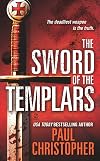
I enjoy the occasional thriller, and I have an abiding interest in the medieval ordercalled The Poor Fellow-soldiers of Jesus Christ and Solomon's Temple, or Knights Templar, for short. Since Dan Brown's silly little fairy tale, there have been many offerings in the thriller genre dealing with these Crusader-monks and their putative hidden purpose and succession down into the present. I enjoy these tales, as far-fetched and obviously ridiculous as most of them are, because they make for a show more pleasant adventure. Suspension of disbelief for the sake of the tale is usually easy.
UNLESS ... the writer begins his tale with such egregious errors in historical fact that it blows one completely out of the story. Such a book is THE SWORD OF THE TEMPLARS. It has the same faults that most of these ancient-conspiracy-hidden-treasure-world-changing-revelation type books: utterly improbable thesis, insufficient motivation, plot driven as much by coincidence as by the protagonist(s)' actions, omnipotent and omnipresent villains. All this can be forgiven, if, as I said, one enjoys the occasional dip into this kind of story, as I do. What is unforgivable is the plain errors in Templar fact on which the author grounds his plot. Here are a few:
**THE BOOK: Hughes de Payens, the Templars' founder, was said to have gotten the backing of Godfrey of Bouillon, who had seized the title of King of Jerusalem, for the creation of the Order of the Temple.
HISTORICAL FACT: When the Crusaders captured Jerusalem in 1099, they elected Godfrey de Bouillon to rule the City, but he, a pious man, refused to accept the title of king in the city where Christ was crucified. He would only accept the title, "Defender of the Holy Sepulchre." Further, Godfrey lived only one year after the capture, dying in 1100. The Templars did not form until 1118 or 1119, under the sanction of King Baldwin II of Jerusalem.
**THE BOOK:Attributes the pamphlet, "De laude novae militiae" ("In Praise of the New Knighthood") to St. Alberic of Citeaux. HISTORICAL FACT: De laude nova militiae was written in the period 1128 - 1131 to establish that the new order was justified in waging war and shedding blood. It was written by St. Bernard of Clairevaux. Alberic had died in 1108.
**THE BOOK( p. 273): "Innocent was Pope during the Crusades. He was the one who eventually ordered the Templars to be arrested and killed." HISTORICAL FACT: Innocent was A pope during the Crusades, which lasted for more than two hundred years, but he was not the pope that presided over the destruction of the Templars. That was Pope Clement V, who, because of a promise he had made to King Philip IV (called "The Fair") of France prior to his elevation as pope, colluded with the French king in the sordid charges against and destruction of the Order.
There are others. Mistakes like this rob the readers of the simple, escapist pleasures to be had in books of this ilk. show less
UNLESS ... the writer begins his tale with such egregious errors in historical fact that it blows one completely out of the story. Such a book is THE SWORD OF THE TEMPLARS. It has the same faults that most of these ancient-conspiracy-hidden-treasure-world-changing-revelation type books: utterly improbable thesis, insufficient motivation, plot driven as much by coincidence as by the protagonist(s)' actions, omnipotent and omnipresent villains. All this can be forgiven, if, as I said, one enjoys the occasional dip into this kind of story, as I do. What is unforgivable is the plain errors in Templar fact on which the author grounds his plot. Here are a few:
**THE BOOK: Hughes de Payens, the Templars' founder, was said to have gotten the backing of Godfrey of Bouillon, who had seized the title of King of Jerusalem, for the creation of the Order of the Temple.
HISTORICAL FACT: When the Crusaders captured Jerusalem in 1099, they elected Godfrey de Bouillon to rule the City, but he, a pious man, refused to accept the title of king in the city where Christ was crucified. He would only accept the title, "Defender of the Holy Sepulchre." Further, Godfrey lived only one year after the capture, dying in 1100. The Templars did not form until 1118 or 1119, under the sanction of King Baldwin II of Jerusalem.
**THE BOOK:Attributes the pamphlet, "De laude novae militiae" ("In Praise of the New Knighthood") to St. Alberic of Citeaux. HISTORICAL FACT: De laude nova militiae was written in the period 1128 - 1131 to establish that the new order was justified in waging war and shedding blood. It was written by St. Bernard of Clairevaux. Alberic had died in 1108.
**THE BOOK( p. 273): "Innocent was Pope during the Crusades. He was the one who eventually ordered the Templars to be arrested and killed." HISTORICAL FACT: Innocent was A pope during the Crusades, which lasted for more than two hundred years, but he was not the pope that presided over the destruction of the Templars. That was Pope Clement V, who, because of a promise he had made to King Philip IV (called "The Fair") of France prior to his elevation as pope, colluded with the French king in the sordid charges against and destruction of the Order.
There are others. Mistakes like this rob the readers of the simple, escapist pleasures to be had in books of this ilk. show less

For Satan so loved the World, that he gave his only begotten ... uh ... oops, wrong Gospel!
The Lucifer Gospel is so unmitigatedly bad, it makes even the worst novel ever, The Da Vinci Code -- the novel it shamelessly rips off royally trying to cash in on the Catholic/Illuminati secret society conspiracy craze -- good. And that's a bad, diabolically bad thing, for a book to do.
The Lucifer Gospel is so unmitigatedly bad, it makes even the worst novel ever, The Da Vinci Code -- the novel it shamelessly rips off royally trying to cash in on the Catholic/Illuminati secret society conspiracy craze -- good. And that's a bad, diabolically bad thing, for a book to do.
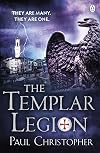
Read to me like a cross between Wilbur Smith and Dan Brown with the shade of H Rider Haggard lurking in the background. Set in Africa this time, they're hunting Solomon's Mine following previous explorers. At the same time into the country involved there is an attempt to exploit it using a coup, the man in charge is unhinged.
There's a certain tinge of "Africa is all corrupt" though Saint-Sylvestre is both scary and efficient. Sometimes it does come across as a bit patronising about the show more locals. It's an okay read but nothing earth-shattering. I accidentally read this one out of sequence but I don't think it really matters for the plot. Felt a bit lacking, but I can't put a finger on exactly what it is lacking. show less
There's a certain tinge of "Africa is all corrupt" though Saint-Sylvestre is both scary and efficient. Sometimes it does come across as a bit patronising about the show more locals. It's an okay read but nothing earth-shattering. I accidentally read this one out of sequence but I don't think it really matters for the plot. Felt a bit lacking, but I can't put a finger on exactly what it is lacking. show less
Statistics
- Works
- 16
- Members
- 2,663
- Popularity
- #9,634
- Rating
- 3.3
- Reviews
- 47
- ISBNs
- 141
- Languages
- 9
- Favorited
- 1