
Bob Gibson (1) (1935–2020)
Author of Stranger to the Game: The Autobiography of Bob Gibson
For other authors named Bob Gibson, see the disambiguation page.
About the Author
Image credit: bk1bennett
Works by Bob Gibson
Sixty Feet, Six Inches: A Hall of Fame Pitcher & a Hall of Fame Hitter Talk About How the Game Is Played (2009) 93 copies, 4 reviews
Tagged
Common Knowledge
- Other names
- Gibson, Pack Robert (birth name)
Gibson, Robert - Birthdate
- 1935-11-09
- Date of death
- 2020-10-02
- Gender
- male
- Education
- Omaha Technical High School
Creighton University - Occupations
- baseball player
baseball coach
MLB broadcaster
restaurateur
radio station investor
basketball player (show all 7)
bank co-founder - Organizations
- St. Louis Cardinals
- Awards and honors
- World Series MVP (1964)
World Series MVP (1967)
Most Valuable Player (NL|1968)
Cy Young Award (NL|1968)
Cy Young Award (NL|1970)
Baseball Hall of Fame (Player|1981) (show all 25)
Major League Baseball All-Century Team (P)
Babe Ruth Award (1964)
Sporting News Pitcher of the Year (1968)
Sporting News Pitcher of the Year (1970)
Missouri Sports Hall of Fame (1996)
star added to St. Louis Walk of Fame (1993)
chosen by The Omaha World-Herald as No. 1 athlete in Nebraska's history (2005)
Nebraska High School Hall of Fame (1994)
The Nebraska Black Sports Hall of Fame (2006)
Retired Jersey (St. Louis Cardinals)
Gold Glove Award (NL|P|1965)
Gold Glove Award (NL|P|1966)
Gold Glove Award (NL|P|1967)
Gold Glove Award (NL|P|1968)
Gold Glove Award (NL|P|1969)
Gold Glove Award (NL|P|1970)
Gold Glove Award (NL|P|1971)
Gold Glove Award (NL|P|1972)
Gold Glove Award (NL|P|1973) - Nationality
- USA
- Birthplace
- Omaha, Nebraska, USA
- Places of residence
- Omaha, Nebraska, USA
St. Louis, Missouri, USA
Columbus, Georgia, USA
New York, USA
Rochester, New York, USA - Associated Place (for map)
- USA
Members
Reviews
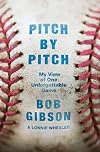
This is the book I hoped Daniel Okrent’s Nine Innings would be when I read it years ago. Okrent’s book was good, but I think this is better.
Bob Gibson was incredible in 1968. Denny McLain was, too. Gibson’s 1.12 ERA and McLain’s 31 wins are mind-boggling, even given that it was the “year of the pitcher.” And they were the opposing pitchers in the opening game of the World Series that year. Gibson’s done us a huge favor by putting himself back on that day and telling us show more everything that went through his mind, batter by batter, pitch by pitch.
Casual baseball fans complain that the game is too slow, that, for most of the game, nothing is really happening. But most of what happens in baseball happens when nothing is happening. It’s the strategizing, and it’s the pitcher vs. batter mental matchup — if you watch a game for action, I think you’re missing the best part.
And that’s what Gibson tells us. It’s all about what pitch to throw and where to throw it when. What did I throw this guy before? How was his swing on that fastball? What is he expecting now? Am I getting too tired to rely on my slider?
Several things impressed me about Gibson in particular. One was his confidence in how he could dictate where a batter would hit a ball — not just in the obvious cases where he wanted a double play groundball, but where he just wanted to get a quick out (he seems to think some guys aren’t even worth the pitches it would take to strike them out).
Another is his lack of concern, or even attention, for the positioning of the fielders behind him. I remember how Jim Palmer would move outfielders around. So far as you can tell from this, Gibson hardly pays any attention. And it’s not because he intended to strike everyone out — in fact, he says, as a rule, he didn’t even think about strikeouts until he got two strikes on a batter.
Gibson had a reputation as an intimidator. But, judging from what he says here (yes, it could be cleaned up), that wasn’t a big thing. He shows a lot of respect for hitters like Norm Cash, Willie Horton, Al Kaline, and Jim Northrup. He does move the ball in and out, setting up sliders away by first throwing fastballs in and off the plate. But I would expect any pitcher to do that.
And he does watch body language. He notices when batters step out of the box, to reset themselves, and he thinks about what he can conclude from it. He notices Northrup move up a step in the batter’s box, and he thinks Northrup must be moving up to hit a breaking pitch before it breaks. So Northrup gets a fastball.
It’s all pretty good stuff. And even if you know that this is how a pitcher thinks, it’s different hearing it, pitch by pitch, from the pitcher himself. I'm giving the book four stars instead of five, just because, like a pitching duel itself, I suspect it doesn't appeal to everyone. The action is in Gibson's head, not on the field.
Honestly, it’d be interesting to hear the same kind of account from a pitcher who is very different from Gibson. Maybe somebody without Gibson’s overpowering fastball. I’d love to hear Luis Tiant’s thoughts pitch by pitch. Or maybe a pitcher who just wasn’t as good, to understand the struggles he’s going through. show less
Bob Gibson was incredible in 1968. Denny McLain was, too. Gibson’s 1.12 ERA and McLain’s 31 wins are mind-boggling, even given that it was the “year of the pitcher.” And they were the opposing pitchers in the opening game of the World Series that year. Gibson’s done us a huge favor by putting himself back on that day and telling us show more everything that went through his mind, batter by batter, pitch by pitch.
Casual baseball fans complain that the game is too slow, that, for most of the game, nothing is really happening. But most of what happens in baseball happens when nothing is happening. It’s the strategizing, and it’s the pitcher vs. batter mental matchup — if you watch a game for action, I think you’re missing the best part.
And that’s what Gibson tells us. It’s all about what pitch to throw and where to throw it when. What did I throw this guy before? How was his swing on that fastball? What is he expecting now? Am I getting too tired to rely on my slider?
Several things impressed me about Gibson in particular. One was his confidence in how he could dictate where a batter would hit a ball — not just in the obvious cases where he wanted a double play groundball, but where he just wanted to get a quick out (he seems to think some guys aren’t even worth the pitches it would take to strike them out).
Another is his lack of concern, or even attention, for the positioning of the fielders behind him. I remember how Jim Palmer would move outfielders around. So far as you can tell from this, Gibson hardly pays any attention. And it’s not because he intended to strike everyone out — in fact, he says, as a rule, he didn’t even think about strikeouts until he got two strikes on a batter.
Gibson had a reputation as an intimidator. But, judging from what he says here (yes, it could be cleaned up), that wasn’t a big thing. He shows a lot of respect for hitters like Norm Cash, Willie Horton, Al Kaline, and Jim Northrup. He does move the ball in and out, setting up sliders away by first throwing fastballs in and off the plate. But I would expect any pitcher to do that.
And he does watch body language. He notices when batters step out of the box, to reset themselves, and he thinks about what he can conclude from it. He notices Northrup move up a step in the batter’s box, and he thinks Northrup must be moving up to hit a breaking pitch before it breaks. So Northrup gets a fastball.
It’s all pretty good stuff. And even if you know that this is how a pitcher thinks, it’s different hearing it, pitch by pitch, from the pitcher himself. I'm giving the book four stars instead of five, just because, like a pitching duel itself, I suspect it doesn't appeal to everyone. The action is in Gibson's head, not on the field.
Honestly, it’d be interesting to hear the same kind of account from a pitcher who is very different from Gibson. Maybe somebody without Gibson’s overpowering fastball. I’d love to hear Luis Tiant’s thoughts pitch by pitch. Or maybe a pitcher who just wasn’t as good, to understand the struggles he’s going through. show less
Sixty Feet, Six Inches: A Hall of Fame Pitcher & a Hall of Fame Hitter Talk about How the Game is Played by Bob Gibson
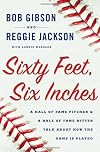
Two baseball Hall-of-Famers, Bob Gibson and Reggie Jackson, talk about how the game should be played, how they approached it, and how the game differs now from their day. Given Gibson's head-hunter reputation, I was a bit surprised to learn that he had fairly rigid conditions for brushing the batter back, and that he would never go for the head. What's not a surprise is that Gibson and Jackson have much the same work ethic about the game, that involves taking their natural gifts and show more improving them as much as possible through hard work, practice, attention to fundamentals, and thinking intelligently about everything they did. These approaches are often sorely lacking today; Albert Pujols is probably the best proponent of their approach to the game. It's a fascinating book for the baseball fan, especially for a St. Louisan. Interesting to see the mutual respect Gibson and Jackson share, and their regret that the only times they faced each other was in an All-Star game. I'm curious about the format of the book; it follows the form of a conversation, but it's pretty tightly edited, and both authors call up an array of facts and statistics you wouldn't imagine them to have at their fingertips. My guess is that they were e-mailing each other, giving them the opportunity to polish their comments and look up facts and figures. A very interesting baseball book, and I'm grateful to my sister and her husband for snagging me a copy at Gibson's book-signing. show less
Sixty Feet, Six Inches: A Hall of Fame Pitcher & a Hall of Fame Hitter Talk about How the Game is Played by Bob Gibson
Structured in the format of a conversation between two of the greatest ballplayers ever, Sixty Feet, Six Inches is a master class in anything and everything baseball. Of all the many baseball books I've read in recent years, this is one of the more insightful, interesting books.
There is a bit too much of a mutual admiration society thing going on and certainly plenty of "things were better back in our day," but that's probably to be expected. Where else can you get two great Hall of Famers show more offering opinions on the game, and its players, then and now?
This is a book that baseball fans won't want to miss. show less
There is a bit too much of a mutual admiration society thing going on and certainly plenty of "things were better back in our day," but that's probably to be expected. Where else can you get two great Hall of Famers show more offering opinions on the game, and its players, then and now?
This is a book that baseball fans won't want to miss. show less
Sixty feet, six inches : a Hall of Fame pitcher & a Hall of Fame hitter talk about how the game is played by Bob Gibson
One of baseball's greatest pitchers and one of baseball's greatest hitters - and ones known as great baseball thinkers - sit down and talk about baseball and you have a front row seat. Sounds like a great concept and Gibson and Jackson do tell a lot of great stories and offer some great insight and analysis of the game. Gibson even admits he used a spitball once in a game against the Mets (like he really needed too!). I found the book disappointing though because they seemed to fall back on show more old cliches and baseball accepted wisdom than really offering a unique perspective. And don't get me started on all the Yankees glurge and Jeter-love (especially from Jackson). I think this book would be better if there was a third person there - someone from outside the game, say, Bill James - to stir things up and keep Gibson & Jackson honest. Good but not great baseball writing, and baseball fans should enjoy reading it and enjoy critiquing it. show less
Lists
Recreation (1)
You May Also Like


Associated Authors
Statistics
- Works
- 5
- Members
- 310
- Popularity
- #76,068
- Rating
- 3.6
- Reviews
- 7
- ISBNs
- 15