
Jeff Brown (1) (1926–2003)
Author of Flat Stanley
For other authors named Jeff Brown, see the disambiguation page.
About the Author
Born in New York City, Jeff Brown has worked on the editorial staffs of The New Yorker and the Saturday Evening Post, and his stories have appeared in these magazines and many others. Mr. Brown is the author of several other books about the Lambchop family Scott Nash is cofounder of Big Blue Dot. show more He has illustrated many children's books. Like Stanley Lambchop, Scott is the oldest child in his family. He lives with his wife, Nancy, also an artist, and their very sweet dog, Bear, on Peaks Island off the coast of Maine show less
Series
Works by Jeff Brown
The Flat Stanley Collection Box Set: Flat Stanley, Invisible Stanley, Stanley in Space, and Stanley, Flat Again! (2006) 310 copies, 5 reviews
The Flat Stanley Adventures Series Collection 12 Book Box Set by Jeff Brown (Magic Lamp, In Space, Invisible, Flat Again, Amazing Mexican Secret & MORE!) (2020) 61 copies
Flat Stanley 4 Books in 1!: Flat Stanley, His Original Adventure; Stanley, Flat Again!; Stanley in Space; Stanley and the Magic Lamp (2016) 22 copies
Flat Stanley: The Graphic Novel - His Original Adventure! (2025) — Original Author — 2 copies, 1 review
The Flat Stanley Collection 2 copies
Flat Stanley's Adventure 14 1 copy
Associated Works
Cricket Magazine, Vol. 1, No. 4, December 1973 — Contributor — 5 copies
Tagged
Common Knowledge
- Legal name
- Brown, Richard Chester
- Birthdate
- 1926-08-26
- Date of death
- 2003-12-03
- Gender
- male
- Education
- Professional Children's School
- Occupations
- editor
child actor
producer
writer - Organizations
- Actors' Equity Association
The New Yorker
Life
Saturday Evening Post
Esquire
Warner Books - Short biography
- [excerpt from Prabook]
Brown had a busy and full career before turning to children's fiction. As a child growing up in New York, he went into show business, providing children's voices for radio programs and then acting in Broadway shows as a teenager. After leaving school, he went to Los Angeles, where he worked as an assistant to Samuel Goldwyn, Jr., and became an independent producer and later a story consultant at a subsidiary of Paramount Studios. Soon he was also writing, returning to New York to become a staff writer for several prominent magazines. This, in turn, led to a career in magazine editing, and then to book editing, with Brown becoming a senior editor at Warner Books before he retired from that position in 1980. - Nationality
- USA
- Places of residence
- New York, New York, USA
- Associated Place (for map)
- New York, USA
Members
Reviews
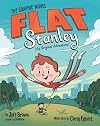
A charmingly absurd adaptation of the charmingly absurd children's novel about a boy who wakes up one morning to find himself flattened to only a half-inch thick.
I almost took issue with the depictions that weren't included in the original book of U.S. mail being routed through Canada and Mexico and sewers being laden with treasures, but then I remembered: absurd.
FOR REFERENCE:
Contents: Chapter 1. The Big Bulletin Board -- Chapter 2. Being Flat -- Chapter 3. Stanley the Kite -- Chapter 4. show more The Museum Thieves -- Chapter 5. Arthur's Good Idea show less
I almost took issue with the depictions that weren't included in the original book of U.S. mail being routed through Canada and Mexico and sewers being laden with treasures, but then I remembered: absurd.
FOR REFERENCE:
Contents: Chapter 1. The Big Bulletin Board -- Chapter 2. Being Flat -- Chapter 3. Stanley the Kite -- Chapter 4. show more The Museum Thieves -- Chapter 5. Arthur's Good Idea show less
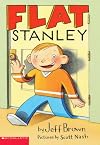
I was surprised at how appealing I found this silly story of a boy he is squished flat one day and makes the best of it. Maybe it's that all the adults -- doctors, parents, police, museum directors -- are all so consistently incompetent, so of course the kids have to step up when it comes to saving money, rescuing lost rings, stopping thieves, resolving sibling rivalry, and finding a cure.
Fun.
My only critique: I dislike stories where every member of the family gets a first name except the show more mother. Free Mrs. Lambchop from the patriarchy!
FOR REFERENCE:
Contents: Chapter 1. The Big Bulletin Board -- Chapter 2. Being Flat -- Chapter 3. Stanley the Kite -- Chapter 4. The Museum Thieves -- Chapter 5. Arthur's Good Idea show less
Fun.
My only critique: I dislike stories where every member of the family gets a first name except the show more mother. Free Mrs. Lambchop from the patriarchy!
FOR REFERENCE:
Contents: Chapter 1. The Big Bulletin Board -- Chapter 2. Being Flat -- Chapter 3. Stanley the Kite -- Chapter 4. The Museum Thieves -- Chapter 5. Arthur's Good Idea show less
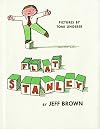
Stanley Lambchop is an ordinary boy . . . was an ordinary boy . . . until the night the bulletin board fell on top of him while he was sleeping. When Mr. and Mrs. Lambchop lifted the board off Stanley, they discovered that he was flat.
At first, Stanley enjoyed being flat. He could slide under doors and do all sorts of things. He even slid through the sidewalk grating when his mother’s ring accidentally rolled between its bars. He mailed himself in an envelope to visit his friend, Thomas, show more in California. Stanley could roll himself up, and make himself into a kite for his younger brother, Arthur. [Arthur was jealous of all the things Stanley could do now that he was flat and tried to flatten himself by putting a great many volumes of the Encyclopedia Britannica on top of himself. It didn’t work.]
Mr. O. Jay Dart, director of the Famous Museum of Art, was upset because thieves were stealing paintings from the museum. Sneak thieves [the worst kind because they work by sneakery] are responsible, but the police have had no luck catching them.
Stanley comes up with a plan. But will it work? Will they catch the sneak thieves and save the paintings in the museum? And, most importantly, will Stanley stay flat forever?
Flat Stanley is destined to become the young reader’s favorite character. Although filled with whimsy and silliness, the clever story makes some important points about family, being brothers, coming to hasty conclusions, teamwork, and judging people by their differences.
“Flat Stanley” has spawned a plethora of Flat Stanley adventures as well as imaginative school projects in which students create a flat figure of themselves and then send themselves in the mail to have adventures [my granddaughter’s flat-self went to the playground, the movies, and grocery-shopping, then visited a local classroom . . . now her flat-self is proudly displayed on my bookcase].
The target audience here is ages six through ten; however, the narrative is a bit lengthy, so perhaps not appropriate for the youngest readers unless read in installments. Some of the humor may be more at the parental level, but the improbability is sure to make every young reader giggle. This is definitely a book that children will ask to read again and again.
Highly recommended. show less
At first, Stanley enjoyed being flat. He could slide under doors and do all sorts of things. He even slid through the sidewalk grating when his mother’s ring accidentally rolled between its bars. He mailed himself in an envelope to visit his friend, Thomas, show more in California. Stanley could roll himself up, and make himself into a kite for his younger brother, Arthur. [Arthur was jealous of all the things Stanley could do now that he was flat and tried to flatten himself by putting a great many volumes of the Encyclopedia Britannica on top of himself. It didn’t work.]
Mr. O. Jay Dart, director of the Famous Museum of Art, was upset because thieves were stealing paintings from the museum. Sneak thieves [the worst kind because they work by sneakery] are responsible, but the police have had no luck catching them.
Stanley comes up with a plan. But will it work? Will they catch the sneak thieves and save the paintings in the museum? And, most importantly, will Stanley stay flat forever?
Flat Stanley is destined to become the young reader’s favorite character. Although filled with whimsy and silliness, the clever story makes some important points about family, being brothers, coming to hasty conclusions, teamwork, and judging people by their differences.
“Flat Stanley” has spawned a plethora of Flat Stanley adventures as well as imaginative school projects in which students create a flat figure of themselves and then send themselves in the mail to have adventures [my granddaughter’s flat-self went to the playground, the movies, and grocery-shopping, then visited a local classroom . . . now her flat-self is proudly displayed on my bookcase].
The target audience here is ages six through ten; however, the narrative is a bit lengthy, so perhaps not appropriate for the youngest readers unless read in installments. Some of the humor may be more at the parental level, but the improbability is sure to make every young reader giggle. This is definitely a book that children will ask to read again and again.
Highly recommended. show less

W received this as part of a goody bag from a friend's birthday party, and we read it aloud together. The wishes make for an episodic book, a series of separate mini-adventures with a predictable morality-tale ending. I see it as an example of the recurrent myth, or looking at culture from an anthropological perspective: trite perhaps, but a worthy message for a society to preserve.
Stanley is no longer flat, which is perhaps the most disappointing aspect of the book. Unclear how much that's show more marketing, or a means for Brown to allow his characters to grow. show less
Stanley is no longer flat, which is perhaps the most disappointing aspect of the book. Unclear how much that's show more marketing, or a means for Brown to allow his characters to grow. show less
Lists
Awards

You May Also Like


Associated Authors
Statistics
- Works
- 64
- Also by
- 9
- Members
- 38,723
- Popularity
- #467
- Rating
- 3.7
- Reviews
- 235
- ISBNs
- 562
- Languages
- 9
- Favorited
- 2
