
Diane Morgan (1)
Author of Roots: The Definitive Compendium with more than 225 Recipes
For other authors named Diane Morgan, see the disambiguation page.
About the Author
Diane Morgan is an experienced teacher and author of several cookbooks including "Cooking for the Week". She also writes a food column for the "Los Angeles Times". She lives in Portland, Oregon. (Bowker Author Biography)
Image credit: Diane Morgan
Series
Works by Diane Morgan
Associated Works
Tagged
Common Knowledge
- Gender
- female
- Education
- Reed College (BS|Mathematics)
- Occupations
- writer
author - Awards and honors
- James Beard Award
- Nationality
- USA
- Places of residence
- Chicago, Illinois, USA
Portland Oregon - Associated Place (for map)
- Illinois, USA
Members
Reviews
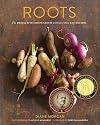
Diane Morgan's Roots cookbook is a comprehensive guide to root vegetables, along with creative recipes for each root variety. Be aware, however, that almost all of the 225+ recipes make heavy use of rich ingredients like high-fat dairy products and eggs, plus generous amounts of refined sweeteners (most often white sugar). More than a few recipes use meat. Unfortunately, no nutrition analysis is given for these recipes, but the vast majority are very high in fat. These recipes rarely call show more for grains, but when they do, it's processed white rice and heavily processed white flour ... whole grain and unrefined ingredients are absent. I disagree with her advice to use acidulated water (with added drops of lemon juice) for roots like burdock that are fast to discolor when cut ... plain water (I use only deep spring water for cooking) works well, so that's a time-saver. A more serious error is the book's description of ginger's limited nutrition value. For example, books on herbal medicines have as many as six pages of examples of the healing qualities of ginger.
The author's advice to use Sendai miso in a burdock recipe (and Japanese Panko breadcrumbs elsewhere) is also a problem. Sendai is in the Kanto (northeast) region of Japan, which is still suffering acute and chronic effects of the Fukushima nuclear disaster. Testing food for radioactive contamination is expensive, but luckily some macrobiotic food companies test their food products from Japan, beginning in 2011. Buy a tested miso or make miso at home, as I do.
Finally, the author refers to herself in her younger days as being pescatarian, and disparages macrobiotic cooking as something that was (only) popular in the latter part of the 20th century. First of all, in the 21st century, macrobiotics is still popular with tens of thousands of people worldwide, those seeking a healthy (and even healing) diet. Second, for more than 100 years, the worldwide credit for introducing a mostly vegetarian diet based on whole foods and some use of fish goes to the global macrobiotic community, not to "pescatarians." Ocean fish contains Vitamin B12, iodine and Vitamin D3, nutrients which are otherwise mostly absent from vegetarian diets. Ideally, in any future second edition of this book, the above errors will be corrected.
I do recommend this cookbook, but please keep the above points in mind when you use it. I also recommend buying the hardcover edition, because with the many gorgeous and necessary color photographs, the book's weight is considerable; the hardcover edition will endure in your library much better than a paperback copy. Be aware, also, that the color photographs are of the roots themselves, not the finished recipes. show less
The author's advice to use Sendai miso in a burdock recipe (and Japanese Panko breadcrumbs elsewhere) is also a problem. Sendai is in the Kanto (northeast) region of Japan, which is still suffering acute and chronic effects of the Fukushima nuclear disaster. Testing food for radioactive contamination is expensive, but luckily some macrobiotic food companies test their food products from Japan, beginning in 2011. Buy a tested miso or make miso at home, as I do.
Finally, the author refers to herself in her younger days as being pescatarian, and disparages macrobiotic cooking as something that was (only) popular in the latter part of the 20th century. First of all, in the 21st century, macrobiotics is still popular with tens of thousands of people worldwide, those seeking a healthy (and even healing) diet. Second, for more than 100 years, the worldwide credit for introducing a mostly vegetarian diet based on whole foods and some use of fish goes to the global macrobiotic community, not to "pescatarians." Ocean fish contains Vitamin B12, iodine and Vitamin D3, nutrients which are otherwise mostly absent from vegetarian diets. Ideally, in any future second edition of this book, the above errors will be corrected.
I do recommend this cookbook, but please keep the above points in mind when you use it. I also recommend buying the hardcover edition, because with the many gorgeous and necessary color photographs, the book's weight is considerable; the hardcover edition will endure in your library much better than a paperback copy. Be aware, also, that the color photographs are of the roots themselves, not the finished recipes. show less
Lists
Awards


You May Also Like


Associated Authors
Statistics
- Works
- 16
- Also by
- 2
- Members
- 837
- Popularity
- #30,526
- Rating
- 3.7
- Reviews
- 5
- ISBNs
- 141