
Colonel Jack Jacobs
Author of If Not Now, When?: Duty and Sacrifice in America's Time of Need
Colonel Jack Jacobs is Jack Jacobs (1). For other authors named Jack Jacobs, see the disambiguation page.
Works by Colonel Jack Jacobs
Tagged
Common Knowledge
- Gender
- male
Members
Reviews
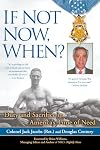
This book is a smoothly written memoir by the Medal of Honor winner Jack Jacobs. Jacobs is a New York Jew and part of the book's attraction is his understanding of life from that religious perspective. This book isn't a recounting of the days when he won the Medal of Honor. He actually downplays what happened on that day. "If Not Now" is more a reflection on the life lessons that included his surviving the Vietnam battlefield. I have read more thrilling Vietnam memoirs, but Jacob's literary show more polish (with the help of a co-author) is something not often found among war accounts. There are many unique things described which I haven't seen elsewhere. He has a description of LZ Sally which I have heard of from my family members. He spends some time describing Ft. Bragg's jump school. He also speaks in passing about the location of La Vang (site of a Marian apparition). I found Jacob's critical remarks on the war and the then President, his Secretary of Defense, and the US military Generals to be fair and logical. He gives, in separate places, reasons for why the US was the inevitable loser, and why it did not have to be so. Brian Williams has written a Preface which gave me a higher estimation of Williams’ intelligence than I had from watching his normal TV appearances. show less
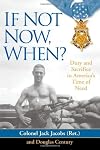
The autobiography of Colonel Jack Jacobs is at times both hilarious and somber. While it does tell of his time in Vietnam as an advisor (an aspect of the war that is often overlooked and nearly unheard of), as well as the action that lead to him receiving the Medal of Honor, Jacobs goes further into his life before and after the war. From being in ROTC at Rutgers, to going into the banking business after his retirement from the Army, Jacobs talks about the triumphs and challenges that he show more faced in life.
Unlike the grittiness and gruesomeness of war memoirs like Steel My Soldiers' Hearts by Colonel Hackworth or the well known We Were Soldiers Once...and Young by Lt. Gen. Moore & Galloway, If Not Now, When? is written with a sort of sarcastic wit that at times left me in stitches. Jacobs likes to poke fun at the ironies of military service as well as life in general. Simple descriptions of how he learned to survive in Vietnam to how the doctors treated his wounds, to how he met is second wife are written with a great sense of humor.
My only gripes are that Jacobs frequently throws in big words into the writing. This isn't a big issue, but I found numerous words where I didn't even have any idea of the meaning of them. Either Jacobs had a thesaurus handy, or his education at Rutgers is far superior to any English course I've ever taken. My final issue with the book is that I found the ending kind of abrupt and unmoving. In other war memoirs, they usually end with a sense that we need to honor the brave men who've fought and died in battle. I'm not saying that Jacobs doesn't mention their sacrifice (he does), but it seemed a bit tacked on. Perhaps it was because the overall tone of the book was meant to be humorous, that the feeling of somberness was a bit diluted.
Overall, If Not Now, When? was a well-written and straightforward autobiography of Colonel Jacobs. I greatly enjoyed reading it as it was a welcome change of pace from all the other depressing war memoirs. show less
Unlike the grittiness and gruesomeness of war memoirs like Steel My Soldiers' Hearts by Colonel Hackworth or the well known We Were Soldiers Once...and Young by Lt. Gen. Moore & Galloway, If Not Now, When? is written with a sort of sarcastic wit that at times left me in stitches. Jacobs likes to poke fun at the ironies of military service as well as life in general. Simple descriptions of how he learned to survive in Vietnam to how the doctors treated his wounds, to how he met is second wife are written with a great sense of humor.
My only gripes are that Jacobs frequently throws in big words into the writing. This isn't a big issue, but I found numerous words where I didn't even have any idea of the meaning of them. Either Jacobs had a thesaurus handy, or his education at Rutgers is far superior to any English course I've ever taken. My final issue with the book is that I found the ending kind of abrupt and unmoving. In other war memoirs, they usually end with a sense that we need to honor the brave men who've fought and died in battle. I'm not saying that Jacobs doesn't mention their sacrifice (he does), but it seemed a bit tacked on. Perhaps it was because the overall tone of the book was meant to be humorous, that the feeling of somberness was a bit diluted.
Overall, If Not Now, When? was a well-written and straightforward autobiography of Colonel Jacobs. I greatly enjoyed reading it as it was a welcome change of pace from all the other depressing war memoirs. show less
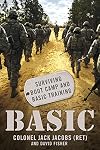
I picked up this book going into it like I was going to get a lot of tips but also just a lot of dialect. Yes this book does have dialect but it is not stale. It is actually very enlightening. Throughout the book are quotes from military movies or actual personal that endured boot camp/basic training. Although I have never actually been in the military, I did get a little taste of what it would be like to enlist in the military. I was in the Civil Air Patrol and I was gone for a week at the show more Air Force Academy. I had to follow all of the rules as if I was actually in the military with the 45 degree hospital corners, dusting and cleaning my room, the bathroom, and polishing my boots as well as ironing my uniform. Oh and taking a shower what is that. I was lucky if I got to take a 5 minute shower. It was because of this that I have learned to take quick showers and get dressed quickly.
So I could relate to stuff that people were talking about. I even understood the reason for the yelling. The stories that people would share were funny. This is a well-written, quick read. show less
So I could relate to stuff that people were talking about. I even understood the reason for the yelling. The stories that people would share were funny. This is a well-written, quick read. show less
Talk about bringing back memories. Reading Basic: Surviving Boot Camp and Basic Training made me remember (sometimes fondly, sometimes not so fondly) things I have not thought about in since they happened way back in 1968 while I was in the process of completing Army basic training at Ft. Campbell, Kentucky. I am certain that anyone who completed basic or boot camp during the Viet Nam era (because most of the book’s first-person anecdotes seem to come from those years) will react the same show more way. The awakening of those memories, along with a better understanding of things that made little sense to most of us while they were happening, makes Basic a fun (and worthwhile) read.
But, first things first. The title of the book might seem a little redundant to some because it references both “Boot Camp” and “Basic Training.” There is, however, good reason for that: Marines complete “boot camp” and the Army’s “soldiers” complete “basic training.” And, although I am less certain about it, I believe that the Navy puts its recruits through “boot camp,” while the Air Force prefers the “basic training” designation. So, although the training is somewhat similar across all branches of the U.S. military, the terms really are not directly interchangeable.
Basic describes each of the segments and milestones that are part of a military recruit’s first few weeks of military training, beginning with the calm-by-comparison first week during which hair is shorn, shots are given, and uniforms are issued, and ending with the graduation ceremony. Along the way, Colonel Paris describes both training whose purpose is apparent and “training” that seems to have little purpose at all. Through a combination of stories from those who have gone through the training themselves and the colonel’s explanation of what that training entails, the reader learns about things like: close-order drill, hand-to-hand combat training, bayonet training, guard duty, barracks life, weapons qualification, mess hall protocols, and PT training and testing.
Colonel Paris emphasizes the two distinct types of training that occur during basic, physical and mental, because it is critical that new soldiers, marines, sailors, and airmen, be as well prepared mentally as they are physically to take on the responsibilities for which they are training. That being the case, most of the training whose purpose is not so readily apparent most often relates to the mental aspects of basic training. Those in charge of such training believe that new recruits must first be broken down before they can be rebuilt into the military men and women they are meant to be. And they are correct; the process works beautifully.
At the end of a recruit’s training, the Drill Instructors who were his worst enemy (and someone to fear), suddenly turn into peers who show him as much respect as they have demanded from him just a few days earlier. And that has to be one of the best feelings in the world, something that no graduate of Basic Training or Boot Camp will ever forget.
Bottom Line: Basic: Surviving Boot Camp and Basic Training will be of interest both to those who have not undergone the training and to those who have. I had fun with this one. show less
But, first things first. The title of the book might seem a little redundant to some because it references both “Boot Camp” and “Basic Training.” There is, however, good reason for that: Marines complete “boot camp” and the Army’s “soldiers” complete “basic training.” And, although I am less certain about it, I believe that the Navy puts its recruits through “boot camp,” while the Air Force prefers the “basic training” designation. So, although the training is somewhat similar across all branches of the U.S. military, the terms really are not directly interchangeable.
Basic describes each of the segments and milestones that are part of a military recruit’s first few weeks of military training, beginning with the calm-by-comparison first week during which hair is shorn, shots are given, and uniforms are issued, and ending with the graduation ceremony. Along the way, Colonel Paris describes both training whose purpose is apparent and “training” that seems to have little purpose at all. Through a combination of stories from those who have gone through the training themselves and the colonel’s explanation of what that training entails, the reader learns about things like: close-order drill, hand-to-hand combat training, bayonet training, guard duty, barracks life, weapons qualification, mess hall protocols, and PT training and testing.
Colonel Paris emphasizes the two distinct types of training that occur during basic, physical and mental, because it is critical that new soldiers, marines, sailors, and airmen, be as well prepared mentally as they are physically to take on the responsibilities for which they are training. That being the case, most of the training whose purpose is not so readily apparent most often relates to the mental aspects of basic training. Those in charge of such training believe that new recruits must first be broken down before they can be rebuilt into the military men and women they are meant to be. And they are correct; the process works beautifully.
At the end of a recruit’s training, the Drill Instructors who were his worst enemy (and someone to fear), suddenly turn into peers who show him as much respect as they have demanded from him just a few days earlier. And that has to be one of the best feelings in the world, something that no graduate of Basic Training or Boot Camp will ever forget.
Bottom Line: Basic: Surviving Boot Camp and Basic Training will be of interest both to those who have not undergone the training and to those who have. I had fun with this one. show less
Awards

Statistics
- Works
- 2
- Members
- 145
- Popularity
- #142,478
- Rating
- 3.9
- Reviews
- 8
- ISBNs
- 28
- Languages
- 2