
David Frost (1) (1939–2013)
Author of Frost/Nixon: Behind the Scenes of the Nixon Interviews
For other authors named David Frost, see the disambiguation page.
About the Author
Image credit: Photo by R. D. Ward, United States Department of Defense (Cropped for Wikimedia)
Works by David Frost
The Presidential debate, 1968;: David Frost talks with Vice-President Hubert H. Humphrey [and others] (1968) 6 copies
Frost Nixon--The Complete Interviews: Special Limited Edition--2 disc Collectors set [DVD] [1977] [UK Import] (2009) 3 copies
Wolds worst dicisions 2 copies
De Engelsen 1 copy
The Next President 1 copy
Billy Graham: Prophet With Honor (DVD) — Narrator — 1 copy
Associated Works
The bluffer's guide to the cinema: Leslie Elliott. Introduced by David Frost (1969) — Introduction — 15 copies
Tagged
Common Knowledge
- Other names
- Frost, David Paradine (birth name)
- Birthdate
- 1939-04-07
- Date of death
- 2013-08-31
- Gender
- male
- Education
- Gonville and Caius College, Cambridge
- Organizations
- Associated-Rediffusion
Anglia Television
BBC
ITV
Al Jazeera English - Awards and honors
- Knight Bachelor (1993)
Order of the British Empire (Officer) - Nationality
- UK
- Birthplace
- Tenterden, England, UK
- Associated Place (for map)
- England, UK
Members
Reviews
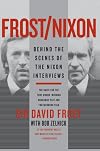
My hope was to hear the entirety of the Frost/Nixon interviews, and since that was far outside the purview of this 4.5-hour audiobook (the interviews run something like 28 hours), I was disappointed. That's a pattern for me, for my life: disappointment because of insufficient initial info gathering.
But still, there is quite a bit here to hold one's interest. Of especial note is Nixon's parsing, in his own words, in his own voice, and at the business end of Frost's anglovox, Q&A goad, Nixon's show more parsing of the Watergate cover-up. Nixon is careful to note that his actions did not breach the legal line defining conspiracy to obstruct justice, but "they [= his actions:] went all the way up to that line." He claims that his intent was to simply shield his administration (and himself) from the botched robbery's fallout. (Frost concedes at the end of the audiobook that, in light of all the evidence that's surfaced in the years 1977 to 2007, he's inclined to take Nixon's assertion at face value; i.e., that Nixon didn't know about the initial break-in and that his subsequent actions were meant to simply shunt scandal fallout outward.) Nixon then makes the startling admission that in spite of not technically, criminally covering anything up, "any reasonable person would interpret my actions as constituting a cover up."
There are even a few quite moving moments. All the more remarkable given that my early and initial exposure to Nixon was actually to Jules Feiffer's Nixon caricatures (which I, a 9 year old, could reproduce to the delight of my 5-grade teacher Dawn Fowler, whom I loved) and Dan Ackroyd's SNL Richard Nixon. Thus, the Nixon of my conception is a ludicrous and ridiculous and corrupt cartoon. That's my Nixon-imago, and hearing Nixon and Frost's head-to-head kind of burst that imago and revealed to me something of Nixon the real man.
Did I mention that Frost reveals this little tidbit about Nixon's participation in these interviews? The revelation: Nixon agreed to cede Frost's team 100% editorial control for the interviews. That's one remarkably ballsy move for anyone, let alone for a man obsessed with image-control and power, Nixon. What Nixon basically does in these interviews is, to paraphrase Frost's commentary, to tear down his personality's defenses and leave himself vulnerable (at least vulnerable for Nixon) to a kind of public/personal intimacy. And this isn't to say that he's also not circuitous of speech and cagey and at times combative -- he is -- but he also here and there unbuttons his shirt and tells Frost the marksman to fire at will.
So, hat's off to the be-jowled, vampire hairdo'd, double v-sign wagging national joke, and congratulations to Richard Milhous the man, and congratulations to Frost. show less
But still, there is quite a bit here to hold one's interest. Of especial note is Nixon's parsing, in his own words, in his own voice, and at the business end of Frost's anglovox, Q&A goad, Nixon's show more parsing of the Watergate cover-up. Nixon is careful to note that his actions did not breach the legal line defining conspiracy to obstruct justice, but "they [= his actions:] went all the way up to that line." He claims that his intent was to simply shield his administration (and himself) from the botched robbery's fallout. (Frost concedes at the end of the audiobook that, in light of all the evidence that's surfaced in the years 1977 to 2007, he's inclined to take Nixon's assertion at face value; i.e., that Nixon didn't know about the initial break-in and that his subsequent actions were meant to simply shunt scandal fallout outward.) Nixon then makes the startling admission that in spite of not technically, criminally covering anything up, "any reasonable person would interpret my actions as constituting a cover up."
There are even a few quite moving moments. All the more remarkable given that my early and initial exposure to Nixon was actually to Jules Feiffer's Nixon caricatures (which I, a 9 year old, could reproduce to the delight of my 5-grade teacher Dawn Fowler, whom I loved) and Dan Ackroyd's SNL Richard Nixon. Thus, the Nixon of my conception is a ludicrous and ridiculous and corrupt cartoon. That's my Nixon-imago, and hearing Nixon and Frost's head-to-head kind of burst that imago and revealed to me something of Nixon the real man.
Did I mention that Frost reveals this little tidbit about Nixon's participation in these interviews? The revelation: Nixon agreed to cede Frost's team 100% editorial control for the interviews. That's one remarkably ballsy move for anyone, let alone for a man obsessed with image-control and power, Nixon. What Nixon basically does in these interviews is, to paraphrase Frost's commentary, to tear down his personality's defenses and leave himself vulnerable (at least vulnerable for Nixon) to a kind of public/personal intimacy. And this isn't to say that he's also not circuitous of speech and cagey and at times combative -- he is -- but he also here and there unbuttons his shirt and tells Frost the marksman to fire at will.
So, hat's off to the be-jowled, vampire hairdo'd, double v-sign wagging national joke, and congratulations to Richard Milhous the man, and congratulations to Frost. show less
Frost/Nixon: Behind the Scenes of the Nixon Interviews is divided into two parts.
First there's a look at Frost's decision to interview Nixon when he was basically persona non grata, at a time when Nixon was trying to get back into public life. This was not an easy thing to accomplish for Frost -- a LOT of negotiation went on, including questions over how much money Nixon would get, who was going to have editorial control, the topics that Nixon would speak on, etc. This part of the book also show more examines the series of interviews that took place, and how Frost was able to ask questions and not get bogged down in Nixon's somewhat elusive answers, especially on Watergate, Vietnam and Chile. It also takes a look at how Nixon tries to, in effect, rewrite some of the history of his tenure as President, even though the Watergate tapes showed he wasn't being quite truthful. Frost also examines what happened after the interviews aired and Nixon went back into public life. After writing about the tapings,
Frost takes a look at Nixon's presidency and briefly assesses both negative and positive aspects of Nixon's time in office prior to his resignation. He doesn't just dwell on Watergate but goes on to examine Nixon's foreign policy decisions as well.
The second part contains the transcripts of the interviews by topic.
This was an interesting read, but for me, it was less the behind the scenes stuff and more for Nixon's perspective on his own wrongdoings and those of the men who worked for him. Also, I realized after reading this that the bad-guy Nixon was the same person who did things like open up China. Frost's take on Nixon's tenure in office also gives the reader food for thought.
I have a bone to pick with Frost, though...it's minor but worth noting. Considering the man is a journalist, he should know that Chinese people always state their last names first, so it grated on my nerves when he'd say Mao Zedong and then refer to Zhou Enlai as "En-lai," or Hua Guofeng as Guo-feng, just knowing he was probably using their first names as last names.
I'd definitely recommend this book to anyone who is even mildly interested in the topic. There is a LOT of information on not only Watergate, but other issues of the late 1960s, early 1970s such as Vietnam, civil rights, the cold war and the role of the two major superpowers of the era. I read this book before the movie, and I think anyone who is planning to see the film may find it helpful, even though parts of the movie are fictionalized.
Lest we think "so what -- that was then", on page 89, in the center of the page, there is a bit of transcript which reads something like this:
Frost: "So in a sense what you're saying is that there are certain situations...where the president can decide that it's in the best interest of the nation or something and do something illegal?"
Nixon: "Well, when the president does it, that means that it is not illegal."
Frost: "By definition?"
Nixon: "Exactly, exactly."
This extract is only a part of what Nixon had to say during the Frost/Nixon interviews, but it's important, and it's (imho) still relevant. show less
First there's a look at Frost's decision to interview Nixon when he was basically persona non grata, at a time when Nixon was trying to get back into public life. This was not an easy thing to accomplish for Frost -- a LOT of negotiation went on, including questions over how much money Nixon would get, who was going to have editorial control, the topics that Nixon would speak on, etc. This part of the book also show more examines the series of interviews that took place, and how Frost was able to ask questions and not get bogged down in Nixon's somewhat elusive answers, especially on Watergate, Vietnam and Chile. It also takes a look at how Nixon tries to, in effect, rewrite some of the history of his tenure as President, even though the Watergate tapes showed he wasn't being quite truthful. Frost also examines what happened after the interviews aired and Nixon went back into public life. After writing about the tapings,
Frost takes a look at Nixon's presidency and briefly assesses both negative and positive aspects of Nixon's time in office prior to his resignation. He doesn't just dwell on Watergate but goes on to examine Nixon's foreign policy decisions as well.
The second part contains the transcripts of the interviews by topic.
This was an interesting read, but for me, it was less the behind the scenes stuff and more for Nixon's perspective on his own wrongdoings and those of the men who worked for him. Also, I realized after reading this that the bad-guy Nixon was the same person who did things like open up China. Frost's take on Nixon's tenure in office also gives the reader food for thought.
I have a bone to pick with Frost, though...it's minor but worth noting. Considering the man is a journalist, he should know that Chinese people always state their last names first, so it grated on my nerves when he'd say Mao Zedong and then refer to Zhou Enlai as "En-lai," or Hua Guofeng as Guo-feng, just knowing he was probably using their first names as last names.
I'd definitely recommend this book to anyone who is even mildly interested in the topic. There is a LOT of information on not only Watergate, but other issues of the late 1960s, early 1970s such as Vietnam, civil rights, the cold war and the role of the two major superpowers of the era. I read this book before the movie, and I think anyone who is planning to see the film may find it helpful, even though parts of the movie are fictionalized.
Lest we think "so what -- that was then", on page 89, in the center of the page, there is a bit of transcript which reads something like this:
Frost: "So in a sense what you're saying is that there are certain situations...where the president can decide that it's in the best interest of the nation or something and do something illegal?"
Nixon: "Well, when the president does it, that means that it is not illegal."
Frost: "By definition?"
Nixon: "Exactly, exactly."
This extract is only a part of what Nixon had to say during the Frost/Nixon interviews, but it's important, and it's (imho) still relevant. show less

At age 29, David Frost's interviewing ability was recognized by the programming powers-that-be in this country, and he was imported here from England to do a series of TV interviews with well-known and influential people from all walks of life. Frost has a talent for discovering the inner cores of guarded people, and that gift is well-displayed in this colloection of interview transcripts. The guests include Truman Capote, Orson Welles, Tennessee Williams, Louis Armstrong, Helen Hayes, Artur show more Rubinstein, Jon Voight, Johnny Carson, Ralph Nader, Ramsey Clark, Adam Clayton Powell Jesse Jackson, Barry Goldwater, James Baldwin, Carl Stokes, Dr. Spock, Raquel Welch, Claire Boothe Luce, Chet Huntley, Peter Fonda and Dennis Hopper, Spiro Agnew, Joe McGinniss and Gerald Ford, George McGovern, Eugene McCarthy, and Adam Clayton Powell, who was by far the most irritating of the interviewees. The others, even such as Spiro Agnew, came off as remarkably human while chatting with David Frost. I'm intrigued enough to check and see if there are visuals of these interviews available to be seen. Frost comes off as a well-informed and affable interviewer, who had a gift for putting his subjects at ease (and perhaps off their guard). show less
Dagney Night, a sought-after succubus, is no stranger to blazing hot sex. But as Valentine's Day approaches, she longs for something more. When oddly erotic paintings arrive for display at her art gallery, arousing everyone who views them, she wonders about the mysterious artist who created the works.
Maxwell Raines, a fire-sex demon, lives a life of solitude and seclusion behind the walls of his compound at Sleepy Hollow, channeling his lustful impulses into his art-until his muse deserts show more him and his temperature rises past the danger point. He needs sex. Now. When Madame Evangeline arranges a torrid Valentine's 1Night Stand for them, will the flames of their encounter be too hot to handle?
I liked Dagney. She is smart and has a cute inner voice that made me smile a couple of times. She has grown tired of meaningless sex and finds herself with the need to find someone who will make her feel again. Maxwell seems to be the answer to her prayers. I liked Maxwell too. He is a sexy bad boy who wants someone to call his own. Too bad he ends up literally burning his lovers. But his luck is about to change with Dagney. He is one of the good guys because when he thinks he might hurt her, he walks away. Thankfully he isn't able to stay away for long. He ends up hurting Dagney by going away, but that is a good thing because she feels again, just like she wanted in the first place. The love scenes between them are blistering hot. This story contains very explicit love scenes and language.
TRS for AReCafe show less
Maxwell Raines, a fire-sex demon, lives a life of solitude and seclusion behind the walls of his compound at Sleepy Hollow, channeling his lustful impulses into his art-until his muse deserts show more him and his temperature rises past the danger point. He needs sex. Now. When Madame Evangeline arranges a torrid Valentine's 1Night Stand for them, will the flames of their encounter be too hot to handle?
I liked Dagney. She is smart and has a cute inner voice that made me smile a couple of times. She has grown tired of meaningless sex and finds herself with the need to find someone who will make her feel again. Maxwell seems to be the answer to her prayers. I liked Maxwell too. He is a sexy bad boy who wants someone to call his own. Too bad he ends up literally burning his lovers. But his luck is about to change with Dagney. He is one of the good guys because when he thinks he might hurt her, he walks away. Thankfully he isn't able to stay away for long. He ends up hurting Dagney by going away, but that is a good thing because she feels again, just like she wanted in the first place. The love scenes between them are blistering hot. This story contains very explicit love scenes and language.
TRS for AReCafe show less
Awards

You May Also Like


Associated Authors
Statistics
- Works
- 45
- Also by
- 3
- Members
- 857
- Popularity
- #29,858
- Rating
- 3.4
- Reviews
- 9
- ISBNs
- 70
- Languages
- 2