
Peter Hunt (1) (1945–)
Author of The Norton Anthology of Children's Literature
For other authors named Peter Hunt, see the disambiguation page.
About the Author
Peter Hunt is Professor of English at Cardiff University.
Image credit: Peter Hunt (1)
Works by Peter Hunt
How did Long John Silver lose his leg? : and twenty-six other mysteries of children's literature (2013) 11 copies, 1 review
Associated Works
Alice's Adventures in Wonderland / Through the Looking-Glass (1865) — Editor, some editions — 29,264 copies, 314 reviews
Children's Literature: Classic Texts and Contemporary Trends (2009) — Contributor — 31 copies, 1 review
Voices of the Other: Children's Literature and the Postcolonial Context (1999) — Contributor — 10 copies
The Arthur Ransome Society : transcripts from the literary weekends (1993) — Contributor, some editions — 1 copy
Tagged
Common Knowledge
- Birthdate
- 1945
- Gender
- male
- Occupations
- literary critic
editor
professor - Organizations
- Cardiff University (Professor Emeritus in Children's Literature)
- Awards and honors
- IAFA Distinguished Scholarship (1995)
International Brothers Grimm Award (2003) - Nationality
- UK
- Associated Place (for map)
- UK
Members
Reviews
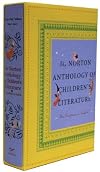
This book has everything. It gives history associated with children's literature generally, with the specific stories (the different versions of "Little Red Riding Hood," for example, are a fascinating study), and even with the content of some specific stories (e.g. the section on alphabet poems describes an older, 24-letter English alphabet). And what a collection! It contains tradition stories, including fairy tales. It contains more modern responses to these fairy tales, such as parodies show more and cynical, worldly retellings. Its collection of literature includes humor and serious works. It includes poetry, prose, plays, and picture books (and yes, the actual pages of the picture books are reproduced as images, so the readers can see more than just the text). It even has a section of full-color pictures. It includes many works that I recall from my own childhood, and it grounds them in context so that I can better understand their history and their context in the canon.
This book brings me joy. show less
This book brings me joy. show less
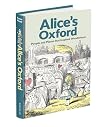
It always amazes me the way fans seek any tie they find linking some work of creative fiction to the real world. I myself made a point of staying in The Village in Wales, where the Patrick McGoohan TV series The Prisoner was shot in the 1960s. Now here is a treatment of Alice in Wonderland and Through The Looking Glass, connecting the author Lewis Carroll and the real Alice by placing her in the real locations in Oxford that the books fictionalized. Pretty cool.
First of all, Alice did not show more look like the little blond girl of the books. She had dark, straight hair and bangs (at times). Lewis Carroll hired John Tenniel to do the illustrations for his book, but he did them remotely. Carroll would make sketches and send them to Tenniel, and Tenniel would make artwork and send them to Carroll. Somehow, and not without tensions, they made it work. It took a while before Tenniel finally agreed to illustrate the second book, if that’s and indicator.
Alice Liddell was the daughter of the dean at Christ Church, one of three daughters. In the 1800s, it was not uncommon for students to play with and accompany children on days off, for tours, and boat rides and picnics. And so the stuttering, stammering Charles Dodgson turned Alice Liddell into his muse, making up wild stories to fascinate her. It was this collection of stories that he edited into his two books on her adventures. The settings, it seems, were based on locations throughout Oxford and its innumerable colleges, where they both lived and explored. Oxford is filled with parks and gardens, walkways and imposing formal buildings, movie set ready for an Alice sci-fi adventure.
So like a Seinfeld walking tour of Manhattan, Peter Hunt’s Alice’s Oxford takes readers on a tour of Oxford and its environs, including up the river and down, where several more locations are relevant to the books. Readers will learn where some of the book’s characters (might have) come from (as in who they might have mocked), and learn that Alice’s Shop at 83 St. Aldate’s, is still there, right across the street from the school. It maintains its 1850s look and feel. It remains, says Hunt, the most direct connection to the books.
Hunt describes Alice’s environment as “the centre of a secure, confident, privileged and almost ludicrously talented world.” All the best minds were schooled in Oxford, which even in the mid 1800s could look back to 500 years of its own history. Dodgson and Liddell’s college alone educated 13 British prime ministers (all the other University of Cambridge schools combined claimed 17), as well as 14 archbishops. Dodgson arrived at the age of 19, and stayed until he was 65. Alice grew up, married, left Oxford at 27, had a suitably upper class life, and never shook (or even avoided) her connection to Lewis Carroll’s masterpieces about her. She seems to have lived a dream.
There’s lots of references to and drawings of all the favorites: the Queen of Hearts, the Mad Hatter, the Cheshire Cat, the White Rabbit as well as Alice, and Hunt explains how the locations match the various buildings and gardens of the Christ Church area of Oxford. The book is laid out nicely, with a Tenniel drawing and a relevant quotation from one or both of the books, followed by a real world description of where and why that might be.
It’s a fun, voyeuristic Hollywood-style see-the-stars-homes kind of thing, charmingly presented for 170 years’ worth of fans.
David Wineberg show less
First of all, Alice did not show more look like the little blond girl of the books. She had dark, straight hair and bangs (at times). Lewis Carroll hired John Tenniel to do the illustrations for his book, but he did them remotely. Carroll would make sketches and send them to Tenniel, and Tenniel would make artwork and send them to Carroll. Somehow, and not without tensions, they made it work. It took a while before Tenniel finally agreed to illustrate the second book, if that’s and indicator.
Alice Liddell was the daughter of the dean at Christ Church, one of three daughters. In the 1800s, it was not uncommon for students to play with and accompany children on days off, for tours, and boat rides and picnics. And so the stuttering, stammering Charles Dodgson turned Alice Liddell into his muse, making up wild stories to fascinate her. It was this collection of stories that he edited into his two books on her adventures. The settings, it seems, were based on locations throughout Oxford and its innumerable colleges, where they both lived and explored. Oxford is filled with parks and gardens, walkways and imposing formal buildings, movie set ready for an Alice sci-fi adventure.
So like a Seinfeld walking tour of Manhattan, Peter Hunt’s Alice’s Oxford takes readers on a tour of Oxford and its environs, including up the river and down, where several more locations are relevant to the books. Readers will learn where some of the book’s characters (might have) come from (as in who they might have mocked), and learn that Alice’s Shop at 83 St. Aldate’s, is still there, right across the street from the school. It maintains its 1850s look and feel. It remains, says Hunt, the most direct connection to the books.
Hunt describes Alice’s environment as “the centre of a secure, confident, privileged and almost ludicrously talented world.” All the best minds were schooled in Oxford, which even in the mid 1800s could look back to 500 years of its own history. Dodgson and Liddell’s college alone educated 13 British prime ministers (all the other University of Cambridge schools combined claimed 17), as well as 14 archbishops. Dodgson arrived at the age of 19, and stayed until he was 65. Alice grew up, married, left Oxford at 27, had a suitably upper class life, and never shook (or even avoided) her connection to Lewis Carroll’s masterpieces about her. She seems to have lived a dream.
There’s lots of references to and drawings of all the favorites: the Queen of Hearts, the Mad Hatter, the Cheshire Cat, the White Rabbit as well as Alice, and Hunt explains how the locations match the various buildings and gardens of the Christ Church area of Oxford. The book is laid out nicely, with a Tenniel drawing and a relevant quotation from one or both of the books, followed by a real world description of where and why that might be.
It’s a fun, voyeuristic Hollywood-style see-the-stars-homes kind of thing, charmingly presented for 170 years’ worth of fans.
David Wineberg show less
A lovely presentation of a life. Any WITW fan will appreciate the personal letters, photos, and artwork. A nicely designed and executed trade paperback.
How did Long John Silver Lose his Leg? and Twenty - Six Other Mysteries of Children's Literature by Dennis Butts

This review appears on the back cover of the book.
"This is a book that wears its learning lightly but offers much in the way of cultural insight and some serious reflections on the condition and future of the children's book in a digital age. "
Professor Kimberley Reynolds
School of English, Language and Linguistitcs, Newcastle University
"This is a book that wears its learning lightly but offers much in the way of cultural insight and some serious reflections on the condition and future of the children's book in a digital age. "
Professor Kimberley Reynolds
School of English, Language and Linguistitcs, Newcastle University
Lists
Awards

You May Also Like


Associated Authors
Statistics
- Works
- 28
- Also by
- 8
- Members
- 849
- Popularity
- #30,130
- Rating
- 4.0
- Reviews
- 4
- ISBNs
- 123
- Languages
- 3
- Favorited
- 1