
Chris Ware (1) (1967–)
Author of Jimmy Corrigan: The Smartest Kid on Earth
For other authors named Chris Ware, see the disambiguation page.
Chris Ware (1) has been aliased into F. C. Ware.
Series
Works by Chris Ware
Works have been aliased into F. C. Ware.
The ACME Novelty Library : Annual Report to Shareholders and Rainy Day Saturday Afternoon Fun Book (2005) 592 copies, 3 reviews
Rusty Brown Theme Song 2 copies
The Acme Novelty Library Issue 4, Vol. 3, Winter 1994-5: Sparky's Best Comics and Stories (1994) 1 copy
Best american series 1 copy
Touch Sensitive 1 copy
Comics, emotional directness, and self-doubt : 2015-16 Bill and Stephanie Sick Distinguished Professor: Chris Ware (2016) 1 copy
Soft City 1 copy
The Rag Time Ephemeralist 1 copy
Associated Works
Works have been aliased into F. C. Ware.
An Anthology of Graphic Fiction, Cartoons, and True Stories (2000) — Contributor — 385 copies, 3 reviews
An Anthology of Graphic Fiction, Cartoons, and True Stories: v. 2 (2008) — Contributor — 169 copies, 2 reviews
Drawn & Quarterly: Twenty-five Years of Contemporary Cartooning, Comics, and Graphic Novels (2015) — Contributor — 149 copies, 5 reviews
Lost Buildings: an on-stage radio & picture collaboration between Ira Glass and Chris Ware... (2003) — Illustrator — 69 copies, 1 review
Tagged
Common Knowledge
- Legal name
- Ware, Franklin Christenson
- Birthdate
- 1967-12-28
- Gender
- male
- Education
- University of Texas, Austin
Art Institute of Chicago - Occupations
- cartoonist
- Awards and honors
- Eisner Award ( [2008])
National Cartoonists Society Award (1999)
Eisner Award ( [2013])
Eisner Award (Best Letterer ∙ 2013)
Guardian First Book Award - Nationality
- USA
- Birthplace
- Omaha, Nebraska, USA
- Places of residence
- Omaha, Nebraska, USA
Oak Park, Illinois, USA
Austin, Texas, USA
San Antonio, Texas, USA
Chicago, Illinois, USA - Associated Place (for map)
- USA
Members
Discussions
Jimmy Corrigan in Comics (July 2007)
Reviews
I have read other graphic novels, but none with the quiet and lonely sadness that this book conveyed. I have read comic books where I skim the text and stare deeply at the pictures. I have also read comic books where I devour the text and almost skip over the pictures. Neither of these types were able to convince me that graphic novels are something more than the sum of the aforementioned parts. But this book was able to. It is a masterpiece for this reason. As it says on the cover (in a show more statement typical of the dry humor of the author): "Winner of the American Book Award and the Guardian Prize 2001 (the consumer will note that these honors are generally only bestowed on those authors who refuse to learn how to draw)"
And draw he did! Chris Ware's book is filled with gorgeous artwork, both geometric and very personal at once, as well as being art deco without being grandiose. The artist is very clean, and manages to go from having profuse detail in one frame to having a relatively featureless frame without either looking too busy. In addition, the artist has a great eye for framing. The comic looks almost like storyboard for film because of how successfully it employs dramatic framing, ominous headroom, cut aways, intercutting, close-ups, and other tropes that, as a film major in university, I was trained to look for in film. Occasional diagrams including information on a person's age, and from which parents they came, etc. were brilliant. The comic book also used a color language to convey memory or daydream, which was an interesting trope. Because the story was so haunting, the stilted "ha ha" lettering that representing laughter was awkward, and though at first I didn't like it, by the end I understood. This wasn't a book where laughing was supposed to be natural. In fact, it took me a while to get used to other aspects of the book. Sometimes, the frame layout wasn't intuitive, and so for about the first half of the book, I had to be conscious of which frame I would choose to read next, which is quite distracting. At that point, I was not enamored with the story. But once my eyes and brain adjusted to seeing such fragmented pages, and being able to quickly move from one frame to the next without much thought, I really enjoyed reading it.
The plot is very sad, and poor Jimmy is frightened at all times, and in all situations. Jimmy's time with the father he never knew is tragic and haunting. Jimmy's grandfather's childhood was the most compelling part of the book, seeing a lonely child deal with his terrible father and the cruelty of other children. And in the final pages, it is beautiful to see how all the strings of the story come together, in an almost cyclical way. show less
And draw he did! Chris Ware's book is filled with gorgeous artwork, both geometric and very personal at once, as well as being art deco without being grandiose. The artist is very clean, and manages to go from having profuse detail in one frame to having a relatively featureless frame without either looking too busy. In addition, the artist has a great eye for framing. The comic looks almost like storyboard for film because of how successfully it employs dramatic framing, ominous headroom, cut aways, intercutting, close-ups, and other tropes that, as a film major in university, I was trained to look for in film. Occasional diagrams including information on a person's age, and from which parents they came, etc. were brilliant. The comic book also used a color language to convey memory or daydream, which was an interesting trope. Because the story was so haunting, the stilted "ha ha" lettering that representing laughter was awkward, and though at first I didn't like it, by the end I understood. This wasn't a book where laughing was supposed to be natural. In fact, it took me a while to get used to other aspects of the book. Sometimes, the frame layout wasn't intuitive, and so for about the first half of the book, I had to be conscious of which frame I would choose to read next, which is quite distracting. At that point, I was not enamored with the story. But once my eyes and brain adjusted to seeing such fragmented pages, and being able to quickly move from one frame to the next without much thought, I really enjoyed reading it.
The plot is very sad, and poor Jimmy is frightened at all times, and in all situations. Jimmy's time with the father he never knew is tragic and haunting. Jimmy's grandfather's childhood was the most compelling part of the book, seeing a lonely child deal with his terrible father and the cruelty of other children. And in the final pages, it is beautiful to see how all the strings of the story come together, in an almost cyclical way. show less
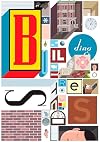
WOW. I was a big fan of Ware's earlier book Jimmy Corrigan, but this latest one seems like a leap beyond. It plays a lot more notes than Corrigan's meditation on lonely behaviors, and the playfulness is put to a lot better use. The term "book" is a little loose in this case, since Stories comes as a giant box loaded with everything from small pamphlets to a giant board that folds out as if you were going to play a board game.
These are weird and bad comparisons to use, but the whole thing show more feels like my favorite part of Infinite Jest: the middle-third where you get 20-30 page jags of some of the best writing you've ever seen, going on for hundreds of pages, seemingly (and pleasurably) without end. Of course, IJ has to come to an ending of sorts, but because Stories is in a dozen different pieces in no particular order, there's this very real feeling that it truly is endless, that you could loop back around to read them in a different order and forever stay in that zone.
The other comparison I would make is to Edward P. Jones' The Known World, which has these wild leaps in time, even in the middle of a sentence. You get the feeling that Jones has imagined his character's entire lives into the future, and that's a similar impression to what Ware brings. Pieces are set as early as the '40s and as late as the modern day, covering different spans of memory and time. One memorable piece—and probably the best to orient yourself by—covers 24 hours and is patterned after the Little Golden Books of my childhood, with the gold spine and hard cover.
Pro-tip: I read from smallest to largest, and left the giant-but-thin (as opposed to giant-but-many-pages) newspaper thing for last. It was a good accidental decision and a great closer for a line of dialogue that's borderline fourth-wall at the end. :) show less
These are weird and bad comparisons to use, but the whole thing show more feels like my favorite part of Infinite Jest: the middle-third where you get 20-30 page jags of some of the best writing you've ever seen, going on for hundreds of pages, seemingly (and pleasurably) without end. Of course, IJ has to come to an ending of sorts, but because Stories is in a dozen different pieces in no particular order, there's this very real feeling that it truly is endless, that you could loop back around to read them in a different order and forever stay in that zone.
The other comparison I would make is to Edward P. Jones' The Known World, which has these wild leaps in time, even in the middle of a sentence. You get the feeling that Jones has imagined his character's entire lives into the future, and that's a similar impression to what Ware brings. Pieces are set as early as the '40s and as late as the modern day, covering different spans of memory and time. One memorable piece—and probably the best to orient yourself by—covers 24 hours and is patterned after the Little Golden Books of my childhood, with the gold spine and hard cover.
Pro-tip: I read from smallest to largest, and left the giant-but-thin (as opposed to giant-but-many-pages) newspaper thing for last. It was a good accidental decision and a great closer for a line of dialogue that's borderline fourth-wall at the end. :) show less
It's an epic creation in terms of its scope, so let me start there.
Ten years in the making, Chris Ware's story-experience-in-a-box (I just can't call it a book, and neither could the judges in the Tournament of Books, who ultimately voted it down due to its lack of resemblance to a book) defies the traditional linear notion of a story. I'm not talking about chronology; authors mess with timelines all the time with varying levels of success, but Ware's fourteen-piece story has no particular show more beginning or end. Open the box and start wherever you want; your understanding of the characters and their lives and emotions and thoughts will form one brick at a time, no matter in what order you choose to read the parts. It's almost as though instead of hearing a story told, you're seeing it...built. It seems similar to the way we construct our identities in life: there's no specific, rational plan so much as there is a back-and-forth of new experiences and reflections on old ones.
"Building" in the title also refers to the three-story apartment building where the characters’ lives converge. At moments, Ware even gives the building its own turn at narration (in a transparently opinionated voice, which seems counterintuitive; I’d expected the building to be the only objective narrator).
Although I granted Building Stories four stars (and even teetered on five) for its ambition, creative genius, and technical skill, if I had graded it on how much I actually enjoyed “reading” it, I would have to give it…maybe one and a half. It’s just sort of anticlimactic (and really, how can a story with no prescribed order really have an effective climax?). It’s also outrageously depressing.
In some ways, reading this was like watching Avatar. It was one brilliant creator’s decade-long project, an innovative offering that was supposed to blow the minds of those who experienced it. But even though I can appreciate all that…I just didn’t much care for it. show less
Ten years in the making, Chris Ware's story-experience-in-a-box (I just can't call it a book, and neither could the judges in the Tournament of Books, who ultimately voted it down due to its lack of resemblance to a book) defies the traditional linear notion of a story. I'm not talking about chronology; authors mess with timelines all the time with varying levels of success, but Ware's fourteen-piece story has no particular show more beginning or end. Open the box and start wherever you want; your understanding of the characters and their lives and emotions and thoughts will form one brick at a time, no matter in what order you choose to read the parts. It's almost as though instead of hearing a story told, you're seeing it...built. It seems similar to the way we construct our identities in life: there's no specific, rational plan so much as there is a back-and-forth of new experiences and reflections on old ones.
"Building" in the title also refers to the three-story apartment building where the characters’ lives converge. At moments, Ware even gives the building its own turn at narration (in a transparently opinionated voice, which seems counterintuitive; I’d expected the building to be the only objective narrator).
Although I granted Building Stories four stars (and even teetered on five) for its ambition, creative genius, and technical skill, if I had graded it on how much I actually enjoyed “reading” it, I would have to give it…maybe one and a half. It’s just sort of anticlimactic (and really, how can a story with no prescribed order really have an effective climax?). It’s also outrageously depressing.
In some ways, reading this was like watching Avatar. It was one brilliant creator’s decade-long project, an innovative offering that was supposed to blow the minds of those who experienced it. But even though I can appreciate all that…I just didn’t much care for it. show less
A hauntingly sad epic of vaguely auto-biographical fiction that takes place over the course of several generations within a family. At the center is Jimmy Corrigan, the name given to the eldest son in each generation. The present days Jimmy is a depressed office dweller who is contacted by his estranged father out of the blue right before Thanksgiving. Invited for an impromptu visit, Jimmy agrees though he is not enthusiastic. His father is disappointing in many ways but also full of secrets show more and insights, chief among them is the existence of a sister previously unknown to Jimmy.
Throughout the book we see flashbacks to the life of Jimmy's grandfather, who was a boy when the Chicago World's Fair was being constructed. Grandfather Jimmy was also lived a brutal and sad life dominated by a deeply disappointing father.
Dream, memory, and fantasy intertwine tightly within this novel's narrative, lending it the surreal quality of a nightmare. Although vaguely disgusting, the characters all have a certain pathetic charm that his hard to resist. The author's tone is light, playful, and cynical which brightens the material somewhat. I wouldn't say I enjoyed it, exactly, but I was moved by this strange and winding tale. show less
Throughout the book we see flashbacks to the life of Jimmy's grandfather, who was a boy when the Chicago World's Fair was being constructed. Grandfather Jimmy was also lived a brutal and sad life dominated by a deeply disappointing father.
Dream, memory, and fantasy intertwine tightly within this novel's narrative, lending it the surreal quality of a nightmare. Although vaguely disgusting, the characters all have a certain pathetic charm that his hard to resist. The author's tone is light, playful, and cynical which brightens the material somewhat. I wouldn't say I enjoyed it, exactly, but I was moved by this strange and winding tale. show less
Lists
Awards


You May Also Like
Associated Authors
Statistics
- Works
- 68
- Also by
- 33
- Members
- 10,393
- Popularity
- #2,288
- Rating
- 3.9
- Reviews
- 160
- ISBNs
- 77
- Languages
- 10
- Favorited
- 61