
Paul Oppenheimer (1)
Author of Rubens: A Portrait
For other authors named Paul Oppenheimer, see the disambiguation page.
About the Author
Paul Oppenheimer is professor of comparative medieval literature, English, and history of science at the City University of New York.
Works by Paul Oppenheimer
A Pleasant Vintage of Till Eulenspiegel: Born in the country of Brunswick. How he spent his life. 95 of his tales (1972) — Translator — 18 copies
Associated Works
Tagged
Common Knowledge
- Gender
- male
Members
Reviews
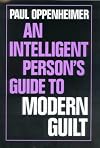
Guilt makes no compromises. One may be a little in love or a little bit angry, but the idea of degrees of guilt is meaningless. Any guilt, whether of the emotional, religious or legal variety, is fiendishly intense. The word itself points to a mysterious intensity of indebtedness, and this with an absolution extraordinary in human affairs.
This book aims to go to the heart of the mystery. Its theme, that of the absolutism of guilt, is explored from a variety of different perspectives and show more through a series of anecdotes. The author examines the sources of the word "guilt"
languages and cultures without the concept of guilt
the religious importance and meaning of guilt, in Judaism, Christianity and other religions
psychological investigations of guilt, by Freud and Jung, among others
guilt and criminal behaviour
guilt and mourning
the effect of guilt as a creative stimulant in modern times, on literature, art, politics, law and film
and the mysterious persistence of guilt in modern secular societies
Throughout, the text is supported with quotations from authors ancient and modern. show less
This book aims to go to the heart of the mystery. Its theme, that of the absolutism of guilt, is explored from a variety of different perspectives and show more through a series of anecdotes. The author examines the sources of the word "guilt"
languages and cultures without the concept of guilt
the religious importance and meaning of guilt, in Judaism, Christianity and other religions
psychological investigations of guilt, by Freud and Jung, among others
guilt and criminal behaviour
guilt and mourning
the effect of guilt as a creative stimulant in modern times, on literature, art, politics, law and film
and the mysterious persistence of guilt in modern secular societies
Throughout, the text is supported with quotations from authors ancient and modern. show less
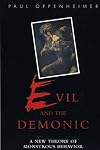
In this powerfully original work, Paul Oppenheimer analyzes the phenomenon of evil in light of a startling new theory. He proposes that evil can be understood empirically, as a type of physical and mental behavior that emerges in particular landscapes. Evil, Oppenheimer argues, contains specific, predictable ingredients and is, as such, a demonstrable fact. By understanding its nature - its diabolical self-consciousness and its impersonal selection of victims - we can diagnose its specific show more manifestations in mass murder, genocide, and serial killings. Crisscrossing a variety of cinematic and literary genres in developing its evidence, the book considers such familiar films as The Silence of the Lambs and Brazil and draws upon such literary works as Richard III, Oedipus the King and The Picture of Dorian Gray. Written in a style intended for both general reader and specialist, Evil and the Demonic provides a framework in which we can place the horrors of human existence.
Oppenheimer (comparative medieval literature and English, City U. ofNew York) finds empirical evidence for the existence of evil as atype of physical and mental behavior that emerges in particular landscapes and contains specific, predictable ingredients such as a diabolical self-consciousness and an impersonal selection of victims.He then uses the theory to explain manifestations of mass murder,genocide, and serial killings, especially in the 20th century. show less
Oppenheimer (comparative medieval literature and English, City U. ofNew York) finds empirical evidence for the existence of evil as atype of physical and mental behavior that emerges in particular landscapes and contains specific, predictable ingredients such as a diabolical self-consciousness and an impersonal selection of victims.He then uses the theory to explain manifestations of mass murder,genocide, and serial killings, especially in the 20th century. show less
Statistics
- Works
- 7
- Also by
- 1
- Members
- 115
- Popularity
- #170,829
- Rating
- 3.4
- Reviews
- 2
- ISBNs
- 18