
Pauline Clarke (1) (1921–)
Author of The Return of the Twelves
For other authors named Pauline Clarke, see the disambiguation page.
Pauline Clarke (1) has been aliased into Helen Clare.
Works by Pauline Clarke
Works have been aliased into Helen Clare.
The Twelve And The Geneii 1 copy
Associated Works
Works have been aliased into Helen Clare.
The Magazine of Fantasy and Science Fiction January 1955, Vol. 8, No. 1 (1955) — Contributor — 7 copies
Tagged
Common Knowledge
- Other names
- Clare, Helen (pseudonym)
Blair, Pauline Hunter (pseudonym) - Birthdate
- 1921-05-19
- Gender
- female
- Occupations
- children's book author
- Awards and honors
- Carnegie Medal (1962)
- Relationships
- Blair, Peter Hunter (husband)
- Nationality
- England
UK - Birthplace
- Kirkby-in-Ashfield, Nottinghamshire, England, UK
- Associated Place (for map)
- England, UK
Members
Reviews
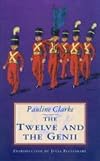
I didn't come across this as a child, though I wish I had; it would have been just up my street. Well, it still is. There's a special appeal in stories about miniature people (Mary Norton's Borrowers, T H White's Lilliputians in Mistress Masham's Repose). The children in this story are likeable and natural, and Max's relationship with the battered old wooden soldiers is beautifully conveyed. There's suspense too, until the soldiers return to their rightful home.

Posted at:
http://web.mac.com/ann163125/Table_Talk/Table_Talk_Blog/Entries/2008/4/4_The_Twe...
As I read Justine Picardie’s new novel, Daphne, last weekend I found myself thinking again and again about Pauline Clarke’s 1963 Carnegie winning children's novel, The Twelve and the Genii. This was how I first became aware of the history of the Bronte children, of the adventures they wove, the stories they wrote about the set of soldiers Patrick Bronte brought home for his son, the soldiers show more that Branwell called the Twelves. In tiny hand-written volumes the four children sent the valiant Crackey and Tracky, Monkey and Cheeky, Bravey and Gravey, Sneaky and Stumps, Parry and Ross, the Duke of Wellington and the Patriarch, Butter Crashey, on voyages of exploration and discovery across the wide oceans to the land of Angria.
And I knew that I had to read again about the twentieth century child, eight year old Max, who discovers the soldiers in the attic of the Yorkshire house his family has just moved into and finds to his delight that they are far more than a set of wooden toys. Just as they lived for the Brontes so too they come to life for Max and begin again upon their boisterous and sometimes foolhardy exploits. They explore the Ashanti treasures brought home by one of Max’s ancestors and wage war on his chess set with marbles for cannon-balls. But word gets out that the soldiers that inspired the first lengthy Bronte works may have been found and the collectors begin to prowl. The Twelves themselves hear of the possibility that they may be taken to America and while Max is trying to think of ways to save them from this fate they take the matter in hand themselves and decide that they will make their way home; they will march to Haworth. Their journey is perilous and without the help of the Genii Maxii, and his sister, the Genii Janii and brother, the Genii Philippii they would surely fail, but this, as Branwell, the original Genii, has taught the Twelves years ago, is what the Genii are for, to guard and to guide and to give the gift of life.
And that is what makes this book a brilliant piece of literature. I argued yesterday that literature might be defined as a story that asks the reader to think beyond the plot and this novel does just that. It asks you to consider the power of genius to bring life to inanimate objects and abstract ideas in story, in art, in music; to mimic the very act of creation itself. Such is the power of genius to make things alive. I suppose, in a sense, it is a reflection on the nature of literature itself, where the characters about whom we read come off the page, take on a life of their own and live eternally in the minds and hearts of the reader.
The book also raises again the question of Branwell and of how a child of such promise could have descended into self-destruction. Max longs to know more about the Chief Genius who seems to have imbued each of the Twelves with something of his nature. The artfulness and ingenuity of Sneaky, the mischief of the midshipmen and, inevitably, the drunkenness of the hard-drinking Bravey. But it is the attributes that Branwell has bequeathed to Butter Crushey that Max concentrates on and which emphasise again the tragedy of that misty nineteenth century figure.
What about you, Butter? [Max asks] There must have been something of him in you! You’re so kind and dignified and calm and always able to arrange things, and you love the Twelves. And the chief thing about you, Butter, is that they all love you. And so do I. There must have been something in the Genius Brannii that was like you.
Serious lump in the throat time.
There is one copy of this novel left in the Birmingham Library system and I had to get them to get that out of storage for me, which is, I think, a disgrace. If you haven’t read it then go and demand that your libraries dig out their copies and curl up for an afternoon with a book that will make you feel glad to be alive and desperate to meet the Twelves yourselves. show less
http://web.mac.com/ann163125/Table_Talk/Table_Talk_Blog/Entries/2008/4/4_The_Twe...
As I read Justine Picardie’s new novel, Daphne, last weekend I found myself thinking again and again about Pauline Clarke’s 1963 Carnegie winning children's novel, The Twelve and the Genii. This was how I first became aware of the history of the Bronte children, of the adventures they wove, the stories they wrote about the set of soldiers Patrick Bronte brought home for his son, the soldiers show more that Branwell called the Twelves. In tiny hand-written volumes the four children sent the valiant Crackey and Tracky, Monkey and Cheeky, Bravey and Gravey, Sneaky and Stumps, Parry and Ross, the Duke of Wellington and the Patriarch, Butter Crashey, on voyages of exploration and discovery across the wide oceans to the land of Angria.
And I knew that I had to read again about the twentieth century child, eight year old Max, who discovers the soldiers in the attic of the Yorkshire house his family has just moved into and finds to his delight that they are far more than a set of wooden toys. Just as they lived for the Brontes so too they come to life for Max and begin again upon their boisterous and sometimes foolhardy exploits. They explore the Ashanti treasures brought home by one of Max’s ancestors and wage war on his chess set with marbles for cannon-balls. But word gets out that the soldiers that inspired the first lengthy Bronte works may have been found and the collectors begin to prowl. The Twelves themselves hear of the possibility that they may be taken to America and while Max is trying to think of ways to save them from this fate they take the matter in hand themselves and decide that they will make their way home; they will march to Haworth. Their journey is perilous and without the help of the Genii Maxii, and his sister, the Genii Janii and brother, the Genii Philippii they would surely fail, but this, as Branwell, the original Genii, has taught the Twelves years ago, is what the Genii are for, to guard and to guide and to give the gift of life.
And that is what makes this book a brilliant piece of literature. I argued yesterday that literature might be defined as a story that asks the reader to think beyond the plot and this novel does just that. It asks you to consider the power of genius to bring life to inanimate objects and abstract ideas in story, in art, in music; to mimic the very act of creation itself. Such is the power of genius to make things alive. I suppose, in a sense, it is a reflection on the nature of literature itself, where the characters about whom we read come off the page, take on a life of their own and live eternally in the minds and hearts of the reader.
The book also raises again the question of Branwell and of how a child of such promise could have descended into self-destruction. Max longs to know more about the Chief Genius who seems to have imbued each of the Twelves with something of his nature. The artfulness and ingenuity of Sneaky, the mischief of the midshipmen and, inevitably, the drunkenness of the hard-drinking Bravey. But it is the attributes that Branwell has bequeathed to Butter Crushey that Max concentrates on and which emphasise again the tragedy of that misty nineteenth century figure.
What about you, Butter? [Max asks] There must have been something of him in you! You’re so kind and dignified and calm and always able to arrange things, and you love the Twelves. And the chief thing about you, Butter, is that they all love you. And so do I. There must have been something in the Genius Brannii that was like you.
Serious lump in the throat time.
There is one copy of this novel left in the Birmingham Library system and I had to get them to get that out of storage for me, which is, I think, a disgrace. If you haven’t read it then go and demand that your libraries dig out their copies and curl up for an afternoon with a book that will make you feel glad to be alive and desperate to meet the Twelves yourselves. show less

When Max moves with his family into an old English farmhouse, he discovers one dozen old wooden soldiers hidden in the attic for over a hundred years. But they're not only great toys--they are alive! Soon Max learns that historians are searching for the soldiers. Will he be able to keep them from being locked up in a museum?

Another charming book (96 pages) in this series. Illustrated in black & white by Cecil Leslie.
Lists
Awards


You May Also Like
Associated Authors
Statistics
- Works
- 13
- Also by
- 3
- Members
- 346
- Popularity
- #69,042
- Rating
- 4.1
- Reviews
- 7
- ISBNs
- 36
- Languages
- 2