
Anthony Browne (1) (1946–)
Author of Voices in the Park
For other authors named Anthony Browne, see the disambiguation page.
Series
Works by Anthony Browne
Associated Works
Tagged
Common Knowledge
- Legal name
- Browne, Anthony Edward Tudor
- Birthdate
- 1946-09-11
- Gender
- male
- Education
- Leeds College of Art
- Occupations
- children's book author
medical illustrator
greeting card designer - Awards and honors
- Children's Laureate (2009-2011)
Hans Christian Andersen Award - Nationality
- UK
- Birthplace
- Sheffield, South Yorkshire, England, UK
- Places of residence
- Canterbury, Kent, England, UK
- Map Location
- England, UK
Members
Reviews
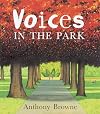
In my opinion, this is a phenomenal book for various reasons. This book was about two families, one with a mother and a son and the other a father and a daughter, who go to the park one day. The same short story, of the trip to the park, is told from each of their perspectives. Within each, the reader is able to see the different variances in perspective that are possible from the same situation. Each perspective demonstrates that one should never judge someone based upon their appearance show more and should be accepting of all. The other theme apparent in the perspectives is that having money and possessions does not automatically equal happiness in life. An integral part of this book is the illustrations; the illustrations tremendously enhance the story in many ways. For example, the trees set the mood of each voice/perspective. In the first voice, the mother, the trees in the background of the park are on fire, which represents the anger and unhappiness the mother is feeling. Also, the mother’s hat is shown in the background demonstrating her domineering and controlling manner towards her son. There are various other features of the illustrations that carry more weight then just as visual descriptions of the story. These include the weather in each perspective and how each corresponds to a specific season. Another interesting yet powerful and effective component of this story is how the font for each perspective was different. Each font carried a different and important meaning about each character and their perspective. Charles, the little boy, had a font that was very light and had a type-writer look to it; this portrayed how he had to conform to his mothers over-protective and strict ways. Also, the language and writing used appropriately conveyed each character. For example, the mother refers to her son as Charles, as if he was much older, and in doing so it confirms how she feels everything should be proper. But the last perspective, the little girl, calls the boy Charlie and this indicates how she acts like a child and treats him as a child would be treated. One of the main components of the illustrations is how the characters are gorillas instead of humans. This aids in conveying the importance of not judging someone by appearance and how socioeconomic status is not the end-all be-all. Through these various features, this book pushes readers to think about tough issues and broadens perspectives by flipping or highlighting common stereotypes through the use of different perceptions in one situation. The overarching theme of this book is that everyone will always bring a different perspective, no matter what the situation is. show less
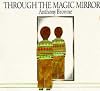
Published in 1976, this is Anthony Browne’s first picture book. The surreal elements that can be found in all his later work are already present, and there’s some humour to be found in them, though rather less in the narrative itself. The story focuses on Toby whose staid parents are parked in front of the TV one evening—his dad snoring away, his mum eating bonbons as she reads the evening paper. Toby, however, is less than content with this dull existence. Fed up with his toys and show more books, he goes upstairs, looks in the mirror and has something of a shock. It’s not his face that looks out at him. No, he sees his back, and quickly discovers he can pass through the looking glass onto the street: “It seemed like the same street, but was it?” Evidently not. Here, among other things, the sun is an orange, streetlights are large drooping tulips, a dog takes a leashed man for walk, mice chase a terrified cat, a goldfish swims in a window, and choirboys fly as a flock in the sky. Men queuing for the bus haven’t been able to coordinate their costumes: for example a clown might have his wig and makeup on, but be wearing the jacket and star of the sheriff and the metal leggings of the knight, both of whom are also waiting and more than “a bit mixed up” when it comes to wardrobe. The strangeness ultimately becomes frightening when a lion walks out of a poster advertising the zoo and other animals follow .Toby runs, finds the mirror: yes, there it is right behind him. Back in his own house, he runs down to tea. Refreshed! Nothing like the restorative power of the imagination. A visit with the odd, the strange, the slightly scary makes reality so much easier to cope with! show less

As Joe and his Mum walk to a party being given by one of Joe's friends, the boy expresses all of his fears about attending such a social event on his own for the first time. What if there's someone at the party he doesn't know? What if the kids play scary games? His mother offers reassurance, and at every house they stop to see if they've arrived. When they finally do, things work out better than Joe expected...
As one would expect from an Anthony Browne picture-book, What If...? has a show more quirky, surreal quality to it, one that plays with ideas of imagination and perception. Amusingly, every house passed by Joe and Mum displays some sort of unusual resident, from aliens to elephants, adding to the sense of traveling through an unknown and possibly off-putting world. The happy ending, in which Joe enjoys the party after all, will offer reassurance to young children with social anxieties, and reaffirm the notion that sometimes it is worthwhile to step outside of our comfort zone and try new things. The interplay here between straightforward text and fantastic illustration is classic Browne, and works well I think, in capturing a child's sense of living in a world that is largely unknown and alien. Recommended to Browne fans, and to anyone looking for reassurance stories for children uneasy about stepping into a wider social world. show less
As one would expect from an Anthony Browne picture-book, What If...? has a show more quirky, surreal quality to it, one that plays with ideas of imagination and perception. Amusingly, every house passed by Joe and Mum displays some sort of unusual resident, from aliens to elephants, adding to the sense of traveling through an unknown and possibly off-putting world. The happy ending, in which Joe enjoys the party after all, will offer reassurance to young children with social anxieties, and reaffirm the notion that sometimes it is worthwhile to step outside of our comfort zone and try new things. The interplay here between straightforward text and fantastic illustration is classic Browne, and works well I think, in capturing a child's sense of living in a world that is largely unknown and alien. Recommended to Browne fans, and to anyone looking for reassurance stories for children uneasy about stepping into a wider social world. show less

A very special gorilla with the ability to use sign language indicates to his human keepers that he wants a friend. After some thought, they provide him with a little kitten named Beauty, and a wonderful cross-species friendship is born. Gorilla and cat do everything together, becoming boon companions. But will they be separated when the gorilla loses his temper? Or will Beauty find a way to make things right...?
A fictional tale inspired by the true story of Koko the gorilla and her feline show more companions, Little Beauty pairs an engaging, emotionally resonant text with immensely appealing, expressive illustrations. I've always found it fascinating and quite moving, that gorillas have such a soft spot for cats, so I was quite excited to discover this picture-book on the shelf at the library, particularly as I have enjoyed so many of author/illustrator Anthony Browne's other books. I was not disappointed, finding that word and image worked perfectly together to create a poignant and ultimately satisfying story. Little Beauty herself is immensely charming - perhaps not a surprise, given my fondness for all things feline. Recommended to young gorilla and/or cat lovers, as well as to fellow fans of Browne's work. show less
A fictional tale inspired by the true story of Koko the gorilla and her feline show more companions, Little Beauty pairs an engaging, emotionally resonant text with immensely appealing, expressive illustrations. I've always found it fascinating and quite moving, that gorillas have such a soft spot for cats, so I was quite excited to discover this picture-book on the shelf at the library, particularly as I have enjoyed so many of author/illustrator Anthony Browne's other books. I was not disappointed, finding that word and image worked perfectly together to create a poignant and ultimately satisfying story. Little Beauty herself is immensely charming - perhaps not a surprise, given my fondness for all things feline. Recommended to young gorilla and/or cat lovers, as well as to fellow fans of Browne's work. show less
Lists
Awards


You May Also Like


Associated Authors
Statistics
- Works
- 45
- Also by
- 4
- Members
- 10,525
- Popularity
- #2,263
- Rating
- 4.0
- Reviews
- 656
- ISBNs
- 695
- Languages
- 21
- Favorited
- 6
