
David Rutledge (1)
Author of Do You Know What It Means to Miss New Orleans?
For other authors named David Rutledge, see the disambiguation page.
About the Author
Image credit: Faculty webpage at University of New Orleans website.
Works by David Rutledge
Tagged
Common Knowledge
- Gender
- male
Members
Reviews
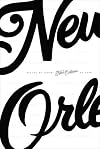
My starting point for this book is an interesting one… While I certainly know of Hurricane Katrina and the death and destruction she wrought…I did not see or hear any of the news reporting. I took a year off from the news in late 2004/2005 – and missed all of that.
So I started “Where We Know: New Orleans as Home” with eyes unclouded by disaster footage, with ears clear of the voices of fear, anger, grief. This book is the closest I’ve come to hearing from the residents of New show more Orleans – and these voices will stay with me for a very long while.
The book feels like it’s straight from the city itself. There’s a mix of themes, of attitudes, of perspectives, of stories. There’s no one real overlying message – except perhaps the emphasis of that very fact – that New Orleans is all things. The new and the old, the mystic and the modern, the laid back and the always ready for a party. The people of this city cannot be defined – nor can their feelings for this incredibly unique place.
“It is not an easy thing to describe one’s first impression of New Orleans; for while it actually resembles no other city upon the face of the earth, yet it recalls memories of a hundred cities.”
After I finished admiring the binding and care put into the creation of the book, I fell into these words. One of the most amazing elements of the book is the juxtaposition of words written about New Orleans centuries ago with those written or spoken in the very recent past. They all speak of the same city – they all bring forth a facet of her – yet they are divided by hundreds of years, by race, by gender, by class.
From a writer in 1887: “I suppose we are all wrongly made up and have a fallen nature; else why is it that while the most thrifty and neat and orderly city only wins our approval, and perhaps gratifies us intellectually, such a thriftless, battered and stained, and lazy old place as the French Quarter of New Orleans takes our hearts?”
To a present day writer: “So, now, here we all are, New Orleanians by birth or by choice, sitting on our stoops, watching the sun set and listening to the music of our city, a testimony to its endurance and vitality.”
There is a spirit described in this book, whether of the city itself or of the people that are drawn to it, that draws the reader in. The varied voices create a beautiful music – a symphony of joy, pride, rage, despair, violence, fierce love…underscored by strength. It seems as if no matter the circumstances, New Orleans and her people will find a way to adapt, without changing the soul of the place.
“There are certainly times when the decision to save or replace the past is problematic. Here, however, there is more of a tendency not only to preserve the past, but to live alongside of it, to live in the midst of it. Our history is not for the museums. We still have a culture that comes from the city, from the neighborhoods; we still have a culture that connects to the past and parades in the streets.”
Far more clearly (and probably more accurately) than any newscast I might have watched – this book gave me a vision of New Orleans that will not soon fade. show less
So I started “Where We Know: New Orleans as Home” with eyes unclouded by disaster footage, with ears clear of the voices of fear, anger, grief. This book is the closest I’ve come to hearing from the residents of New show more Orleans – and these voices will stay with me for a very long while.
The book feels like it’s straight from the city itself. There’s a mix of themes, of attitudes, of perspectives, of stories. There’s no one real overlying message – except perhaps the emphasis of that very fact – that New Orleans is all things. The new and the old, the mystic and the modern, the laid back and the always ready for a party. The people of this city cannot be defined – nor can their feelings for this incredibly unique place.
“It is not an easy thing to describe one’s first impression of New Orleans; for while it actually resembles no other city upon the face of the earth, yet it recalls memories of a hundred cities.”
After I finished admiring the binding and care put into the creation of the book, I fell into these words. One of the most amazing elements of the book is the juxtaposition of words written about New Orleans centuries ago with those written or spoken in the very recent past. They all speak of the same city – they all bring forth a facet of her – yet they are divided by hundreds of years, by race, by gender, by class.
From a writer in 1887: “I suppose we are all wrongly made up and have a fallen nature; else why is it that while the most thrifty and neat and orderly city only wins our approval, and perhaps gratifies us intellectually, such a thriftless, battered and stained, and lazy old place as the French Quarter of New Orleans takes our hearts?”
To a present day writer: “So, now, here we all are, New Orleanians by birth or by choice, sitting on our stoops, watching the sun set and listening to the music of our city, a testimony to its endurance and vitality.”
There is a spirit described in this book, whether of the city itself or of the people that are drawn to it, that draws the reader in. The varied voices create a beautiful music – a symphony of joy, pride, rage, despair, violence, fierce love…underscored by strength. It seems as if no matter the circumstances, New Orleans and her people will find a way to adapt, without changing the soul of the place.
“There are certainly times when the decision to save or replace the past is problematic. Here, however, there is more of a tendency not only to preserve the past, but to live alongside of it, to live in the midst of it. Our history is not for the museums. We still have a culture that comes from the city, from the neighborhoods; we still have a culture that connects to the past and parades in the streets.”
Far more clearly (and probably more accurately) than any newscast I might have watched – this book gave me a vision of New Orleans that will not soon fade. show less
 This review was written for LibraryThing Early Reviewers.
The Book Report: An anthology of writings, commissioned as well as previously publsihed, on the topic of New Orleans as one's homeplace, whether corporeal or spiritual.
My Review: Produced by Chin Music Press's Broken Levee imprint, you know from just that much information that this is a **gorgeous** book to look at, a deeply gruntling book to hold, and a pleasure to read. Hmmm...that pleasure to read bit? If you're not tied emotionally to New Orleans, this book will quite likely bore the show more socks right off your feet, shoes or no shoes.
I am tied to New Orleans, though, however unwillingly and with whatever angry, grumpy, "my car needs alignment AGAIN?!?!" caveats, tied I am. Once upon a time, I possessed a carriage house on Carondelet Street. It was tiny, but perfect for one person on vacation, which was me a few times here and there. It's still there, but I can't be...can't make the climate work for me for more than a day or two. Still, there is *no*place* like New Orleans. That's either the thing that makes you go back, or makes you late for the airport.
And reading this book? It's a lot like being there. It's gonna work, you just know it is, up until the moment it doesn't anymore, and for no obvious reason (Barbara Bodichon's 1867 selection felt like a glass-cutting tool gone wrong to me, Jennifer Kuchta's piece "Jennie's Grocery: R.I.P" was...well...oddly shaped). But there are more successes than failures (Lolis Elie's piece "Still Live, With Voices", good as always, hey Lolis! Long time no hear, the extraordinarily underknown Tracey Tangerine's loud "In My Face", which alone is worth your $16 purchase), and of course the sheer physical beauty of the thing makes it a must-covet-and-retain for any serious lover of bibliophilic curiosa. The maps...the belly-band...the strange, impractical, not-for-the-marts-of-commerce unlaminated WHITE cover (!!)...all are just, well, wondrous. I adore this press's books. I wish I would win the MegaMillions or whatever so I could give them a big, fat grant to stay in business and even grow some.
But enough. Be warned: Not bit by the Nawlins Vodoun Viper? Don't buy unless you simply can't resist the look of the thing. Already bit? Your soul is gone anyway. Buy it, no regrets. show less
My Review: Produced by Chin Music Press's Broken Levee imprint, you know from just that much information that this is a **gorgeous** book to look at, a deeply gruntling book to hold, and a pleasure to read. Hmmm...that pleasure to read bit? If you're not tied emotionally to New Orleans, this book will quite likely bore the show more socks right off your feet, shoes or no shoes.
I am tied to New Orleans, though, however unwillingly and with whatever angry, grumpy, "my car needs alignment AGAIN?!?!" caveats, tied I am. Once upon a time, I possessed a carriage house on Carondelet Street. It was tiny, but perfect for one person on vacation, which was me a few times here and there. It's still there, but I can't be...can't make the climate work for me for more than a day or two. Still, there is *no*place* like New Orleans. That's either the thing that makes you go back, or makes you late for the airport.
And reading this book? It's a lot like being there. It's gonna work, you just know it is, up until the moment it doesn't anymore, and for no obvious reason (Barbara Bodichon's 1867 selection felt like a glass-cutting tool gone wrong to me, Jennifer Kuchta's piece "Jennie's Grocery: R.I.P" was...well...oddly shaped). But there are more successes than failures (Lolis Elie's piece "Still Live, With Voices", good as always, hey Lolis! Long time no hear, the extraordinarily underknown Tracey Tangerine's loud "In My Face", which alone is worth your $16 purchase), and of course the sheer physical beauty of the thing makes it a must-covet-and-retain for any serious lover of bibliophilic curiosa. The maps...the belly-band...the strange, impractical, not-for-the-marts-of-commerce unlaminated WHITE cover (!!)...all are just, well, wondrous. I adore this press's books. I wish I would win the MegaMillions or whatever so I could give them a big, fat grant to stay in business and even grow some.
But enough. Be warned: Not bit by the Nawlins Vodoun Viper? Don't buy unless you simply can't resist the look of the thing. Already bit? Your soul is gone anyway. Buy it, no regrets. show less
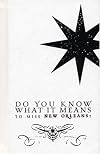
You have to read every word of this book. And I do mean every word. A tease from the copyright page: "All rights reserved. . . . Exceptions are made for book reviewers. By the way, there are no jokes here so you can stop reading if you are looking for them."
"This book was written and designed during three months in the fall of 2005." In the aftermath of Hurricane Katrina, Chin Music Press put together this slender, beautifully made anthology that will make you laugh and cry and rage. And show more cook. There are recipes, too. Interspersed throughout are engravings from the 1885 volume, Historical Sketch Book and Guide to New Orleans.
There are two ways to read this book. The first gathers the contributions into three sections: "The Dirge", "The Return" and "Lagniappe". But if it is too hard for you to read all those stories of ruin and devastation, one right after another, before reaching hope, there is an "Alternative Reading Order. Inspired by the many different versions of the song "Do You Know What It Means to Miss New Orleans?" I read it the second way and still shed more than one tear along the way. All over again, I saw the images of things that should never happen in this country, heard the stories of grace and generosity, stupidity and blindness.
Thank you to Toni McGee Causey for her eloquent essay, "Where Grace Lives". Thank you to Jason Berry, for his tale of evacuation, "The Holy City of New Orleans". Thank you to Colleen Mondor, who has never been to New Orleans for "Listen to the Second Line", about the music that I, too, love and cherish. Thank you to Ray Shea for the laughter and memories he shares in "I was a Teenage Float Grunt". Thank you to Rex (oh, appropriate first name!) Noone for his story of the power of celebration, "Professor Stevens Goes to Mardi Gras". Thank you to everyone who contributed to this book. But most of all, thank you to Chin Music Press, who gave it to us.
I don't usually link to reviews in my blog, but I am doing so for this book, as you really have to see the full title page, and I can't put it here, so check it out at: http://joansbooks.blogspot.com/2009/03/katrina-tales.html (There's also a link there to more Katrina voices.) show less
"This book was written and designed during three months in the fall of 2005." In the aftermath of Hurricane Katrina, Chin Music Press put together this slender, beautifully made anthology that will make you laugh and cry and rage. And show more cook. There are recipes, too. Interspersed throughout are engravings from the 1885 volume, Historical Sketch Book and Guide to New Orleans.
There are two ways to read this book. The first gathers the contributions into three sections: "The Dirge", "The Return" and "Lagniappe". But if it is too hard for you to read all those stories of ruin and devastation, one right after another, before reaching hope, there is an "Alternative Reading Order. Inspired by the many different versions of the song "Do You Know What It Means to Miss New Orleans?" I read it the second way and still shed more than one tear along the way. All over again, I saw the images of things that should never happen in this country, heard the stories of grace and generosity, stupidity and blindness.
Thank you to Toni McGee Causey for her eloquent essay, "Where Grace Lives". Thank you to Jason Berry, for his tale of evacuation, "The Holy City of New Orleans". Thank you to Colleen Mondor, who has never been to New Orleans for "Listen to the Second Line", about the music that I, too, love and cherish. Thank you to Ray Shea for the laughter and memories he shares in "I was a Teenage Float Grunt". Thank you to Rex (oh, appropriate first name!) Noone for his story of the power of celebration, "Professor Stevens Goes to Mardi Gras". Thank you to everyone who contributed to this book. But most of all, thank you to Chin Music Press, who gave it to us.
I don't usually link to reviews in my blog, but I am doing so for this book, as you really have to see the full title page, and I can't put it here, so check it out at: http://joansbooks.blogspot.com/2009/03/katrina-tales.html (There's also a link there to more Katrina voices.) show less
This is a beautifully made book, an anthology of surprising historical depth. Voices from the 19th and even the 18th century join pre- and post-Katrina writers. It's an honest book, full of deep affection for the city, but not a feel-good book. The contributions by Eve Troeh, especially, were desperately sad. For a long time, I simply couldn't bear to reopen the book and read the end of her second essay in which she spoke of leaving the city to which she had returned so hopefully, no longer show more able to cope with the violence, the murder of her dear friend and of others she knew, a brutal attack on herself. But there is more to the book than that.
The book includes some colour photographs, and one of the highlights is a selection from the photographic work of Sandra Burshell, who finds beauty in the debris and flotsam of the flood.
The essays are coded with tiny letters and numbers to indicate their location in time and space. I got the idea of the time line, but not being a New Orleanian I could not decode the tiny maps. show less
The book includes some colour photographs, and one of the highlights is a selection from the photographic work of Sandra Burshell, who finds beauty in the debris and flotsam of the flood.
The essays are coded with tiny letters and numbers to indicate their location in time and space. I got the idea of the time line, but not being a New Orleanian I could not decode the tiny maps. show less
This review was written for LibraryThing Early Reviewers.Lists
You May Also Like
Associated Authors
Statistics
- Works
- 2
- Members
- 146
- Popularity
- #141,735
- Rating
- 4.2
- Reviews
- 19
- ISBNs
- 9
