
Richard Buckley (1) (1938–)
Author of The Foolish Tortoise
For other authors named Richard Buckley, see the disambiguation page.
Works by Richard Buckley
Tagged
Common Knowledge
- Legal name
- Buckley, Richard Austen
- Other names
- Buckley, Austen (pseudonym)
- Birthdate
- 1938-10-28
- Gender
- male
Members
Reviews

A tortoise casts aside the safety of his shell to experience the world in a new way only to be beaten down by his fear of the dangers and chaos he finds.
So the awful lesson is never change -- embrace the status quo -- or you'll regret everything. What a foolish tortoise. What a foolish author.
Nice pictures though.
So the awful lesson is never change -- embrace the status quo -- or you'll regret everything. What a foolish tortoise. What a foolish author.
Nice pictures though.
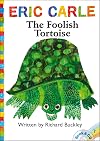
A turtle decides to leave his shell behind one day as it weighs him down, but then discovers all the ways the shell benefits him.
Featuring Eric Carle's distinctive collage work, the illustrations in this book are pure fun. The story itself is captivating enough, and Buckley uses beautiful poetry to tell it. The only downside to this is the possibility that the very young intended audience might not quite understand everything - it's probably confusing for them to hear passages in which nouns show more and verbs in a sentence are inverted to force a rhyme, especially given that they rarely hear such usage. The vocabulary choices are also sometimes more difficult in order to make passages alliterative (i.e., "A hare, a hound, a horse raced by") or to use some other poetic device. Still, I'm one to err on the side of presenting an introduction to something new that will expand young children's minds (and vocabularies), even if it means having to read the book more than once and provide some extra explanations/definitions. Using this method, I found that even my toddler class enjoyed this book and seemed to understand it.
This edition includes an audio CD of the book being read by Keith Nobbs. I did not find his reading to be particularly interesting; it was rather flat and monotone actually. Unlike many other audio CDs accompanying books for young readers, there were no cues for when to turn the page. This is something that tends to be very helpful for beginning readers (or non-readers who are working on pre-literacy skills), so I found that sadly lacking. show less
Featuring Eric Carle's distinctive collage work, the illustrations in this book are pure fun. The story itself is captivating enough, and Buckley uses beautiful poetry to tell it. The only downside to this is the possibility that the very young intended audience might not quite understand everything - it's probably confusing for them to hear passages in which nouns show more and verbs in a sentence are inverted to force a rhyme, especially given that they rarely hear such usage. The vocabulary choices are also sometimes more difficult in order to make passages alliterative (i.e., "A hare, a hound, a horse raced by") or to use some other poetic device. Still, I'm one to err on the side of presenting an introduction to something new that will expand young children's minds (and vocabularies), even if it means having to read the book more than once and provide some extra explanations/definitions. Using this method, I found that even my toddler class enjoyed this book and seemed to understand it.
This edition includes an audio CD of the book being read by Keith Nobbs. I did not find his reading to be particularly interesting; it was rather flat and monotone actually. Unlike many other audio CDs accompanying books for young readers, there were no cues for when to turn the page. This is something that tends to be very helpful for beginning readers (or non-readers who are working on pre-literacy skills), so I found that sadly lacking. show less

A snake eats an increasingly unlikely amount and increasingly unlikely forms of prey. Just weird enough to work.
And in addition to introducing carnivorism and different types of animals to little ones, it can be a counting book if you want.
And in addition to introducing carnivorism and different types of animals to little ones, it can be a counting book if you want.

In this humorous story about manners, respect, and friendship, a greedy python eats every creature he comes across in the jungle. From a tiny mouse to an enormous elephant, the devoured animals eventually befriend one another in the belly of the snake, where they team up and kick the inside of the python until he spits them out. Rather than learning his lesson, the python sticks to his greedy ways. When he spots his own tail and mistakes it for food, he swallows himself and...disappears!
show more This amusing—and cautionary—tale features Eric Carle’s vivid illustrations and rhyming text that’s been adapted into a Level 1 Ready-to-Read, making it ideal for sharing aloud with emerging readers. show less
show more This amusing—and cautionary—tale features Eric Carle’s vivid illustrations and rhyming text that’s been adapted into a Level 1 Ready-to-Read, making it ideal for sharing aloud with emerging readers. show less
You May Also Like


Associated Authors
Statistics
- Works
- 49
- Members
- 5,001
- Popularity
- #5,012
- Rating
- 3.8
- Reviews
- 39
- ISBNs
- 139
- Languages
- 3
- Favorited
- 2