

George Moore (1) (1852–1933)
Author of Esther Waters
For other authors named George Moore, see the disambiguation page.
George Moore (1) has been aliased into George Augustus Moore.
About the Author
Image credit: Portrait of Moore by J. B. Yeats (1905). Housed in the National Gallery of Ireland. Wikimedia Commons: photograph by Sailko.
Series
Works by George Moore
Works have been aliased into George Augustus Moore.
The coming of Gabrielle : a comedy 5 copies
The apostle; a drama in three acts 4 copies
Fragments from Héloïse & Abélard 2 copies
The Clerk's Quest 1 copy
Euphorian in Texas 1 copy
Morality in Literature 1 copy
Associated Works
Works have been aliased into George Augustus Moore.
The Chronicles of the Holy Grail: The Ultimate Quest from the Age of Arthurian Literature (1996) — Contributor — 79 copies, 1 review
The Dedalus Book of English Decadence: Vile Emperors and Elegant Degenerates (2004) — Contributor — 60 copies
Isaac Asimov's Magical Worlds of Fantasy, Volume 11: Curses (1939) — Contributor — 58 copies, 1 review
Irish Ghost Stories (Tales of Mystery & The Supernatural) (2011) — Contributor — 42 copies, 1 review
Tagged
Common Knowledge
- Legal name
- Moore, George Augustus
- Birthdate
- 1852-02-24
- Date of death
- 1933-01-21
- Gender
- male
- Education
- St Mary's College, Oscott, England, UK
- Occupations
- painter
novelist
short story writer
landowner
art critic - Relationships
- Martyn, Edward (cousin)
- Nationality
- Ireland
UK - Birthplace
- Moore Hall, Ballyglass, County Mayo, Ireland
- Places of residence
- Paris, France
- Place of death
- London, England, UK
- Map Location
- Ireland
Members
Reviews

Confessions of a Young Man (1886) is a memoir by 30-year old Irish novelist George Moore (1852-1933). It is an unusually frank account, by the standards of the time, of an Irish expatriate's life as a bohemian artist in Paris and London during the "fin-de-siecle". Moore describes drinking absinthe in Parisian cafes with founders of Impressionism - Manet, Degas, Monet and Pissaro - before England had even heard of them. His Paris studio was adorned in "pagan" trappings such as Indian lamps, show more red velvet ceiling canopies "to give the appearance of a tent", Turkish rugs and couches, incense and candles of the Orient, a Buddhist temple, a statue of Apollo, "a faun in terra-cotta that laughed in the red gloom." He kept a large python (snake) in the house and once a month fed it live rabbits while Gregorian chant music was played on a pipe organ. Friends came to watch. His sexual escapades are only hinted at in typical Victorian fashion, such as two satin slippers nailed to the head of his bed and used as an ashtray, or bedrooms bedecked in trees of flowers. Moore is completely unapologetic about his debaucheries, which interestingly don't seem that shocking today.
Moore's memoir is unusual for Victorian writers because he is so outward with his feelings and views. He spares no ones reputation, including his own, in the name of honesty. Oscar Wilde quipped of Moore: "He conducts his education in public". It is eerily modern, yet clearly Victorian in style, an uncanny valley. The Modern Library chose it in 1917 (1925?) as among the first to be included in the series, but is now long out of print. Moore spends a lot of space on literary criticism - he is critical of just about everyone popular in the day (except Shelly and Balzac), but praises the school of Aestheticism and Walter Pater. The last chapter is probably the most gripping, describing a duel between himself and a young aristocrat whom Moore baited into a fight to gain notoriety (Moore is boastingly unapologetic).
The book was written in various chapters over time and can be a bit inconsistent in style and focus, like a collection of essays, but lively and full of youthful energy. Two years after Confessions, his publisher Henry Vizetelly was charged with obscene libel for the publication of an uncensored translation of Emile Zola's La Terre (which contains incest and pedophilia, among other things). Moore supported Vizetelly's efforts, and his Confessions can be seen as weapon in the war against hypocritical Victorian morality. His last chapter is a sort of "bait" to his detractors to take up a public duel, Moore knew debating morality in public would expose the contradictions. He was ahead of his time and by WWI the old facades no longer held as Modernism took the center. The morality struggles Moore fought in the 1870s and 80s, like this book, are largely forgotten today - but it's a fun and curious step back in time to see how the rebels of another era are so much alike and so very different.
--Review by Stephen Balbach, via CoolReading (c) 2008 cc-by-nd show less
Moore's memoir is unusual for Victorian writers because he is so outward with his feelings and views. He spares no ones reputation, including his own, in the name of honesty. Oscar Wilde quipped of Moore: "He conducts his education in public". It is eerily modern, yet clearly Victorian in style, an uncanny valley. The Modern Library chose it in 1917 (1925?) as among the first to be included in the series, but is now long out of print. Moore spends a lot of space on literary criticism - he is critical of just about everyone popular in the day (except Shelly and Balzac), but praises the school of Aestheticism and Walter Pater. The last chapter is probably the most gripping, describing a duel between himself and a young aristocrat whom Moore baited into a fight to gain notoriety (Moore is boastingly unapologetic).
The book was written in various chapters over time and can be a bit inconsistent in style and focus, like a collection of essays, but lively and full of youthful energy. Two years after Confessions, his publisher Henry Vizetelly was charged with obscene libel for the publication of an uncensored translation of Emile Zola's La Terre (which contains incest and pedophilia, among other things). Moore supported Vizetelly's efforts, and his Confessions can be seen as weapon in the war against hypocritical Victorian morality. His last chapter is a sort of "bait" to his detractors to take up a public duel, Moore knew debating morality in public would expose the contradictions. He was ahead of his time and by WWI the old facades no longer held as Modernism took the center. The morality struggles Moore fought in the 1870s and 80s, like this book, are largely forgotten today - but it's a fun and curious step back in time to see how the rebels of another era are so much alike and so very different.
--Review by Stephen Balbach, via CoolReading (c) 2008 cc-by-nd show less
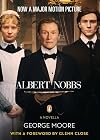
Finished Albert Nobbs, a book that kept me guessing until the end.
I’ve wanted to read it for a while, since I’ve always liked books with gender bending, or obscurely gendered, protagonists. I did not come blind to the book; I chose it I knew it was about a woman who disguises herself as a male butler. But how, and why, and what happens after that, was what kept me turning the pages. Though a novelette, I read it slowly, and may read it yet again, just to digest the richness of the show more language and the archaic style of writing.
(This review contains spoilers, so if you hadn’t read it, and are wanting to be surprised, like me, don’t go any further.)
This book carries a reputation as being sympathetic towards characters who are breaking away from the gender norm. In reading about the author, George Moore, after I finished, he was indeed sympathetic towards gay and lesbian characters and endowed them with sympathy and humanity, something that was not common in the age in which he wrote. The mentions are low key, as in Albert Nobbs, but clearly there; however, they are just as clearly overlooked by readers wishing to see a more mainstream narrative.
Albert Nobbs begins by not being about Albert Nobbs at all. Instead, it starts with two blokes having a chat in Dublin about how the city has changed, and one of them casually mentions the strange butler who used to terrorize him as a child by his (her) unworldly appearance:
… his squeaky voice remains in my ears. He seemed to be always laughing at me, showing long, yellow teeth, and used to be afraid to open the sitting-room door, for I’d be sure to find him waiting on the landing, his napkin thrown over his right shoulder. I think I was afraid he’d pick me up and kiss me. As the whole of my story is about him, perhaps I’d better describe him more fully, and to do that I will tell you that he was a tall, scraggy fellow. With big hips sticking out, and a long, thin, throat. It was his throat that frightened me as much as anything about him, unless it was his nose, which was a great high one, or his melancholy eyes, which were pale blue and very small, deep in the head.
The narrator then tells the story of the butler’s life, acting as a stand-in for the author who might have told the story to the reader directly, but by using that framing device removes himself from the more controversial twists and turns therein. So the narrative is twice removed, but, somehow it works, and the framing device that seemed clunky also allowed the writer to express his own ideas about class and gender.
Albert’s adventure starts when, having been established as an exemplary employee who lives in her employer’s hotel to save money, she is requested to share her bedroom and bed with a contractor doing some painting for the hotel’s owner who can’t find any other accommodation for the night. (I’m sure this was a common occurrence in the Victorian age the story takes place in, and perhaps something of a plot cliché of that time too.) Albert fears being exposed as a woman, yet tries to make the best of it as she shares her bed. And of course she is exposed as a female… and, as it turns out, the painter she thought was a man is, in fact, a female in disguise just as she is!
This chance meeting and the painter’s story (which is a story in a story in a story) of leaving an unhappy marriage and disguising herself as a man to earn a trade, even marrying an accepting woman to join economic forces and gain a middle class life, gives Albert ideas. She discovers she need not labor alone and incognito, always fearful of being found out, but can find a trusted confidante, gain respectability, and live a normal life… all hinging on finding another woman who agrees with her plan, as her true gender cannot be kept a secret even in a marriage of convenience.
The story turns humorous as Albert mulls over possible candidates, before deciding on a maid who works in the hotel who she thinks has the proper temperament. She begins her courtship, but can never quite be fully trustful of Helen, the young woman who believes Albert a man, yet not enough not like a man. Helen has a casual boyfriend in Joe, a waiter who also works at the hotel, and the difference between him and Albert makes her suspicious. She knows Albert has more money and respectability and offers advancement for her life – Albert carefully save and buys her courtship gifts to prove just that – yet the dissonance is there. Thus the two never quite connect, and things go haywire, and the disillusionment and heartbreak begin.
It’s all psychologically on the nose, and in spite of the framing of the story, and the Edwardian language, and the odd way it is written (long, long, paragraphs, no quotation marks) I was drawn into it completely. The language was oddball in parts, yet lyrical. It would have been perfect read out loud.
When the tragedy plays itself out, the framing device muffles rather than amplifies it, driving the lessons home without additional emotional wear and tear on the reader.
The story can be read as a cry for gay acceptance, and also a manifesto for a dreamer. But my take on it is that it’s more a mild parody of the Protestant middle class than an allegory of queerness. Hard work and having savings, Albert believes, are necessary for a middle class Victorian Dublin, which includes a townhouse, piano, nice carpets and lace curtains. It’s also necessary for men and women to marry and join forces in this endeavor, so therefore, it makes sense for one partner or the other to switch genders to gain it.
Touching, sly, and heartbreaking. I give it five stars. show less
I’ve wanted to read it for a while, since I’ve always liked books with gender bending, or obscurely gendered, protagonists. I did not come blind to the book; I chose it I knew it was about a woman who disguises herself as a male butler. But how, and why, and what happens after that, was what kept me turning the pages. Though a novelette, I read it slowly, and may read it yet again, just to digest the richness of the show more language and the archaic style of writing.
(This review contains spoilers, so if you hadn’t read it, and are wanting to be surprised, like me, don’t go any further.)
This book carries a reputation as being sympathetic towards characters who are breaking away from the gender norm. In reading about the author, George Moore, after I finished, he was indeed sympathetic towards gay and lesbian characters and endowed them with sympathy and humanity, something that was not common in the age in which he wrote. The mentions are low key, as in Albert Nobbs, but clearly there; however, they are just as clearly overlooked by readers wishing to see a more mainstream narrative.
Albert Nobbs begins by not being about Albert Nobbs at all. Instead, it starts with two blokes having a chat in Dublin about how the city has changed, and one of them casually mentions the strange butler who used to terrorize him as a child by his (her) unworldly appearance:
… his squeaky voice remains in my ears. He seemed to be always laughing at me, showing long, yellow teeth, and used to be afraid to open the sitting-room door, for I’d be sure to find him waiting on the landing, his napkin thrown over his right shoulder. I think I was afraid he’d pick me up and kiss me. As the whole of my story is about him, perhaps I’d better describe him more fully, and to do that I will tell you that he was a tall, scraggy fellow. With big hips sticking out, and a long, thin, throat. It was his throat that frightened me as much as anything about him, unless it was his nose, which was a great high one, or his melancholy eyes, which were pale blue and very small, deep in the head.
The narrator then tells the story of the butler’s life, acting as a stand-in for the author who might have told the story to the reader directly, but by using that framing device removes himself from the more controversial twists and turns therein. So the narrative is twice removed, but, somehow it works, and the framing device that seemed clunky also allowed the writer to express his own ideas about class and gender.
Albert’s adventure starts when, having been established as an exemplary employee who lives in her employer’s hotel to save money, she is requested to share her bedroom and bed with a contractor doing some painting for the hotel’s owner who can’t find any other accommodation for the night. (I’m sure this was a common occurrence in the Victorian age the story takes place in, and perhaps something of a plot cliché of that time too.) Albert fears being exposed as a woman, yet tries to make the best of it as she shares her bed. And of course she is exposed as a female… and, as it turns out, the painter she thought was a man is, in fact, a female in disguise just as she is!
This chance meeting and the painter’s story (which is a story in a story in a story) of leaving an unhappy marriage and disguising herself as a man to earn a trade, even marrying an accepting woman to join economic forces and gain a middle class life, gives Albert ideas. She discovers she need not labor alone and incognito, always fearful of being found out, but can find a trusted confidante, gain respectability, and live a normal life… all hinging on finding another woman who agrees with her plan, as her true gender cannot be kept a secret even in a marriage of convenience.
The story turns humorous as Albert mulls over possible candidates, before deciding on a maid who works in the hotel who she thinks has the proper temperament. She begins her courtship, but can never quite be fully trustful of Helen, the young woman who believes Albert a man, yet not enough not like a man. Helen has a casual boyfriend in Joe, a waiter who also works at the hotel, and the difference between him and Albert makes her suspicious. She knows Albert has more money and respectability and offers advancement for her life – Albert carefully save and buys her courtship gifts to prove just that – yet the dissonance is there. Thus the two never quite connect, and things go haywire, and the disillusionment and heartbreak begin.
It’s all psychologically on the nose, and in spite of the framing of the story, and the Edwardian language, and the odd way it is written (long, long, paragraphs, no quotation marks) I was drawn into it completely. The language was oddball in parts, yet lyrical. It would have been perfect read out loud.
When the tragedy plays itself out, the framing device muffles rather than amplifies it, driving the lessons home without additional emotional wear and tear on the reader.
The story can be read as a cry for gay acceptance, and also a manifesto for a dreamer. But my take on it is that it’s more a mild parody of the Protestant middle class than an allegory of queerness. Hard work and having savings, Albert believes, are necessary for a middle class Victorian Dublin, which includes a townhouse, piano, nice carpets and lace curtains. It’s also necessary for men and women to marry and join forces in this endeavor, so therefore, it makes sense for one partner or the other to switch genders to gain it.
Touching, sly, and heartbreaking. I give it five stars. show less
This novella served its purpose, apparently, by inspiring the film in which Glenn Close and Janet McTeer put in stunning performances, and Gabriella Prekop and John Banville turned a highly flawed book into a heart-breaking film.
It's late 19th century in Dublin; Albert Nobbs, a successful waiter in an upscale hotel, is forced to share his bed with a house-painter, Hubert Page, during an especially busy time. Albert resists, but finally has to relent. His reluctance is born of the fear that show more allowing another man into his personal space will result in the exposure of the secret he has been keeping for years---Albert is really a woman. Well, as it turns out, so it Hubert. They have both found it convenient, if not vital, to present themselves to the world as men in order to survive without resorting to prostitution or submitting to otherwise abusive relationships. Upon learning that she is not alone in choosing this lifestyle, Albert is rather more confused than relieved, and must now struggle with her perception of herself. The core of the story is brilliant, if rather poorly executed in the book. And Moore sets it in an inexplicably useless framework of one man telling Albert's story to another years after the fact. We have no idea who this narrator is, nor who he is talking to, let alone how he could possibly know the intimate details of Albert's and Hubert's personal lives. He can't be Albert, because we are told of Albert's eventual death. Could he be Hubert? Just possibly, I suppose, but there is nothing whatever to suggest that we are meant to conclude that. The movie adds and subtracts from Moore's story in ways that I feel only improve it, and the cast alone makes watching it a worthwhile experience. (The always-delightful Pauline Collins appears as Mrs. Baker, owner of the hotel, and Mia Wasikowska is perfect as a maid who Albert contemplates "marrying" after Hubert explains his own cozy living arrangements.) As short as the novella is, don't waste your time reading it. Watch the move instead. Not a recommendation I put forth often! show less
It's late 19th century in Dublin; Albert Nobbs, a successful waiter in an upscale hotel, is forced to share his bed with a house-painter, Hubert Page, during an especially busy time. Albert resists, but finally has to relent. His reluctance is born of the fear that show more allowing another man into his personal space will result in the exposure of the secret he has been keeping for years---Albert is really a woman. Well, as it turns out, so it Hubert. They have both found it convenient, if not vital, to present themselves to the world as men in order to survive without resorting to prostitution or submitting to otherwise abusive relationships. Upon learning that she is not alone in choosing this lifestyle, Albert is rather more confused than relieved, and must now struggle with her perception of herself. The core of the story is brilliant, if rather poorly executed in the book. And Moore sets it in an inexplicably useless framework of one man telling Albert's story to another years after the fact. We have no idea who this narrator is, nor who he is talking to, let alone how he could possibly know the intimate details of Albert's and Hubert's personal lives. He can't be Albert, because we are told of Albert's eventual death. Could he be Hubert? Just possibly, I suppose, but there is nothing whatever to suggest that we are meant to conclude that. The movie adds and subtracts from Moore's story in ways that I feel only improve it, and the cast alone makes watching it a worthwhile experience. (The always-delightful Pauline Collins appears as Mrs. Baker, owner of the hotel, and Mia Wasikowska is perfect as a maid who Albert contemplates "marrying" after Hubert explains his own cozy living arrangements.) As short as the novella is, don't waste your time reading it. Watch the move instead. Not a recommendation I put forth often! show less

This book really bowled me over. It deserves a place as one of the greatest works of Victorian fiction. I loved the way Moore was able to realistically portray not only a woman but a working-class woman. I wept at her struggle to keep her illegitimate child, shared her determination and felt the difficulty of her choices. Yet it is neither downbeat nor sentimental. A much more true to life portrait of a Victorian girl who bears an illegitimate child than Mrs Gaskell's Ruth (much as I admire show more and enjoy Mrs G's works). And certainly better than Tess of the D'Urbervilles (but I have never been a big Hardy fan. Thomas or Oliver...) show less
Lists
Awards


You May Also Like
Associated Authors
Statistics
- Works
- 67
- Also by
- 23
- Members
- 1,507
- Popularity
- #17,057
- Rating
- 3.8
- Reviews
- 23
- ISBNs
- 564
- Languages
- 8
- Favorited
- 5


