
Michael Williams (1) (1952–)
Author of Weasel's Luck
For other authors named Michael Williams, see the disambiguation page.
Series
Works by Michael Williams
Associated Works
Tagged
Common Knowledge
- Canonical name
- Williams, Michael
- Legal name
- Williams, Michael Leon
- Birthdate
- 1952-12-17
- Gender
- male
- Education
- Middlebury College
University of Rochester (M.S. in English) - Occupations
- novelist
- Relationships
- Williams, Teri (wife)
- Nationality
- USA
- Birthplace
- Louisville, Kentucky, USA
- Places of residence
- Vermont, USA
New York, USA
New Jersey, USA
Ireland
UK - Associated Place (for map)
- USA
Members
Reviews
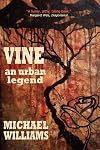
I was delighted by this book from the first page. Written vaguely in the style of a Greek play -- or, a choral novel, as Williams explains in his Author's Note -- there are narrative 'episodes' and various commentaries, ranging from the Muses to the homeless itinerants.
Set in Louisville, Kentucky, the story follows a handful of players -- Stephen Thorne, once-disgraced high school teacher who now runs regional theater; his band of scrappy teen thespians, some of whom might just be literally show more divine; his student fling, now a grown woman and a mother -- as they attempt to stage Euripides' Bacchae. The production has attracted immortal interest, and the gods gather in Louisville, nudging and pushing everyone along. Like a production on opening night, the story hurtles toward the end -- but whether the end is a success or disaster remains to be seen. Reading, I wasn't sure if this would be a Greek tragedy or comedy, and I held my breath, hopeful.
I was rather taken with the characters, which surprised me -- given the sort of stylized way the story is written, I expected some distance, but Williams creates real warmth in his players, back stories that resonated and moved me, and he evokes a Louisville that is urban, grimy, gritty, and mesmerizing.
Williams' writing style is just wonderful, a word-lovers delight. (I shared a teaser yesterday.) Languorous, lyrical, lilting, lovely -- very nearly the kind of thing to read aloud, just to try on words new and exotic. Yet, despite the poetic style, the book doesn't feel contrived or overly designed: it still reads like a novel, still has dramatic tension and great characters, and the unusual frame just heightens the anticipation and the awareness of supernatural elements. A kind of magical realism for those who like their magic darker and seedier. show less
Set in Louisville, Kentucky, the story follows a handful of players -- Stephen Thorne, once-disgraced high school teacher who now runs regional theater; his band of scrappy teen thespians, some of whom might just be literally show more divine; his student fling, now a grown woman and a mother -- as they attempt to stage Euripides' Bacchae. The production has attracted immortal interest, and the gods gather in Louisville, nudging and pushing everyone along. Like a production on opening night, the story hurtles toward the end -- but whether the end is a success or disaster remains to be seen. Reading, I wasn't sure if this would be a Greek tragedy or comedy, and I held my breath, hopeful.
I was rather taken with the characters, which surprised me -- given the sort of stylized way the story is written, I expected some distance, but Williams creates real warmth in his players, back stories that resonated and moved me, and he evokes a Louisville that is urban, grimy, gritty, and mesmerizing.
Williams' writing style is just wonderful, a word-lovers delight. (I shared a teaser yesterday.) Languorous, lyrical, lilting, lovely -- very nearly the kind of thing to read aloud, just to try on words new and exotic. Yet, despite the poetic style, the book doesn't feel contrived or overly designed: it still reads like a novel, still has dramatic tension and great characters, and the unusual frame just heightens the anticipation and the awareness of supernatural elements. A kind of magical realism for those who like their magic darker and seedier. show less
Michael William’s Vine is an ambitious work, masterfully executed. The story, centered on a rag-tag community theatre production of Euripides’ tragedy The Bacchae, is told in the form of a Greek tragedy, with the narrative of the characters interspersed with chapters from the meddling Muses, and others from a chorus making pithy barbs of insight into the darker side of society and human nature. The use of metaphor becomes hypnotic, before shocking the reader back into the lives of the show more misfit characters. Weeks after finishing the novel, I find myself still thinking about both the characters and the skillful way the past and present merge. Because of the form of the novel, it is not a book I would recommend for everyone, but for those who enjoy classical theatre or the allegorical nature of the musings of the Muses, Vine is an excellent read. Well done! show less

he hero of a previous Dragon Lance book, “Weasel’s Luck” returns. Coming from a hard luck Solmanic family in a period set before the original series, this book follows Galen Pathwarden as he is knighted under the charge of his mentor from the first, Bayard Brightblade. Galen struggles with the new and committed knightly lifestyle and h is old conniving, lazy ways. When his brother Brithelm vanishes mysteriously, Galen sets aside his better judgement and embarks on a quest that leads hi show more in the heart of a mountain, where a pale plainsmen tribe mine opals unknowingly to further the devices of an evil god. Galen must face fear, the mad shaman Firebrand and himself to set things right. This was by far one of the better non-series DL books I have read. The author manages to inject humor and charm into the text as well as referencing the cultural history of the DL world. It is something often ignored by most of the sequel/prequel writers. Williams is not a great writer and some passages can get bogged down in overly attempted prose, but for the most part, the text bounces along with the well-thought out character of Galen. By using the history and geography of the DL world and not the main characters of the original, Williams can make the book his own and have some fun, which make it that much more fun to read. show less
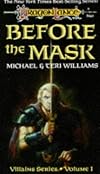
This is the story of Verminaard, unloved bastard son of Solamnic Knights, and his road to evil. My husband adores the Dragonlance series and insisted I read this. He'd finished it in a weekend, so surely I, the voracious reader, would speed through as well. He was wrong. Though far from being a bad book, it just didn't draw me in. Verminaard's evilness seems to be inborne rather than reactionary, to the point that the supposed contributing factors - the unloving father, the loss of the show more beloved brother - seem more like asides and much less sympathetic. Likewise with his half-brother Aglaca, who is unfailingly upbeat and loyal for no apparent reason. I understand the story the Williamses were trying to tell, and it took a while to put my finger on what was wrong. Then I realized it was missing a vital element of all great drama: levity. The human experience is not serious all the time. Even in the grimmest tales there is laughter. The unrelenting depression of this book left me frankly unmoved. show less
You May Also Like


Associated Authors
Statistics
- Works
- 22
- Also by
- 25
- Members
- 4,983
- Popularity
- #5,025
- Rating
- 3.7
- Reviews
- 29
- ISBNs
- 447
- Languages
- 11