
Colin Davis (1) (1960–)
Author of Levinas: An Introduction
For other authors named Colin Davis, see the disambiguation page.
About the Author
Colin Davis is Professor of French at Royal Holloway, University of London. His most recent books are After Poststructuralism: Reading, Stories and Theory (2004), Haunted Subjects: Deconstruction, Psychoanalysis and the Return of the Dead (2007), and Scenes of Love and Murder: Renoir, Film and show more Philosophy (2009). show less
Works by Colin Davis
Tagged
Common Knowledge
- Canonical name
- Davis, Colin
- Birthdate
- 1960
- Gender
- male
- Education
- Wadham College, University of Oxford (D.Phil)
- Occupations
- professor
philosopher - Organizations
- Royal Holloway, University of London (Research Chair in French)
- Nationality
- UK
- Places of residence
- London, England, UK
- Associated Place (for map)
- England, UK
Members
Reviews
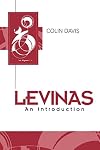
I give 5 stars because it's a great introduction to Levinas' thought, not because it's of any independent value. That said, it really is a very good introduction. Davis gives you the overarching point of Levinas' philosophy in the first three chapters, and manages to make it both comprehensible and quite convincing; that's a rare double. The book's a bit heavy on the special pleading. It's true that Levinas' writing is, well, needlessly impenetrable, and Davis never gives you the impression show more that he really buys all that medium is the message crap that you get from some commentators on continental philosophy. But there's an awful lot of defense that really shouldn't be in here. Maybe a health warning: trying to read Lev will make you angry, but it's worth persevering. But not a full-fledged defense. The same could be said of the final chapter on Levinas' interlocutors, which was pretty dull. Yep, he falls in between academic philosophy and the nuttier fringes; but you already know that because Davis does a great job bringing it out in the early chapters. Kudos, though, for the chapter on his religious writings. Do I want to read his commentaries on the Talmud? No. But it's nice to know someone did.
Anyway, this is well written, well structured, sympathetic and objective. Also, it makes me think Levinas was onto something much more impressive than I had previously thought (blame a certain famous professor from my grad-school days).
“Modern anti-humanism is right, Levinas suggests, though not entirely for the reasons it gives. It correctly abolishes the notion of the human person as the free, self-creating source of its own values; but it then fails to make Levinas’s move of reinstating subjectivity in terms of substitution and responsibility… ‘Humanism has to be denounced only because it is not sufficiently human,’ (OB, 203/128)” show less
Anyway, this is well written, well structured, sympathetic and objective. Also, it makes me think Levinas was onto something much more impressive than I had previously thought (blame a certain famous professor from my grad-school days).
“Modern anti-humanism is right, Levinas suggests, though not entirely for the reasons it gives. It correctly abolishes the notion of the human person as the free, self-creating source of its own values; but it then fails to make Levinas’s move of reinstating subjectivity in terms of substitution and responsibility… ‘Humanism has to be denounced only because it is not sufficiently human,’ (OB, 203/128)” show less
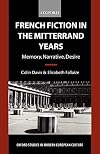
Has a chapter on Annie Ernaux's Passion simple and a few references on Patrick Modiano. Pennac, Duras, Semprun, Echenoz and Guibert are also covered in individual chapters.
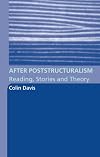
En synnerligen välskriven bok för emot postmodernism / poststrukturalism. De tuffa invändningarna av bl Habermas tas upp oförfärat och tillbakavisas respektive antas. Därefter analyseras ett antal texter av Lyotard, Levinas, Althusser och Kristeva.
May 18, 2014Swedish
Statistics
- Works
- 7
- Members
- 94
- Popularity
- #199,201
- Rating
- 3.7
- Reviews
- 3
- ISBNs
- 42
- Languages
- 1