
Thomas Wyatt (1) (1503–1542)
Author of The Complete Poems
For other authors named Thomas Wyatt, see the disambiguation page.
Thomas Wyatt (1) has been aliased into Sir Thomas Wyatt.
About the Author
Image credit: Sir Thomas Wyatt, by Hans Holbein the Younger. Royal Collection, Windsor Castle.
Works by Thomas Wyatt
Works have been aliased into Sir Thomas Wyatt.
Associated Works
Works have been aliased into Sir Thomas Wyatt.
The Making of a Poem: A Norton Anthology of Poetic Forms (2000) — Contributor — 1,474 copies, 9 reviews
Literature: An Introduction to Fiction, Poetry, and Drama (1995) — Contributor, some editions — 1,016 copies, 7 reviews
Edexcel Poetry Anthology for Advanced subsidiary and advanced GCE examinations in English Literature (2000) — Contributor, some editions — 6 copies
Tagged
Common Knowledge
- Canonical name
- Wyatt, Thomas
- Birthdate
- 1503
- Date of death
- 1542-10-11
- Gender
- male
- Occupations
- diplomat
poet - Awards and honors
- Knighthood (1537)
- Relationships
- Howard, Henry, Earl of Surrey (friend)
- Nationality
- England
- Birthplace
- Allington Castle, Kent, England, UK
- Places of residence
- Cambridge, Cambridgeshire, England, UK
- Place of death
- Sherborne, Dorset, England, UK
- Burial location
- Sherborne Abbey, Dorset, England, UK
- Associated Place (for map)
- England, UK
Members
Reviews
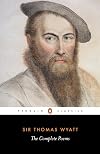
Stunning editorial and historiographical work by Rebholz, revealing an incredibly prolific Wyatt. What that also unfortunately reveals is his repetitous and inconsistent catalogue. Thomas Wyatt led such a fascinating life and the context imbued into many of the poems gives them a very multifaceted existence; some of them being genuinely impressive as pieces of poetry isolated from the history that makes them even more interesting. A good handful of this work makes for some of the best lyrics show more in the English language but the caveat is that he wrote a hell of a lot of lyrics - and a lot of them contain repeating themes, repeating structures and even repeating language (he loved the word "hap") to the point where I think a 'Selected Poems' may have been better suited to his work, because reading this entire book is exhaustingly tedious on occasion. The "Ballades" and "Songs" segments are mostly dispensible save for a select few, given their blatant similarity to a lot of his higher quality sonnets and epigrams - yet they take up almost half of the entire content of the book. The Epistles and Epigrams and Sonnets and Psalms are all absolutely sublime - "Mine own John Poyntz" and "Me list no more to sing" (the best of the Songs) being two of my favourite poems ever - but it is hard to not see them as overshadowed by the onslaught of other mediocre poems. I still of course love Wyatt and think he was a brilliant poet when he wanted to be, but Rebholz' work on this collection is almost too good. On coming back to this I will definitely be skipping over the largely superfluous parts, which is a shame given that means skipping hundreds of pages of incredibly conducted research. show less

The best part of this volume is the introduction by W.S. Merwin. Sadly, Merwin's enthusiasm and admiration for Wyatt's poetry did not transfer. Too bad, because these poems clearly had power for him: "The wry beauty of Wyatt's poems hung in my ear when I was a student, and then and since exercised some indefinable influence upon what I heard and relished and listened for in other poetry."
I think I know what went wrong. This volume, in keeping with its titular directive, is about as paired show more down as possible. You get the poems and whatever brief 13 page context you can derive from Merwin's introduction and that's all you get. The trouble is these poems were written in the 16th Century, which means context clues are not so natural and the non-standard spelling and archaic vocabulary can be a little distracting ("I ame in hold: if pitie the meveth,/Goo bend thy bowe, that stony hertes breketh" Not impossible to understand but not immediate either). Not only that, these poems weren't even considered exceptional until three hundred years after they were written, so it isn't like they just slip right into the old meaning machine without consideration. He isn't part of our own common knowledge poetry index (at least in America Sir Thomas Wyatt doesn't ring a bell). I'll be honest, after reading his work bare even I might fall into the 300 years of "Wyatt? Meh" category as most of these poems seemed written by a whinny little man who feels sorry for himself a lot.
So this is my main criticism: why would The Ecco Press tease us with an introduction by a major poet who clearly has strong feelings for Wyatt and not give us anything more? This book would have gone so much further to enlighten/educate/deepen my engagement with Wyatt's work had its editor bothered to include even a simple gloss (I still can't figure out what the word "mowgh" means).... and if he included notes and a little commentary for context and interpretation I might have even recommended this book to other people.
If you are interested in reading Wyatt you are better off with the Penguin Classics Complete Poems. show less
I think I know what went wrong. This volume, in keeping with its titular directive, is about as paired show more down as possible. You get the poems and whatever brief 13 page context you can derive from Merwin's introduction and that's all you get. The trouble is these poems were written in the 16th Century, which means context clues are not so natural and the non-standard spelling and archaic vocabulary can be a little distracting ("I ame in hold: if pitie the meveth,/Goo bend thy bowe, that stony hertes breketh" Not impossible to understand but not immediate either). Not only that, these poems weren't even considered exceptional until three hundred years after they were written, so it isn't like they just slip right into the old meaning machine without consideration. He isn't part of our own common knowledge poetry index (at least in America Sir Thomas Wyatt doesn't ring a bell). I'll be honest, after reading his work bare even I might fall into the 300 years of "Wyatt? Meh" category as most of these poems seemed written by a whinny little man who feels sorry for himself a lot.
So this is my main criticism: why would The Ecco Press tease us with an introduction by a major poet who clearly has strong feelings for Wyatt and not give us anything more? This book would have gone so much further to enlighten/educate/deepen my engagement with Wyatt's work had its editor bothered to include even a simple gloss (I still can't figure out what the word "mowgh" means).... and if he included notes and a little commentary for context and interpretation I might have even recommended this book to other people.
If you are interested in reading Wyatt you are better off with the Penguin Classics Complete Poems. show less
The best part of this volume is the introduction by W.S. Merwin. Sadly, Merwin's enthusiasm and admiration for Wyatt's poetry did not transfer. Too bad, because these poems clearly had power for him: "The wry beauty of Wyatt's poems hung in my ear when I was a student, and then and since exercised some indefinable influence upon what I heard and relished and listened for in other poetry."
I think I know what went wrong. This volume, in keeping with its titular directive, is about as paired show more down as possible. You get the poems and whatever brief 13 page context you can derive from Merwin's introduction and that's all you get. The trouble is these poems were written in the 16th Century, which means context clues are not so natural and the non-standard spelling and archaic vocabulary can be a little distracting ("I ame in hold: if pitie the meveth,/Goo bend thy bowe, that stony hertes breketh" Not impossible to understand but not immediate either). Not only that, these poems weren't even considered exceptional until three hundred years after they were written, so it isn't like they just slip right into the old meaning machine without consideration. He isn't part of our own common knowledge poetry index (at least in America Sir Thomas Wyatt doesn't ring a bell). I'll be honest, after reading his work bare even I might fall into the 300 years of "Wyatt? Meh" category as most of these poems seemed written by a whinny little man who feels sorry for himself a lot.
So this is my main criticism: why would The Ecco Press tease us with an introduction by a major poet who clearly has strong feelings for Wyatt and not give us anything more? This book would have gone so much further to enlighten/educate/deepen my engagement with Wyatt's work had its editor bothered to include even a simple gloss (I still can't figure out what the word "mowgh" means).... and if he included notes and a little commentary for context and interpretation I might have even recommended this book to other people.
If you are interested in reading Wyatt you are better off with the Penguin Classics Complete Poems. show less
I think I know what went wrong. This volume, in keeping with its titular directive, is about as paired show more down as possible. You get the poems and whatever brief 13 page context you can derive from Merwin's introduction and that's all you get. The trouble is these poems were written in the 16th Century, which means context clues are not so natural and the non-standard spelling and archaic vocabulary can be a little distracting ("I ame in hold: if pitie the meveth,/Goo bend thy bowe, that stony hertes breketh" Not impossible to understand but not immediate either). Not only that, these poems weren't even considered exceptional until three hundred years after they were written, so it isn't like they just slip right into the old meaning machine without consideration. He isn't part of our own common knowledge poetry index (at least in America Sir Thomas Wyatt doesn't ring a bell). I'll be honest, after reading his work bare even I might fall into the 300 years of "Wyatt? Meh" category as most of these poems seemed written by a whinny little man who feels sorry for himself a lot.
So this is my main criticism: why would The Ecco Press tease us with an introduction by a major poet who clearly has strong feelings for Wyatt and not give us anything more? This book would have gone so much further to enlighten/educate/deepen my engagement with Wyatt's work had its editor bothered to include even a simple gloss (I still can't figure out what the word "mowgh" means).... and if he included notes and a little commentary for context and interpretation I might have even recommended this book to other people.
If you are interested in reading Wyatt you are better off with the Penguin Classics Complete Poems. show less
The Poetry of Sir Thomas Wyatt: A Selection and Study by E. M. W. Tillyard
Silver Poets of the Sixteenth Century
Sir Thomas Wyatt and his poems by William Edward Simonds
Sir Thomas Wyatt along with Henry Howard Earl of Surrey are the only two poets given their full name in Tottel’s Miscellany (The first anthology of printed poems to be published; 1557). The Miscellany was enormously popular running to a second print just six weeks after the first and so it probably went a long way to show more establishing Wyatt’s place in the canon of English poetry. His poems were not published during his lifetime, but would have been circulated in manuscript form among a select group of people who were courtiers to Henry VIII. Many of his pieces would not have been recognised as poems, but rather as songs and because he was by all accounts an accomplished lute player and songwriter he would have been a popular figure at court well able to entertain his friends. Tottel by printing the pieces as poems took them out of the hot house of the courtiers world and made them available to the general public (those that could read and who could buy books).
There are 95 poems by Wyatt in the Miscellany and another 100 or more have been found in private collections and so there is a large body of his work that is available and there are at least two fairly modern collections. The majority of the pieces could be described as lyrics or songs and many of these were based around the idea of courtly love, which can be defined as:
a highly conventionalized medieval tradition of love between a knight and a married noblewoman, first developed by the troubadours of southern France and extensively employed in European literature of the time. The love of the knight for his lady was regarded as an ennobling passion and the relationship was typically unconsummated.
This is a typical example by Wyatt:
To wish and want and not obtain,
To seek and sue ease of my pain,
Since all that ever I do is vain
What may it avail me?
Although I strive both day and hour
Against the stream with all my power,
If fortune list yet for to lour
What may it avail me?
If willingly I suffer woe,
If from the fire me list not go,
If then I burn to plain me so,
What may it avail me?
And if the harm that I suffer
Be run too far out of measure,
To seek for help any further
What may it avail me?
What though each heart that heareth me plain
Pityeth and plaineth for my pain,
If I no less in grief remain
What may it avail me?
Yea, though the want of my relief
Displease the causer of my grief,
Since I remain still in mischief
What may it avail me?
Such cruel chance doth so me threat
Continually inward to fret.
Then of release for to treat
What may it avail me?
Fortune is deaf unto my call.
My torment moveth her not at all.
And though she turn as doth a ball
What may it avail me?
For in despair there is no rede.
To want of ear speech is no speed.
To linger still alive as dead
What may it avail me?
I can imagine this being put to music and being enjoyed by friends that would have been steeped in the traditions of courtly love.
However when looking back on songs and lyrics from the 16th century it is the poets who break with tradition and point the way to something new that grabs our attention and Wyatt certainly did this.
He introduced a number of poems in sonnet form based on his free translations of the Italian Renaissance poet Petrarch. He had to adapt the Italian language to 16th century English and also reinvent a rhyming scheme that would fit. His attempts were not always successful; (of the 20 or so that I have read about a half of these sound clunky and are difficult to read aloud) but he laid a template for others to follow. He also experimented with other forms and rhyming schemes, again with varying degrees of success. He wrote epigrams which might have sounded witty and entertaining in the 16th century, but sound laboured to my ears. He made translations of the penitential psalms and he also left us three satires based on his experiences as a courtier to Henry VIII.
E M W Tillyard in his selection and study of Wyatts poems says that there is little evidence of a break with medieval tradition. Although he chooses Italian themes he is bound by the English tradition of song making. I can see his point but I think in many of the lyrics Wyatt’s individual voice can be detected and this makes him readable for 21 century readers. William Edward Symonds in his study of the poems attempts to place the courtly love poems in some sort of order, so as to make of them a collection that depicts a courtly love affair. It can be done because the poems go through the whole gamut of such an affair; the moment when love hits, the eager anticipation, the offer to to the lady of faithful service, the pain of rejection and the the ruminations on a life wasted. However this was not the intention of Wyatt and although it sort of works it sounds artificial.
It is the moments when Wyatt does break with tradition that sets him apart. For example the poem “They flee from me, that sometimes did me seek”. This is not a poem about an unconsummated courtly love affair, it is sensual and erotic and very very personal. The poet/speaker (who could well be Wyatt himself) shows a cruel even vindictive streak in his feeling to one particular woman. The poem stands on its own, but is also fascinating to readers who are aware of Wyatt’s own personal history. He found himself on two memorable occasions out of favour with Henry VIII. So out of favour that he was locked up in the Tower of London, the first time suspected of being a lover of Ann Boleyn. He was a courtier who knew how to play the game, but he needed also to have fortune on his side to survive the factions that played deadly games in Henry’s court. There are themes of change and changes in fortune that crop up again and again in many of the poems:
IT may be good, like it who list ;
But I do doubt : who can me blame ?
For oft assured, yet have I mist ;
And now again I fear the same.
The words, that from your mouth last came,
Of sudden change, make me aghast ;
For dread to fall, I stand not fast.
Alas, I tread an endless maze,
That seek t' accord two contraries :
And hope thus still, and nothing hase,
Imprisoned in liberties :
As one unheard, and still that cries ;
Always thirsty, and naught doth taste ;
For dread to fall, I stand not fast.
Assured, I doubt I be not sure ;
Should I then trust unto such surety ;
That oft have put the proof in ure,
And never yet have found it trusty ?
Nay, sir, in faith, it were great folly :
And yet my life thus do I waste ;
For dread to fall, I stand not fast.
After an exhausting time as a diplomat working for Thomas Cromwell and Henry VIII, Wyatt sought solace in his country home at Aldington. Indeed he was lucky to still have it in his possession as he had found himself locked up in the Tower again on a charge of associating with traitors to the king. His property, his belongings were all packaged away to be distributed to those in favour with Henry VIII on the certainty that Wyatt would be executed. However he got lucky again and obtained a last minute reprieve. He wrote three satires on his life as a courtier that sound like a warning to others intent on engaging themselves at Henry VIII court. They may not be great poetry but as a vignette of life in Tudor times they are essential reading.
So to end with one of Wyatt’s epigrams
Driven by desire I did this deed,
To danger myself without cause why,
To trust the untrue not like to speed,
To speak and promise faithfully. 4
But now the proof doth verify,
That who so trusteth ere he know,
Doth hurt himself and please his foe.
Sir Thomas Wyatt is famous for the one poem; “They flee from me, that sometimes did me seek” that appears in many anthologies, but delving into the rest of his oeuvre can uncover some gems and will also provide the inside track on life in the early Tudor court of Henry VIII. show less
Silver Poets of the Sixteenth Century
Sir Thomas Wyatt and his poems by William Edward Simonds
Sir Thomas Wyatt along with Henry Howard Earl of Surrey are the only two poets given their full name in Tottel’s Miscellany (The first anthology of printed poems to be published; 1557). The Miscellany was enormously popular running to a second print just six weeks after the first and so it probably went a long way to show more establishing Wyatt’s place in the canon of English poetry. His poems were not published during his lifetime, but would have been circulated in manuscript form among a select group of people who were courtiers to Henry VIII. Many of his pieces would not have been recognised as poems, but rather as songs and because he was by all accounts an accomplished lute player and songwriter he would have been a popular figure at court well able to entertain his friends. Tottel by printing the pieces as poems took them out of the hot house of the courtiers world and made them available to the general public (those that could read and who could buy books).
There are 95 poems by Wyatt in the Miscellany and another 100 or more have been found in private collections and so there is a large body of his work that is available and there are at least two fairly modern collections. The majority of the pieces could be described as lyrics or songs and many of these were based around the idea of courtly love, which can be defined as:
a highly conventionalized medieval tradition of love between a knight and a married noblewoman, first developed by the troubadours of southern France and extensively employed in European literature of the time. The love of the knight for his lady was regarded as an ennobling passion and the relationship was typically unconsummated.
This is a typical example by Wyatt:
To wish and want and not obtain,
To seek and sue ease of my pain,
Since all that ever I do is vain
What may it avail me?
Although I strive both day and hour
Against the stream with all my power,
If fortune list yet for to lour
What may it avail me?
If willingly I suffer woe,
If from the fire me list not go,
If then I burn to plain me so,
What may it avail me?
And if the harm that I suffer
Be run too far out of measure,
To seek for help any further
What may it avail me?
What though each heart that heareth me plain
Pityeth and plaineth for my pain,
If I no less in grief remain
What may it avail me?
Yea, though the want of my relief
Displease the causer of my grief,
Since I remain still in mischief
What may it avail me?
Such cruel chance doth so me threat
Continually inward to fret.
Then of release for to treat
What may it avail me?
Fortune is deaf unto my call.
My torment moveth her not at all.
And though she turn as doth a ball
What may it avail me?
For in despair there is no rede.
To want of ear speech is no speed.
To linger still alive as dead
What may it avail me?
I can imagine this being put to music and being enjoyed by friends that would have been steeped in the traditions of courtly love.
However when looking back on songs and lyrics from the 16th century it is the poets who break with tradition and point the way to something new that grabs our attention and Wyatt certainly did this.
He introduced a number of poems in sonnet form based on his free translations of the Italian Renaissance poet Petrarch. He had to adapt the Italian language to 16th century English and also reinvent a rhyming scheme that would fit. His attempts were not always successful; (of the 20 or so that I have read about a half of these sound clunky and are difficult to read aloud) but he laid a template for others to follow. He also experimented with other forms and rhyming schemes, again with varying degrees of success. He wrote epigrams which might have sounded witty and entertaining in the 16th century, but sound laboured to my ears. He made translations of the penitential psalms and he also left us three satires based on his experiences as a courtier to Henry VIII.
E M W Tillyard in his selection and study of Wyatts poems says that there is little evidence of a break with medieval tradition. Although he chooses Italian themes he is bound by the English tradition of song making. I can see his point but I think in many of the lyrics Wyatt’s individual voice can be detected and this makes him readable for 21 century readers. William Edward Symonds in his study of the poems attempts to place the courtly love poems in some sort of order, so as to make of them a collection that depicts a courtly love affair. It can be done because the poems go through the whole gamut of such an affair; the moment when love hits, the eager anticipation, the offer to to the lady of faithful service, the pain of rejection and the the ruminations on a life wasted. However this was not the intention of Wyatt and although it sort of works it sounds artificial.
It is the moments when Wyatt does break with tradition that sets him apart. For example the poem “They flee from me, that sometimes did me seek”. This is not a poem about an unconsummated courtly love affair, it is sensual and erotic and very very personal. The poet/speaker (who could well be Wyatt himself) shows a cruel even vindictive streak in his feeling to one particular woman. The poem stands on its own, but is also fascinating to readers who are aware of Wyatt’s own personal history. He found himself on two memorable occasions out of favour with Henry VIII. So out of favour that he was locked up in the Tower of London, the first time suspected of being a lover of Ann Boleyn. He was a courtier who knew how to play the game, but he needed also to have fortune on his side to survive the factions that played deadly games in Henry’s court. There are themes of change and changes in fortune that crop up again and again in many of the poems:
IT may be good, like it who list ;
But I do doubt : who can me blame ?
For oft assured, yet have I mist ;
And now again I fear the same.
The words, that from your mouth last came,
Of sudden change, make me aghast ;
For dread to fall, I stand not fast.
Alas, I tread an endless maze,
That seek t' accord two contraries :
And hope thus still, and nothing hase,
Imprisoned in liberties :
As one unheard, and still that cries ;
Always thirsty, and naught doth taste ;
For dread to fall, I stand not fast.
Assured, I doubt I be not sure ;
Should I then trust unto such surety ;
That oft have put the proof in ure,
And never yet have found it trusty ?
Nay, sir, in faith, it were great folly :
And yet my life thus do I waste ;
For dread to fall, I stand not fast.
After an exhausting time as a diplomat working for Thomas Cromwell and Henry VIII, Wyatt sought solace in his country home at Aldington. Indeed he was lucky to still have it in his possession as he had found himself locked up in the Tower again on a charge of associating with traitors to the king. His property, his belongings were all packaged away to be distributed to those in favour with Henry VIII on the certainty that Wyatt would be executed. However he got lucky again and obtained a last minute reprieve. He wrote three satires on his life as a courtier that sound like a warning to others intent on engaging themselves at Henry VIII court. They may not be great poetry but as a vignette of life in Tudor times they are essential reading.
So to end with one of Wyatt’s epigrams
Driven by desire I did this deed,
To danger myself without cause why,
To trust the untrue not like to speed,
To speak and promise faithfully. 4
But now the proof doth verify,
That who so trusteth ere he know,
Doth hurt himself and please his foe.
Sir Thomas Wyatt is famous for the one poem; “They flee from me, that sometimes did me seek” that appears in many anthologies, but delving into the rest of his oeuvre can uncover some gems and will also provide the inside track on life in the early Tudor court of Henry VIII. show less
Lists
You May Also Like
Associated Authors
Statistics
- Works
- 11
- Also by
- 10
- Members
- 289
- Popularity
- #80,897
- Rating
- 4.0
- Reviews
- 5
- ISBNs
- 9
- Favorited
- 7