
Peter Kuper
Author of Franz Kafka's The Metamorphosis [graphic novel]
About the Author
Image credit: Photo of Peter Kuper, Graphic Artist at the NYC 81st street Subway Station By Hollykuper - Own work, CC BY 3.0, https://commons.wikimedia.org/w/index.php?curid=44237067
Series
Works by Peter Kuper
World War 3 Illustrated #51: The World We are Fighting For (2020) — Editor; Contributor — 15 copies, 1 review
World War 3 Illustrated #8: Titanic 4 copies
World War 3 Illustrated #7 3 copies
Wild Life No1 2 copies
Itchy Planet #3 2 copies
Wild Life (1994) #2 (of 2) 1 copy
Bleeding Heart #5 1 copy
Bleeding Heart #4 1 copy
Bleeding Heart #3 1 copy
Associated Works
The Graphic Canon, Vol. 1: From the Epic of Gilgamesh to Shakespeare to Dangerous Liaisons (2012) — Illustrator — 307 copies, 7 reviews
Above the Dreamless Dead: World War I in Poetry and Comics (2014) — Illustrator — 141 copies, 9 reviews
The Graphic Canon of Children's Literature: The World's Greatest Kids' Lit as Comics and Visuals (2014) — Illustrator — 101 copies, 1 review
The Art of Mickey Mouse: Artists Interpret The World's Favorite Mouse (Disney Miniature Series) (1991) — Illustrator, some editions — 95 copies, 3 reviews
The Bush Junta: 25 Cartoonists on the Mayberry Machiavelli and the Abuse of Power (2004) — Contributor — 57 copies
The Graphic Canon of Crime & Mystery, Vol. 1: From Sherlock Holmes to A Clockwork Orange to Jo Nesbø (2017) — Illustrator — 38 copies, 2 reviews
Crazy Magazine #93 — Contributor — 1 copy
Funny Times: A Monthly Newspaper of Humor, Politics & Fun, Volume 16, Issue 2 (2001) — Contributor — 1 copy
Funny Times: A Monthly Newspaper of Humor, Politics & Fun, Volume 16, Issue 3 (2001) — Contributor — 1 copy
Tagged
Common Knowledge
- Birthdate
- 1958-09-22
- Gender
- male
- Nationality
- USA
- Birthplace
- New Jersey, USA
- Map Location
- New Jersey, USA
Members
Reviews
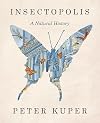
I’ll admit I haven’t always been a big fan of bugs. However, 30+ years of gardening have helped me to cultivate a greater appreciation for these fascinating animals. It has even helped me overcome my fear of spiders. (Except for the big, hairy ones. I’m still scared of those.) Insectopolis is a love letter to insects and natural history in graphic novel form. It does have a narrative structure that I won’t reveal, because doing so would reveal a huge spoiler right at the start of the show more story, and I think keeping that secret heightens the impact of the book. Suffice it to say that all life on Earth is inextricably intertwined with insects, and comparing oneself to an ant might be extremely useful in establishing perspective.
Since I don’t read the New York Times (where Kuper’s cartoons regularly appear), I didn’t know much about him. According to Wikipedia, he is: “… an American alternative comics artist and illustrator, best known for his autobiographical, political, and social observations.” It also mentions that as Kuper’s work has evolved, his comics and illustrations have gone from being separate, compartmentalized disciplines to merging together in ways that are breathtakingly on display throughout the pages of Insectopolis.
Kuper manages to tuck in plenty of political and social observations between the insects’ stories. We learn about scientists who were marginalized because of racism, who produced groundbreaking work while paying the bills with other jobs—who knew that moths could hear?—or kept on working through race riots despite considerable danger to themselves and their families. (The insects remark that one of these scientists isn’t even even mentioned in the exhibition.) Women scientists—their biographies and discoveries—are interspersed throughout the book, including the Mother of Entomology, Maria Sibylla Merian (1647-1717). We learn how mosquitoes helped in warfare, were a decisive force in major battles, and how they influenced the development of slavery. We learn about insects that navigate using the stars or use the Earth’s magnetic forces for long-distance migration.
Inventiveness? Kuper’s got it in spades. One of my favourite sections is the Acknowledgments, where a group of fire ants prompts a New York Public Library computer to search its database for the credits. Another poignant section tells the story of a cicada, who’s living its first 17 years underground and turns to a tree to learn about the world above. Then there’s the powerful exchange between the ghosts of Rachel Carson, Margaret Collins, and a dragonfly, covering everything from the effects of insecticides on ecosystems to termites and civil rights. The tight integration of social studies, natural history, and environmental education in Insectopolis makes it perfect for classrooms. There’s so much that teachers could do with it.
Insectopia is one of those books that straddle different genres and different age groups. I would absolutely recommend it for older kids, especially ones that prefer non-fiction, scientific books, graphic novels, or even kids who don’t think of reading as a fun activity. (Note: Anyone reading this book should be old enough to handle basic information about sexual reproduction.) I’d also recommend it to people who don’t like graphic novels. I think it could really change some minds. It’s an easy recommendation for fans of alternative comics and graphic novels, and anyone who loves art and illustration. In fact, it’s hard to think of an audience who wouldn’t like this uniquely riveting book. If your local library doesn’t have a copy, request it. You won’t be sorry.
Highly recommended, 14+. show less
Since I don’t read the New York Times (where Kuper’s cartoons regularly appear), I didn’t know much about him. According to Wikipedia, he is: “… an American alternative comics artist and illustrator, best known for his autobiographical, political, and social observations.” It also mentions that as Kuper’s work has evolved, his comics and illustrations have gone from being separate, compartmentalized disciplines to merging together in ways that are breathtakingly on display throughout the pages of Insectopolis.
Kuper manages to tuck in plenty of political and social observations between the insects’ stories. We learn about scientists who were marginalized because of racism, who produced groundbreaking work while paying the bills with other jobs—who knew that moths could hear?—or kept on working through race riots despite considerable danger to themselves and their families. (The insects remark that one of these scientists isn’t even even mentioned in the exhibition.) Women scientists—their biographies and discoveries—are interspersed throughout the book, including the Mother of Entomology, Maria Sibylla Merian (1647-1717). We learn how mosquitoes helped in warfare, were a decisive force in major battles, and how they influenced the development of slavery. We learn about insects that navigate using the stars or use the Earth’s magnetic forces for long-distance migration.
Inventiveness? Kuper’s got it in spades. One of my favourite sections is the Acknowledgments, where a group of fire ants prompts a New York Public Library computer to search its database for the credits. Another poignant section tells the story of a cicada, who’s living its first 17 years underground and turns to a tree to learn about the world above. Then there’s the powerful exchange between the ghosts of Rachel Carson, Margaret Collins, and a dragonfly, covering everything from the effects of insecticides on ecosystems to termites and civil rights. The tight integration of social studies, natural history, and environmental education in Insectopolis makes it perfect for classrooms. There’s so much that teachers could do with it.
Insectopia is one of those books that straddle different genres and different age groups. I would absolutely recommend it for older kids, especially ones that prefer non-fiction, scientific books, graphic novels, or even kids who don’t think of reading as a fun activity. (Note: Anyone reading this book should be old enough to handle basic information about sexual reproduction.) I’d also recommend it to people who don’t like graphic novels. I think it could really change some minds. It’s an easy recommendation for fans of alternative comics and graphic novels, and anyone who loves art and illustration. In fact, it’s hard to think of an audience who wouldn’t like this uniquely riveting book. If your local library doesn’t have a copy, request it. You won’t be sorry.
Highly recommended, 14+. show less
One of my favorite things about books are the words that make them up. This book had no dialogue; the only words to appear were in the background, on newspapers, billboards, etc. Still, after "reading" it (in like an hour), I feel like it told a story better than most people do with actual words. The weaving in and out of the character's stories, the art, and the plot were all fantastic. Read this book!
When the pandemic strikes, the world's insects flock to the New York Public Library's exhibit, Insectopolis to learn more about each other, what humans think of them and the humans who studied and revered them.
Insectopolis is a beautifully illustrated graphic novel that briefly recounts the natural history of insects and their relationship with humanity. Beginning with the rise of insects 400 million years ago to today, the book explores their diversity and importance. Each picture is show more incredibly detailed and every quote, poster and graphic in the background of each exhibit piece is worth looking at. Even the QR codes in the exhibit drawings work, taking you to scientists discussing the insects they study. While every species of insect or even major group of insect could be highlighted, the focus was on where insects intersect with humanity, from waste management to pollination. I also enjoyed the spotlight on entomologists who have dedicated their lives to studying these creatures, and on other scientists—especially the unsung female and Black scientists—who affected the world of insects. With plenty of book recommendations at the end for a further dive, Insectopolis is a delightful read for any insect or nature lover. show less
Insectopolis is a beautifully illustrated graphic novel that briefly recounts the natural history of insects and their relationship with humanity. Beginning with the rise of insects 400 million years ago to today, the book explores their diversity and importance. Each picture is show more incredibly detailed and every quote, poster and graphic in the background of each exhibit piece is worth looking at. Even the QR codes in the exhibit drawings work, taking you to scientists discussing the insects they study. While every species of insect or even major group of insect could be highlighted, the focus was on where insects intersect with humanity, from waste management to pollination. I also enjoyed the spotlight on entomologists who have dedicated their lives to studying these creatures, and on other scientists—especially the unsung female and Black scientists—who affected the world of insects. With plenty of book recommendations at the end for a further dive, Insectopolis is a delightful read for any insect or nature lover. show less
Ruins by Peter Kuper
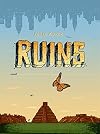
Disappointing. Because of the place they were in their relationship, I found neither of the main characters particularly likable or interesting. And exploring the problems of a foreign country through the perspective of a white American couple is always problematic, if not cliche and lazy. While the white couple has their heads up their asses, the residents of Oaxaca are barely developed. Off the top of my head I really only recall four major supporting characters and one of those was a show more white bookstore owner. So the population of Mexico is represented by a wild, drunken photographer of mixed heritage, a sleazy artist and a maid who generally just tries to stay under the radar. Not a lot of depth there. Hell, the flying butterfly gets more pages than any of those characters. Kuper's art is nice and creates a beautiful setting at least. show less
Lists
Awards


You May Also Like
Associated Authors
Statistics
- Works
- 62
- Also by
- 94
- Members
- 2,425
- Popularity
- #10,577
- Rating
- 3.8
- Reviews
- 64
- ISBNs
- 100
- Languages
- 8
