
Thomas Thompson (1) (1933–1982)
Author of Blood and Money
For other authors named Thomas Thompson, see the disambiguation page.
Works by Thomas Thompson
Associated Works
Reader's Digest Condensed Books 1972 v02: Wild Goose, Brother Goose / Event 1000 / Bring Me a Unicorn / Hearts / The Day of the Jackal (1972) — Author — 41 copies
Reader's Digest Condensed Books 1975 v02: Lost! / Baker's Hawk / The Physicians / God and Mr. Gomez / Eagle in the Sky (1975) — Contributor — 39 copies, 1 review
Tagged
Common Knowledge
- Birthdate
- 1933-10-03
- Date of death
- 1982-10-29
- Gender
- male
- Education
- University of Texas, Austin (BA ∙ Journalism)
- Occupations
- journalist
editor
author
professor - Organizations
- Life
- Awards and honors
- Saddleman Award (1971)
- Relationships
- Thompson, Larry D. (brother)
- Nationality
- USA
- Birthplace
- Fort Worth, Texas, USA
- Places of residence
- Austin, Texas, USA
Houston, Texas, USA
Dallas, Texas, USA
India
Los Angeles, California, USA - Associated Place (for map)
- Texas, USA
Members
Reviews
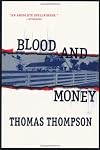
This book, a non-fiction work, presents a tragic tale of dysfunctional marriage, obsessive love, untimely death, murder for hire, and intense courtroom drama. The story proves the adage that truth can be stranger than fiction. Thomas, a veteran journalist, renders a lucid, richly detailed account of each player, their virtues and flaws, deeds and misdeeds, relying on numerous interviews and court transcripts. Highly recommended.
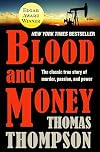
Such a well-written true crime novel (although a bit on the long side). Thompson really looked at what made all of the players in the drama tick. He actually makes one of the bad guys very, very sympathetic. Many flawed human beings, many warped priorities and motivations, and subsequently, the concept of justice becomes blurred on many different levels. Aside from the story itself, the author's look a the wild and wooly days of Houston's emergence as a city of oil and new money is alone show more worth the price of admission. show less
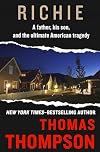
Richie: A Father, His Son, and the Ultimate American Tragedy by Thomas Thompson is a 1973 publication.
Recently this book popped up in a few promotional book emails. I had not thought of this case in decades- but I remembered reading this book when I was a teenager- and remember the made for TV movie, as well. I discovered the book was a part of the KU program, so I checked it out.
I was surprised at how conflicted I felt about a book written over forty years ago. As a teen I also remember show more feeling conflicted but not in the same way I am today. The book, for many, was a cautionary tale. Some viewed George as the ultimate villain, others viewed Richie as an example of the effect drugs had on people. But nearly everyone could agree that it was the ultimate tragedy.
I was particularly struck by the passages that described the barbiturate crisis because it mirrors today’s opioid crisis. Perhaps the real villain in this tale is once again the pharmaceutical companies and their greed.
“Those profiting…. Are an otherwise respected, successful group- The American pharmaceutical corporations who simply must know what they are doing and know the ugly consequences of their over-production.
From my contacts, I am advised that is all too easy for pharmaceutical manufacturers to over-produce vastly the legitimate market for barbiturates, and to ‘dump’ their excess production into the hands of irresponsible drug buyers outside the U.S. Questionable pharmaceutical operators in Mexico evidently have played this role vis-à-vis the Southwest, purchasing great supplies of barbiturates “legally” from American manufacturers and then routing them back in the Southwest black market through Juarez and El Paso, and Tijuana and Los Angeles.”
“I also am not moved by the laxity shown by the U.S. Justice Department in giving the black-market barbiturate problem sufficient recognition and priority, in informing the public, and in providing leadership in seeking solutions. In my opinion, this implies the potency of that industry’s political contributors and lobbyists.”
Sounds familiar, right?
The situation in this household though was a perfect storm of events coming together at once. The author did a good job of explaining the growing tension in this family, but also in many other families as well, and in society.
In this case, drastic measures were called for, but not only did the parents make mistakes, so did others in Richie’s orbit who were not so emotionally involved. Today this situation might have been approached in such a way that the parents would have had much more information at their disposal, many more resources, too. Richie needed lots of help and maybe even had a few underlying problems that the drugs only exacerbated. But at the end of the day, this family was stretched to its maximum ability to cope. Deep down I do wonder about George’s motives. He was being threatened, his son was abusive, belligerent, and violent. But part of me does think that George was exhausted – that his own mental health had taken a beating and while Richie was certainly mentally and emotionally unstable- George was too by that time.
Either way, the book, despite its age and some vernacular and attitudes that were a product of the era of time in which this drama transpires, is still quite effective, still conflicting, and thought-provoking… and still so very sad.
4 stars show less
Recently this book popped up in a few promotional book emails. I had not thought of this case in decades- but I remembered reading this book when I was a teenager- and remember the made for TV movie, as well. I discovered the book was a part of the KU program, so I checked it out.
I was surprised at how conflicted I felt about a book written over forty years ago. As a teen I also remember show more feeling conflicted but not in the same way I am today. The book, for many, was a cautionary tale. Some viewed George as the ultimate villain, others viewed Richie as an example of the effect drugs had on people. But nearly everyone could agree that it was the ultimate tragedy.
I was particularly struck by the passages that described the barbiturate crisis because it mirrors today’s opioid crisis. Perhaps the real villain in this tale is once again the pharmaceutical companies and their greed.
“Those profiting…. Are an otherwise respected, successful group- The American pharmaceutical corporations who simply must know what they are doing and know the ugly consequences of their over-production.
From my contacts, I am advised that is all too easy for pharmaceutical manufacturers to over-produce vastly the legitimate market for barbiturates, and to ‘dump’ their excess production into the hands of irresponsible drug buyers outside the U.S. Questionable pharmaceutical operators in Mexico evidently have played this role vis-à-vis the Southwest, purchasing great supplies of barbiturates “legally” from American manufacturers and then routing them back in the Southwest black market through Juarez and El Paso, and Tijuana and Los Angeles.”
“I also am not moved by the laxity shown by the U.S. Justice Department in giving the black-market barbiturate problem sufficient recognition and priority, in informing the public, and in providing leadership in seeking solutions. In my opinion, this implies the potency of that industry’s political contributors and lobbyists.”
Sounds familiar, right?
The situation in this household though was a perfect storm of events coming together at once. The author did a good job of explaining the growing tension in this family, but also in many other families as well, and in society.
In this case, drastic measures were called for, but not only did the parents make mistakes, so did others in Richie’s orbit who were not so emotionally involved. Today this situation might have been approached in such a way that the parents would have had much more information at their disposal, many more resources, too. Richie needed lots of help and maybe even had a few underlying problems that the drugs only exacerbated. But at the end of the day, this family was stretched to its maximum ability to cope. Deep down I do wonder about George’s motives. He was being threatened, his son was abusive, belligerent, and violent. But part of me does think that George was exhausted – that his own mental health had taken a beating and while Richie was certainly mentally and emotionally unstable- George was too by that time.
Either way, the book, despite its age and some vernacular and attitudes that were a product of the era of time in which this drama transpires, is still quite effective, still conflicting, and thought-provoking… and still so very sad.
4 stars show less
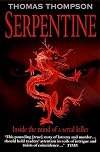
Thomas Thompson brilliantly dissects the festering evil that is Charles Sobhraj in 1979's "Serpentine." This twisted tale winds across continents, through hideous murders and countless shocking crimes and arrives at clear-eyed conclusions about the nature of evil. Thompson's thorough research and compelling narrative of the life of the man known as "The Serpent" equal a tale minus the subtle glorification or sympathy so often found in similar accounts.
Lists
Awards


You May Also Like


Associated Authors
Statistics
- Works
- 6
- Also by
- 3
- Members
- 986
- Popularity
- #26,110
- Rating
- 3.9
- Reviews
- 14
- ISBNs
- 82
- Languages
- 6
- Favorited
- 2