
Ivan Morris (1) (1925–1976)
Author of The World of the Shining Prince: Court Life in Ancient Japan
For other authors named Ivan Morris, see the disambiguation page.
Ivan Morris (1) has been aliased into Ivan I. Morris.
About the Author
Image credit: Uncredited image found at Alchtron.com
Works by Ivan Morris
Works have been aliased into Ivan I. Morris.
Madly Singing in the Mountains: An Appreciation and Anthology of Arthur Waley (1970) — Editor — 41 copies
Associated Works
Works have been aliased into Ivan I. Morris.
The Pillow Book of Sei Shonagon (1002) — Translator, some editions; Translator, some editions — 3,174 copies, 50 reviews
As I Crossed a Bridge of Dreams: Recollections of a Woman in Eleventh-Century Japan (1058) — Translator, some editions — 541 copies, 10 reviews
Modern Japanese Literature: From 1868 to the Present Day (1956) — Translator, some editions — 320 copies, 1 review
The Sailor Who Fell from Grace with the Sea / The Temple of the Golden Pavilion / Confessions of a Mask (1990) — Translator — 83 copies
The Priest of Shiga Temple and His Love — Translator, some editions — 1 copy
Swaddling Clothes — Translator, some editions — 1 copy
Tagged
Common Knowledge
- Legal name
- Morris, Ivan Ira Esme
- Birthdate
- 1925-11-29
- Date of death
- 1976-07-19
- Gender
- male
- Occupations
- author
teacher (Japanese Studies)
vertaler Japans - Engels
Members
Reviews
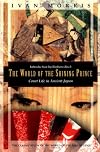
This was a fascinating and fun little book about Japan's cultural high point in history: the Heian period. Not much is known about this era (or really any civilization from the 10th century), but Morris does a great job of spinning together what he's been able to gleam both from factual sources as well as fictional ones into a somewhat cohesive vision of what the era would have been like.
Morris's biggest source is Murasaki Shikibu's epic novel The Tale of Genji. While it is a fictional show more representation of the royal court, Murasaki painstakingly uses it to record the lives she observes. He freely admits that, as a result, his research only covers the upper echelons of society, but that's nothing new when it comes to studies like this. That said, Morris does a fantastic job of building up the society around Murasaki's novel. He covers the way Japan closed itself off from the outside world and how that isolation yet adoration of T'ang culture informed every aspect of their society. He paints a picture of the government structure, the religion, the festivals that ruled everyone's days, and the daily lives of the rich and powerful (or just the rich). While the picture is incomplete, it doesn't feel lacking.
Aside from setting up the Heian world for the reader, Morris spends a lot of time delving into the relationships of the people living at this time. After all, relationships were one of the defining things of this era of extreme leisure for the wealthy, and it's one Murasaki herself fixates on in her masterpiece, as well as her contemporaries. The Heian era is certainly unique in that romance is inextricably linked to relationships but in a performative sense rather than an emotional one. The position of men and women is ultra limiting for everyone unless you're the Fujiwara clan member in charge. It's as captivating as it is sad. I don't blame everyone for moping around and writing depressed poetry all the time.
The only odd thing about this book was the introduction, which I would recommend skipping. The majority of it was excusing Morris's behavior and "salvaging" his image. Now, I'm just a regular person. I'm not in academic circles, let alone Medieval Japanese circles. I didn't realize Morris was a problematic figure who needed his image to be cleaned up, and now that I've read this book, I still don't think there's anything alarming. His book was approachable. His arguments made sense, and I didn't get an overwhelming sense of racism, xenophobia, or sexism from the text. There might have been a couple small instances, but the introduction made it seem like his was some horribly outdated viewpoint that needed an apology, so I was expecting some pretty outlandish notions; yet, I didn't get that. I still rated this book 5 stars because I felt Morris did a fantastic job, and I don't think it's fair to rate a book based on what other people wrote in the introduction. show less
Morris's biggest source is Murasaki Shikibu's epic novel The Tale of Genji. While it is a fictional show more representation of the royal court, Murasaki painstakingly uses it to record the lives she observes. He freely admits that, as a result, his research only covers the upper echelons of society, but that's nothing new when it comes to studies like this. That said, Morris does a fantastic job of building up the society around Murasaki's novel. He covers the way Japan closed itself off from the outside world and how that isolation yet adoration of T'ang culture informed every aspect of their society. He paints a picture of the government structure, the religion, the festivals that ruled everyone's days, and the daily lives of the rich and powerful (or just the rich). While the picture is incomplete, it doesn't feel lacking.
Aside from setting up the Heian world for the reader, Morris spends a lot of time delving into the relationships of the people living at this time. After all, relationships were one of the defining things of this era of extreme leisure for the wealthy, and it's one Murasaki herself fixates on in her masterpiece, as well as her contemporaries. The Heian era is certainly unique in that romance is inextricably linked to relationships but in a performative sense rather than an emotional one. The position of men and women is ultra limiting for everyone unless you're the Fujiwara clan member in charge. It's as captivating as it is sad. I don't blame everyone for moping around and writing depressed poetry all the time.
The only odd thing about this book was the introduction, which I would recommend skipping. The majority of it was excusing Morris's behavior and "salvaging" his image. Now, I'm just a regular person. I'm not in academic circles, let alone Medieval Japanese circles. I didn't realize Morris was a problematic figure who needed his image to be cleaned up, and now that I've read this book, I still don't think there's anything alarming. His book was approachable. His arguments made sense, and I didn't get an overwhelming sense of racism, xenophobia, or sexism from the text. There might have been a couple small instances, but the introduction made it seem like his was some horribly outdated viewpoint that needed an apology, so I was expecting some pretty outlandish notions; yet, I didn't get that. I still rated this book 5 stars because I felt Morris did a fantastic job, and I don't think it's fair to rate a book based on what other people wrote in the introduction. show less

This work in an English language masterwork on the the Japan's concept of national heroism as embodied by historical/mythological figures. Morris is an authority and one of the pinnacles of the field of Japanese studies so that completeness and readability of this work should come as no surprise. What makes it transcend from very good to great is Morris' ability to understand both within and without of the Japanese mindset and emotional psyche when analyzing this history. It is not a pure show more observational study nor is it blind to alternative perceptions outside of the Japanese persona. A perfect blend of emotion, history, critique, and hypothesis. show less
 This review was written for LibraryThing Early Reviewers.
I was worried that this book was going to be a slog. The topic is a bit obscure - the aristocratic world of 10th century Japan at the time of Lady Murasaki's novel The Tale of Gengi. So some possiblity it would be one of those not terribly well written academic tomes, long on footnotes, short on readable prose, primarily concerned with scoring points in academic infighting over minutiae. You know the stuff, "Professor Walrus puts forth the absurd contention that Lord Hisagau was 5'3", show more ignoring the careful scholarship of Professor Carpenter who has demonstrated conclusively that he was of course 5'4"..." Feh.
Plus it was first published in 1964, which gave me some concerns about how the author was going to handle certain aspects of Heian culture particularly issues of sex - was the author going to feel the need to over explain or resort to cringe making euphemisms? But I'm really interested in Heian Japan so I figured I'd give it a shot.
I'm glad I did. There was a little bit of what I was worried about but not enough to ruin what turned out to be a fascinating and informative book. I learned a lot, and I had great fun imagining the world he was describing. For the most part he stuck with the facts and wrote very readably - only in a few places, mostly when dealing with polygamy and shamanism, did he run off the rails into trying to justify and over explain his material.
If you are interested in the world of Lady Murasaki I recommend this. show less
Plus it was first published in 1964, which gave me some concerns about how the author was going to handle certain aspects of Heian culture particularly issues of sex - was the author going to feel the need to over explain or resort to cringe making euphemisms? But I'm really interested in Heian Japan so I figured I'd give it a shot.
I'm glad I did. There was a little bit of what I was worried about but not enough to ruin what turned out to be a fascinating and informative book. I learned a lot, and I had great fun imagining the world he was describing. For the most part he stuck with the facts and wrote very readably - only in a few places, mostly when dealing with polygamy and shamanism, did he run off the rails into trying to justify and over explain his material.
If you are interested in the world of Lady Murasaki I recommend this. show less
In some ways, Ivan Morris' The Nobility of Failure: Tragic Heroes in the History of Japan could be considered a companion of sorts to his earlier work The World of the Shining Prince: Court Life in Ancient Japan. While The World of the Shining Prince explores the beauty of court culture in Japan, The Nobility of Failure addresses the country's more tragic history. Originally published in 1975, The Nobility of Failure has been out of print for years. Happily, Kurodahan Press was able to show more rerelease the volume in 2013 with a newly added preface by Juliet Winters Carpenter. Happier still, I was selected to receive a review copy of the new edition of The Nobility of Failure through LibraryThing's Early Reviewers program. The Nobility of Failure is an important work that examines the cultural and historical background of some of the tragic heroes who continue to influence the modern Japanese psyche. I am very glad that I, and others, once again have the opportunity to read it.
While not unheard of in Western tradition, Japan has a particular, and some might call peculiar, predilection for the tragic or failed hero. They are admired for their sincerity and loyalty even when their causes were meet with failure and their goals could be considered traitorous. Above all else, those heroes adhered to their ideals, especially in the face of their own destruction. In The Nobility of Failure, Morris traces Japan's tradition of the tragic hero back to the fourth century and the archetype of Prince Yamato Takeru. The following chapters explore the lives and influences of Japan's legendary and historic failed heroes found throughout the centuries: Yorozu, Arima no Miko, Sugawara no Michizane, Minamoto no Yoshitsune, Kusunoki Masashige, Amakusa Shirō, Ōshio Heihachirō, and Saigō Takamori. The volume culminates in an examination of the World War II kamikaze fighters--an unprecedented development in modern warfare which for most countries would have been unimaginable.
One thing that I didn't realize about The Nobility of Failure before reading the book was how much of an influence Yukio Mishima had on its creation. Morris and Mishima were friends and the book was at least in part written in order to put Mishima's act of ritual suicide in 1970 into historical context. The volume is even dedicated to his memory. Since I happen to have a particular fascination with Mishima, I found this connection to be especially interesting. Many of the heroes who are the focus of The Nobility of Failure (tragic heroines are only mentioned in passing) were men that Mishima personally admired, but they are also generally recognized as important to Japan as a whole and are even considered to be inspirational figures to some. Japan's tragic heroes carry immense psychological and cultural significance; their role in Japanese history was crucial to the development of Japan's national character, perspective, and worldview.
The Nobility of Failure is an extremely illuminating volume. It's readily clear that Morris put a tremendous amount of thought and research into the volume. In fact, the endnotes, bibliography, and index make up approximately a third of the books' length. Morris draws upon both primary and secondary materials, including literature, poetry, and theatrical interpretations of the heroes' stories found in kabuki and Noh. Using a combination of sources, excerpts, and retellings, Morris reveals both the mythic and legendary basis of Japan's tragic heroes as well as their historical reality and how they have influenced Japan's culture and psyche. This is particularly evident in the chapter about the kamikaze fighters in which Morris ties in everything that had previously been examined. Even though The Nobility of Failure was written nearly forty years ago, it is still a valuable and fascinating work. Morris' compassionate analysis deserves to remain in print.
Experiments in Manga show less
While not unheard of in Western tradition, Japan has a particular, and some might call peculiar, predilection for the tragic or failed hero. They are admired for their sincerity and loyalty even when their causes were meet with failure and their goals could be considered traitorous. Above all else, those heroes adhered to their ideals, especially in the face of their own destruction. In The Nobility of Failure, Morris traces Japan's tradition of the tragic hero back to the fourth century and the archetype of Prince Yamato Takeru. The following chapters explore the lives and influences of Japan's legendary and historic failed heroes found throughout the centuries: Yorozu, Arima no Miko, Sugawara no Michizane, Minamoto no Yoshitsune, Kusunoki Masashige, Amakusa Shirō, Ōshio Heihachirō, and Saigō Takamori. The volume culminates in an examination of the World War II kamikaze fighters--an unprecedented development in modern warfare which for most countries would have been unimaginable.
One thing that I didn't realize about The Nobility of Failure before reading the book was how much of an influence Yukio Mishima had on its creation. Morris and Mishima were friends and the book was at least in part written in order to put Mishima's act of ritual suicide in 1970 into historical context. The volume is even dedicated to his memory. Since I happen to have a particular fascination with Mishima, I found this connection to be especially interesting. Many of the heroes who are the focus of The Nobility of Failure (tragic heroines are only mentioned in passing) were men that Mishima personally admired, but they are also generally recognized as important to Japan as a whole and are even considered to be inspirational figures to some. Japan's tragic heroes carry immense psychological and cultural significance; their role in Japanese history was crucial to the development of Japan's national character, perspective, and worldview.
The Nobility of Failure is an extremely illuminating volume. It's readily clear that Morris put a tremendous amount of thought and research into the volume. In fact, the endnotes, bibliography, and index make up approximately a third of the books' length. Morris draws upon both primary and secondary materials, including literature, poetry, and theatrical interpretations of the heroes' stories found in kabuki and Noh. Using a combination of sources, excerpts, and retellings, Morris reveals both the mythic and legendary basis of Japan's tragic heroes as well as their historical reality and how they have influenced Japan's culture and psyche. This is particularly evident in the chapter about the kamikaze fighters in which Morris ties in everything that had previously been examined. Even though The Nobility of Failure was written nearly forty years ago, it is still a valuable and fascinating work. Morris' compassionate analysis deserves to remain in print.
Experiments in Manga show less
This review was written for LibraryThing Early Reviewers.Lists
Awards

You May Also Like
Associated Authors
Statistics
- Works
- 8
- Also by
- 12
- Members
- 1,145
- Popularity
- #22,428
- Rating
- 3.9
- Reviews
- 28
- ISBNs
- 46
- Languages
- 5
