

Austin Clarke (1) (1934–2016)
Author of The Polished Hoe
For other authors named Austin Clarke, see the disambiguation page.
Austin Clarke (1) has been aliased into Austin Clarke.
About the Author
Austin Chesterfield Clarke was born in St. James, Barbados on July 26, 1934. He moved to Canada in 1955 to attend the University of Toronto, where he studied economics and political science. He worked as a journalist before becoming an author. During the late 1960s and early 1970s, he became a show more visiting lecturer at a number of U.S. universities and was among the professors who founded Yale University's Black Studies program. He also worked as a cultural attache to the Barbadian Embassy in Washington. In 1975, he returned to Barbados to become general manager of the Caribbean Broadcasting Corporation and an advisor to the prime minister. He returned to Canada in 1976 and became a Canadian citizen in 1981. His works mainly focus on the immigrant experience and being black in Canada. His books include The Survivors of Crossing, The Meeting Point, Storm of Fortune, The Bigger Light, The Question, and More. In 1997, The Origin of the Waves won the Writers' Trust Fiction Prize. In 2002, The Polished Hoe won the Scotiabank Giller Prize for fiction, the Commonwealth Writer's Prize for best book, and the Trillium Book Award. His memoir, Growing up Stupid under the Union Jack, won the Casa de las Americas Prize for Literature in 1980. His other memoirs include A Passage Back Home and 'Membering. He also wrote five short-story collections and in 1999, he was awarded the W.O. Mitchell Prize for producing an outstanding body of work for his short stories collections. In 1998, he was made a member of the Order of Canada. He died on June 26, 2016 at the age of 81. (Bowker Author Biography) show less
Image credit: Andrew Currie
Series
Works by Austin Clarke
Works have been aliased into Austin Clarke.
Associated Works
Works have been aliased into Austin Clarke.
Tagged
Common Knowledge
- Legal name
- Clarke, Austin Ardinel Chesterfield
- Birthdate
- 1934-07-26
- Date of death
- 2016-06-26
- Gender
- male
- Education
- Trinity College, University of Toronto
- Occupations
- novelist
- Awards and honors
- Commonwealth Writers' Prize
Toronto Book Award
Rogers Writers' Trust Fiction Prize
Harbourfront Festival Prize
Order of Ontario - Nationality
- Barbados (birth)
Canada - Birthplace
- St. James, Barbados
- Places of residence
- Toronto, Ontario, Canada
- Map Location
- Barbados
Members
Reviews
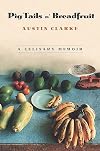
I will be the first to admit that I don't like eating, don't know how to cook and have no interest in learning, but Clarke's luscious descriptions of Barbadian cooking and Barbadian food were able to hold my attention nevertheless -- they even made me feel a little hungry. His descriptions, and the West Indian dialect he wrote in, made me feel like I knew Barbados much better than any travel book or history book would have done. This book is a winner, if you go for that sort of thing.
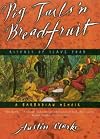
Praised as “masterful” by the New York Times and “uncommonly talented” by Publishers Weekly and winner of the 1999 Martin Luther King Jr. Achievement Award, Austin Clarke has a distinguished reputation as one of the preeminent Caribbean writers of our time. In Pig Tails ’n Breadfruit, he has created a tantalizing “culinary memoir” of his childhood in Barbados. Clarke describes how he learned traditional Bajan cooking—food with origins in the days of slavery, hardship, and show more economic grief—by listening to this mother, aunts, and cousins talking in the kitchen as they prepared each meal.
Pig Tails ’n Breadfruit is not a recipe book; rather, each chapter is devoted to a detailed description of the ritual surrounding the preparation of a particular native dish—Oxtails with Mushrooms, Smoked Ham Hocks with Lima Beans, or Breadfruit Cou-Cou with Braising Beef. Cooking here, as in Clarke’s home, is based not on precise measurements, but on trial and error, taste and touch. As a result, the process becomes utterly sensual, and the author’s exquisite language artfully translates sense into words, creating a rich and intoxicating personal memoir. show less
Pig Tails ’n Breadfruit is not a recipe book; rather, each chapter is devoted to a detailed description of the ritual surrounding the preparation of a particular native dish—Oxtails with Mushrooms, Smoked Ham Hocks with Lima Beans, or Breadfruit Cou-Cou with Braising Beef. Cooking here, as in Clarke’s home, is based not on precise measurements, but on trial and error, taste and touch. As a result, the process becomes utterly sensual, and the author’s exquisite language artfully translates sense into words, creating a rich and intoxicating personal memoir. show less
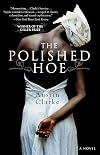
Before reading this novel I'd seen a number of other readers' comments about it being slow, boring, tedious, having no plot and so on. Which misses the point completely. This isn't a novel in which a plot is central, but about the course of an individual life, about relationships, history and, as it says on the back of the book, about the sacrifices which have to be made for survival.
The Polished Hoe, set in a lightly disguised Barbados, painstakingly teases apart the history of its central show more character, Mary-Mathilda, and the lifetime of exploitation and abuse she was put to by her mother in order to ensure her relative material prosperity. Indeed, one is hard-pressed to say whether May or Bellfeels, the Plantation manager, is more fundamentally guilty of the betrayal of Mary-Mathilda, whose voice, perceptions and experiences at the centre of Clarke's novel.
This is a novel without chapters, although it is divided into three lengthy sections, which means that there are few logical breaks in the narrative at which the reader may conveniently break. However I found that whenever I picked the book up again and started reading I always remembered exactly where in the speaker's reminiscences I'd laid it aside, and in a novel whose action is all reported at second hand and often from many years ago, it is a supreme achievement of the narrative and writing that each twist and digression is so memorable and vivid, offering firm anchors for the reader to latch onto.
Of all the novels I've read it reminds me most forcibly of Sandor Marai's Embers, also a novel in which two people sit through a night and talk about something which which has taken place and the circumstances surrounding it. In The Polished Hoe it is clear throughout the novel that something has happened earlier that evening but, although we have a fair idea fairly early on what that is, our surmise is not confirmed until the very end. In Embers what happened, or rather what didn't happen, took place more than half a lifetime ago and in that case it was an act which could have taken place but which didn't but which nevertheless tore two close friends irretrievably apart. In The Polished Hoe the reminiscences serve to draw back together the two childhood friends who had been separated by the different fates for which they were destined.
The Polished Hoe is shot through with a sustained, powerful yet subtle eroticism which weaves itself around and between Mary-Mathilda and Percy and as a piece of erotic writing it works very well indeed. On a more cynical note one could also see the events of the night in question as a wider seduction, or perhaps corruption is more appropriate, of Percy, the Crown-Sergeant, by Mary-Mathilda who, as it turns out, needs to compromise the policeman as much as she wishes to make up for lost time.
Not surprisingly, the history and legacy of slavery feature strongly in the novel in the form of the memories and testimony of Mary-Mathilda's grandmother and great grandmother as told by Mary-Mathilda by her mother, hence we appear to have four generations of oral history and testimony.
I am, however, not convinced that the history provided by Mary-Mathilda is reliable. We know from internal evidence in the novel that Mary-Mathilda was born c1897 and may therefore surmise that her mother was born c1870, her grandmother c1845 and her great-grandmother c1820. Mary-Mathilda's claim that her great-grandmother had come from somewhere in Africa seems somewhat unlikely since the slave trade was abolished throughout the Britsh Empire in 1807 (and the Royal Navy thereafter policed the Atlantic rigorously stamping out what trade remained taking slaves to the US) and slavery itself was outlawed throughout the Empire from 1834.
This is not to deny or denigrate the very real legacy of slavery in Barbados. Clearly the island's sugar economy had depended heavily on slavery in the past, but I think we are intended to see the poorly educated Mary-Mathilda as an unreliable narrator in this instance, which perhaps only serves to heighten the power of her account of her own experiences and life. show less
The Polished Hoe, set in a lightly disguised Barbados, painstakingly teases apart the history of its central show more character, Mary-Mathilda, and the lifetime of exploitation and abuse she was put to by her mother in order to ensure her relative material prosperity. Indeed, one is hard-pressed to say whether May or Bellfeels, the Plantation manager, is more fundamentally guilty of the betrayal of Mary-Mathilda, whose voice, perceptions and experiences at the centre of Clarke's novel.
This is a novel without chapters, although it is divided into three lengthy sections, which means that there are few logical breaks in the narrative at which the reader may conveniently break. However I found that whenever I picked the book up again and started reading I always remembered exactly where in the speaker's reminiscences I'd laid it aside, and in a novel whose action is all reported at second hand and often from many years ago, it is a supreme achievement of the narrative and writing that each twist and digression is so memorable and vivid, offering firm anchors for the reader to latch onto.
Of all the novels I've read it reminds me most forcibly of Sandor Marai's Embers, also a novel in which two people sit through a night and talk about something which which has taken place and the circumstances surrounding it. In The Polished Hoe it is clear throughout the novel that something has happened earlier that evening but, although we have a fair idea fairly early on what that is, our surmise is not confirmed until the very end. In Embers what happened, or rather what didn't happen, took place more than half a lifetime ago and in that case it was an act which could have taken place but which didn't but which nevertheless tore two close friends irretrievably apart. In The Polished Hoe the reminiscences serve to draw back together the two childhood friends who had been separated by the different fates for which they were destined.
The Polished Hoe is shot through with a sustained, powerful yet subtle eroticism which weaves itself around and between Mary-Mathilda and Percy and as a piece of erotic writing it works very well indeed. On a more cynical note one could also see the events of the night in question as a wider seduction, or perhaps corruption is more appropriate, of Percy, the Crown-Sergeant, by Mary-Mathilda who, as it turns out, needs to compromise the policeman as much as she wishes to make up for lost time.
Not surprisingly, the history and legacy of slavery feature strongly in the novel in the form of the memories and testimony of Mary-Mathilda's grandmother and great grandmother as told by Mary-Mathilda by her mother, hence we appear to have four generations of oral history and testimony.
I am, however, not convinced that the history provided by Mary-Mathilda is reliable. We know from internal evidence in the novel that Mary-Mathilda was born c1897 and may therefore surmise that her mother was born c1870, her grandmother c1845 and her great-grandmother c1820. Mary-Mathilda's claim that her great-grandmother had come from somewhere in Africa seems somewhat unlikely since the slave trade was abolished throughout the Britsh Empire in 1807 (and the Royal Navy thereafter policed the Atlantic rigorously stamping out what trade remained taking slaves to the US) and slavery itself was outlawed throughout the Empire from 1834.
This is not to deny or denigrate the very real legacy of slavery in Barbados. Clearly the island's sugar economy had depended heavily on slavery in the past, but I think we are intended to see the poorly educated Mary-Mathilda as an unreliable narrator in this instance, which perhaps only serves to heighten the power of her account of her own experiences and life. show less
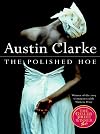
Clarke's book is a difficult one to read and is certainly not for those looking for a quick escape with a happy ending. The action of the story takes place over a single night, but it covers years of the life on a small West Indian island that had it's beginnings in slavery. Mary-G is a black woman born to as a fourth generation slave on this island. Like her mother, grandmother and great-grandmother before her she worked in the fields for a white overseer on a sugar cane plantation. She show more also follows them in another area-that of a white man's plaything. These women are all slaves so cannot question their lot, or say know to the unwelcome advances. Mary-G goes on like this for years as a casual sex toy for the white overseer. She is placed in a nice home, and she has three children by this man (only one lives), but she has been alienated from her fellow black friends by this show of favouritism. She is lonely and whiles the time away by raising her son and by reading. Then one day she has just had enough and she takes matters into her own hands. She exacts revenge for all of her anscestors. This book is about choices (limited or otherwise), and the results of those choices. The book is actually set in the time of the 30's and 40's (post-colonial because this island was a British colony). Clarke has created some powerful characters in this book. They are certainly not going to be forgotten by me for quite some time. This book is another worhty winner of the prestigious Giller prize. show less
Lists
Awards


You May Also Like
Associated Authors
Statistics
- Works
- 27
- Also by
- 4
- Members
- 935
- Popularity
- #27,473
- Rating
- 3.4
- Reviews
- 18
- ISBNs
- 130
- Languages
- 1
- Favorited
- 1