
Thomas Fleming (4) (1927–2017)
Author of Liberty! The American Revolution [1997 TV mini series]
For other authors named Thomas Fleming, see the disambiguation page.
Thomas Fleming (4) has been aliased into Thomas J. Fleming.
About the Author
Image credit: Bobrowen
Series
Works by Thomas Fleming
Works have been aliased into Thomas J. Fleming.
A Disease in the Public Mind: A New Understanding of Why We Fought the Civil War (2013) 159 copies, 4 reviews
The Great Divide: The Conflict between Washington and Jefferson that Defined a Nation (2015) 149 copies, 3 reviews
The Strategy of Victory: How General George Washington Won the American Revolution (2017) 68 copies, 1 review
The first stroke : Lexington, Concord, and the beginning of the American Revolution (2005) 15 copies
Unconditional Surrender: The Policy That Prolonged World War II (The Thomas Fleming Library) (2011) 3 copies
Reader's Digest Magazine 1976 July 2 copies
Jefferson Versus Hamilton: The Trial That Shook The Nation (The Thomas Fleming Library) (2012) 1 copy
Associated Works
Works have been aliased into Thomas J. Fleming.
MHQ: The Quarterly Journal of Military History — Autumn 1993 (1993) — Author "Transformation at Saratoga" — 20 copies
MHQ: The Quarterly Journal of Military History — Spring 1998 (1998) — Author "A Country Without a Father" — 17 copies
MHQ: The Quarterly Journal of Military History — Winter 1990 (1989) — Author "George Washington, General" — 16 copies
MHQ: The Quarterly Journal of Military History — Winter 1996 (1995) — Author "Wolfe's Prophetic Victory" — 16 copies
MHQ: The Quarterly Journal of Military History — Spring 1999 (1999) — Author "From the Hudson to the Halls of Montezuma" — 15 copies
MHQ: The Quarterly Journal of Military History — Winter 1993 (1992) — Author "The Man Who Saved Korea" — 14 copies
MHQ: The Quarterly Journal of Military History — Winter 2006 (2005) — Author "General George Washington, Politician" and "In Review: Conduct Under Fire" — 14 copies
MHQ: The Quarterly Journal of Military History — Autumn 1996 (1996) — Author "Who Was Lafayette?" — 13 copies
MHQ: The Quarterly Journal of Military History — Winter 1998 (1997) — Author "The Man Who Would Not Be King" and "The War After Yorktown" — 13 copies
MHQ: The Quarterly Journal of Military History — Autumn 1990 (1990) — Author "Braddock's Defeat" — 12 copies
MHQ: The Quarterly Journal of Military History — Winter 2001 (2000) — Author "Old Hickory's Finest Hour" — 12 copies
MHQ: The Quarterly Journal of Military History — Winter 1995 (1994) — Author "Iron General" and "A New Definition of "Open Warfare," Learned the Hard Way" — 11 copies
MHQ: The Quarterly Journal of Military History — Summer 1994 (1994) — Author "Their Golden Glory" — 11 copies
MHQ: The Quarterly Journal of Military History — Winter 2003 (2002) — Author "Birth of the American Way of War" — 11 copies
MHQ: The Quarterly Journal of Military History — Autumn 2007 (2007) — Author "The Father of West Point" — 11 copies
MHQ: The Quarterly Journal of Military History — Winter 1994 (1993) — Author "Band of Brothers" — 10 copies
MHQ: The Quarterly Journal of Military History — Spring 2008 (2008) — Author "George Washington's Tears" — 10 copies
MHQ: The Quarterly Journal of Military History — Autumn 2003 (2003) — Author "In Review: In the Shadows of War" — 9 copies
MHQ: The Quarterly Journal of Military History — Winter 2009 (2008) — Author "A Policy Written in Blood" — 9 copies
MHQ: The Quarterly Journal of Military History — Spring 2004 (2004) — Author "We Have Met the Enemy and We Were Almost Theirs" — 8 copies
MHQ: The Quarterly Journal of Military History — Winter 2007 (2006) — Author "Getting the Real Message to Garcia" — 8 copies
MHQ: The Quarterly Journal of Military History — Winter 2010 (2009) — Author "Getting Away With Murder" and "In Review: War on the Run" — 8 copies
MHQ: The Quarterly Journal of Military History — Summer 2000 (2000) — Author "MacArthur's Pirate" — 7 copies
MHQ: The Quarterly Journal of Military History — Summer 2005 (2005) — Author "Nurse on the Edge of No Man's Land" — 7 copies
MHQ: The Quarterly Journal of Military History — Spring 2011 (2011) — Author "War of Revenge" and "In Review: George Washington's First War" — 3 copies
MHQ: The Quarterly Journal of Military History — Summer 2013 (2013) — Author "Escape From Brooklyn" — 3 copies
Tagged
Common Knowledge
- Birthdate
- 1927-07-05
- Date of death
- 2017-07-23
- Gender
- male
- Education
- Fordham University
- Organizations
- US Navy
- Nationality
- USA
- Birthplace
- Jersey City, New Jersey, USA
- Place of death
- New York, New York, USA
- Associated Place (for map)
- USA
Members
Reviews
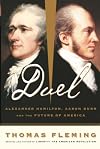
Duel is the haunting and illuminating story of two talented American founders who were ruined and driven against each other by three factors: their own ambition, their passionate natures, and the vicious designs of their powerful rival Thomas Jefferson. Fleming, skilled at presenting great detail without boring the reader, tells what happened in the years from the contentious election of 1800 to the duel that took Hamilton’s life in 1804. This book also provides a revealing look at show more politics at the beginning of the republic.
Hamilton was less adept than Burr at reigning in his sensitivity to injustice, and his craving for “the praise of persons of judgment and quality” (per Francis Bacon). Noah Webster warned Hamilton about his “ambition, pride, and overbearing temper.” But Hamilton had admirable leadership qualities as well: a brilliant intellect; bravery in battle; passionate support of political causes that seemed infinitely preferable to the Jacobinism of Jefferson; and consummate skills at speaking and writing to convince others of his arguments.
Burr had also proven brave and competent in battle; inspiring in the courtroom, and better able to broker political deals than Hamilton (if a bit too reluctant to commit to one side or another). While Vice President, he made sure Congress was conducted with dignity and decorum, precedents that were continued after his departure.
Jefferson, whom Fleming calls “at best a lukewarm friend of the Constitution,” engaged in unrelenting calumny and slander against these two political rivals, but always behind the scenes. He hired newspaper editors, he orchestrated moves and feints in Congress, and drafted (anonymously) documents to be presented by others – always working “in deep background.” His pet projects were characterized by emphases on loyalty and submission rather than the democracy he touted publicly.
Fleming’s accounts of the defamations issued by agents of Jefferson against Hamilton and Burr are shocking and depressing. Most people had no alternative means of obtaining information and tended to believe what they read in the Jefferson-sponsored diatribes. The lives of these two great men were ruined and nothing could be done. In the end, both men lost their families, their fortunes, their political careers, and in Hamilton’s case - his life - while Jefferson went on to be worshipped as the embodiment of We the People.
(JAF) show less
Hamilton was less adept than Burr at reigning in his sensitivity to injustice, and his craving for “the praise of persons of judgment and quality” (per Francis Bacon). Noah Webster warned Hamilton about his “ambition, pride, and overbearing temper.” But Hamilton had admirable leadership qualities as well: a brilliant intellect; bravery in battle; passionate support of political causes that seemed infinitely preferable to the Jacobinism of Jefferson; and consummate skills at speaking and writing to convince others of his arguments.
Burr had also proven brave and competent in battle; inspiring in the courtroom, and better able to broker political deals than Hamilton (if a bit too reluctant to commit to one side or another). While Vice President, he made sure Congress was conducted with dignity and decorum, precedents that were continued after his departure.
Jefferson, whom Fleming calls “at best a lukewarm friend of the Constitution,” engaged in unrelenting calumny and slander against these two political rivals, but always behind the scenes. He hired newspaper editors, he orchestrated moves and feints in Congress, and drafted (anonymously) documents to be presented by others – always working “in deep background.” His pet projects were characterized by emphases on loyalty and submission rather than the democracy he touted publicly.
Fleming’s accounts of the defamations issued by agents of Jefferson against Hamilton and Burr are shocking and depressing. Most people had no alternative means of obtaining information and tended to believe what they read in the Jefferson-sponsored diatribes. The lives of these two great men were ruined and nothing could be done. In the end, both men lost their families, their fortunes, their political careers, and in Hamilton’s case - his life - while Jefferson went on to be worshipped as the embodiment of We the People.
(JAF) show less
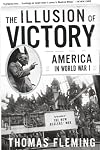
A certain prominent American has recently proposed that November 11th be celebrated as “Victory Day for World War I” in America. That day had the more somber and appropriate designation of Armistice Day until 1968 when it became Veterans Day.
But what did America actually win in World War One?
Fleming offers a witty and devastating riposte that it was little. It’s not a revisionist book. There are no claims of new documents discovered. Just an unpleasant reminder of everything most show more Americans forgot (if they ever knew) about the war.
It’s primarily a book concerned with domestic and foreign politics under the Woodrow Wilson administration. In fact, much of it concerns America’s role in settling the peace (which didn’t actually happen in parts of Europe until 1924) after the armistice was declared.
In a narrow sense, America’s did contribute significantly to the victory on the Western Front.
But Wilson declared war on Germany in April 1917 (and, months later, on the Austro-Hungarian Empire) because he wanted a place at the treaty table in order to remake the world, provide a just settlement and not one for just the victors. He thought the war was almost won. America would just provide some naval and material support.
He was unpleasantly surprised to learn that, contrary to the massive British propaganda machine operating in America, the Germans were far from beaten and that American troops were needed.
And the troops were called out. And, after all was said and done, it is estimated 460,000 American troops died from their service. 50,300 died on the battlefield. 62,668 died of disease with more than 38,000 of those in training camps in America. And they weren’t all from the Spanish Flu. Despite the “preparedness movement”, those camps were poorly provided with shelter and clothing. 1,000 committed suicide during the war. More died from gas injuries after the war. And that was just from American troops spending slightly more than six months at the front.
Belleau Wood is a justly celebrated example of the tenacity of the United States Marine Corps. They suffered 42% casualties. But the battle was initiated without reconnaissance, a political exercise to show American troops were tougher than British and French, to show that Pershing’s idea of “open warfare” with just rifle and bayonet could win the day. The Wood, a square-mile of forest, was finally taken when the Marines were withdrawn and the Germans shelled for 14 hours and the Marines sent back in.
The Meusse-Argonne Offensive, still the largest offensive involving the U.S. Army as well as its deadliest, was another exercise in open warfare. Poorly fed troops advanced on a large front. Many got lost. An estimated 100,000 ran away, so many an order was issued to shoot them. (This is well-covered in John Dos Passos Three Soldiers.)
Eventually, Pershing turned command of two armies over to Hunter Liggett and Robert Lee Bullard. Those, along with Herbert Hoover, George Marshall, and Charles Dawes, are some of the few military and political leaders Fleming has no criticism of.
All the while the Allies pleaded for incorporation of American troops into their forces, Britain had 1.5 million troops in the United Kingdom because Lloyd George wanted them for internal security and to keep them out of the hands of Douglas Haig after Passchendaele.
And what was all this carnage for? A place at the victor’s table, to insure the peoples of the world right of self-determination, to have a world of no secret treaties, to ensure free movement of goods and people. War was declared by Wilson not against the German people but its Prussian government.
Except Senator “Fighting” Bob La Follette of Wisconsin answered every one of Wilson’s justifications for war at the time. Free navigation. What about the British blockade? Right of Americans to travel on the ships of countries at war and expect no harm. Should Americans expect no harm if they camped near a munitions dump at the front?
Wilson was particularly hypocritical on the issue of submarine warfare. Submarines were an uncivilized weapon of war claimed the British. So why did it commission, in violation of American law, Bethlehem Steel to build them for it? (Bethlehem Steel’s excuse was they were only building the parts. The submarines would be assembled in Canada.) The British put false flags on their Q-ships. Their official policy, if a German submarine did comply with “civilized” rules and surface and give a ship the chance to evacuate its crew, is that no surrender should occur in order to give any nearby British warships the chance to attack the submarine. The crews of German submarines were not to be afforded the protections of prisoners of war.
At Versailles, Wilson consented to the enforcement of those “secret treaties” he railed against. He allowed a blockade to starve hundreds of thousands of Germans to death though the German government he had once declared war against was gone. He allowed unreasonable repatriations to be enacted – reparations whose damage was foreseen even by some at Versailles. Herbert Hoover would end German payments in 1931. Germany became America’s leading trading partner in the 1920s, and the American troops occupying Germany found they liked the hated Hun better than the French or British they dealt with.
The cliché is that American isolationism killed America joining the League of Nations. There was probably a majority of support for the idea among the American people and in both parties for the idea. But they wanted some changes to Wilson’s proposal. But it was Wilson’s way or the highway. He made the 1920 election a referendum on his idea, and it was rejected.
It didn’t help that the Irish Americans turned against him for his failure to support Irish Independence. Italian Americans were angry he spoke against Italy claiming the city of Fiume.
President Warren G. Harding, after that election, announced a “return to normalcy”. Things had gotten very abnormal during the war years of Wilson. There was a massive suppression of civil rights. The sinister George Creel and his Committee on Public Information initiated the age of US government propaganda. In the war years, it also initiated private vigilantes who struck out against any citizen not deemed loyal enough. Political candidates were jailed. There were race riots during and after the war (including one in Washington DC) and labor unrest. The producer of the film Spirit of ’76 was jailed. His patriotic film of the American Revolution was deemed too critical of America’s ally Britain. Farmers (unless they were cotton growers) faced price controls.
The world this book covers is depressingly familiar to an American of the last ten years. Lying reporters collude with politicians. Government officials collude with foreign governments and seek to sabotage their superiors. Private organizations join in spreading the partisan lies they favor. A president’s disqualifying disability is kept hidden. Immigrants show unseemly concern with countries they supposedly abjured loyalty to. President use blustering rhetoric to sell their vacillating principles to their followers.
I did have a few quibbles. Fleming somewhat undersells the idea of German subversion in America. The Red Scare of 1919 and possibility of communist subversion and anarchic terrorism was there. The book could have used a better index.
But it’s not all about the great and good. Fleming gives us haunting accounts of what war, metal and blast wave meeting flesh, means in some sections on the experience of American women serving as nurses in France.
One recounts how she, with no medical training, was thrown into assisting with surgery. She learned her vocation. But, then, another casualty came in. A man she knew and a friend of the surgeon.
And, as they returned home to America, two women, both Red Cross volunteers in hospitals, kept to themselves, depressed. One night, both women threw themselves overboard. The woman relating the story, the writer Eunice Tietjens, said “I believe every one of us on that boat might have done the same.”
Fleming provides a brief alternate history of how America, and, specifically, Woodrow Wilson, could have had another sort of victory. If America had remained truly neutral, it’s likely a settlement would have been reached on the Western Front in 1916. The poor and broken combatants would have had to turn to America for economic support. Wilson could have leveraged that need to come closer to realizing his vision of a new world.
What did the victorious America win? Entanglement in European affairs. A Europe eventually broken by fascism and communism. Some Americans made a lot of money though.
Victory indeed. show less
But what did America actually win in World War One?
Fleming offers a witty and devastating riposte that it was little. It’s not a revisionist book. There are no claims of new documents discovered. Just an unpleasant reminder of everything most show more Americans forgot (if they ever knew) about the war.
It’s primarily a book concerned with domestic and foreign politics under the Woodrow Wilson administration. In fact, much of it concerns America’s role in settling the peace (which didn’t actually happen in parts of Europe until 1924) after the armistice was declared.
In a narrow sense, America’s did contribute significantly to the victory on the Western Front.
But Wilson declared war on Germany in April 1917 (and, months later, on the Austro-Hungarian Empire) because he wanted a place at the treaty table in order to remake the world, provide a just settlement and not one for just the victors. He thought the war was almost won. America would just provide some naval and material support.
He was unpleasantly surprised to learn that, contrary to the massive British propaganda machine operating in America, the Germans were far from beaten and that American troops were needed.
And the troops were called out. And, after all was said and done, it is estimated 460,000 American troops died from their service. 50,300 died on the battlefield. 62,668 died of disease with more than 38,000 of those in training camps in America. And they weren’t all from the Spanish Flu. Despite the “preparedness movement”, those camps were poorly provided with shelter and clothing. 1,000 committed suicide during the war. More died from gas injuries after the war. And that was just from American troops spending slightly more than six months at the front.
Belleau Wood is a justly celebrated example of the tenacity of the United States Marine Corps. They suffered 42% casualties. But the battle was initiated without reconnaissance, a political exercise to show American troops were tougher than British and French, to show that Pershing’s idea of “open warfare” with just rifle and bayonet could win the day. The Wood, a square-mile of forest, was finally taken when the Marines were withdrawn and the Germans shelled for 14 hours and the Marines sent back in.
The Meusse-Argonne Offensive, still the largest offensive involving the U.S. Army as well as its deadliest, was another exercise in open warfare. Poorly fed troops advanced on a large front. Many got lost. An estimated 100,000 ran away, so many an order was issued to shoot them. (This is well-covered in John Dos Passos Three Soldiers.)
Eventually, Pershing turned command of two armies over to Hunter Liggett and Robert Lee Bullard. Those, along with Herbert Hoover, George Marshall, and Charles Dawes, are some of the few military and political leaders Fleming has no criticism of.
All the while the Allies pleaded for incorporation of American troops into their forces, Britain had 1.5 million troops in the United Kingdom because Lloyd George wanted them for internal security and to keep them out of the hands of Douglas Haig after Passchendaele.
And what was all this carnage for? A place at the victor’s table, to insure the peoples of the world right of self-determination, to have a world of no secret treaties, to ensure free movement of goods and people. War was declared by Wilson not against the German people but its Prussian government.
Except Senator “Fighting” Bob La Follette of Wisconsin answered every one of Wilson’s justifications for war at the time. Free navigation. What about the British blockade? Right of Americans to travel on the ships of countries at war and expect no harm. Should Americans expect no harm if they camped near a munitions dump at the front?
Wilson was particularly hypocritical on the issue of submarine warfare. Submarines were an uncivilized weapon of war claimed the British. So why did it commission, in violation of American law, Bethlehem Steel to build them for it? (Bethlehem Steel’s excuse was they were only building the parts. The submarines would be assembled in Canada.) The British put false flags on their Q-ships. Their official policy, if a German submarine did comply with “civilized” rules and surface and give a ship the chance to evacuate its crew, is that no surrender should occur in order to give any nearby British warships the chance to attack the submarine. The crews of German submarines were not to be afforded the protections of prisoners of war.
At Versailles, Wilson consented to the enforcement of those “secret treaties” he railed against. He allowed a blockade to starve hundreds of thousands of Germans to death though the German government he had once declared war against was gone. He allowed unreasonable repatriations to be enacted – reparations whose damage was foreseen even by some at Versailles. Herbert Hoover would end German payments in 1931. Germany became America’s leading trading partner in the 1920s, and the American troops occupying Germany found they liked the hated Hun better than the French or British they dealt with.
The cliché is that American isolationism killed America joining the League of Nations. There was probably a majority of support for the idea among the American people and in both parties for the idea. But they wanted some changes to Wilson’s proposal. But it was Wilson’s way or the highway. He made the 1920 election a referendum on his idea, and it was rejected.
It didn’t help that the Irish Americans turned against him for his failure to support Irish Independence. Italian Americans were angry he spoke against Italy claiming the city of Fiume.
President Warren G. Harding, after that election, announced a “return to normalcy”. Things had gotten very abnormal during the war years of Wilson. There was a massive suppression of civil rights. The sinister George Creel and his Committee on Public Information initiated the age of US government propaganda. In the war years, it also initiated private vigilantes who struck out against any citizen not deemed loyal enough. Political candidates were jailed. There were race riots during and after the war (including one in Washington DC) and labor unrest. The producer of the film Spirit of ’76 was jailed. His patriotic film of the American Revolution was deemed too critical of America’s ally Britain. Farmers (unless they were cotton growers) faced price controls.
The world this book covers is depressingly familiar to an American of the last ten years. Lying reporters collude with politicians. Government officials collude with foreign governments and seek to sabotage their superiors. Private organizations join in spreading the partisan lies they favor. A president’s disqualifying disability is kept hidden. Immigrants show unseemly concern with countries they supposedly abjured loyalty to. President use blustering rhetoric to sell their vacillating principles to their followers.
I did have a few quibbles. Fleming somewhat undersells the idea of German subversion in America. The Red Scare of 1919 and possibility of communist subversion and anarchic terrorism was there. The book could have used a better index.
But it’s not all about the great and good. Fleming gives us haunting accounts of what war, metal and blast wave meeting flesh, means in some sections on the experience of American women serving as nurses in France.
One recounts how she, with no medical training, was thrown into assisting with surgery. She learned her vocation. But, then, another casualty came in. A man she knew and a friend of the surgeon.
And, as they returned home to America, two women, both Red Cross volunteers in hospitals, kept to themselves, depressed. One night, both women threw themselves overboard. The woman relating the story, the writer Eunice Tietjens, said “I believe every one of us on that boat might have done the same.”
Fleming provides a brief alternate history of how America, and, specifically, Woodrow Wilson, could have had another sort of victory. If America had remained truly neutral, it’s likely a settlement would have been reached on the Western Front in 1916. The poor and broken combatants would have had to turn to America for economic support. Wilson could have leveraged that need to come closer to realizing his vision of a new world.
What did the victorious America win? Entanglement in European affairs. A Europe eventually broken by fascism and communism. Some Americans made a lot of money though.
Victory indeed. show less

I read this book because I wanted to better understand the recent debate about the cause of the Civil War. Was it a lost cause in defense of homeland, or was it a traitorous rebellion to preserve slavery? Somehow many Americans still don't agree on this question. And recent protests over Confederate monuments made this a national issue, even for a removed westerner like me. After Chief of Staff John Kelly said the Civil War was caused by lack of compromise, and pundits and historians blew show more their tops, I needed some context.
I liked that Fleming was a respected historian with Revolutionary chops. And I was caught by Fleming's title and premise. What was the misguided thinking that allowed fellow countrymen to kill each other? Why couldn't slavery have been resolved by political means? What split us then, and could it help me understand our split today?
Fleming addressed some of my questions. Southerners inherited their economic system and had some opportunities to reform themselves (what Fleming called their earlier "Emancipation Proclamations"), but they were never of one mind about it, and were haunted by the bloody reports of past slave rebellions. They did not believe there could be peace between the races. And northerners cohabited with some particularly zealous abolitionists who persisted in antagonizing and demonizing southern "Slavocrats". Many believed slavery was wrong, and didn't think equality was right either, but there wasn't a clear way to change the system anyway. And I learned of the rivalry between New England and Virginia to influence the nation's destiny, and the north sometimes felt impotent against southern power and the procession of strong southern Presidents. Some northern leaders briefly considered succession early on, long before the south who would sternly remind the north of that fact.
I had trouble with some of Fleming's tone. He often portrayed abolitionists and their northern sympathizers to be harsh, hateful, violent, irresponsible, and unreasonable. And it seemed like southern slaveholders were often conflicted, good intentioned, and restrained from reform by fear and circumstances. The slave rebellions were truly horrible to read, but the reactive and routine atrocities of white slaveholders seemed downplayed. I really struggled hearing abolitionist rhetoric (which seemed admirable to my ears) portrayed as malicious attacks. Lincoln was treated reverentially, endowed as the only man with the gifts to heal the union. Lee played a noble character who could not accept charge of the Union army because of how disrespectful the north was for the south.
Maybe I'm not giving this book a fair shake (I mean, it really was historically revealing to me), but it left a bad taste in my mouth. Maybe I would have done better with a more academic writer, with a more data-focused, dispassionate approach. show less
I liked that Fleming was a respected historian with Revolutionary chops. And I was caught by Fleming's title and premise. What was the misguided thinking that allowed fellow countrymen to kill each other? Why couldn't slavery have been resolved by political means? What split us then, and could it help me understand our split today?
Fleming addressed some of my questions. Southerners inherited their economic system and had some opportunities to reform themselves (what Fleming called their earlier "Emancipation Proclamations"), but they were never of one mind about it, and were haunted by the bloody reports of past slave rebellions. They did not believe there could be peace between the races. And northerners cohabited with some particularly zealous abolitionists who persisted in antagonizing and demonizing southern "Slavocrats". Many believed slavery was wrong, and didn't think equality was right either, but there wasn't a clear way to change the system anyway. And I learned of the rivalry between New England and Virginia to influence the nation's destiny, and the north sometimes felt impotent against southern power and the procession of strong southern Presidents. Some northern leaders briefly considered succession early on, long before the south who would sternly remind the north of that fact.
I had trouble with some of Fleming's tone. He often portrayed abolitionists and their northern sympathizers to be harsh, hateful, violent, irresponsible, and unreasonable. And it seemed like southern slaveholders were often conflicted, good intentioned, and restrained from reform by fear and circumstances. The slave rebellions were truly horrible to read, but the reactive and routine atrocities of white slaveholders seemed downplayed. I really struggled hearing abolitionist rhetoric (which seemed admirable to my ears) portrayed as malicious attacks. Lincoln was treated reverentially, endowed as the only man with the gifts to heal the union. Lee played a noble character who could not accept charge of the Union army because of how disrespectful the north was for the south.
Maybe I'm not giving this book a fair shake (I mean, it really was historically revealing to me), but it left a bad taste in my mouth. Maybe I would have done better with a more academic writer, with a more data-focused, dispassionate approach. show less
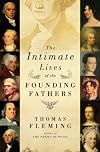
This book has a light and interesting tone that I found very engrossing. While this is easy to read/approachable it is also heavily researched, which is nice. Very accessible for those interested in more info on the Founding Fathers that's not about battles and negotiations. I found the section on John Adams the most interesting and enlightening. I also liked how much information was included about the wives and the parts they played in their husbands successes.
I found the references used show more to explain the lives and treatment of enslaved peoples was based on sources that are too dated to be valid as used. An example would be in the chapter on Washington. The author says that slave women lie about the white father's of their children. The source for this is from a book published in the 1980's. There's considerably less dated sources available that explain this from the point of view of the enslaved person which is currently how we process this type of situation. Enslaved women had no right to accuse white men of fathering their children. Mostly they did not name the father of their mixed children. It's part of not acknowledging slave families as valid. This blaming the enslaved woman at the expense of the slave owning white men sits poorly with me. I have no issue with the author choosing not to believe that Thomas Jefferson was the father of Sally Hemings children. My problem lies with the portraying of her as a harlot. Callender portrayed 'Dusky' Sally Hemings in a series of racist hyper sexual stereotypes commonly accepted as fact in his age. The problem is this is published in 2009. A time at which the author clearly understood that slavery in any form was wrong and chattel slavery the worst incarnation yet. That sex is only sex if consent exists. That racist caricatures were used to excuse chattel slavery. Enslaved person's by virtue of their enslavement are unable to consent to sex with any white person, as all white people acted as authority figures to all black people. Much less any white person who was acting as owner/overseer. We recognise this today in not allowing professors to date students, managers/bosses to date employees. Sally Hemings was raped by whatever white man fathered her children. Even if she thought she loved him and thought he loved her, by virtue of this man holding and/or leaving her enslaved she was unable to consent. So to suggest Sally was a harlot is to blame her for her own abuse and perpetuates what was done to her during life time. It's the worst form of biography/history when academics become so attached to their subjects that they perpetuate outdated bigotry.
It's worth noting that Sally Hemings hidden room is currently being excavated at Monticello. show less
I found the references used show more to explain the lives and treatment of enslaved peoples was based on sources that are too dated to be valid as used. An example would be in the chapter on Washington. The author says that slave women lie about the white father's of their children. The source for this is from a book published in the 1980's. There's considerably less dated sources available that explain this from the point of view of the enslaved person which is currently how we process this type of situation. Enslaved women had no right to accuse white men of fathering their children. Mostly they did not name the father of their mixed children. It's part of not acknowledging slave families as valid. This blaming the enslaved woman at the expense of the slave owning white men sits poorly with me. I have no issue with the author choosing not to believe that Thomas Jefferson was the father of Sally Hemings children. My problem lies with the portraying of her as a harlot. Callender portrayed 'Dusky' Sally Hemings in a series of racist hyper sexual stereotypes commonly accepted as fact in his age. The problem is this is published in 2009. A time at which the author clearly understood that slavery in any form was wrong and chattel slavery the worst incarnation yet. That sex is only sex if consent exists. That racist caricatures were used to excuse chattel slavery. Enslaved person's by virtue of their enslavement are unable to consent to sex with any white person, as all white people acted as authority figures to all black people. Much less any white person who was acting as owner/overseer. We recognise this today in not allowing professors to date students, managers/bosses to date employees. Sally Hemings was raped by whatever white man fathered her children. Even if she thought she loved him and thought he loved her, by virtue of this man holding and/or leaving her enslaved she was unable to consent. So to suggest Sally was a harlot is to blame her for her own abuse and perpetuates what was done to her during life time. It's the worst form of biography/history when academics become so attached to their subjects that they perpetuate outdated bigotry.
It's worth noting that Sally Hemings hidden room is currently being excavated at Monticello. show less
Lists
Awards


You May Also Like
Associated Authors
Statistics
- Works
- 68
- Also by
- 26
- Members
- 3,803
- Popularity
- #6,669
- Rating
- 3.7
- Reviews
- 55
- ISBNs
- 201
- Languages
- 1
- Favorited
- 1